


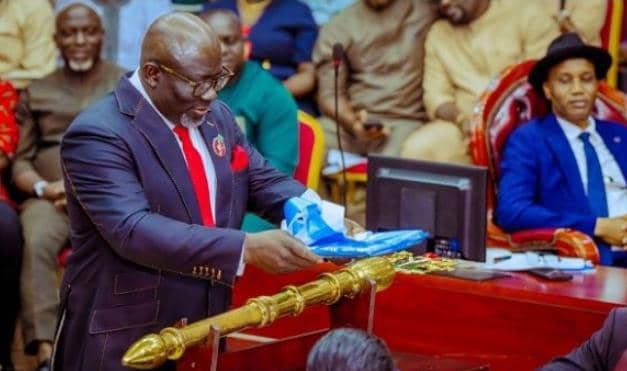
(DDM) – Delta State Governor Sheriff Oborevwori has unveiled a historic N1 trillion budget proposal for 2026, signaling a new era of bold governance and citizen-focused spending.
Diaspora Digital Media (DDM) notes that the governor, represented by Commissioner for Economic Planning, Sonny Ekedayen, presented the financial roadmap at the State Executive Council meeting in Asaba.
The governor announced that 67 percent of the budget is allocated to capital expenditure, targeting infrastructure, education, healthcare, and job creation. The remaining 33 percent covers recurrent expenditure, with special attention to workers’ salaries, pensions, and essential services.
Oborevwori stressed that the 2026 plan is designed to strengthen fiscal discipline, reduce debt dependency, and ensure that every naira is accounted for. He pledged absolute transparency, assuring citizens that the budget would be implemented with strict monitoring and regular public updates.
Commissioner for Information, Charles Aniagwu, described the proposal as “a people’s budget,” noting that it was crafted after wide consultations with community leaders, trade unions, youth groups, and civil society.
Observers say the budget’s scale and structure reflect Delta’s ambition to reposition itself as one of Nigeria’s fastest-growing subnational economies. Analysts noted that the 67 percent capital expenditure ratio is one of the highest in the country, signaling serious commitment to physical development rather than administrative overheads.
Civil society leaders welcomed the participatory approach, pointing out that the state had finally adopted an inclusive budgeting system where ordinary citizens influenced spending priorities.
Development experts at the unveiling compared the move to Lagos State’s multi-trillion-naira budgets, suggesting Delta is now competing at the top level of fiscal ambition.
They stressed that timely implementation will be key to achieving the intended impact.
Governor Oborevwori highlighted roads, bridges, rural electrification, and healthcare facilities as top priorities. He also emphasized education investments, revealing that funds will be directed to complete classroom projects, expand teacher recruitment, and strengthen technical schools.
The governor said healthcare delivery would be improved through the upgrade of general hospitals, expanded primary healthcare centers, and recruitment of medical professionals. He also assured that welfare programs would cushion vulnerable households from economic shocks.
Financial experts praised the proposed budget but cautioned that transparency must be matched by execution. They advised the government to avoid project duplication, inflated contracts, and late releases that historically undermine Nigerian state budgets.
The governor reiterated that the 2026 budget will serve as a “social contract with the people,” reinforcing his administration’s agenda of sustainable development and inclusive governance.
If approved by the Delta State House of Assembly, the N1 trillion spending plan will be the largest in the state’s history and one of the most ambitious subnational budgets in Nigeria.
🔥 Viral headline option 2:
“Oborevwori makes history with Delta’s first trillion-naira budget”
Do you want me to also include a comparative analysis with previous Delta budgets (e.g., 2024 and 2025 figures) so readers see the growth trajectory more clearly?




