



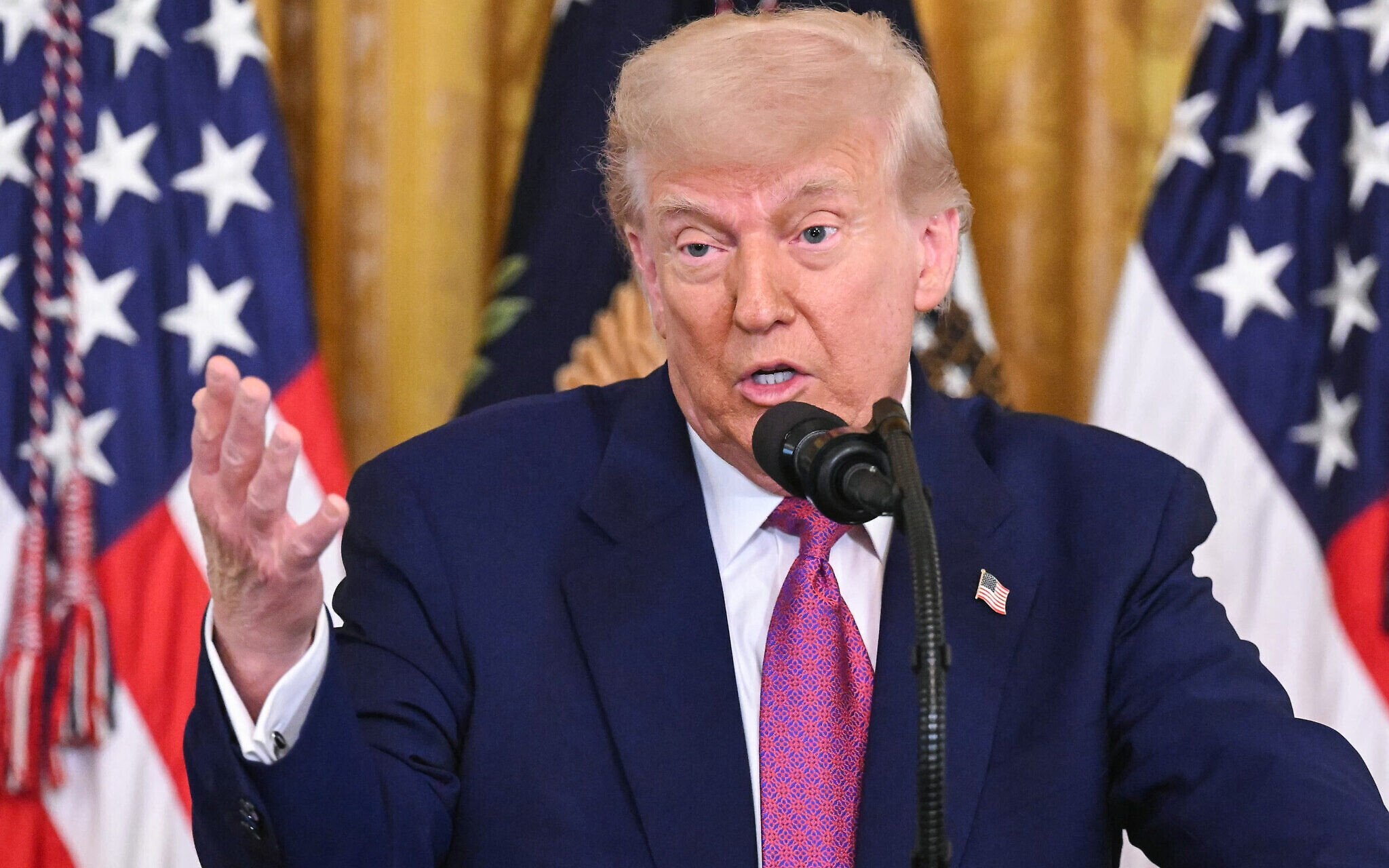
US President Donald Trump has announced the immediate imposition of a 25 percent tariff on any country that maintains business ties with Iran, a move that could significantly disrupt global trade flows and intensify geopolitical tensions particularly with China.
In a blunt statement released Monday, Trump declared that any nation engaging commercially with the Islamic Republic of Iran would now face punitive tariffs on all trade conducted with the United States.
He described the decision as “final and conclusive,” offering no exemptions or transition period.
While the White House has provided no further clarification, the announcement raises sweeping questions about scope and enforcement.

Trump did not specify what constitutes “doing business” with Iran, leaving uncertainty over whether the tariffs would apply strictly to goods or extend to services, energy transactions, and indirect trade routed through third countries.
China in the Crosshairs
The most immediate and far-reaching impact is expected to fall on China, Iran’s largest trading partner and one of the United States’ biggest commercial rivals.
If enforced as stated, the new policy could push total US tariffs on Chinese goods to at least 45 percent, sharply increasing import costs and risking renewed instability in global markets.
Trade data indicates that China exported over six billion dollars’ worth of goods to Iran in the first eleven months of 2025, while importing nearly three billion dollars in return.
These figures exclude oil, which China does not publicly disclose but which analysts say accounts for the overwhelming majority of Iran’s crude exports.
Beyond China, countries such as India, the United Arab Emirates, and Turkey each with significant commercial ties to Iran could also find themselves caught in Washington’s expanding tariff net.
Trump’s tariff declaration comes amid escalating rhetoric over Iran’s internal unrest, where anti-government protests have reportedly turned deadly.
The president has recently floated the idea of US intervention, framing economic pressure as part of a broader strategy to confront Tehran.
This approach mirrors earlier actions taken against India over its purchase of Russian oil, which prompted Washington to double tariffs on Indian goods.
Similar threats were previously directed at China and other major energy buyers, underscoring Trump’s willingness to weaponize trade policy to enforce geopolitical alignment.
Trump’s reliance on emergency economic powers to impose tariffs has not gone unchallenged.
His use of the International Emergency Economic Powers Act is currently under scrutiny at the US Supreme Court, with a ruling expected soon.
A decision against the administration could severely curtail presidential authority over trade and potentially force the government to refund tens of billions of dollars in tariff revenues.
For now, markets, governments, and multinational businesses are left grappling with a policy announcement heavy on force but light on detail.
If implemented broadly, the tariff threat could trigger retaliatory measures, disrupt supply chains, and reopen the wounds of past trade wars this time with Iran squarely at the center of a global economic standoff.




