


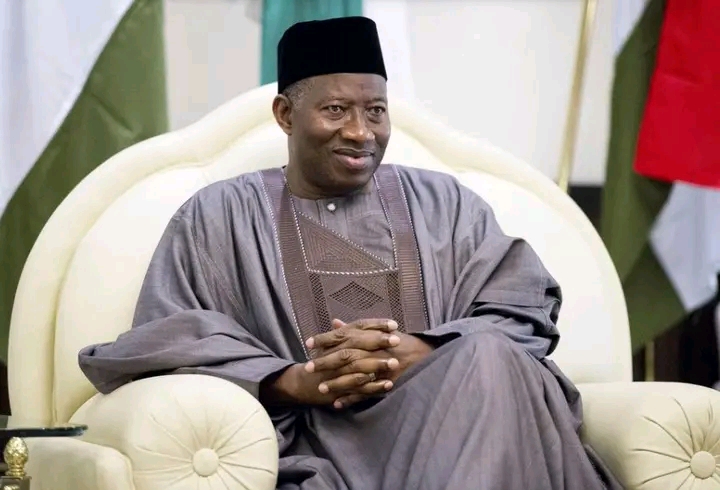
Former President Goodluck Jonathan has declared that he will engage in wide consultations before taking any decision on a possible return to the presidency in the 2027 general elections, as political speculation over his future continues to intensify across Nigeria’s political landscape.
Jonathan made the position known amid growing pressure from political groups, supporters, and interest blocs urging him to consider a comeback bid. The former president, who led Nigeria from 2010 to 2015, said any decision on the matter would not be taken unilaterally but would follow extensive discussions with key political stakeholders across the country.
His comments have immediately sparked renewed political debate, with analysts and party insiders suggesting that his name remains one of the most prominent potential contenders in emerging conversations about the 2027 presidential race.

Jonathan emphasized that no final decision has been made, stressing that consultations remain central to his political approach at this stage. According to him, any move regarding the presidency would depend on careful engagement with a wide range of stakeholders, reflecting both national interest and political realities on the ground.
The former president’s statement comes at a time when discussions around possible coalition arrangements and consensus candidates are gaining momentum within opposition circles. Several political actors are reportedly exploring options that could produce a strong challenger capable of reshaping the 2027 electoral contest, with Jonathan frequently mentioned in such discussions.
Supporters of a possible return argue that his experience as a former head of state, combined with his record of overseeing a peaceful transition of power in 2015, positions him as a stabilizing figure in Nigeria’s increasingly competitive political environment. His concession after the 2015 presidential election remains one of the most referenced moments in the country’s democratic history.
That moment is often cited by political observers as a defining example of democratic maturity, with Jonathan widely commended both locally and internationally for prioritizing national stability over personal political ambition at the time.
Despite this growing wave of encouragement, Jonathan has remained cautious, avoiding any formal declaration of intent. His consistent reference to consultations suggests that he is still evaluating both political conditions and broader national considerations before reaching a conclusion.
Political analysts say the renewed attention on Jonathan reflects deeper uncertainty within Nigeria’s opposition landscape, where parties are still struggling to build cohesion ahead of the next general elections. In this context, his name has resurfaced as a potential consensus candidate capable of bridging regional and political divides.
At the same time, discussions around his possible return have also triggered legal and constitutional debates regarding eligibility and the interpretation of presidential tenure limits. While no official challenge has been made, the issue continues to generate commentary within political and legal circles.
Reactions across the political spectrum remain mixed. Some stakeholders believe Jonathan’s return could bring experience and stability to a politically tense environment, while others argue that Nigeria’s current realities require a new generation of leadership rather than a return to former office holders.
Within political parties, especially among opposition groups, his name continues to feature prominently in early strategic discussions ahead of 2027. However, no formal alignment or endorsement has been announced at this stage.
For now, Jonathan’s position keeps the political space open, with uncertainty surrounding whether he will eventually join the race or maintain his current statesman role. His emphasis on consultation signals that any decision will likely be deliberate, strategic, and shaped by broad political engagement.
As preparations for the 2027 elections gradually take shape, attention is expected to remain focused on his consultations and public statements, which could significantly influence emerging political alignments and reshape early electoral calculations across the country.


