ABUJA, NIGERIA — The Independent Corrupt Practices and Other Related Offences Commission has revealed that porous institutional controls and systemic vulnerabilities enabled a private individual, Adeniyi Adeyemi, to establish a “fake agency” and successfully manipulate government processes for years before detection.
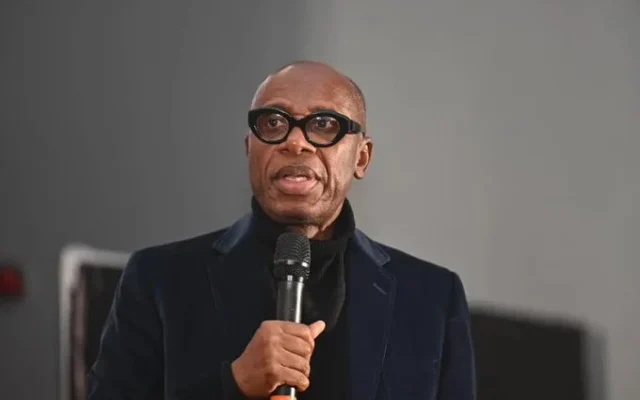
ICPC Chairman Dr. Musa Adamu Aliyu made the startling disclosure during a press conference at the commission’s headquarters on Thursday, detailing how Adeyemi exploited bureaucratic loopholes to create an entirely fictitious government body, complete with official-looking letterheads, purported mandates, and even staff appointments. The fraudster allegedly used the phantom agency to solicit funds, award fake contracts, and impersonate government officials in dealings with unsuspecting partners and international organizations.
“This is not simply a case of one clever criminal,” Aliyu stated emphatically. “This is a case of systemic failure. The question we must ask ourselves is not just how Adeyemi did it, but why our systems allowed him to do it so easily and for so long. The answers are uncomfortable, but they are necessary.”
Investigators revealed that Adeyemi exploited disjointed record-keeping across ministries, weak verification protocols, and the absence of a centralized database for tracking government agencies and their mandates. Without a single source of truth, the fake agency was able to register with multiple government departments, each operating in silos and failing to cross-reference his claims.
The ICPC chairman outlined several critical lapses that facilitated the fraud. First, there is no comprehensive, publicly accessible registry of all government parastatals, making it virtually impossible to verify the legitimacy of any agency. Second, internal procurement and due diligence processes are often rushed, with officials failing to validate the credentials of entities they engage with. Third, inter-agency communication remains woefully inadequate, allowing fraudsters to exploit gaps between ministries.
“The government operates like a collection of disconnected islands,” Aliyu observed. “Until we build bridges between these islands, criminals will continue to navigate the waters between them with impunity.”
Adeyemi, who is now in custody and facing multiple charges, reportedly collected millions of naira through his elaborate scheme, defrauding both private businesses seeking government contracts and international development partners eager to collaborate with official agencies. The ICPC has recovered significant assets, including properties and vehicles, but officials concede that much of the stolen funds may have already been laundered through multiple accounts and shell companies.
The case has sent shockwaves through Nigeria’s civil service, with many questioning how such a fundamental breach could have gone undetected for years. Some lawmakers have called for a complete overhaul of government registration and verification systems, while others demand accountability for the officials whose negligence allowed the fake agency to operate.
Dr. Aliyu emphasized that the ICPC’s investigation is ongoing and will likely lead to additional arrests, including potential complicity from within government ranks. “We are examining whether Adeyemi had collaborators on the inside,” he revealed. “It strains credibility to believe that he accomplished all of this entirely alone. Someone, somewhere, must have looked the other way.”
The commission has recommended several reforms, including the creation of a centralized digital registry of all government entities, mandatory cross-verification protocols for all procurement processes, and enhanced training for civil servants on fraud detection. The ICPC is also pushing for legislation that would impose stricter penalties on officials found negligent in verifying the legitimacy of entities they engage with.
Anti-corruption advocates have welcomed the commission’s transparency but caution that revelations must translate into actionable reforms. “We have seen countless investigations and recommendations that gather dust on shelves,” said Adebayo Okeowo, executive director of the Civic Accountability Initiative. “The real test is whether the government has the political will to implement these changes before the next Adeyemi emerges.”
For now, the Adeyemi case stands as a sobering reminder of the fragility of Nigeria’s institutional frameworks. While the arrest represents a victory for law enforcement, the broader battle against systemic corruption is far from won. Until the government addresses the foundational weaknesses that enabled this fraud, officials warn, the next fake agency is likely already in the making.