


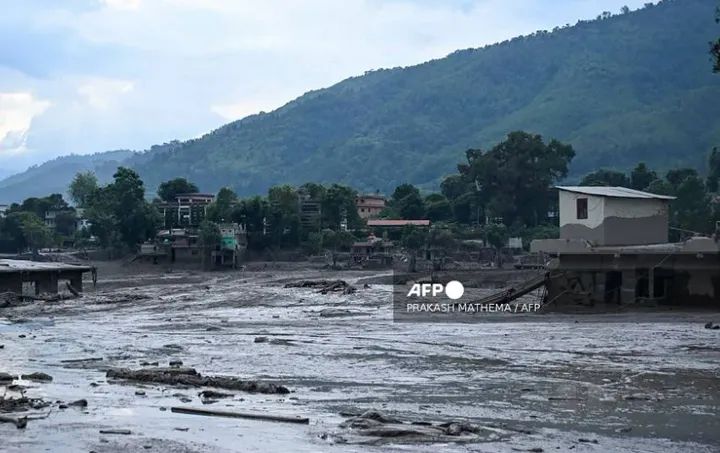
KATHMANDU, NEPAL — Nepal’s reconstruction bill following catastrophic glacial floods that killed more than 1,400 people is estimated at $4.78 billion, the country’s foreign ministry has disclosed, as the Himalayan nation grapples with the staggering cost of rebuilding communities devastated by one of its worst natural disasters in recent history.
The floods, triggered by a glacial lake outburst in the Everest region in early August, swept away entire villages, destroyed roads, bridges, hydropower facilities, and agricultural land across several districts. The death toll, which stands at over 1,400, is expected to rise as rescue teams reach remote areas cut off by landslides and washed-out infrastructure.
Speaking at a briefing in Kathmandu on Thursday, Foreign Ministry spokesperson Krishna Prasad Dhakal said the government had completed a preliminary damage assessment and was now seeking international assistance to fund the massive reconstruction effort. He noted that the $4.78 billion estimate covers the rebuilding of homes, schools, health facilities, roads, bridges, and hydropower infrastructure, as well as the restoration of livelihoods for affected communities.
“The scale of the destruction is unprecedented. We have lost lives, homes, and critical infrastructure. The reconstruction effort will require significant resources, and we are appealing to the international community for support,” Dhakal stated.

The floods have also raised concerns about the impact of climate change on Nepal’s fragile mountain ecosystems. Scientists have warned that rising global temperatures are accelerating glacial melt in the Himalayas, increasing the risk of glacial lake outburst floods. The recent disaster has been described as a stark reminder of the urgent need for climate adaptation and disaster preparedness in the region.
Nepal’s government has declared a national emergency and established a reconstruction authority to coordinate the rebuilding effort. The government has also appealed to international donors, including the World Bank, the Asian Development Bank, and bilateral partners, for emergency assistance. Several countries have already pledged humanitarian aid, including food, shelter, and medical supplies.
The economic impact of the floods is expected to be severe. Nepal’s economy, which relies heavily on agriculture, tourism, and hydropower, has been badly hit. The destruction of hydropower facilities has reduced electricity generation, while the damage to trekking routes in the Everest region has disrupted the tourism industry, a key source of foreign exchange.
Prime Minister KP Sharma Oli has pledged that his government will rebuild affected communities “better and stronger,” with a focus on disaster-resilient infrastructure. He has also called for greater international cooperation on climate change, urging developed nations to honour their commitments to climate finance.
The reconstruction effort is expected to take several years and will require sustained international support. For now, the government is focused on providing immediate relief to survivors and restoring critical infrastructure before the onset of winter, which will make reconstruction efforts even more challenging in the high-altitude regions. The $4.78 billion bill is a sobering reminder of the human and economic cost of climate change, and the urgent need for global action to mitigate its impact.




