


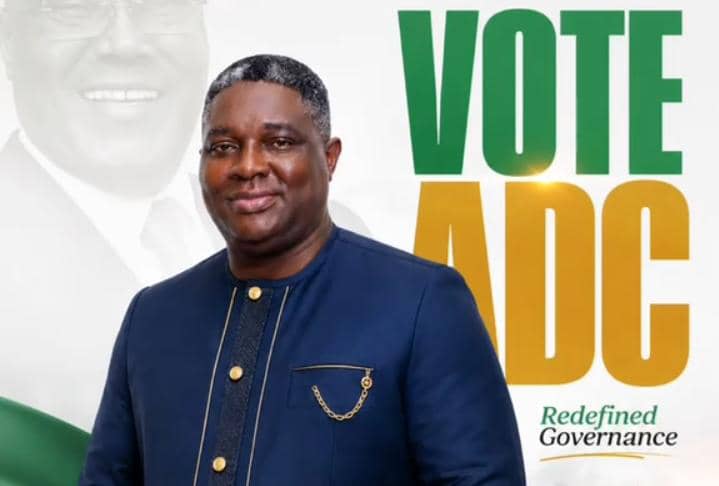
ENUGU, NIGERIA — The Obodoeze Media Project has issued a detailed rejoinder to remarks attributed to Dr. Ben Nwoye at the Enugu ICC Centre, in which he allegedly suggested that Nsukka cannot have another opportunity to produce the governor of Enugu State after four years of Governor Peter Mbah’s administration, responding not with anger but with history.
The project traced the political evolution of Enugu State, noting that before the creation of Ebonyi State in 1996, the political landscape that later became today’s Enugu State involved three major blocs commonly identified as Abakaliki, Enugu and Nsukka. With the carving out of Abakaliki, the remaining political relationship fundamentally changed, leaving Nsukka and Enugu as the two dominant blocs.
One of the issues repeatedly raised by Nsukka political commentators, the project noted, is the relative population and voting strength of the two remaining major blocs. The commonly cited argument is that Nsukka accounts for approximately 56 per cent, while the Enugu axis accounts for approximately 44 per cent. If those figures are accepted, the project asked why a bloc representing about 44 per cent should be divided into two senatorial districts, while a bloc representing about 56 per cent remains represented by one.
The project then examined the governorship record since the return to democratic rule in 1999. Senator Chimaroke Nnamani governed from 1999 to 2007, representing the Enugu zone with eight years in office. Barrister Sullivan Chime governed from 2007 to 2015, also representing the Enugu zone with eight years. Together, these two administrations gave the Enugu axis 16 consecutive years of governorship.

Rt. Hon. Ifeanyi Ugwuanyi governed from 2015 to 2023, becoming the first governor from the Nsukka zone in the Fourth Republic, with eight years in office. Therefore, between 1999 and 2023, the Enugu axis occupied the governorship for 16 years, while Nsukka occupied it for only eight years. With Governor Peter Mbah representing the Enugu zone from 2023 to 2027, the Enugu axis will have occupied the governorship for a total of 20 years since 1999, while Nsukka has had only eight years through Ugwuanyi.
The project questioned on what principle of fairness Nsukka should be denied another opportunity. “If Nsukka has governed for only eight years since 1999, why should another opportunity be considered unacceptable?” the statement asked. It also clarified that the debate is not about whether the three senatorial districts legally exist, but whether political zoning should be treated as an absolute principle that permanently limits one historical bloc while allowing another bloc to benefit from its representation through two senatorial districts.
The project emphasised that the argument was not against Nkanu or Enugu people, nor a call for division or a denial of anybody’s constitutional right to contest an election. It described the issue as a question of political equity. It noted that Nsukka people have every right to examine their political history and ask whether they have received a fair share of political power and development, why their zone remains one senatorial district while the Enugu axis has two, and whether the existing political arrangement has served all parts of the state equally.
The statement also raised the development question, noting that across Nsukka’s six local government areas of Nsukka, Udenu, Uzo-Uwani, Igbo-Etiti, Igbo-Eze North and Igbo-Eze South, residents continue to discuss roads, rural infrastructure, agriculture, employment, education, healthcare and economic opportunities. It specifically mentioned the destruction of Ogige Market, which affected traders and families whose livelihoods depended on the market, describing it as one of the most painful issues raised in recent years.
The project called for an honest conversation, urging that if the political arrangement is fair, it should be explained; if zoning is the best approach, the principle should be articulated; and if eight years of governorship is considered sufficient for Nsukka, the reason should be stated. It also urged that if the frequently cited 56 per cent Nsukka versus 44 per cent Enugu figure is inaccurate, then the relevant demographic and electoral data should be produced for public examination.
The project concluded by reiterating that the governorship of Enugu State does not belong permanently to any zone, but to the people of Enugu State, and that every qualified Onye Enugu has the right to aspire. It called on voters to support the ADC governorship candidate, Ocho Obodoeze Chukwuma, for justice and equity, describing the question before the people as simple: if one bloc represents approximately 56 per cent while another represents approximately 44 per cent, why is the 44 per cent bloc divided into two senatorial districts while the 56 per cent bloc remains one?




