


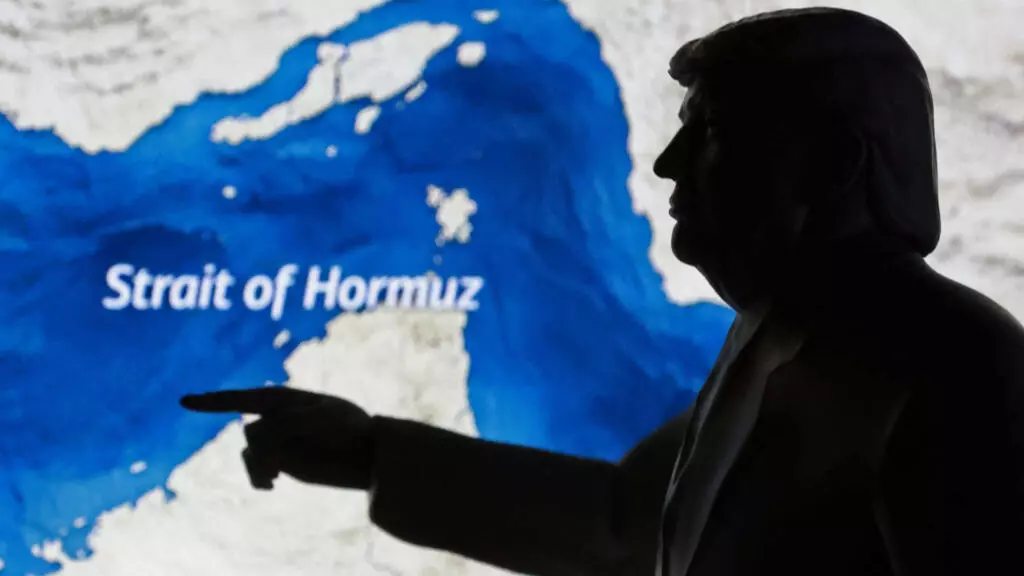
Talks between Iran and Gulf countries on reopening the Strait of Hormuz to regular tanker traffic have been postponed indefinitely, Oman’s Foreign Minister, Badr Albusaidi, has said.
The meeting was scheduled to take place in Salalah on Monday under an Omani proposal for a framework to restore commercial shipping through the strategic waterway.
Albusaidi announced the postponement on Sunday, saying the decision was taken in the interest of consensus.
He said Oman remained committed to dialogue aimed at promoting stability and cooperation in the region.

The talks were expected to bring together Iranian and Gulf officials without representatives of the United States, which has been escorting oil tankers through the strait with military vessels.
Regional diplomats had hoped the meeting would help advance discussions on a legal framework for reopening the waterway after months of disruption.
The proposed Omani framework reportedly includes voluntary payments for navigational safety and environmental protection, although the possibility of Iran imposing mandatory tolls on tanker traffic remains a major concern for Gulf countries.
Saudi Arabia had submitted amendments to the proposal over concerns that some of its provisions could establish a new status quo that would not be acceptable to Riyadh and other Gulf Cooperation Council members.
A regional source said there was no expectation of an immediate breakthrough but described resolving the Strait of Hormuz issue as an urgent priority.
One of the objectives of the meeting was reportedly to agree on routes for vessels passing through the strait.
However, US officials have maintained that any future negotiations with Iran should focus on Tehran’s nuclear programme rather than reopening the waterway.
A US official said Washington was closely communicating with its regional partners but insisted that Iran did not control the Strait of Hormuz.
“Iran does not control the Strait of Hormuz and never will,” the official said.
Iran has reportedly indicated to regional countries that it would be willing to discuss its nuclear programme with the US once the Strait of Hormuz issue, including the US blockade, is resolved.
The strait is one of the world’s most important energy routes, and its disruption has contributed to rising global energy prices.
The US has increased military escorts for commercial vessels in recent weeks, allowing more tankers to pass through the waterway. However, Iranian attacks on some commercial ships have continued.
The scale of the US military operation has also raised questions about how long Washington can maintain the resources needed to escort large numbers of vessels.
US Navy forces have escorted as many as 40 commercial vessels in a single day, according to US officials.
Despite efforts to develop alternative routes for energy exports, Gulf and European diplomats say a long-term solution for the Strait of Hormuz remains necessary, particularly as Houthi attacks have also threatened shipping through the Red Sea.




