


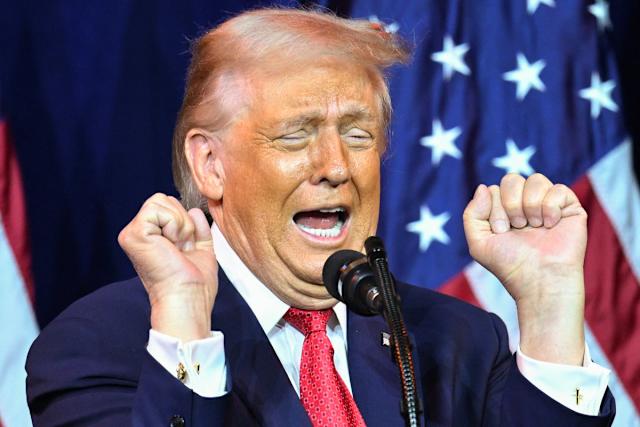
US President Donald Trump has signed a new sanctions law targeting Russia, giving his administration the authority to impose tariffs of up to 100 per cent on countries that buy Russian crude oil or natural gas.
The White House confirmed the signing on Friday, September 18, after the legislation was passed by both chambers of Congress.
The law, named the Lindsey O. Graham Sanctioning Russia and Iran Act of 2026, targets Russia’s energy and defence sectors, senior officials, financial institutions and vessels accused of helping Moscow evade Western sanctions.
Under the law, Trump can impose tariffs of up to 100 per cent on goods from countries that knowingly purchase Russian crude oil or natural gas.

The measure also allows tariffs of up to 100 per cent on countries among the five largest importers of Russian energy products or the five biggest facilitators of sanctions evasion.
The list of affected countries can be reviewed every 180 days.
The legislation further gives Trump the power to impose tariffs of up to 500 per cent on Russian goods.
India, China among potential targets
The new powers could affect major buyers of Russian oil, including India and China.
Data cited by S&P Global showed that India imported about 1.6 million barrels per day of Russian crude in August, while China imported about 1.1 million barrels per day.
Italy, Turkey and the Netherlands were also among the major importers during the period.
The law could therefore affect countries that maintain significant energy trade with Russia, particularly if they export goods to the US.
However, the measure does not automatically impose the maximum tariffs on every country covered by the provisions.
Trump can waive or suspend the measures if he determines that doing so is in the US national interest.
The sanctions package is intended to reduce Russia’s revenue from energy exports and further restrict its access to international finance.
It also expands sanctions against Russian officials, oligarchs, financial institutions, defence companies and vessels linked to the so-called shadow fleet.
The Kremlin has criticised the sanctions legislation, warning that further US restrictions could make efforts to end the war in Ukraine more difficult.
Kremlin spokesman Dmitry Peskov described the move as an “unfriendly” action and said additional sanctions could complicate diplomatic efforts to reach a peaceful settlement.
Russia has consistently opposed the Western sanctions imposed since its invasion of Ukraine.
The US and its allies have used restrictions on Russian energy exports and financial institutions as part of efforts to reduce Moscow’s ability to fund its war.
The signing comes ahead of the 81st United Nations General Assembly in New York, where Ukrainian President Volodymyr Zelenskyy is expected to seek a meeting with Trump.
Discussions are expected to focus on the war in Ukraine, energy security and possible efforts towards a ceasefire.
Zelenskyy has previously supported the sanctions legislation as part of efforts to increase economic pressure on Moscow.
Iran sanctions extended
The legislation also extends the Iran Sanctions Act of 1996 until 2031.
The extension preserves US authority to impose secondary sanctions on non-US companies involved in certain business activities with Iran.
The combined Russia-Iran legislation gives the Trump administration wider powers to use economic sanctions against the two countries.




