


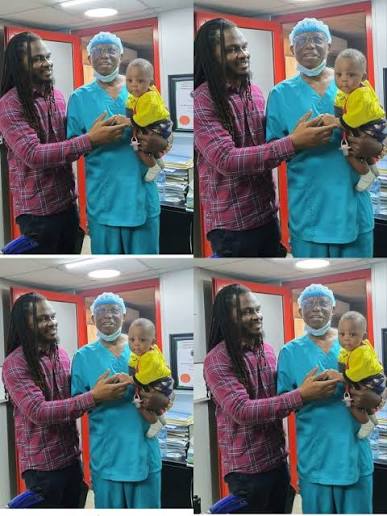
A Nigerian family has welcomed a baby boy conceived using sperm preserved by his late father before he began cancer treatment.
The emotional story was shared online by the child’s uncle, a Nigerian man known as Mufasa on X, who revealed that his late elder brother had preserved his sperm before undergoing chemotherapy.
According to Mufasa, his brother was diagnosed with lung cancer in 2025 and decided to bank his sperm before starting treatment, as cancer therapies such as chemotherapy can affect male fertility.
His brother later died from the illness in February 2025.

Mufasa said the family had begun discussing an in-vitro fertilisation procedure while his brother was still alive, with plans eventually continuing after his death.
Using the sperm that had been preserved before treatment, the family proceeded with IVF and welcomed a baby boy about six months ago.
The child was named Chinonso Francis Jidenna Ezeokoye II.
Sharing the experience online, Mufasa described the birth as a remarkable example of what modern medicine can make possible.
“Science is amazing!” he wrote.
He also revealed that the baby bears a striking resemblance to his late brother when he was the same age.
Beyond the biological connection, Mufasa said he intends to take an active role in raising the child and considers himself the boy’s father.
“For his lifetime, I’m his daddy,” he said.
The family also expressed appreciation to Trucare Fertility Clinic for assisting with the IVF process.
The story has drawn attention to fertility preservation, particularly for people preparing to undergo cancer treatment.
Sperm banking involves collecting, testing, freezing and storing sperm for possible future use. Medical organisations recommend that men who are likely to undergo treatments that could affect fertility discuss preservation options with their doctors before treatment begins.
Chemotherapy and some other cancer treatments can damage the cells responsible for sperm production, with the effects potentially being temporary or permanent depending on several factors.
For the family, a decision made before cancer treatment ultimately provided an opportunity to welcome a child biologically connected to a man they had lost.
The birth has also given Mufasa a new role within the family as he prepares to raise his late brother’s son and preserve his memory through the child’s life.
A Nigerian family has welcomed a baby boy conceived using sperm preserved by his late father before he began cancer treatment.
The emotional story was shared online by the child’s uncle, a Nigerian man known as Mufasa on X, who revealed that his late elder brother had preserved his sperm before undergoing chemotherapy.
According to Mufasa, his brother was diagnosed with lung cancer in 2025 and decided to bank his sperm before starting treatment, as cancer therapies such as chemotherapy can affect male fertility.
His brother later died from the illness in February 2025.
Mufasa said the family had begun discussing an in-vitro fertilisation procedure while his brother was still alive, with plans eventually continuing after his death.
Using the sperm that had been preserved before treatment, the family proceeded with IVF and welcomed a baby boy about six months ago.
The child was named Chinonso Francis Jidenna Ezeokoye II.
Sharing the experience online, Mufasa described the birth as a remarkable example of what modern medicine can make possible.
“Science is amazing!” he wrote.
He also revealed that the baby bears a striking resemblance to his late brother when he was the same age.
Beyond the biological connection, Mufasa said he intends to take an active role in raising the child and considers himself the boy’s father.
“For his lifetime, I’m his daddy,” he said.
The family also expressed appreciation to Trucare Fertility Clinic for assisting with the IVF process.
The story has drawn attention to fertility preservation, particularly for people preparing to undergo cancer treatment.
Sperm banking involves collecting, testing, freezing and storing sperm for possible future use. Medical organisations recommend that men who are likely to undergo treatments that could affect fertility discuss preservation options with their doctors before treatment begins.
Chemotherapy and some other cancer treatments can damage the cells responsible for sperm production, with the effects potentially being temporary or permanent depending on several factors.
For the family, a decision made before cancer treatment ultimately provided an opportunity to welcome a child biologically connected to a man they had lost.
The birth has also given Mufasa a new role within the family as he prepares to raise his late brother’s son and preserve his memory through the child’s life.




