


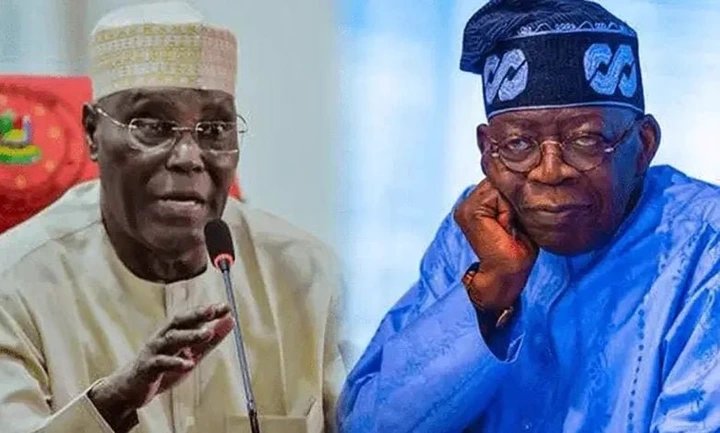
ABUJA, NIGERIA — The camp of former Vice President Atiku Abubakar has defended his decision to repeatedly address President Bola Ahmed Tinubu as “Bola”, saying no Nigerian law requires citizens to use the President’s official title whenever referring to him.
The response followed criticism from Minister of Aviation and Aerospace Development, Festus Keyamo, who described Atiku’s repeated use of Tinubu’s first name as disrespectful and discourteous. The controversy has continued alongside a broader political disagreement over the Tinubu administration’s economic record and Atiku’s policy proposals ahead of the 2027 general election.
Camp Cites Constitutional Provisions
In defending Atiku, his media team argued that calling the President by his first name does not constitute a criminal offence.
The statement referenced Section 36(12) of the Nigerian Constitution, which establishes that a person cannot be convicted of an offence unless the offence and its penalty are prescribed in a written law.

The camp therefore challenged critics to identify any law requiring Nigerians to prefix Tinubu’s name with “President”, “His Excellency” or “Mr President” whenever addressing him.
The statement also cited Section 39 of the Constitution, which protects freedom of expression.
Keyamo Criticises Atiku
The controversy intensified after Keyamo criticised Atiku’s manner of addressing the President during his recent public statements.
Keyamo argued that political disagreements should not diminish the dignity attached to the office of the President.
He described the repeated reference to Tinubu simply as “Bola” as disrespectful and discourteous, while maintaining that the presidential office should receive appropriate recognition regardless of political differences.
Atiku’s camp, however, maintained that people could disagree with the former Vice President’s style without portraying the choice of words as a criminal offence.
Camp Says Debate Should Focus On Issues
Atiku’s supporters also argued that the dispute over the President’s first name should not distract from the substantive issues raised in his Independence Day address.
In the October 1 message, Atiku criticised the Federal Government over the cost of living, fuel prices, food prices, insecurity and public debt.
He also outlined proposals that he said would address some of the economic pressures facing Nigerians.
Atiku Proposes Fuel Policy
The former Vice President proposed a capped and budgeted production subsidy tied to verified petroleum products refined in Nigeria.
Under the proposal, he said imported petrol would not qualify for the subsidy and that payments and costs would be made public and independently audited.
Atiku also criticised the removal of the petrol subsidy, arguing that the policy had increased pressure on households without sufficient protection for vulnerable Nigerians.
He compared minimum-wage purchasing power before and during the Tinubu administration, arguing that rising petrol prices had significantly reduced the amount of fuel workers could purchase with their wages.
Debt Transparency Also Raised
Atiku also raised concerns about Nigeria’s public debt.
He put the country’s debt stock at ₦166.79 trillion as of the end of June and said any administration he leads would require greater transparency before taking on additional borrowing.
He said Nigerians should be able to know the projects being financed with borrowed funds, their costs, beneficiaries and payment details.
The former Vice President also challenged the Federal Government to publish details of its promised reduction in transport fares.
Atiku Outlines 2027 Priorities
Beyond economic policy, Atiku said a government led by him would prioritise the cost of food, fuel and electricity from its first day in office.
He also mentioned healthcare, education and security as areas requiring attention.
On electoral reform, he pledged to respect the independence of the Independent National Electoral Commission and support prompt publication of results from polling units.
He further called for sanctions against anyone found guilty of vote buying or altering election results, regardless of political affiliation.
Political Dispute Continues
The disagreement over Atiku’s use of Tinubu’s first name forms part of a wider political confrontation between the former Vice President and the administration ahead of the 2027 election.
Atiku’s camp had previously argued that the presidency should remain open to scrutiny and that political criticism should focus on government policies and their effects on Nigerians.
The latest response keeps the focus on the distinction between the President’s personal name and the constitutional office he occupies, while the wider political debate continues to centre on economic policy, governance and competing proposals for Nigeria’s future.




