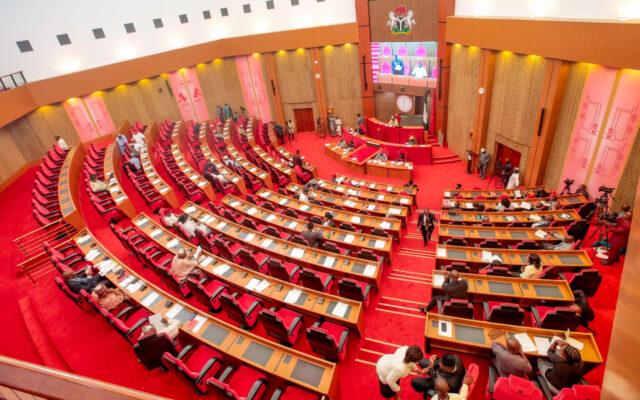
The Enugu State House of Assembly has passed a bill seeking to limit rent increases to two per cent every four years, a move that could change how landlords review rents and how tenants manage accommodation costs if signed into law.
The proposed amendment to the state’s Landlord and Tenant Law is aimed at addressing complaints over rising rents, arbitrary increases, excessive agency commissions and legal fees.
Although the bill has passed its third reading, it is not yet law. It requires the assent of Governor Peter Mbah before the proposed provisions can take effect.
Here are five key provisions and their possible implications for landlords and tenants in Enugu State.
1. Landlords may be restricted from increasing rent annually
Under the proposed amendment, landlords would be required to wait at least four years before increasing rent. Any permitted increase would be capped at two per cent of the existing rent.
For instance, a tenant paying ₦500,000 annually would face an increase of ₦10,000 after the permitted review period, bringing the rent to ₦510,000.
Similarly, a tenant paying ₦1m annually would have a maximum increase of ₦20,000, bringing the new rent to ₦1.02m.
The provision is intended to give tenants greater certainty over their accommodation costs and prevent frequent rent increases.
However, its practical effect would depend on the final wording of the law, particularly how the four-year period and rent calculation are defined.
2. Renovated properties could attract up to 10% rent increase
The proposed law makes provision for landlords who carry out reasonable renovations on their properties.
In such cases, landlords would be allowed to increase rent by up to 10 per cent.
For example, a property with an annual rent of ₦500,000 could attract an additional ₦50,000, bringing the new rent to ₦550,000.
The provision could allow property owners to recover part of the cost of improving their buildings while keeping increases within a specified limit.
However, the definition of reasonable renovations, the evidence required and the conditions for applying the 10 per cent increase would determine how the provision is implemented.
3. Agency commissions and legal fees could be regulated
The proposed amendment also seeks to address complaints about high agency commissions and legal fees paid by prospective tenants when securing accommodation.
House Committee Chairman, Okey Mbah, said the legislation was designed to protect residents from exploitation by landlords and estate agents.
He said the bill would reduce by more than 60 per cent the amount residents previously paid when trying to secure accommodation.
A previous version of the amendment bill reportedly contained provisions requiring estate agents to obtain permits from the Enugu State Housing Development Corporation.
It also proposed limiting agency fees to 10 per cent of the rent paid by prospective tenants and legal fees for preparing tenancy agreements to 10 per cent.
However, the final version passed by the Assembly needs to be examined to establish whether these provisions were retained.
4. Tenants could receive stronger protection against improper eviction
The proposed reform also addresses procedures landlords must follow when seeking to recover their properties from tenants.
According to a report by THISDAY, Okey Mbah said landlords would be required to properly serve tenants before initiating court proceedings.
He stressed that tenants must receive proper notice before being taken to court.
If retained in the final legislation, the provision could strengthen procedural safeguards for tenants involved in eviction disputes.
However, it would not give tenants the right to occupy properties indefinitely without paying rent or complying with their tenancy agreements.
5. Landlords have raised concerns over enforcement and sustainability
While the proposed rent cap could provide tenants with greater predictability, some property owners have questioned whether the restriction is realistic in an economy where the costs of building maintenance, construction materials, electricity and other services continue to fluctuate.
A landlord in Enugu, Onyekwere Johnson, described the proposed two per cent cap as unrealistic and difficult to enforce.
He argued that regulating rent increases without applying similar restrictions to other rising costs could make the law unsustainable and unfair to property owners.
The concerns raise questions about how the government would enforce the restrictions, verify qualifying renovations and resolve disputes between landlords and tenants.
There are also questions about whether landlords could seek alternative ways to adjust accommodation charges, making clear regulations and effective enforcement important.
When will the proposed rent cap take effect?
The Enugu State House of Assembly passed the Landlord and Tenant Amendment Bill on Tuesday, November 17, 2026, after it scaled its third reading.
The bill had passed its second reading on March 11 and subsequently underwent a public hearing on March 26.
It is now awaiting the assent of Governor Peter Mbah.
Until the governor signs the bill and it commences in accordance with its provisions, the proposed two per cent rent cap and other restrictions should not be treated as existing law.
If signed, the legislation could introduce significant changes to rent reviews, accommodation-related charges and tenancy disputes across Enugu State.