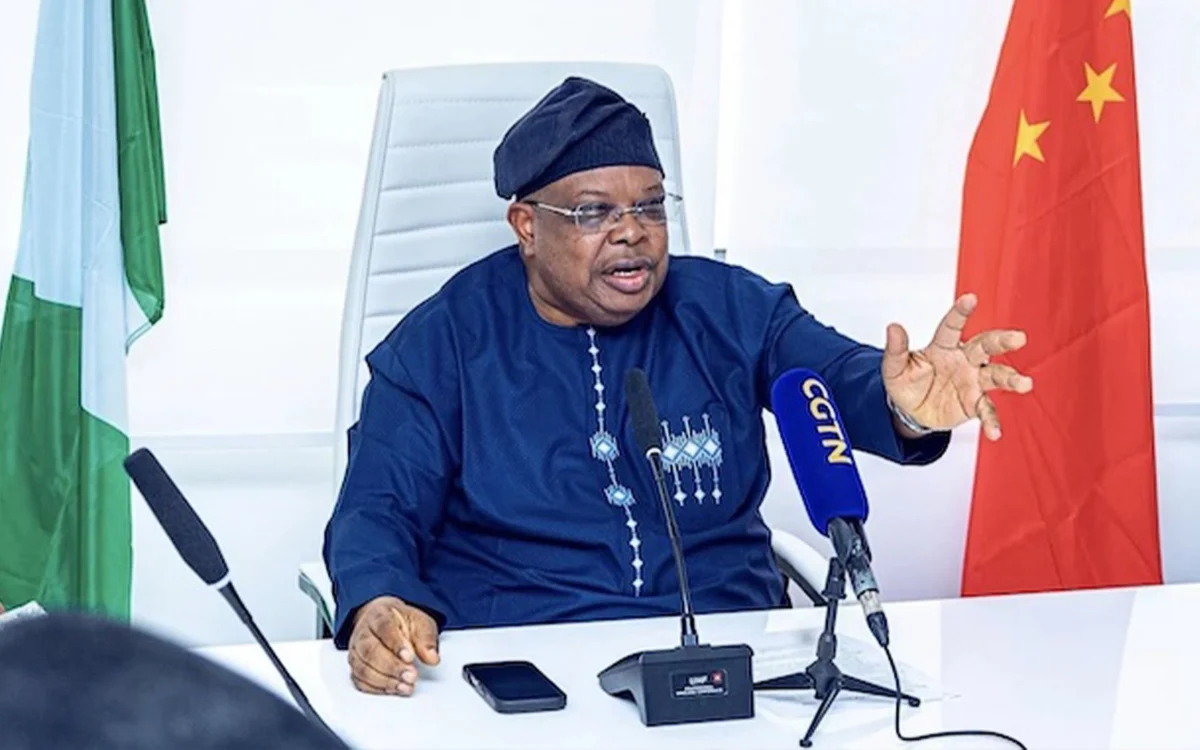
Nigerians may have to wait another three to five years before experiencing significant improvements in electricity supply, Minister of Power Joseph Tegbe has said, citing decades of infrastructure decay, poor investment decisions and financial challenges in the power sector.
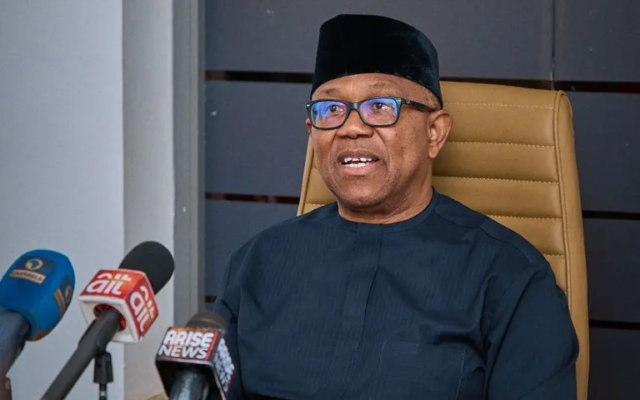
Tegbe disclosed this during an interview on Arise Television’s The Morning Show on Monday, acknowledging the difficulties Nigerians face due to unreliable electricity.
He said the government had discovered that the challenges confronting the sector were more extensive than initially estimated, with major deficiencies across generation, transmission and distribution.
According to the minister, substantial improvements are expected within the next three to five years, although he insisted that the government would be transparent about the time required to address the problems.
“The truth is that some of the reasons why we haven’t reached where we are is, at the end of the day, some of us who are in the sector have realised that the deficiencies in infrastructure are much more than what we estimated,” he said.
“In the next three to five years, we’ll see much improvement.”
Tegbe also ruled out an increase in electricity tariffs, saying the government’s immediate priority was to improve access to reliable power rather than impose additional financial burdens on consumers.
He said President Bola Tinubu had directed the ministry to explore available options, including reviewing policies, commercial arrangements and financial models, to improve electricity supply.
“There’s no plan to increase tariffs. I even have, to be honest with you, the most important thing for me is how do I get electricity to Nigerians?” he said.
Decades of infrastructure neglect
Explaining the sector’s challenges, Tegbe recalled that during his Senate screening, he had argued that technical issues accounted for only 20 per cent of the electricity crisis, while human and institutional factors made up the remaining 80 per cent.
He said his experience in office had reinforced that assessment, pointing to poor coordination among institutions, weak commercial arrangements, inadequate liquidity and governance failures.
The minister cited electricity infrastructure still bearing the logo of the defunct Electricity Corporation of Nigeria (ECN) as an indication of the scale of neglect.
“Some of these towers still bear the ECN logo. Those things have not been replaced,” he said.
He also criticised successive administrations for undertaking projects without adequately considering the supporting infrastructure needed to make them functional.
Tegbe gave the example of transformers installed in communities without the transmission lines required to supply them with electricity.
“Everybody wants a transformer in their village. Even where transformers are being installed, there are no transmission lines getting there,” he said.
He said the ministry was reviewing ongoing projects to identify those requiring urgent intervention and ensure public funds were directed towards investments capable of improving electricity supply.
He added that infrastructure planning should be guided by economic needs rather than political considerations.
FG renegotiates N6tn power debt to N3.3tn
The minister identified outstanding debts owed to power generation companies, particularly for gas supplied to electricity plants, as another major challenge facing the sector.
He said the Federal Government’s liabilities, initially estimated at N6 trillion, had been renegotiated to N3.3 trillion, with N1.23 trillion already paid.
According to him, the government expects to settle the outstanding balance by 2027.
Tegbe said the government was also considering offsetting some of the debts against royalties and corporate income taxes payable by the companies.
He added that discussions were ongoing with relevant institutions to explore ways of reducing the cost of gas supplied to power plants.
Defending the debt renegotiation, he said the government had to balance its obligations to the power sector with competing demands in education, healthcare and agriculture.
“I will not even support Mr President taking all the money we have only on one sector. We have challenges in education. We have challenges in health. We have challenges in agriculture,” he said.
Metering gaps worsen electricity crisis
Tegbe also blamed inadequate metering and poor revenue collection for the financial difficulties in the electricity market.
He explained that some consumers failed to pay for electricity supplied to them, while the continued reliance on estimated billing made it difficult for distribution companies to accurately collect revenue.
“The DisCos give power to Nigerians. Some of the Nigerians don’t pay,” he said.
The minister disclosed that about 2.8 million digital meters had been deployed, with the government targeting seven million installations within three years.
Although the government is reviewing the assumptions underpinning the electricity tariff framework, he reiterated that no increase was being considered.
Tegbe identified the Electricity Act 2023 as a major intervention aimed at decentralising the electricity market, noting that it allows state governments to participate more actively in electricity generation, transmission and distribution.
He also clarified that the Presidential Power Initiative, popularly known as the Siemens project, was designed primarily to strengthen transmission infrastructure rather than increase electricity generation.
According to him, substations are being constructed in about five locations under the project’s first phase.
“Siemens deal has nothing to do with generation. Siemens deal is about transmission and largely about substations and transmission lines,” he said.
He argued that increasing power generation without adequate transmission infrastructure would not resolve the country’s electricity challenges.
The minister also defended Tinubu’s commitment to improving electricity supply, recalling the President’s campaign promise to ensure Nigerians had access to reliable power and would no longer pay estimated bills.
Tegbe pledged to remain transparent about the challenges confronting the sector, saying Nigerians should judge him by his willingness to communicate the realities rather than make promises that cannot be fulfilled.