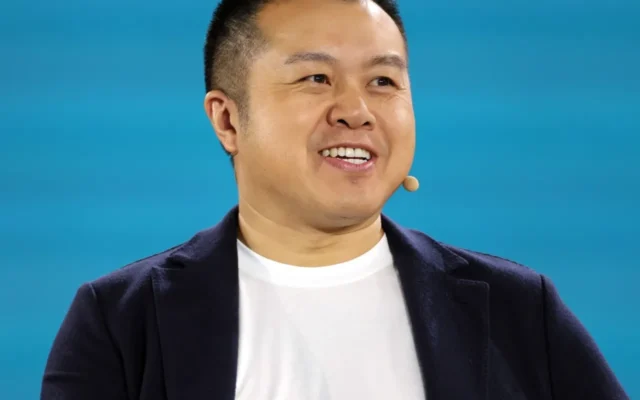
Alexandr Wang says his 2025 Neuralink remarks were deliberately provocative and later called their timing around his Meta appointment “really bad.”
Meta AI chief Alexandr Wang says he deliberately made provocative Neuralink remarks on a podcast. The clip resurfaced around his move to Meta, and he later regretted the timing. In a November 2026 interview, he described the coincidence as poorly timed. His latest comments explain the resurfacing but do not explicitly retract his earlier view.
## Wang says he meant to provoke on the podcast
Wang addressed the clip in an ETN interview posted on November 24, 2026. He said he entered the earlier podcast wanting to try provocative remarks. He recalled that its release coincided with news of his move to Meta.
Wang later described the earlier comments as inadvisable. “Really bad timing.” — Alexandr Wang, Meta’s chief AI officer. The explanation focused on the clip’s release, not on rejecting the brain-interface idea. He did not specify which parts of his earlier argument he still endorses.
The full ETN conversation was broader than this viral excerpt. Its listing says it covered Meta’s Muse launch in the U.K., Wang’s AI vision and brain-computer interfaces. The video’s chapters place the brain-interface discussion near the end. The listing presents a wide-ranging interview, not a dedicated briefing on Neuralink or Meta policy.
## The original Neuralink comments date to 2025
The remarks came from episode 208 of The Shawn Ryan Show, published on June 12, 2025. Wang was then Scale AI’s co-founder and CEO. Meta’s official biography says he joined Meta that June. The Times of India calls the episode “earlier this year,” but that date is wrong.
On the podcast, Wang said he wanted to wait to have children until Neuralink or similar brain-computer interfaces began working. He argued that young children’s brains are more neuroplastic and could adapt to such technology early in life. That was his personal prediction, not a medical recommendation or evidence Neuralink is available to children.
Wang illustrated neuroplasticity with a child whose vision may not develop normally after years of untreated cataracts. He argued that children could learn brain-computer interfaces during a similar early-life window. That analogy was his; it is not evidence that implants are safe or useful for children.
## Wang linked brain interfaces to future AI
Wang also framed the idea against what he saw as a growing gap between AI and human biology. He argued that AI systems could improve much faster than people evolve. He suggested that people might eventually need more direct links to AI.
He described brain-computer interfaces as potentially powerful but risky. In the original interview, he raised concerns about outsiders accessing thoughts or manipulating senses. He still argued that people might need links to AI as the technology improves.
## Meta’s hiring announcement shaped the clip’s timing
Wang recalled that the podcast clip appeared on the day Meta announced he would join. Meta confirms he joined the company in June 2025, though its leadership page gives no exact start date. The same-day timing is Wang’s recollection, not independently established by Meta’s profile.
Meta identifies Wang as its first Chief AI Officer and says he leads Meta Superintelligence Labs. His move gave the remarks a new corporate context beyond his earlier role at Scale AI. But the clip does not show him speaking for Meta about Neuralink or setting company policy.
## A timing clarification is not a full walk-back
The available clip shows Wang discussing his intent and the timing of his earlier remarks. It does not clearly retract his underlying speculation about children and brain-computer interfaces. Nor does it offer a technical reassessment of Neuralink’s safety or readiness.
The older statement was a personal family-planning comment tied to a possible future technology. The later interview segment provides no new timeline for Neuralink or Wang’s plans. It also does not establish that he was joking about every part of the earlier argument.
Ultimately, Wang’s explanation clarifies why the old clip drew attention around his Meta appointment. He says he intended to be provocative and regrets the timing. The underlying comments date to June 2025, not this year. Future interviews may clarify whether Wang still holds his view as thes
e brain-computer interfaces develop.