OSOGBO, NIGERIA – Presidential candidate of the Nigeria Democratic Congress (NDC), Peter Obi, has pledged to intensify the fight against corruption, expand access to healthcare and increase Nigeria’s electricity generation capacity to 10,000 megawatts if elected president in the January 16, 2027 election.
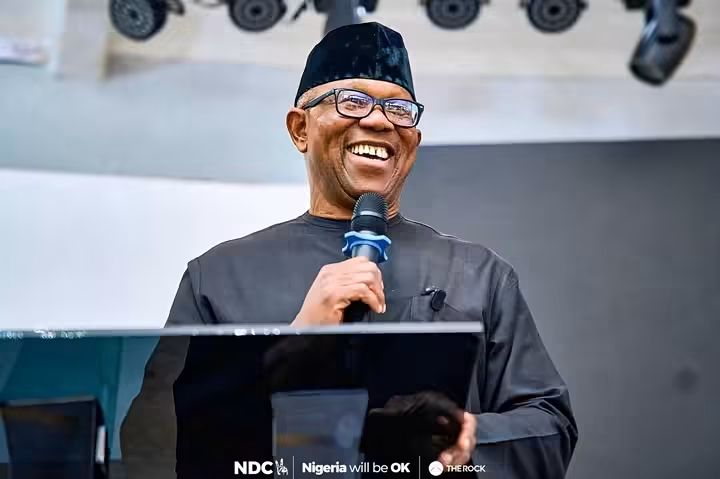
Obi made the commitments on Sunday, November 29, during a visit to Osun State, where he attended religious gatherings and held a town hall meeting with professional associations in Osogbo.
The former Anambra State governor identified corruption as one of the major obstacles to Nigeria’s development, arguing that public resources must be deployed to improve citizens’ welfare rather than diverted through corrupt practices.
He promised that an administration under his leadership would pursue a determined anti-corruption campaign and ensure that government spending produced tangible benefits for ordinary Nigerians.
“Corruption is one of the major problems disrupting the growth and development of our country. I am assuring you that my administration will fight corruption to a standstill so our people can enjoy a good life like those in developed countries,” Obi said.
The NDC candidate also outlined plans to strengthen Nigeria’s healthcare system by ensuring that every political ward across the country has a functional Primary Healthcare Centre.
According to him, bringing basic medical services closer to communities would improve access to treatment, particularly for residents who struggle to reach larger hospitals.
He argued that expanding primary healthcare infrastructure would also create employment opportunities for young doctors and other healthcare professionals, potentially encouraging more medical personnel to remain in Nigeria instead of seeking better working conditions abroad.
Nigeria’s healthcare sector continues to face challenges, including inadequate facilities, uneven distribution of medical workers and the migration of skilled professionals. Obi’s proposal places primary healthcare development among the priorities of his campaign.
On electricity, he pledged to raise the country’s power generation capacity to 10,000 megawatts, describing reliable electricity as essential to economic growth, industrial expansion and improved living standards.
Nigeria has struggled with an unreliable electricity supply, affecting households, businesses and manufacturers. Frequent power interruptions have increased operating costs for companies that depend on alternative energy sources and limited productivity across several sectors.
Obi’s 10,000MW commitment adds to promises he has made during previous campaign engagements. In earlier remarks, he said his proposed administration would focus not only on generating electricity but also on improving transmission and distribution to ensure that additional power reaches consumers.
However, achieving the target would require substantial investment in generation infrastructure, transmission networks, distribution systems and the broader electricity market. The pledge is therefore likely to attract scrutiny over its financing, implementation timetable and the reforms required to make the additional capacity available to Nigerians.
The presidential candidate also called for a fundamental change in the structure of the Nigerian economy, insisting that the country must move away from excessive dependence on consumption and place greater emphasis on production.
“We must move away from a consuming economy and become a producing economy if we want Nigeria to achieve prosperity,” he said.
The proposed shift would involve strengthening productive sectors, supporting businesses, expanding employment opportunities and improving the conditions necessary for local industries to operate.
Obi further pledged to address insecurity and promote national cohesion, although his latest remarks in Osogbo focused particularly on corruption, electricity and healthcare.
His visit formed part of his engagements with communities and professional groups ahead of the 2027 presidential election. Such meetings provide political candidates with opportunities to communicate their policy priorities and hear concerns from different sections of the electorate.
As the campaign develops, Obi’s promises are expected to form part of wider debates over how presidential candidates intend to address Nigeria’s economic difficulties, unreliable electricity, healthcare challenges, insecurity and public-sector accountability.
The proposals also raise important questions about funding, measurable targets and implementation. Voters will be looking for further details on how the NDC candidate intends to translate the commitments into policies and deliverable programmes if elected.