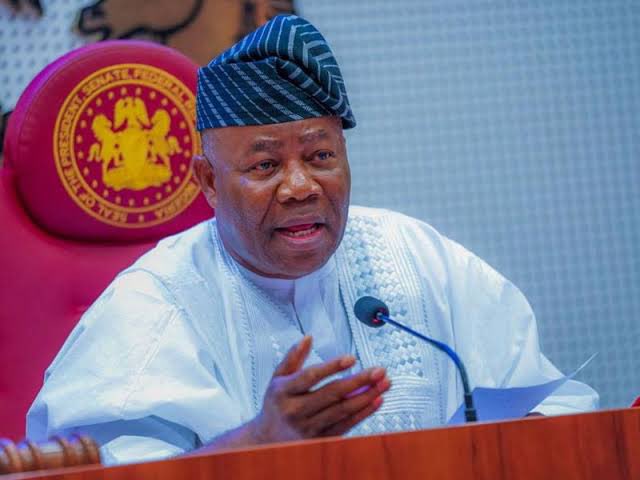
US Congressman Riley Moore recently visited Benue State, Nigeria, and shared harrowing accounts of violence against Christian communities.
In a post on X, he recounted meeting dozens of displaced Christians in IDP camps, who described brutal attacks that killed entire families and forced survivors to flee.
One woman recounted watching her husband and five children being killed, barely escaping with her unborn child.
Another man witnessed his family being hacked to death, leaving his arm permanently mangled.
Moore estimates over 600,000 Christians are currently living in these camps, calling for greater international attention to the crisis, which he described as a “genocidal campaign by the Fulani”.
He met with local Tiv and Catholic leaders, emphasizing the US won’t ignore these experiences.
His visit included talks with Nigeria’s National Security Adviser, Nuhu Ribadu, focusing on terrorism in the North-East and Middle Belt killings—priorities for President Donald Trump. While progress was noted, like the rescue of abducted Catholic schoolchildren, Moore stressed that “there’s much work still to be done”.
The visit comes amid diplomatic tensions, with the US redesignating Nigeria as a Country of Particular Concern over alleged religious freedom violations.
Nigeria’s government rejects claims of systemic persecution, saying insecurity affects all faiths.
A Plateau State High Court sitting in Jos has sentenced a police officer, Ruya Auta, to death by hanging or lethal injection for the killing of Rinji Bala, a University of Jos (UNIJOS) student, on May 13, 2020.
The judgment was delivered on December 8 by Justice David Mann, who ruled that the officer violated the victim’s fundamental right to life.
Speaking after the verdict, counsel to the Plateau State Government, Garba Pwul (SAN), described the ruling as the outcome of “five years of efforts and tenacity” to secure justice for the deceased, his family, and the state.
“Today, we have seen justice served,” Pwul said, expressing hope that the sentence would deter security personnel who misuse their weapons.
He added, “We hope that this judgment will serve as a deterrent to trigger-happy and dangerously negligent uniformed men and provide some measure of comfort to the deceased’s family.”
The court had earlier awarded a substantial nine-figure compensation to Bala’s family, declaring that the officer’s actions amounted to a violation of the student’s right to life.
Reacting to the ruling, Emmanuel Gyang, a friend who witnessed the incident, said the judgment brought back painful memories rather than a sense of victory.
He recalled feeling “terribly bad” since the day Bala was killed and said the ruling had reopened emotional wounds.
Bala was shot dead by the officer attached to the Special Task Force (STF) during a peacekeeping operation in Plateau State on May 13, 2020, an incident that sparked widespread outrage and calls for accountability.
The Nigerian Senate has summoned Education Minister Tunji Alausa and WAEC National Office head Amos Dangut over controversial new guidelines for the 2025/2026 Senior Secondary Certificate Examination (SSCE).
The guidelines, which alter subject requirements, have sparked concerns of mass failure among SS3 students, as they’d be tested on unfamiliar subjects like new trade courses without prior preparation.
Senator Sunday Karimi, who moved the motion, highlighted that subjects like Computer Studies, Civic Education, and previous trade subjects are being removed, leaving students with as few as 6 courses—despite WAEC’s minimum requirement of 8.
Senators cautioned against rushing the changes, questioning readiness of teachers, labs, and curricula.
“Do we have enough teachers? Have we prepared the laboratories?” asked Adams Oshiomhole.
Senate President Godswill Akpabio queried the removal of Computer Studies and Civic Education, emphasizing digital and civic needs.
The matter’s referred to the Senate Committee on Basic and Secondary Education for investigation, with a two-week report deadline.
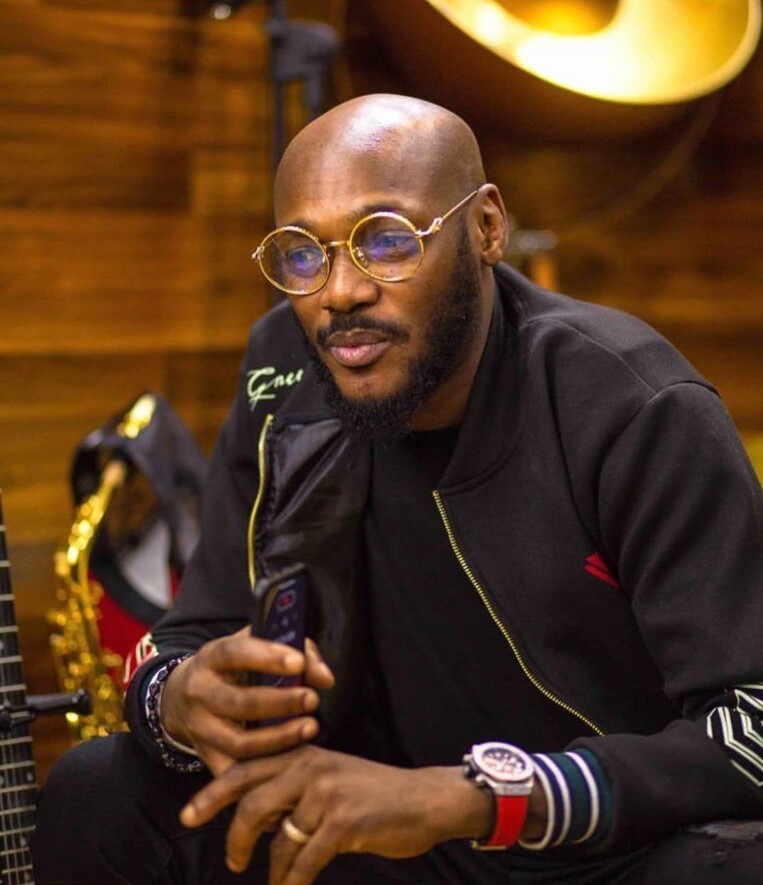
Nigerian music icon 2Baba has issued a public apology to Nigerians, his fans, and his family amid ongoing controversy surrounding his marriage to his wife, Natasha Idibia.
In a video circulating on social media, the award-winning singer appealed for understanding, urging the public to stop speculating about issues within his home.
“Make una no vex again. Make una forgive me and my family and everybody,” he said in the clip, which appeared to address weeks of intense scrutiny following a series of viral videos and reports alleging tension between the couple.
For several weeks, online conversations have centred on possible disagreements between 2Baba and Natasha.
Videos showing heated moments involving the couple both in Nigeria and London sparked widespread commentary and amplified speculation about the state of their marriage.
Although details of the disagreements remain largely private, 2Baba’s recent message appeared aimed at de-escalating the narrative and reminding the public of the emotional toll the spotlight has had on his family.
He urged fans to respect their privacy and refrain from circulating unverified or sensitive content.
Shortly before the apology video surfaced, a photo of 2Baba and Natasha went viral, drawing attention to a small object in Natasha’s hand.
Some social media users speculated that it resembled a Backwood wrap, though the image did not confirm this.
The speculation added to the already heated discussions over the couple’s relationship.
The singer’s appeal triggered a wave of reactions online, with some sympathising with his situation and others questioning the constant public monitoring of celebrities.
Comments ranged from humorous takes to calls for personal boundaries around public figures.
Earlier, entertainment executive Teebillz had reacted to previous viral clips showing altercations between 2Baba and Natasha, recounting emotional conversations he shared with the singer and expressing concern over his wellbeing.
Despite 2Baba’s request for privacy, discussions surrounding his marriage continue to trend across platforms, underscoring the persistent public interest in the personal lives of celebrities.
Nigeria’s already fragile healthcare system is expected to come under further strain as Canada prepares to launch a new Express Entry category in early 2026, aimed specifically at helping foreign-trained doctors transition to permanent residency.
The development comes at a time when Nigeria faces an acute shortage of medical personnel.
In some northern states, a single doctor is responsible for more than 43,000 patients, creating overwhelming pressure on hospitals and worsening health outcomes, especially in insecurity-hit regions.
The announcement was made yesterday by Canada’s Minister of Immigration, Refugees and Citizenship, Lena Diab, and the Parliamentary Secretary to the Minister of Health, Maggie Chi.
According to the statement, the new category will be open to international doctors with at least one year of Canadian work experience in an eligible occupation within the last three years.
Canadian authorities say the move is meant to address persistent physician shortages and strengthen the country’s healthcare workforce.
It forms part of a broader effort to stabilise the system even as Canada tightens other immigration pathways for 2026.
Nigeria’s doctor-to-patient ratio remains far below global standards, with the disparity most pronounced in the north.
The Joint Annual Review Health Sector Statistical Book 2025 shows states such as Yobe, Kebbi, Zamfara, and Jigawa have just 0.5 doctors per 10,000 people equivalent to one doctor for every 20,000 residents.
The World Health Organisation recommends a minimum of 2.5 doctors per 1,000 people, a threshold no Nigerian state currently meets.
With insecurity driving even more professionals out of northern communities, health experts warn that Canada’s targeted immigration pathway could accelerate the exodus and deepen regional inequalities.
A major investigation has revealed that a sperm donor carrying a dangerous genetic mutation has fathered at least 197 children across Europe, leading to multiple cancer diagnoses and several deaths among the affected offspring.
The anonymous donor, who began donating in Denmark in 2005, unknowingly carried a mutation in the TP53 gene a critical gene that helps prevent cells from becoming cancerous.
Up to 20% of his sperm contained the mutation, even though he remains healthy himself.
Children conceived from affected sperm inherited the mutation in every cell, resulting in Li-Fraumeni syndrome, a rare disorder that gives carriers up to a 90% lifetime risk of developing cancer, often beginning in childhood.
Children Already Diagnosed, Some Dead
Doctors raised concerns earlier this year after noticing a pattern of cancer cases among children conceived via the same donor. Of 67 children initially identified, 23 carried the variant, and 10 had already developed cancer, according to French cancer geneticist Dr Edwige Kasper.
Some children have suffered multiple cancers; others have died.
The European Broadcasting Union’s Investigative Journalism Network, including the BBC, has now confirmed that at least 197 children were born using the donor’s sperm across 14 countries and 67 fertility clinics. The total number could be higher, as not all countries have provided data.
UK Families Also Affected
Although the sperm was not sold directly to UK clinics, the UK’s fertility regulator says a “very small number” of British women travelled abroad mainly to Denmark for treatment using the donor’s sperm. Those women have been contacted.
Sperm Bank Admits Excessive Use
Denmark’s European Sperm Bank, which distributed the sperm, expressed sympathy to affected families, acknowledging that the donor’s sperm was used beyond legal limits in some countries.
For example, Belgium allows sperm from one donor to be used by only six families, but the donor fathered 53 children there alone.
The bank said the mutation could not have been detected through routine donor screening.
Experts say the case highlights gaps in global sperm-donation regulations.
There is no international law limiting how often donor sperm can be used, even as donor sperm is distributed globally.
Prof Allan Pacey, former head of the Sheffield Sperm Bank, said dependency on large international sperm banks increases risks:
“You can’t screen for everything… If we make screening any stricter, we may end up with no donors at all.”
The case follows another involving a man who fathered 550 children, intensifying calls for stronger limits.
The European Society of Human Reproduction and Embryology has proposed capping donors at 50 families, though this would not prevent rare genetic issues.
Families Face Lifelong Uncertainty
Parents like Céline (not her real name), whose daughter carries the mutation, say they now face a future overshadowed by cancer risks.
“We don’t know when, we don’t know which one… but when it comes, we’ll fight,” she said.
France has confirmed that it assisted Benin’s security forces in preventing a coup attempt over the weekend, marking another major international response to growing instability in West Africa.
According to an aide to President Emmanuel Macron, France acted at the request of Beninese authorities, providing surveillance, monitoring and logistical support as the plot unfolded.
The aide, who spoke anonymously, said Macron personally coordinated with several regional leaders throughout the crisis.
The attempted takeover began on Sunday when a group of soldiers seized Benin’s national television station and announced that President Patrice Talon had been removed from power.
Loyalist forces quickly regained control, supported by military intervention from neighbouring Nigeria, which reportedly conducted targeted strikes in Cotonou and deployed troops to secure key locations. The coup collapsed within hours.
The failed plot comes amid increasing instability in West Africa, where Mali, Burkina Faso and Niger have all experienced military takeovers in recent years developments that have also weakened France’s influence in the region.
Unlike during Niger’s 2023 coup, when France refrained from military involvement, Paris has now moved to show firmer support for constitutional order in Benin.
The French presidency confirmed that Macron spoke directly with Talon as well as with the leaders of Nigeria and Sierra Leone, which currently chairs ECOWAS.
The regional bloc announced that troops from Ghana, Ivory Coast, Nigeria and Sierra Leone were being deployed to Benin to help safeguard democratic institutions and prevent renewed unrest.
ECOWAS president Omar Alieu Touray warned that the region is facing an emergency marked by recurring coups and a growing jihadist threat.
Beninese authorities said by Monday that all hostages had been freed and at least a dozen suspects arrested.
President Talon later addressed the nation, assuring citizens that order had been fully restored and that the country remained under firm control.
Talon, who is serving his second and final term, is expected to leave office in April 2026 in compliance with constitutional limits.
Former president Thomas Boni Yayi condemned the attempted coup, calling it an attack on democracy and reaffirming that leadership change must come only through free, fair and transparent elections.
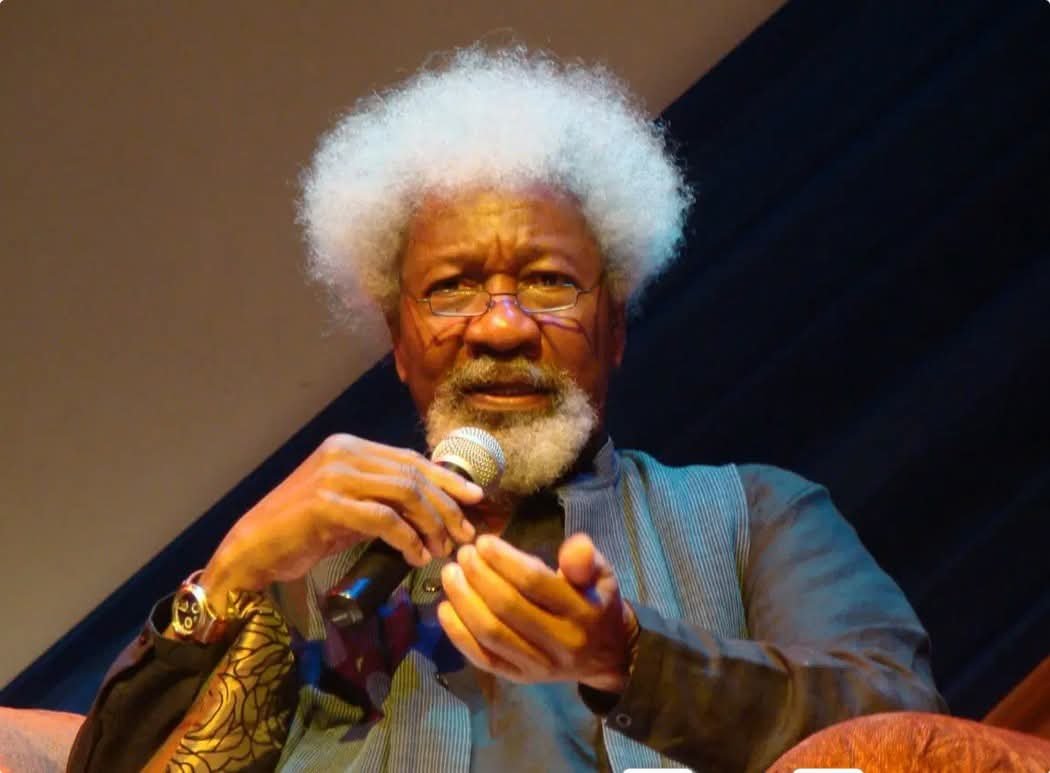
Nobel laureate Prof. Wole Soyinka has criticised President Bola Ahmed Tinubu for Nigeria’s military involvement in the recently foiled coup attempt in the Republic of Benin, warning that such actions risk destabilising the region.
Speaking in Lagos during the 20th Wole Soyinka Centre for Investigative Journalism (WSCIJ) Awards, Soyinka cautioned that Nigeria must avoid “unnecessary military entanglements” and instead focus on strengthening democratic safeguards at home.
According to him, instability in neighbouring countries inevitably affects Nigeria.
“What happens in Benin inevitably affects us. Instability anywhere in the region echoes across our own sense of security,” he said.
Soyinka also criticised the wave of property demolitions across Lagos, lamenting the “inhumane” treatment of displaced residents.
He said he had reviewed images and testimonies of families left homeless, warning that the recurring pattern lacked empathy.
While acknowledging the need to address unsafe structures and flood zones, he insisted that evacuations must be carried out with compassion and proper resettlement measures.
The Nobel laureate further recounted witnessing an unusually large security convoy assigned to a young individual close to the Presidency an entourage he described as “large enough to take over a small country.”
He said he attempted to reach the National Security Adviser to understand why a non-official enjoyed such a powerful security detail.
“Children must understand their place. They are not elected leaders and must not inherit the architecture of state power by proximity,” he warned.
Turning to the media, Soyinka commended Nigerian journalists for resilience but urged stronger editorial discipline in an era he said is polluted by misinformation.
He warned that unchecked social media falsehoods could trigger global conflict, insisting that credible journalism remains Nigeria’s strongest safeguard against chaos.
The chaos in the Republic of Benin the attempted coup, the sudden collapse of order, and Nigeria’s quick military response has dragged West Africa back into another round of uncertainty.
But beneath all the noise lies a question people are whispering everywhere: Is Nigeria truly acting as a regional stabilizer, or is it still dancing around France’s long shadow in West Africa?
For years, France has behaved like the landlord of Francophone Africa always present, always hovering, always involved in ways that don’t quite disappear no matter how loudly countries shout “independence.”
So when coups started sweeping through Niger, Mali, Burkina Faso, Guinea-Bissau, and now Benin, many saw it as the region trying to finally break free from France’s grip.
Yet when trouble starts, France somehow reappears sometimes quietly, sometimes not like a guest who never really left.
And then Nigeria steps in.
The Nigerian Senate’s approval for troop deployment to Benin has left many citizens scratching their heads. How does a country drowning in its own security crises suddenly find the strength to police another nation?
It feels like a man struggling to put out the fire in his own living room rushing to help extinguish flames in his neighbor’s house. It sounds heroic until you look closely and realise his own roof is caving in.
Nigeria’s security situation is nothing short of a national emergency.
Bandits rule parts of the North-West, terrorists still operate in the North-East, kidnappers run their own “businesses” across states, and the South-East has its own agitation issues.
The military is exhausted, stretched in every direction, and yet the government is eager to play “big brother” beyond its borders.
Charity, they say, begins at home but Nigeria seems determined to start from outside.
ECOWAS hasn’t helped matters either. The bloc has turned into a kind of emergency squad that often arrives without equipment or coordination.
It issues strong warnings that rarely change anything. You cannot shout “defend democracy!” when your own region is bleeding from every corner.
Now, in the middle of Benin’s crisis, France’s shadow appears again.
Is Nigeria responding as a sovereign nation?
Or is it reacting as part of the old post-colonial script the script where France directs from backstage while African countries do the acting?
It’s hard to ignore the pattern.
France still has military presence in several West African states.
France still influences their currencies.
France still has strong political interests in the region.
So when Nigeria rushes into Benin, suspicion rises naturally.
To many, it doesn’t look like regional solidarity. It looks like a familiar play a performance written in Paris but staged in Abuja.
But let’s leave geopolitics aside for a moment.
Nigerians are asking a far more emotional question:
“If we can deploy troops to Benin so quickly, why can’t we show the same urgency in tackling kidnappers in Kaduna or bandits in Zamfara?”
How does a government move heaven and earth for another country but move like a snail when its own citizens cry for help? Why does international pressure produce instant action, while local suffering gets committee meetings and long speeches?
The truth is simple: Nigeria is trying to look powerful abroad while struggling badly at home.
A nation cannot stabilise others while shaking from within. You can’t police your neighbors when your own house is trembling.
You cannot be a regional giant when insecurity ties your feet.
If Nigeria wants to lead West Africa, it must first lead itself out of insecurity.
Before helping Benin, help Birnin Gwari.
Before defending Cotonou, defend Chibok.
Before projecting strength, rebuild strength.
West Africa is unstable, yes but Nigeria cannot keep pouring from an empty cup.
Pro-Wike Lawmakers Take Away Fubara's Authority To Appoint LG Chairmen
Rivers State Governor Siminalayi Fubara has officially left the Peoples Democratic Party (PDP) for the All Progressives Congress (APC), saying the move was necessary to safeguard the interests of Rivers people.
Speaking at a stakeholders’ meeting held Tuesday evening at the Government House in Port Harcourt, Fubara said the PDP failed to provide the needed protection and political backing for the state.
Tinubu Is the Reason I Remain Governor — Fubara
Fubara revealed that he met with President Bola Ahmed Tinubu on Monday for what he described as a “state-interest consultation.”
According to him, the meeting produced the final approval for his long-anticipated defection.
“We have the full support and positive nod to leave where we are because we didn’t get any protection,” Fubara stated.
“The truth is that without Mr. President, there won’t be any His Excellency, Sir Siminalayi Fubara. I would have been a former governor.”
He added that President Tinubu’s intervention at critical moments ensured the continuity of his administration.
‘We Have the People, We Have the President’s Support’
Fubara emphasized that his decision was made in the best interest of the state and urged citizens not to be deceived by political narratives.
“Let nobody be fooled in the state. We have the people, and we have the support of the President,” he said.
The governor maintained that his loyalty now aligns with the political platform that guarantees stability and support for Rivers State.
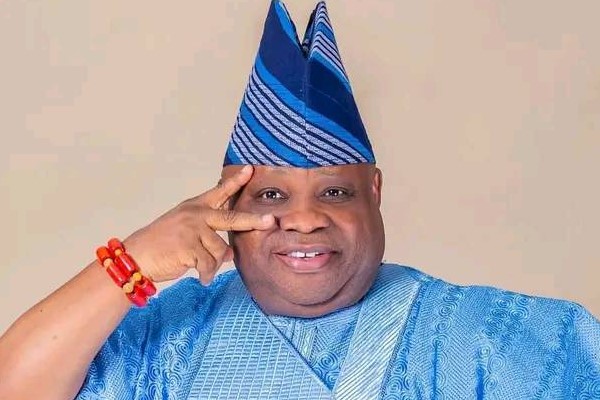
Osun State Governor Ademola Adeleke has officially announced his defection from the People’s Democratic Party (PDP) to the Accord Party, ending months of speculation about his political future.
Adeleke confirmed the move on Tuesday evening in an announcement , marking a major shake-up in Osun politics.
According to a letter dated November 4, 2025, and addressed to the PDP Chairman of Ward 2, Sagba Abogunde in Ede North LGA, Adeleke said his resignation was triggered by the unresolved leadership crisis at the national level of the PDP.
“Due to the current crisis within the national leadership of the People’s Democratic Party (PDP), I hereby resign my membership with immediate effect,” the governor wrote.
Adeleke, who was first elected senator for Osun West and later governor under the PDP, expressed appreciation to the party for shaping his political rise.
“I thank the party for the opportunities given to me as Senator and Governor,” he added.
Adeleke Joins Accord Party
Following his formal resignation, the governor declared the Accord Party as his new political home.
Earlier reports had indicated that Adeleke was set to join Accord after consultations with close allies and political stakeholders.
Adeleke’s defection sets the stage for a significant political realignment in Osun State, especially as the 2026 election cycle draws nearer.
His move is expected to influence party structures, alliances, and voter sentiment across the state.
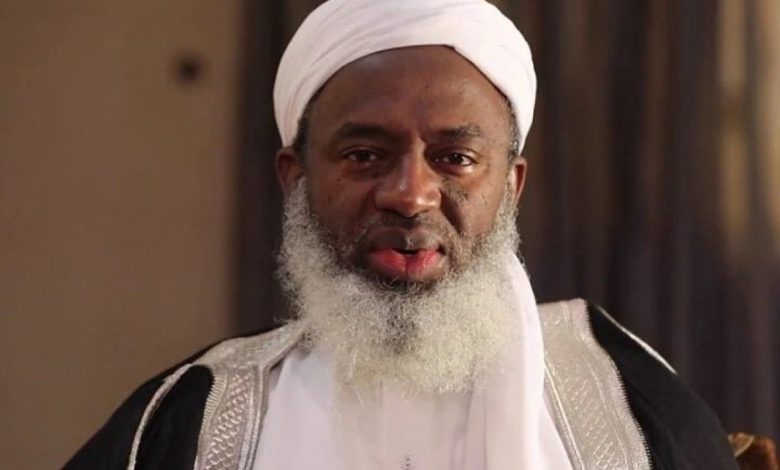
Controversial Islamic cleric Sheikh Ahmad Abubakar Gumi has reiterated his stance on negotiating with armed bandits, insisting that dialogue remains a legitimate tool for resolving conflict and preventing further bloodshed.
Speaking in an interview with BBC Pidgin News, the Kaduna-based scholar argued that neither Islam nor Christianity prohibits engagement with violent groups when it can lead to peace.
“What do you mean when they say we don’t negotiate with terror? That word isn’t in the Bible or the Quran. Everybody negotiates with bandits,” Gumi said.
He referenced global examples, noting that even powerful nations engage non-state actors when strategic interests or humanitarian concerns are at stake.
“America had an office where they negotiated with the Dalai Lama in Qatar. Everyone negotiates with outlaws. We negotiate for peace. If it stops bloodshed, we do it.”
Responding to criticisms that his visits to bandit camps embolden criminals, Gumi stressed that his actions were always coordinated with authorities and media personnel.
“Anyone who thinks I legitimize them doesn’t understand the situation. I never go alone; I go with officials and journalists.”
He said his last engagement with bandit groups took place in 2021, when he attempted to unify factions for peace talks.
While some state governments welcomed the effort, the federal government did not fully support it.
“When they were declared terrorists, we completely disengaged,” he said.
Clarifies Controversial ‘Lesser Evil’ Comment
Gumi also revisited his earlier statement suggesting that kidnapping children was a “lesser evil” than killing soldiers remarks that generated widespread outrage.
“Kidnapping is lesser, but both are evil,” he clarified.
He gave an example from Kebbi State, where abducted children were later released unharmed.
He condemned the recent abduction of over 230 schoolchildren in Niger State, calling the act “evil” and praying for their safe return.
While expressing strong support for Nigeria’s security forces, Gumi noted that the military cannot shoulder the entire burden of tackling banditry.
According to him, only 95% of the response can be kinetic; the rest requires political solutions and community involvement.
“We shouldn’t burden the military with more than they can handle.”
Banditry Linked to Fulani Livelihoods
Gumi stated that most bandits are Fulani herders whose lives revolve around cattle rearing an inherited occupation deeply tied to their identity.
He acknowledged that banditry has spread across the North-West and parts of the South-West but said the situation is less deadly than during the early years of village raids and mass killings.
China has executed a former top executive of a state-owned asset management company for corruption, state media reported on Tuesday.
Bai Tianhui, the former general manager of China Huarong International Holdings (CHIH), was convicted of receiving more than $156 million in bribes between 2014 and 2018.
According to CCTV, Bai used his position to grant preferential treatment in project acquisitions and financing deals.
CHIH is a subsidiary of China Huarong Asset Management, one of the country’s largest firms specializing in distressed-asset management and a major target of President Xi Jinping’s sweeping anti-corruption campaign.
The crackdown previously claimed Huarong’s former chairman Lai Xiaomin, who was executed in January 2021 for taking $253 million in bribes.
Several other executives from the company have also faced investigation.
No Suspended Sentence
While death sentences for corruption in China often carry a two-year reprieve that may be commuted to life imprisonment, Bai’s punishment was carried out immediately.
A Tianjin court initially sentenced him in May 2024. Bai appealed, but the judgment was upheld in February, and China’s Supreme People’s Court confirmed the ruling after review, describing his crimes as “extremely serious.”
According to the SPC:
“Bai accepted an exceptionally large amount of bribes, the circumstances were extremely serious, the social impact especially egregious, and the state and the people suffered exceptionally significant losses.”
State media said Bai met with close family members before his execution on Tuesday morning. The method of execution was not disclosed.
Part of a Wider Crackdown
China keeps execution figures classified, but human rights groups estimate that the country carries out thousands each year.
Bai’s execution is the latest in a wave of high-profile anti-corruption cases across China’s financial sector:
Yi Huiman, former chief of China’s top securities regulator, was investigated in September.
Li Xiaopeng, ex-head of Everbright Group, received a 15-year sentence in March for taking 60 million yuan in bribes.
Liu Liange, former chairman of the Bank of China, was sentenced to death with a two-year suspension in November 2024 for accepting 121 million yuan in bribes.
Supporters say Xi’s anti-corruption drive promotes clean governance, while critics argue it also serves as a tool to neutralize political rivals
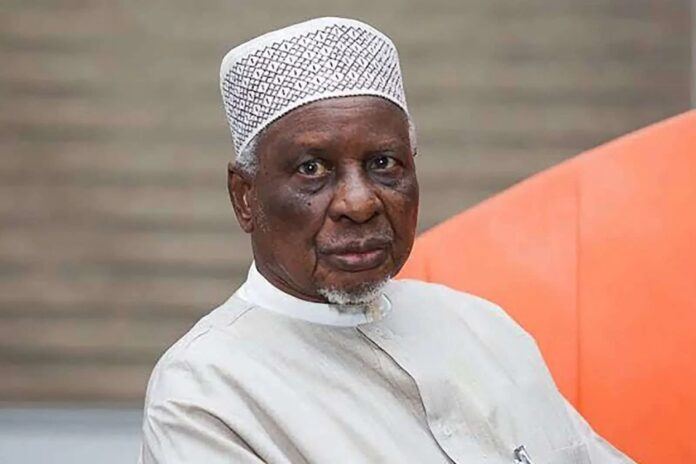
Alhaji Abubakar Tanko Yakasai, a respected elder statesman and founding member of the Arewa Consultative Forum (ACF), has rejected claims of Christian genocide in Nigeria, emphasizing that Christians and Muslims have coexisted peacefully for generations.
In a Vanguard interview, Yakasai criticized foreign media for fusing religious tensions and took a jab at U.S. President Donald Trump for suggesting targeted killings of Christians in the country, calling it an exaggeration for political gain.
“Christians and Muslims have been living in peace; we are brothers and sisters,” Yakasai said, pointing out that mixed-faith families are common, especially in the Middle Belt, long before colonial rule.
He attributed Trump’s comments to a few U.S.-connected individuals, labeling him an “opportunist” seeking relevance.
On Nigeria’s insecurity, Yakasai described it as a national issue, worse in the North, and suggested establishing zonal police commands to bolster the overstretched Nigeria Police Force.
However, he opposed state police, fearing political manipulation. “A zonal setup would help people handle local problems more effectively,” he said.
Yakasai dismissed notions of a North-South rift and predicted President Bola Tinubu might seek and win a second term in 2027, citing his political and financial leverage.
While reflecting on Nigeria’s challenges, he noted every nation faces problems, and solutions come from collective human effort and divine help.
The Economic Community of West African States (ECOWAS) has declared a state of emergency in the region, citing a surge in coups and attempted mutinies.
The announcement was made by ECOWAS Commission President Omar Touray on Tuesday during the 55th session of the Mediation and Security Council in Abuja.
Touray stressed the need for “serious introspection on the future of our democracy” and a stronger focus on regional security, pointing to recent instability in countries like Guinea-Bissau and Benin.
Millions of Glo subscribers in Nigeria are dealing with a major data outage since Tuesday morning, around 8:30 a.m.
The disruption is affecting internet access and online transactions across multiple states.
In a statement to customers, Glo acknowledged the disruption, apologising for the inconvenience and assuring subscribers that its technical team is working to restore services as quickly as possible.
“We understand how important reliable access is to you and sincerely apologise for the disruption.
“Our technical team is working to resolve the issue and ensure services are being restored as quickly as possible.
“Thank you for your patience and for choosing Glo. We truly appreciate you,” the company said
A driver of a Toyota Highlander SUV was killed in a gun attack by suspected militants in Amala, Imo State’s Ngor-Okpala Local Government Area, on Sunday evening around 5:50pm.
The gunmen also abducted occupants of a separate Lexus SUV, though the number of hostages isn’t clear.
Imo State police spokesman, Henry Okoye, said officers quickly responded, secured the area, and took the victim to the hospital where he was pronounced dead.
Commissioner of Police Aboki Danjuma has launched a manhunt for the attackers.
Joint security forces, including vigilantes, are combing the Amala forest and nearby areas to track the gunmen and rescue the abducted victims.
Meanwhile, residents have been urged to stay calm and share any helpful information with authorities.
The Nigerian Senate has approved President Bola Tinubu’s request to deploy troops to the Republic of Benin following last weekend’s attempted coup in the country.
Senate President Godswill Akpabio announced the approval during Tuesday’s plenary after lawmakers unanimously endorsed the request during a Committee of the Whole session, in line with Section 5 of the Constitution.
Akpabio described the move as necessary, stressing that instability in any neighbouring nation poses security risks for the entire region.
“An injury to one is an injury to all,” he said, reiterating Nigeria’s responsibility to support its ECOWAS partners.
The Senate’s decision will be formally communicated to President Tinubu.
President Tinubu, in his letter to the Senate, explained that the deployment was in line with ECOWAS security frameworks, noting that the situation in Benin requires “urgent external intervention” to prevent further destabilisation.
The attempted coup took place on Sunday when a group of soldiers, identifying themselves as the “Military Committee for Refoundation (CMR),” appeared on national television to announce the removal of President Patrice Talon.
The attempt was quickly thwarted, with loyal forces regaining control.
Sources close to President Talon assured that the situation is now under control, saying:
“The city and the country are completely secure… The clean-up is progressing well.”
Following the incident, ECOWAS announced the immediate deployment of a standby force made up of troops from Nigeria, Ghana, Sierra Leone, and Côte d’Ivoire.
The force is expected to support Benin’s government and military in preserving constitutional order and protecting the country’s territorial integrity.
The Economic Community of West African States (ECOWAS) has declared a state of emergency across the sub-region amid a growing wave of military coups, attempted mutinies, and escalating political tensions threatening stability in multiple member states.
The announcement was made on Tuesday in Abuja by ECOWAS Commission President Omar Touray during the 55th Session of the Mediation and Security Council at the ministerial level.
Touray warned that the region is grappling with “unprecedented security and political threats,” adding that the extraordinary measure is necessary to defend constitutional order and prevent further democratic backsliding.
“Our region is confronting a disturbing resurgence of coups and attempted mutinies that challenge our collective commitment to constitutional governance,” Touray said, stressing that only coordinated action could halt the deterioration.
Rising instability across West Africa
The declaration comes as West Africa faces its most turbulent political period in years, with multiple countries experiencing:
Successful military takeovers
Attempted coups
Worsening armed conflicts
ECOWAS ministers and regional security chiefs convened to assess the widening instability and review joint strategies aimed at strengthening both diplomatic and defence cooperation.
Touray reiterated that ECOWAS will continue utilising a mix of diplomatic engagement, targeted sanctions, and reinforced regional security structures to restore stability.
He also hinted that more specific operational guidelines will be released after the Council concludes its deliberations.
The move signals ECOWAS’ growing concern that unchecked instability could spill across borders, threaten economic integration, and undermine decades of fragile democratic gains.
A United Nations peacekeeper has been killed in the Central African Republic (CAR) after armed militants ambushed a MINUSCA patrol near the country’s northern border with Sudan, the UN confirmed on Tuesday.
The attack, which occurred on Friday, was reportedly carried out by suspected Sudanese armed groups who opened fire on peacekeeping troops operating in the area.
The slain soldier was a member of the Zambian contingent serving under the UN Multidimensional Integrated Stabilisation Mission in the Central African Republic (MINUSCA).
Another peacekeeper was injured in the assault and is currently receiving treatment.
In a statement, the spokesperson for UN Secretary-General António Guterres said the Security Council had expressed deep concern over the growing number of attacks targeting peacekeepers in CAR, warning that continued violence undermines stabilisation efforts.
Zambia’s Minister of Foreign Affairs condemned the attack, calling on authorities to ensure that those responsible are brought to justice.
This incident marks the third major attack on UN peacekeepers in CAR since the beginning of the year, as armed groups continue to clash with national and international forces for control of strategic territories.
CAR has been plagued by instability since 2013, when Muslim-majority rebel groups ousted former President François Bozizé.
Although a peace agreement was signed in 2019, violence has resurfaced as six of the fourteen signatory armed factions have withdrawn from the deal.
The country also became one of the earliest African states to host Russian-backed security operatives assisting government forces.
However, these groups have been accused of human rights violations and, in some areas, complicating an already fragile security landscape.
Following the failed military coup in Benin Republic, President Bola Tinubu has officially written to the senate seeking approval for the deployment of Nigerian troops in Benin.
The letter was read on the floor of the red carpet chamber by Senate President Godswill Akpabio during plenary on Tuesday.
“Pursuant to Section 5, Subsection 5, Part 2 of the Constitution of the Federal Republic of Nigeria, 1999, as amended,” the letter reads.
“I seek, in further consultation with the National Defence Council, the consent of the senate, for the deployment of Nigerian troops to the Republic of Benin.”
Tinubu said the request followed an appeal from the government of Benin Republic for “the exceptional and immediate provision of air support by the Armed Forces of the Federal Republic of Nigeria”.
He noted that “the government of the Republic of Benin is currently faced with an attempted unconstitutional seizure of power and disruption and destabilization of democratic institutions”.
The president said “the situation as reported by the government of Benin requires urgent external intervention”.
“Considering the close ties of brotherhood and friendship which exists between Nigeria and the Republic of Benin, as well as the principles of collective security upheld within ECOWAS, it is our duty to provide the support as requested by the government,” he added.
However, after the letter was read, Akpabio committed same to the committee of the whole “for immediate action.
The United States government has filed a lawsuit to strip the citizenship of Ghanaian-born former Marine, Nicholas Eshun, after he was dishonourably discharged over explicit communications with someone he believed to be a 14-year-old girl who was later revealed to be an undercover investigator.
According to the U.S. Department of Justice (DOJ), Eshun arrived in the United States in 2011 and enlisted in the Marine Corps just months later.
He was granted American citizenship in 2013 under a federal statute that fast-tracks naturalisation for active-duty military personnel.
Undercover
The DOJ said the former Marine’s career ended during an overseas deployment in 2015 when he was caught exchanging sexually explicit messages with someone he thought was a minor. The “14-year-old girl” was in fact an undercover Naval Criminal Investigative Service (NCIS) agent.
Eshun was later tried in a military court, convicted, and dismissed from the Marine Corps, ending his service four and a half years into the mandatory five-year period required to retain military-based citizenship benefits.
DOJ Seeks Denaturalisation and Deportation
Federal prosecutors have now filed a denaturalisation complaint in the District of Maryland, arguing that Eshun was not legally eligible for military-based citizenship since he failed to complete the required military obligation.u
If successful, the case will not only revoke his citizenship but also pave the way for his deportation to Ghana.
Assistant Attorney General Brett Shumate said the lawsuit signals Washington’s resolve to act against individuals who obtained citizenship unlawfully.
“Today’s denaturalisation against Nicholas Eshun, a court-martialed sex offender, demonstrates the United States’ commitment to using every tool available under the law,” Shumate said.
“Thanks to the intrepid investigators of NCIS, we now know the danger this man poses. There is no lawful basis for him to keep the citizenship he secured as one.”
Deputy Attorney General Todd Blanche also condemned Eshun’s actions:
“As alleged, this defendant betrayed the uniform and abused the trust of this country.
Citizenship is not a shield for criminals who never deserved it. If you commit heinous crimes, you will be held accountable. This is how we make America safe again.”
The case now awaits court proceedings that will determine whether Eshun will lose his U.S. citizenship and face removal from the country.
The military government in Niger Republic has introduced tighter screening procedures for nearly all goods entering the country from Nigeria, citing heightened security concerns across the Sahel region.
In a circular issued on Monday to customs units, authorities ordered that all goods from Nigeria especially items classified as “miscellaneous” must now be offloaded and inspected at designated entry points before any transit or clearance procedures can continue.
“For security reasons, all goods coming from Nigeria, particularly those in the miscellaneous category, must be unloaded and inspected at the entry offices before any transit formalities,” the directive stated.
However, the regime added an exemption: goods accompanied by verified documentation from the port of origin will only be offloaded at their final destination or during routine customs clearance.
The new restrictions come less than 24 hours after Burkina Faso announced it had detained 11 Nigerian military officers and impounded a Nigerian Air Force cargo plane that made an emergency landing in Bobo-Dioulasso.
According to a statement released by the Alliance of Sahel States (AES) late Monday, Burkinabè authorities launched an investigation immediately after the landing and discovered that the aircraft had entered the country’s airspace without authorisation.
“The investigation revealed the absence of authorisation for the aircraft to fly over Burkinabe territory.
The Confederation of the Sahel States strongly condemns this violation of its airspace and sovereignty,” the AES said.
Following the incident, the AES comprising Burkina Faso, Mali, and Niger confirmed that its joint military structures have been placed on maximum alert to respond to any external threats.
The development further deepens tensions between Nigeria and the AES bloc, coming at a time when diplomatic relations in the region are already strained over recent coup attempts, shifting alliances, and security concerns.
Former President Olusegun Obasanjo has expressed concern that Nigeria’s fight against Boko Haram has surpassed the duration of the country’s civil war (1967-1970), lasting nearly 15 years.
Speaking at the ‘Toyin Falola Interviews’, he emphasized that defeating insurgency requires a mix of training, equipment, intelligence, and technology.
Obasanjo suggested Nigeria’s military, trained for conventional warfare, needs specialized training to tackle guerrilla tactics.
He pointed to Colombia as an example, saying there’s “no shame” in seeking their expertise.
He also highlighted potential collusion between security personnel and insurgents, calling the situation an “industry”.
Recounting a 2011 visit to Maiduguri, Obasanjo said Boko Haram initially refused talks but later agreed to a 21-day ceasefire.
Unfortunately, the government didn’t follow through. Obasanjo stressed that addressing insecurity demands honest commitment and modern strategies, urging the government to seek international help if needed.
Assimi Goïta with his Burkina Faso and Niger Republic co-coup plotters
By Dr. Ebuka Onyekwelu
Africa is now returning to its vomit two decades after it jettisoned military rule and embraced civilian governance. All of a sudden, military rule has once again become attractive not just to military dictators, but to the African populace whose past time now includes cheering their new ‘heroes’. With a long history of human rights abuses, corruption, and nepotism that shaped the post-independence Africa, military intervention in the politics of many African countries in the 1970s, 1980s, and 1990s was merely a change of baton that escalated rights abuses, corruption, and nepotism to an industrial scale. However, with the return to civilian rule, there was a sigh of relief, which has disappeared, only to usher in another sigh of relief for the uniform rulers.
It is interesting that two decades down the line, Africans are, once again, cheering military juntas or calling for the military to displace their civilian government, as some do on social media. To buttress the seriousness of the return of the military in African politics, between 2020 and 2025, Africa has experienced no fewer than 17 coups, out of which 16 were successful. In the list, Mali has experienced a coup both in 2020 and in 2021. The latest coup is the one in the Benin Republic, which has been declared unsuccessful. The “coup belt,” now under military dictatorship, is effectively back to the drawing board with more critical development questions put on hold, amidst escalating insecurity. This is the African story of a deep and troubling somersault embedded in a desire for a messiah and a subterranean crisis of progress that keeps the people running round the same cycle. This contrasts with the “African rising” narrative, which Professor Kingsley Moghalu, political economist and President of the Institute for Governance and Economic Transformation, has dismissed as a farce.
Disconnected from their government in totality, many Africans find justification for coups. For them, a failed government should be displaced by any means possible. To their minds, something that is not working should be discarded. Since the government is not working, even the state can be disbanded. Yet, military juntas, in the experience of Africans, cause far more displacements and social chaos than their civilian counterparts. This situation signals a particular haste for quick fixes, which makes many Africans susceptible to deceit and the charm of agitation leaders who speak loud rhetoric against the government. Many fail to really probe the type of public safety, human dignity, and progress that can be achieved under such human beings as leaders. The fact that many Africans still justify banditry and terrorism only because of opposition to the government speaks to a much dangerous malevolence that is not getting enough attention that it deserves. There is a severe crisis of citizenship that is driving extreme discontent both against the government and against the state. There is also a present challenge of how to engage and strengthen governance without having to weaken the state. This will naturally take us back to the origin of states in Africa and the lack of internal ownership of these states. But the problem is even deeper. Thus, throwing up the following fundamental questions: How best then should Africans be governed and at what level? How best should the African be enticed to take ownership of his own environment? Assuming that tribal identity is a major roadblock to Africa’s development challenge, how have regional governments in Africa changed the fortunes of their own people? There is no region, tribe, or ethnic group with such a story of success tied to its identity in political governance across Africa. Not even in their smallest unit. Yet, every group is in charge of its own governance in its region. It is, therefore, not exactly correct that Africa would have become something far from its current experience if the states were created differently or organically, rather than through colonial appendages. South Sudan, the newest sovereign state that gained independence in 2011, now faces far more troubles than can be imagined for a new country with strong religious and ethnic affinities. Originally proclaimed in 1972 during the first civil war in Sudan, South Sudan has been through a bitter civil war, considered the poorest country in the world, and perhaps now in a worse condition than the mother country, which was formerly conceived of as its problem. It turned out that the problem was deeper than ethnic and religious divides.
The recurrent decimal in which Africans have to make difficult choices between a failed civilian government and a formerly failed military dictatorship in the hope that somehow, the same military which has thoroughly failed at governance will become the new messiah is delusional. In the end, coups will lead to more coups. At the same time, the society is plunged into more chaos, cavernous social disorder, and political instability that further stamp out Africa’s chances of real progress. Africa is still trapped in a vain competition for political power, primarily for proximity to economic power, and this is even more bizarre under military dictatorship.