27.4 C
Lagos
Sunday, March 8, 2026

CBN Grants Final Licenses To 82 Bureaux De Change Operators

0

(DDM) – The Central Bank of Nigeria (CBN) has granted final operating licenses to 82 Bureaux De Change (BDCs) across the country.

Diaspora Digital Media (DDM) gathered that the licenses are effective from November 27, 2025, following compliance with the Bank and Other Financial Institutions Act (BOFIA) 2020.

The CBN issued the licenses under the 2024 Regulatory and Supervisory Guidelines for Bureaux De Change Operations in Nigeria.

According to the apex bank, only BDCs listed on its official website are authorized to operate from the effective date.

The central bank advised the public to avoid dealings with unlicensed foreign exchange operators, emphasizing the legal consequences of operating without a valid license.

“For the avoidance of doubt, operating a Bureau De Change business without a valid license is a punishable offense under Section 57(1) of BOFIA 2020,” the statement read.

The CBN explained that the final licensing follows a process initiated in May 2024, when all previous BDC licenses were withdrawn, requiring operators to reapply for fresh permits.

BDCs were required to apply under one of two categories: Tier One, with a minimum capital of ₦2 billion, or Tier Two, with a minimum capital of ₦500 million.

The bank allowed operators six months from the release of the guidelines to submit their applications for new licenses.

The draft guidelines were initially released in February 2024 to allow stakeholder input before final approval.

“Following the conclusion of stakeholder consultations and in exercise of the powers conferred by Section 56 of BOFIA 2020, the CBN hereby issues the Regulatory and Supervisory Guidelines for Bureau De Change Operations in Nigeria 2024 for compliance,” the bank stated.

The guidelines mandate all BDC operators to reapply according to their chosen tier, ensuring compliance with capital and operational standards.

Industry analysts say the licensing move is aimed at stabilizing the foreign exchange market and curbing illegal forex operations that undermine the naira.

DDM reports that the approval of these 82 BDCs signals a regulatory reset, promoting transparency and ensuring that only financially credible operators can engage in foreign currency transactions.

The CBN will continue to update the list of licensed BDCs for public verification to maintain accountability in the sector.

Experts emphasize that strict adherence to the new licensing guidelines is critical for curbing market malpractice and protecting investors and consumers.

The renewed licensing framework is also seen as part of the apex bank’s broader financial reforms to strengthen Nigeria’s banking and forex ecosystem.

Officials noted that the new regulations enhance supervisory oversight, enabling the CBN to monitor and sanction any operator that violates the law.

This initiative underscores the central bank’s commitment to a structured, transparent, and legally compliant BDC sector across Nigeria.

The licensed BDCs will now be allowed to operate openly, providing foreign exchange services under regulated conditions that align with national financial stability objectives.

The move is expected to boost confidence in Nigeria’s forex market while discouraging unregulated currency trading that has previously caused volatility.

Stakeholders say that as the BDC sector formalizes, investors and consumers will benefit from improved service reliability and safer transactions.

The CBN reiterated that all operators must strictly follow the tier requirements and other provisions in the guidelines to maintain their licensing status.

Abia State, NDPHC Begin Construction Of 7.5MVA Umuahia Substation

DDM News

0

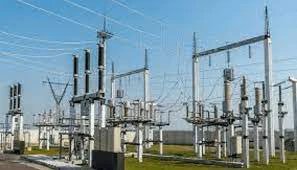
(DDM) – The Abia State government, in partnership with the Niger Delta Power Holding Company (NDPHC), has commenced construction of a 7.5MVA, 33/11kV injection substation in Umuahia.

Diaspora Digital Media (DDM) gathered that Governor Alex Otti performed the groundbreaking ceremony, describing the project as transformative for electricity supply and distribution reliability across the state.

The governor noted that this initiative marks the start of a wider plan to modernize Abia’s power network and expand access to sustainable electricity.

The project is being executed under the National Integrated Power Project (NIPP) by NDPHC, with the scope including a 1km 33kV line, 1.2km 11kV line, two 300kVA distribution substations, and 2km of low-tension line.

Governor Otti commended the federal government and NDPHC for prioritizing Abia in this strategic intervention, highlighting President Bola Tinubu’s reforms in the power sector.

He said Tinubu’s policies have encouraged stronger state participation, private sector investment, and global partnerships in electricity infrastructure.

The governor revealed that the state government has budgeted for an additional 7.5MVA injection substation in the 2026 fiscal year, which will double the Ogurube Layout area’s capacity to 15MVA once completed.

NDPHC Managing Director/CEO, Engr. Jennifer Adighije, represented at the event by Executive Director, Networks, Engr. Bello Babayo Bello, reaffirmed the company’s commitment to expanding reliable electricity nationwide.

She said the Umuahia project reflects NDPHC’s mandate to empower communities, drive economic development, and support industrial growth.

Stakeholders noted that this collaboration between the federal government, NDPHC, and Abia State demonstrates the effectiveness of strategic partnerships in delivering critical infrastructure.

The substation, once completed, is expected to strengthen electricity supply, enhance service reliability, and support small businesses in Umuahia and surrounding areas.

It is also anticipated to attract further industrial investments and contribute to improved quality of life for residents.

Analysts say that the addition of modern substations and upgraded transmission lines is crucial for addressing power shortages that have long affected residents and businesses in southeastern Nigeria.

The project aligns with broader federal initiatives to modernize the national electricity grid and improve distribution efficiency in underserved regions.

Local communities have expressed optimism that the new substation will reduce frequent power outages and create opportunities for economic growth.

DDM reports that the partnership highlights how state and federal collaboration can accelerate infrastructure development, particularly in essential sectors like energy.

Construction is expected to be completed within the next 12 to 18 months, with commissioning scheduled soon after to integrate the facility into Abia State’s electricity network.

Experts emphasize that such projects are critical for achieving long-term energy security, promoting industrialization, and enabling sustainable development across Nigeria.

The Umuahia substation represents a strategic investment in the state’s electricity infrastructure, reinforcing Abia’s position as a growing hub for business and industrial activities.

This initiative is part of a broader federal and state effort to ensure reliable electricity supply, reduce power deficits, and improve economic prospects for citizens across southeastern Nigeria.

Renova Wins 85 MW Solar Project In Philippines’ Visayas Regio

0

(DDM) – Japanese renewable energy giant Renova has secured the rights to develop an 85-megawatt solar project in the Visayas region of the Philippines.

Diaspora Digital Media (DDM) gathered that the project was awarded through the country’s fourth Green Energy Auction Programme (GEAP), marking Renova’s first entry into the Philippine renewable energy market.

The Tokyo-based company will partner with Victoria’s Green Energy Corporation, a local renewable energy firm, to construct and operate the solar facility.

Under the terms of the award, the power generated will be supplied to the Philippine grid through a 20-year fixed-tariff contract.

Industry experts note that this milestone represents a strategic move by Renova to expand its renewable energy footprint across Asia while diversifying its global portfolio.

The company aims to reach 5 gigawatts of installed capacity worldwide by the end of the decade, with 1.8 gigawatts coming from international ventures.

Climate change and environmental sustainability have driven countries worldwide to pursue decarbonization of their energy sectors, creating rising demand for solar, wind, and other renewable solutions.

Asia’s renewable energy market has experienced rapid growth in recent years, exemplified by similar projects backed by the Asian Development Bank and private investors in India, Uzbekistan, and other regional markets.

Renova’s Visayas project aligns with this trend, combining solar power generation with long-term economic and environmental benefits for local communities.

The new facility is expected to contribute significantly to the Philippines’ clean energy targets, reducing reliance on fossil fuels while supporting national grid stability.

The partnership with Victoria’s Green Energy Corporation also highlights local engagement, ensuring that operational and maintenance expertise is developed within the country.

Analysts say the success of Renova’s entry into the Philippine market could encourage other international renewable energy companies to follow suit, intensifying competition and innovation across Southeast Asia.

The global push for decarbonization, spurred by the Paris Agreement and climate-related disasters such as wildfires and floods, has accelerated investment in renewable projects.

Renova’s move demonstrates a clear strategic vision to capitalize on rising energy demand while contributing to environmental sustainability across the Asian continent.

The company has stated that the Visayas project is just the first step in a series of planned expansions in Asia’s solar market.

DDM reports that the development of this 85-MW facility is expected to create jobs, stimulate local economies, and provide reliable clean energy for thousands of households in the Visayas region.

With renewable energy demand continuing to surge, Renova’s entry into the Philippines sets a precedent for large-scale solar projects and international collaboration in Asia.

This initiative reinforces the growing importance of global partnerships in the fight against climate change and the transition to cleaner energy sources.

The solar project is scheduled to begin construction in early 2026, with operational launch planned within the following two years, positioning Renova as a major player in Southeast Asia’s renewable energy landscape.

The agreement reflects not only corporate ambition but also the Philippines’ commitment to expand renewable energy capacity in line with sustainable development goals.

DDM confirms that the GEAP program has successfully attracted several international companies to the Philippine market, underscoring the country’s growing appeal as a renewable energy investment hub.

MTN Nigeria Crowns 2025 PachiPanda Challenge Winners, Eyes Africa Finals

0

(DDM) – MTN Nigeria has officially announced the winners of the 2025 Nigeria PachiPanda Challenge, a national innovation competition aimed at promoting sustainable solutions among young innovators.

DDM gathered that the initiative was delivered in partnership with the Worldwide Fund for Nature (WWF) through its local partner, the Nigerian Conservation Foundation (NCF), and the United Nations Development Programme (UNDP) Nigeria.

The competition drew over 2,000 applications from across Nigeria and concluded with a three-day sprint event at the MTN Rooftop Event Centre, Falomo, Ikoyi, Lagos, featuring masterclasses and pitch presentations.

Ten finalists, including seven individuals and three teams, emerged after a rigorous multi-stage screening process to compete for top honours.

Team OneGrid Energies emerged as the overall winner for its innovative solution addressing energy access in underserved communities.

The team, comprising Emmanuel Ezea, Ogochukwu Ogene, and Valentine Nnamani, developed affordable lanterns by upcycling plastic bottles and e-waste lithium-ion batteries.

They also introduced smart solar-powered charging stations managed by rural women, creating economic opportunities while advancing environmental sustainability.

Second place went to Joshua Ndaman for his project, BuyScrap, a technology-driven platform that streamlines electronic waste collection and recycling.

BuyScrap ensures that discarded electronics are ethically reused and repurposed, fostering a circular economy and connecting households with processing facilities.

Divine Peter secured third place with HopeForge Engineering, which designs affordable recycling equipment for green businesses using recyclable materials.

His initiative automates traditional manual processes, improving productivity and making sustainable tools accessible for small and medium-sized enterprises.

The winners received cash prizes of ₦3,000,000, ₦2,000,000, and ₦1,500,000 respectively and will now represent Nigeria at the Africa PachiPanda Challenge.

The continental finals will see these innovators compete against champions from other African countries, showcasing their solutions to industry experts and investors.

Tobe Okigbo, Chief Corporate Services and Sustainability Officer at MTN Nigeria, emphasized the importance of youth-led innovation in climate action and community resilience.

He stated, “Innovation should go beyond solving problems; it should be bankable and sustainable, ensuring long-term value for both society and the innovators themselves.”

Dr. Joseph Onoja, Director-General of NCF, praised the finalists’ creativity, asserting that “every finalist here is a winner,” and reaffirmed continued support for nurturing innovative ideas.

Representing UNDP Nigeria, Lantana Elhassan highlighted the potential of the projects to inspire systemic change across Africa, noting the role of technology in scaling solutions.

During the week-long event, finalists participated in masterclass sessions led by experts including Bankole Oloruntoba of NCIC, Chinwe Udo-Davis of Instollar, Nifemi Oluboyede of Credit Direct, and Uche Aniche of Rebel Seed Capital.

Judges comprised sustainability and innovation experts such as Dr. Tiwalade Adeniyi, Dr. William Tsuma, Maximus Ugwuoke, Peju Ibekwe, Temitope Okunnu, and Yewande Adeyi.

DDM reports that the Africa-wide finals are expected to bring together leading innovators to showcase solutions, attract investment, and influence the continent’s innovation landscape.

This edition of PachiPanda underscores Nigeria’s growing role in fostering sustainable innovation and youth empowerment across key sectors.

The competition reflects a strategic push to integrate environmental consciousness with technology-driven entrepreneurship in Nigeria and beyond.

PDP Warns Wike Over ‘Illegal Committee’ In Explosive Party Showdown

DDM News

0

(DDM) – The Peoples Democratic Party PDP has issued a blistering condemnation of FCT Minister Nyesom Wike and his loyalists, accusing them of deepening illegality after they announced a factional National Caretaker Committee for the opposition party.

DDM gathered that Wike’s faction had earlier constituted a 13-member National Caretaker Committee at the PDP’s controversial 104th NEC meeting held in Abuja on Sunday, December 7, 2025.

The Wike-backed committee listed Hon. Abdulrahman Mohammed as Chairman and Senator Samuel Anyanwu as Secretary, claiming it would oversee party affairs ahead of a national convention.

However, the PDP’s National Publicity Secretary, Ini Ememobong, dismissed the entire exercise as “a gathering of Wike and his friends,” insisting the former governor had no legal authority to speak for the party.

He stressed that Wike and his allies had been duly expelled from the PDP and therefore lacked any standing to announce committees in the party’s name.

According to him, the move was designed to coordinate Wike’s personal political agenda rather than serve the interest of the opposition.

He added that even if they were still members, they lacked the mandate to interfere with party organs.

Ememobong reaffirmed that the PDP’s legitimate leadership structure, including the National Executive Committee and the Board of Trustees, remains intact under Kabiru Tanimu Turaki, SAN.

He argued that the PDP leadership is made up of dignified figures who cannot be “procured or commodified” in the manner that has allegedly become the trademark of Wike’s group.

DDM learned that the conflict is tied to an ongoing legal dispute filed by Wike’s allies, Alhaji Mohammed Abdulrahman and Senator Sam Anyanwu.

On November 21, 2025, the duo approached the Federal High Court in Abuja seeking to nullify and stop recognition of the PDP’s most recent convention and its outcomes.

Justice J.O. Abdulmalik refused their request for an interim injunction, warning all sides to avoid actions capable of undermining the court’s final judgment.

Despite the court’s caution, Wike’s camp proceeded to announce what Ememobong described as a “fictitious National Caretaker Committee,” a move he said puts the plaintiffs in contempt of court.

He accused the Wike faction of attempting to politically incapacitate the PDP since 2023 and acting as “APC apologists” weaponised to destabilise the main opposition.

He argued that their actions have become increasingly absurd, with each episode surpassing the previous in what he called “sheer ridiculousness.”

Background analysis shows that the PDP has faced internal battles since the 2023 general elections, when Wike led a powerful bloc that opposed the party’s presidential candidate.

The internal strife intensified after Wike joined the APC-led administration as FCT Minister while refusing to resign from the PDP.

His influence within the party has continued to trigger factional clashes that many analysts say threaten the PDP’s long-term survival.

The PDP insists it remains committed to rebuilding on the pillars of transparency, equity and inclusiveness, despite pressure from Wike’s faction.

Ememobong assured party members nationwide that the opposition remains united under its lawful leadership and will not be derailed by political theatrics.

He urged Nigerians to ignore what he described as a desperate bid to destabilise the country’s oldest opposition platform.

The crisis is expected to escalate further as court hearings resume and both factions intensify their power struggle over the party’s future.

EFCC Seals Ex-Minister’s Abuja Mansion Amid Explosive Political Outrage

DDM News

0

(DDM) – The Economic and Financial Crimes Commission EFCC has sealed the Abuja residence of former Minister of State for Petroleum, Timipre Sylva, igniting a fresh wave of political tension and accusations of abuse of power.

DDM gathered that the action was confirmed on Monday by Sylva’s media aide, Julius Bokuro, who issued a strongly worded statement condemning the commission’s conduct as unlawful, hostile and politically motivated.

The former Bayelsa governor is currently embroiled in a dispute with the EFCC over the investigation of a missing $14.8 million earmarked for the Brass Refinery project in Brass Local Government Area.

Bokuro titled his statement “Grave Breach of Decency: EFCC Attempted Raid and Defacement of Sylva’s Family Home,” accusing the anti-graft agency of acting without a warrant and violating every standard of lawful procedure.

He described the EFCC’s behaviour as unbecoming of an institution that claims to uphold national interest.

He stated that officers stormed the Maitama property in an aggressive manner and spray-painted “EFCC — KEEP OFF” in bright red on the walls, treating the home “as though marking the property of a fugitive rather than that of a respected statesman.”

Bokuro said the intrusion amounted to an assault on decency and a troubling signal of political intimidation disguised as law enforcement.

He revealed that Sylva’s children, relatives and domestic staff had already been under weeks of distress because the property had been effectively encircled.

He argued that violating a family residence “without warning and without justification” inflicted terror on innocent individuals who have no connection to the political confrontation.

According to him, the latest action “bears all the hallmarks of local political rivalry being misinterpreted, or mischievously presented, as federal instruction.”

He warned that such actions constitute a dangerous merging of partisan ambition with national authority, thereby undermining democratic institutions.

Background checks show that Sylva, a former governor from the Niger Delta region, has long been a key political figure within the ruling establishment and served as a loyal party member during President Bola Tinubu’s 2023 campaign.

He previously withdrew from a Bayelsa governorship contest amid legal controversies, but has maintained strong influence within the party.

His tenure in the petroleum ministry was marked by promises to revitalize refineries, expand energy infrastructure and boost investor confidence.

The Brass Refinery project, one of Nigeria’s most delayed industrial undertakings, has been subject to multiple allegations of mismanagement and unaccounted funds.

The EFCC’s renewed investigation into the missing $14.8 million is believed to be one of the triggers behind the recent escalation.

Bokuro emphasized that government agencies must never be turned into weapons in political contests.

He said Sylva has served the country “with calmness, loyalty and unwavering patriotism” from his early political career to his federal assignments.

He maintained that even in the face of provocation, Sylva has remained dignified and committed to national stability.

The EFCC has yet to issue a detailed public statement explaining the sealing of the property or addressing the allegations of procedural violations.

Public reaction across political circles suggests that the confrontation may widen as calls grow for transparency, fairness and lawful conduct in anti-corruption investigations.

JUST IN: NNPCL Faces Fresh Deadline in Trillion-Naira Revenue Leakages Probe

0

The House of Representatives Committee on Public Accounts has given the Nigerian National Petroleum Company Limited (NNPCL) up to December 15 to appear before it and address allegations of trillion-naira revenue leakages flagged by the Auditor-General of the Federation.

Committee Chairman Rep. Bamidele Salam issued the ultimatum on Monday in Abuja after NNPCL management again failed to honour the committee’s invitations—now seven in total.

NNPCL Requests 60-Day Extension

A letter from the company, read during the session, said the management was unable to attend because of an urgent meeting with the President, asking instead for a 60-day postponement.

Salam rejected the request, stressing that the Auditor-General’s report raised serious concerns over unremitted revenues that should have gone into the Federation Account but were either withheld or unaccounted for.

“The only way we will believe this is a new NNPCL is through a change in conduct and accountability,” Salam said.

He warned that the parliament would not tolerate what appears to be NNPCL’s disregard for lawmakers.

Lawmakers Express Frustration

Members of the committee criticised the national oil company’s repeated absence:

Rep. Hassan Bappa said NNPCL “cannot be above the committee,” stressing that it must comply like any other agency.

Rep. Kafilat Ogbara argued that the company should not be allowed to fix a new date, urging the committee to compel the appearance within the week.

Deputy Chairman Rep. Jeremiah Umaru supported the call for stricter enforcement.

NNPCL Liaison Officer Defends Management

NNPCL’s Liaison Officer to the National Assembly, Umar Farooq, said the company’s absence was not deliberate.

He explained that management had prepared to attend before receiving a last-minute letter from the Presidency on Friday night.

Background: Rising Scrutiny of NNPCL Finances

Former Vice President Atiku Abubakar recently demanded an independent probe into the ₦17.5 trillion allegedly spent by the Tinubu administration on pipeline security and related expenses in just one year—calling it “unprecedented” and a “moral indictment.”

NNPCL’s latest audited financial statement shows:

Revenue (2024): ₦45.1 trillion

Profit After Tax: ₦5.4 trillion

Despite these figures, lawmakers and financial experts have repeatedly questioned the opacity of the company’s revenue remittances.

The committee insists that all outstanding documents must be submitted before December 15 to enable proper investigation.


Awujale Throne Bid Sparks Fierce Royal Battle As KWAM1 Defies Critics

0

(DDM) – Legendary Fuji icon Wasiu Ayinde, widely known as K1 De Ultimate, has launched a bold public defence of his royal ancestry after declaring his intention to contest for the prestigious Awujale of Ijebuland throne.

Diaspora Digital Media DDM gathered that the controversy intensified shortly after the 67-year-old musician formally submitted his application letter to the Fusengbuwa Ruling House, seeking consideration for the vacant stool.

K1 addressed the issue during a live performance on Sunday, insisting that no one could silence his right to vie for the revered position.

He invoked the spirit of the late Awujale, Oba Sikiru Adetona, stressing that the monarch had bestowed on him the respected title of Olori Omo-Oba Akile Ijebu based on merit, not influence or favour.

He stated that the debates over his lineage only emerged after he made his intentions public.

The Fuji legend told critics that his bloodline traces directly to the Fidipotemole and Fusegbunwa families of Ijebu-Ode.

He warned that any attempt to question his roots would be settled “at Popo,” a symbolic zone near the Awujale’s palace historically linked to the kingdom’s early descendants.

K1 declared that the late Oba Adetona was of sound judgment when he conferred the prince-title on him, noting that the Awujale was never a ruler who made careless appointments.

He added that if anyone doubted his heritage, the spirit of the late monarch should reveal the truth to the people.

Background checks show that the Awujale stool is one of Nigeria’s most respected traditional thrones, with strict rotational rules governed by Ijebu customary law and Ogun State Chieftaincy Laws.

Candidates must prove at least seven generations of legitimate royal descent before being considered eligible.

In his December 3, 2025 letter to the Fusengbuwa Ruling House chairman, K1 formally declared his bid, citing his birth in 1957 and his ancestry within the Fusengbuwa Ruling House of Agunsebi Quarters.

He emphasized his lineage to the Oba Jadiara family, one of the ruling lines entitled to present candidates whenever the throne becomes vacant.

The ruling house acknowledged receiving his letter and immediately requested that he complete the official royal genealogy form.

The chairman, Abdulateef Owoyemi, explained that the verification document traces lineage back seven generations to prevent impostors from exploiting the process.

Owoyemi noted that although K1 currently holds the prestigious Olori Omo-Oba title, he must still undergo the same lineage verification as every other contender.

He stressed that only genuine princes would be permitted to advance to the final selection stage for the next Awujale of Ijebuland.

The scrutiny surrounding K1’s royal claim has triggered heated debates across Ijebuland, the entertainment industry and social media, as supporters and critics clash over tradition, legitimacy and influence in the selection of a monarch.

As the screening process progresses, the battle for the throne is expected to intensify, with the final decision resting solely on Ijebu customary institutions and the Ogun State Chieftaincy framework.

Tacha Hails Funke Akindele’s Movie Mastery In Explosive Premiere Reaction

0

(DDM) — Nigerian reality TV star Anita Natacha Akide, popularly known as Tacha, has set social media buzzing after delivering a powerful endorsement of Funke Akindele’s latest film, Behind The Scenes, during its star-studded Lagos premiere.

DDM gathered that Tacha’s reaction, posted on her verified X handle, instantly ignited widespread conversation among fans, industry critics and Nollywood observers who continue to track Funke Akindele’s meteoric rise as one of Africa’s most influential filmmakers.

The Lagos premiere, held on Saturday night, attracted an elite lineup of celebrities, influencers, media executives, musicians and former Big Brother Naija contestants who came out in large numbers to support Akindele’s newest cinematic effort.

Funke Akindele, often referred to as “The Box Office Queen,” has built an unrivalled reputation within Nollywood through blockbuster successes such as Omo Ghetto: The Saga, A Tribe Called Judah, and Battle on Buka Street.

Her films have consistently broken box-office records, reshaped audience expectations and set new artistic standards in the Nigerian film industry.

Behind The Scenes, her latest project, has already been described as one of the most anticipated Nollywood releases of the year, following months of strategic promotions, teaser campaigns and viral marketing across social media platforms.

Tacha Akide, who attended the premiere in Lagos, appeared visibly moved by the emotional and artistic depth of the film.

In her viral X post, she wrote, “Funke Akindele is a BEAST!!! GOSH!!! BTS is a MUST-WATCH emotional, suspense-filled, thrilling, and loaded with deep lessons about people. She really outdid herself! I’m prouuud.”

Her emphatic praise quickly gained traction, with fans interpreting her use of “beast” as a compliment to Akindele’s unmatched creative strength, directorial authority and mastery of storytelling.

Industry analysts note that enthusiastic endorsements from high-profile influencers like Tacha often help boost pre-release excitement, expand audience reach and drive nationwide anticipation.

They also highlight that Funke Akindele has successfully cultivated a powerful synergy between film, celebrity culture and digital engagement, allowing her premieres to function as cultural events rather than mere screenings.

Observers say Tacha’s endorsement is reflective of a wider sentiment brewing within the entertainment industry, where Akindele is increasingly viewed not only as a prolific actress but also as a visionary director, producer and brand strategist.

Many film critics argue that Akindele’s evolution mirrors global trends in which women filmmakers are taking greater leadership roles and redefining storytelling across mainstream cinema.

Nollywood commentators added that Akindele’s influence on younger creators continues to grow, especially as she integrates social themes, family dynamics and emotional realism into her films.

They noted that her latest work, Behind The Scenes, appears to deepen her signature blend of comedy, drama and social commentary.

As excitement continues to build ahead of the film’s nationwide release, several entertainment platforms report that audience expectations are now higher than ever, with many predicting that Behind The Scenes may become Akindele’s next major box-office triumph.

Fans online also praised Tacha for her openness in celebrating fellow women achievers, saying that her glowing review contributes to a positive culture of collaboration and visibility within Nigeria’s entertainment space.

With momentum rising, Behind The Scenes is expected to dominate Nollywood conversations in the coming days, especially as more celebrities release their own reactions to the highly anticipated project.

Diddy’s Father Lived A Deadly Double Life In Harlem Underworld

0

(DDM) — A renewed surge of public interest in Sean “Diddy” Combs’ family history has resurfaced after the release of 50 Cent’s explosive Netflix documentary, prompting fresh scrutiny of the life and mysterious death of Diddy’s father, the late Melvin Combs.

DDM gathered that Melvin Combs lived a secretive and dangerous existence that his young son would only come to understand decades later, long after building one of the most influential empires in global music and entertainment.

The renewed attention follows the resurfacing of an exclusive investigative feature originally published by Vibe Magazine, which detailed the turbulent world that shaped Melvin’s life and ultimately led to his violent death in 1972.

Melvin Combs grew up in East Baltimore before relocating to the Patterson Houses in the Bronx, where peers described him as charismatic, stylish and exceptionally athletic.

His growing fascination with luxury and fast money gradually drew him into New York’s rising underworld culture of the late 1960s.

By his early twenties, he had become a familiar figure within Harlem nightlife, forging friendships with hustlers, dealers and major narcotics operators.

Despite his deepening involvement in high-risk criminal networks, Melvin maintained a polished family image with his wife Janice, even as he balanced relationships connected to street life.

By the late 1960s, he was working closely with major figures in New York’s heroin trade, including Frank Lucas, one of the most notorious drug kingpins in American criminal history.

Melvin later became aligned with Willie Abraham’s heroin syndicate, a massive narcotics operation that trafficked large volumes of heroin across New York and New Jersey.

Law-enforcement records from that era revealed that Melvin was not the top leader, but his role within the organization placed him at the heart of a dangerous and volatile criminal economy.

The 1971 federal crackdown on New York’s heroin underworld changed everything.

Wiretap operations led to the arrests of dozens of Abraham’s associates, increasing paranoia and suspicion across the organization.

Melvin himself was arrested weeks later with drugs, cash and a firearm, a development that dramatically elevated the risk around him.

Two weeks after his arrest, on a cold January night in 1972, Melvin Combs was found shot twice in the head inside his parked car near Central Park West.

The execution-style killing sparked immediate speculation.

Rumors spread that Melvin had agreed to cooperate with federal investigators or that he was suspected of doing so, a dangerous perception in a world governed by distrust and ruthless enforcement.

Frank Lucas later insisted that Melvin was loyal and would never inform on his associates, but in the drug world of the early 1970s, even unproven suspicion was enough to justify a death sentence.

Years later, Melvin’s associate Claude Helton revealed new claims about the killing.

Helton alleged that Willie Abraham’s lieutenant, Walter Grant, confessed to luring Melvin to 106th Street, sitting beside him in the car, and shooting him at point-blank range.

Grant reportedly believed Melvin had talked to federal agents, or would eventually do so.

Grant himself was later killed in Mount Vernon, closing yet another bloody chapter in the violent cycle of New York’s heroin era.

For a young Sean Combs, the truth of his father’s life would emerge slowly.

Raised by his mother, Janice Combs, far from the Harlem streets that shaped Melvin’s world, Diddy grew up with few memories of the man whose shadow followed him into adulthood.

As his music empire expanded, he eventually sought out friends and associates who had known Melvin, gathering fragments of his personality, style and troubled decisions.

Those conversations revealed a man with charm, ambition and deep flaws, whose dangerous choices cut his life short at age 33.

Though Melvin’s story ended in violence, his influence endured through his son, who inherited not only his father’s smile but also his relentless drive for success.

Diddy has spoken publicly about how learning the truth about his father changed his understanding of life, ambition and survival in America.

The resurfaced story has re-ignited national debate about the hidden histories of Black families whose lives were shaped by the turbulent economic and criminal forces of the 1970s.

Many observers say Melvin Combs’ story is not just the tale of a slain drug operative, but a reflection of the conditions that shaped generations of young Black men navigating limited opportunity, systemic pressure and the seductive danger of street power.

Benin Releases Senior Officers Held Hostage After Failed Coup Attempt

0

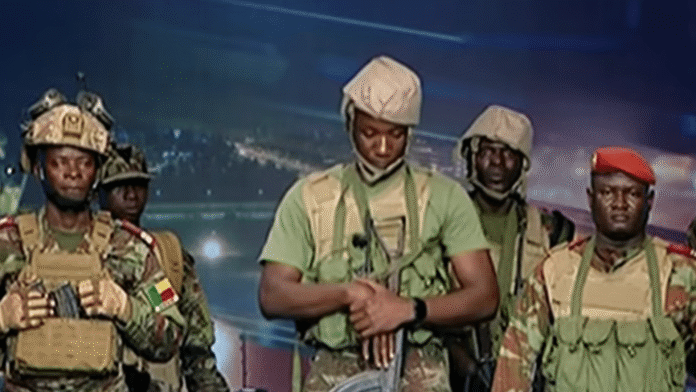
Two senior military officers seized during Sunday’s failed coup attempt in Benin have been released, authorities confirmed early Monday, as calm gradually returned to Cotonou.

Traffic and normal activity resumed in the economic capital after a faction of soldiers appeared on national television on Sunday claiming they had overthrown President Patrice Talon.

Hours later, Talon assured the nation in a televised address that the situation was “completely under control.”

Talon, 67, is expected to leave office in April after completing two terms, in line with Benin’s constitution.

The country has grappled with rising insurgent attacks in its northern region, adding to political tensions.

Nigeria, ECOWAS Intervene Swiftly

In response to the attempted takeover, Benin’s government called for immediate assistance from Nigeria. Abuja confirmed late Sunday that Nigerian forces had conducted operations in Cotonou including airstrikesband deployed troops to support Beninese authorities.

ECOWAS also announced it would send a regional standby force comprising troops from Ghana, Côte d’Ivoire, Nigeria, and Sierra Leone to help safeguard constitutional order.

The bloc, alongside the African Union, United Nations, and France, strongly condemned the coup attempt.

Hostages Released, Coup Leader on the Run

Military sources revealed that the two officers Chief of Army Staff Abou Issa and Colonel Faizou Gomina were freed overnight near a National Guard base in Cotonou. Several roads in the capital remained partially closed on Monday, and more military tanks were seen patrolling strategic locations.

The number of soldiers involved in the coup attempt remains unclear, and some individuals are still unaccounted for.

Authorities said about a dozen soldiers had been arrested so far.

President Talon commended security forces for “clearing the last pockets of resistance,” warning that “this treachery will not go unpunished.”

A high-ranking source confirmed that Lieutenant Colonel Pascal Tigri, believed to be the coup leader, is still at large.

Benin’s constitution bars Talon from seeking a third term.

His preferred successor, Finance Minister Romuald Wadagni, is widely viewed as the leading candidate in the April presidential election.

However, the main opposition party has been excluded from the race because its candidate did not obtain the required number of sponsorship endorsements a decision critics argue is part of Talon’s increasingly authoritarian approach.

Despite notable economic progress under Talon’s administration, analysts say democratic space has significantly narrowed in a country once considered one of West Africa’s most stable democracies.

Police condemn attack on Anambra church, vow to smoke out perpetrators

0
Retired police officers plan nationwide protests

By Agency Report


The Police Command in Anambra has condemned the attack on a Church carried out by armed criminals which resulted in the death of one person and leaving several others injured.

The Command’s Public Relations Officer, SP Tochukwu Ikenga, confirmed the development in a statement on Monday in Awka.

Ikenga said that the incident happened in the early hours of Sunday in Lilu, Ihiala Local Government Area of the state.

He disclosed that the Commissioner of Police, CP Ikioye Orutugu, had condemned the heinous and abominable act.

“This abominable act, committed against innocent worshippers, was not only an assault on the community but a grave affront to our shared values of peace, sanctity of life, and freedom of worship.

“The Command extends its deepest sympathies to the families of the victims and to the entire Lilu community and assures the public that the Police shall relentlessly hunt down the perpetrators of this crime.

“Our community should not be subjected to such brutality as the command will not allow criminals to instill fear or destabilize the peace we are working tirelessly to maintain”, the commissioner said.

Orutugu urged residents to remain calm and cooperate with the joint security team investigating the matter by providing useful information that can assist ongoing investigations for justice to be served.

He said that the command remains steadfast in its commitment to protecting lives and property across Ihiala and the entire state.


NAN

Communal clash: Police deploy more officers to Adamawa

0
Police
Police

The Adamawa State Police Command has deployed additional heavily armed officers to Lamurde Local Government Area following a renewed communal clash that began Sunday night.

In a statement, command spokesman SP Suleiman Nguroje advised residents to comply with the 24-hour curfew and stay indoors to prevent further unrest.

Commissioner of Police Dankwambo Morris emphasized that the deployment aims to enforce the curfew and maintain law and order, working with other security agencies.

“The command will not allow miscreants to operate unchallenged,” Nguroje warned, urging deployed officers to act within the law. Residents are asked to avoid actions that could threaten security.

Kanu suffers another blow as court rejects his request for transfer from Sokoto prison

0
Nnamdi Kanu
Nnamdi Kanu

The Federal High Court in Abuja has denied Nnamdi Kanu’s request to be transferred from Sokoto Correctional Centre to a facility closer to Abuja, citing the need to hear from the Federal Government and Nigerian Correctional Service first.

“You are from the Legal Aid Council. Do you think it is by ex parte motion that this application ought to be granted?” Omotosho asked Kanu’s lawyer, Demdoo Asan, noting that judgment in the case had been delivered with both parties present.

Kanu, leader of the proscribed Indigenous People of Biafra (IPOB), was sentenced to life imprisonment for terrorism-related offences on November 20, a verdict his family plans to appeal.

The court had previously ordered his transfer to Sokoto, deeming Abuja’s Kuje Centre unsuitable.

Kanu wanted to move to Suleja or Keffi for easier access to appeal proceedings.

Justice Omotosho questioned the wording of the application, particularly the use of the word “compel,” and asked whether such relief could be granted without notifying the respondents.

Asan agreed that the parties needed to be put on notice, and Relief One of the application was struck out.

“Don’t you think this application should have come by motion on notice?” the judge asked. Asan replied, “Yes, my Lord, they should be heard.”

The judge ordered that the prosecution and the correctional service be served before any further hearing, remarking that “a law school student will know that this application cannot be granted ex parte.”

The judge struck out part of the application, faulted the premature notice of appeal filed before judgment, and adjourned the case to January 27, 2026, ordering the respondents to be served before further hearings.

Wike’s PDP faction scraps National Working Committee, installs interim panel

0
Nysom Wike
Nysom Wike

A faction of the Peoples Democratic Party (PDP) has dissolved its national working committee (NWC) and established a 13-member caretaker panel to run the party for 60 days, ahead of a national convention.

The panel, inaugurated Sunday at FCT Minister Nyesom Wike’s residence, is chaired by Abdulrahman Mohammed, with Samuel Anyanwu as secretary.

Other members are Kamaldeen Ajibade (national legal adviser), Umar Bature (national organising secretary), Kyari Grema, Janguda Mohammed, Okechukwu Osuana, Nwogu Olaka, Sandy Onor, Adenike Ogunse, Bisi Kolawole, Deji Doherty, and Ibrahim Aboki.

The tenure of the PDP NWC elected in October 2021 will elapse on Tuesday.

Last month, a faction of the party backed by the PDP governors, including Bala Mohammed, governor of Bauchi; and Seyi Makinde of Oyo; held a convention and elected new NWC members, with Kabiru Turaki as chairman.

During the convention, the PDP expelled Wike and his allies — Ayodele Fayose, former governor of Oyo; Anyanwu, Bature, Ajibade, Mao Ohuabunwa, former lawmaker; Austin Nwachukwu, former Imo state PDP chairman; Amah Nnanna Abraham, former Abia state PDP chairman; Dan Orbih, former national vice-chairman (south-south); and Turnah George.

However, Wike group rejected the expulsion and has formed a parallel NWC, board of trustees (BoT), and NEC.

Benin Coup: ECOWAS Orders Immediate Deployment of Standby Force

0
ECOWAS

ECOWAS has ordered the immediate deployment of its Standby Force to the Republic of Benin, following Sunday morning’s failed coup attempt in the country.

The directive was announced in a fresh statement released by the ECOWAS Commission, just hours after its initial reaction to the crisis.

The intervention follows wide consultations with regional Heads of State, the Mediation and Security Council, and top defence officials.

According to ECOWAS, the deployment is anchored on Article 25(e) of the 1999 ECOWAS Protocol on Conflict Prevention, Management, Resolution, Peacekeeping, and Security, empowering the bloc to act swiftly when constitutional order is threatened.

“The Chair of the ECOWAS Authority has ordered the deployment of elements of the ECOWAS Standby Force to the Republic of Benin with immediate effect,”

the statement said.

The multinational force will include troops from:

Nigeria

Sierra Leone

Côte d’Ivoire

Ghana

ECOWAS explained that the mission will support Benin’s government and armed forces in preserving constitutional order and protecting the country’s territorial integrity.

Nigeria’s Swift Response Praised

President Bola Ahmed Tinubu, who currently chairs ECOWAS, commended the rapid intervention of Nigeria’s Armed Forces after Benin urgently requested military assistance.

Benin’s Ministry of Foreign Affairs issued two formal requests seeking immediate:

Nigerian Air Force support to secure its airspace

Surveillance and rapid-intervention missions,

And limited ground-force assistance for protecting key democratic institutions.

Nigeria complied promptly.

General Olufemi Oluyede, Nigeria’s Chief of Defence Staff, confirmed that Nigerian troops are already operating inside Benin, following Tinubu’s orders.

“Ours is to comply with the Commander-in-Chief’s directive,”he stated.

The coup attempt, which saw plotters seize the national television station before regrouping in a military camp, was swiftly neutralized.


JUST IN: Court Rejects Nnamdi Kanu’s Request for Transfer From Sokoto Correctional Centre

0
Detained leader of the Indigenous People of Biafra (IPOB), Mazi Nnamdi Kanu

The Federal High Court in Abuja has refused to grant an ex-parte motion filed by Nnamdi Kanu, leader of the proscribed IPOB, seeking his transfer from the Sokoto Correctional Centre.

Kanu, who is convicted on terrorism charges, had asked the court to compel the Federal Government and the Nigerian Correctional Service (NCoS) to move him to a custodial facility within the court’s jurisdiction preferably Suleja or Keffi to enable him properly pursue his appeal.

But Justice James Omotosho ruled that such a request cannot be granted through an ex-parte application, stressing that the Federal Government and the NCoS must first be put on notice before the court can consider the motion.

The judge questioned why Kanu attempted to “compel” the respondents without hearing from them, noting that even “a law school student will know this application cannot be granted ex-parte.”

Kanu’s counsel, Demdoo Asan of the Legal Aid Council, admitted that the respondents had the right to be heard and agreed that the first relief in the application should be struck out.

In a twist, the court also observed irregularities in Kanu’s notice of appeal, which was dated 10 November, ten days before the judgment delivered on 20 November meaning no valid appeal was before the court.

Justice Omotosho ordered that the Federal Government and NCoS be properly served and adjourned the case to January 27, 2026 for hearing.

Kanu’s team told the court they would “do the needful.”


Adamawa gov imposes 24-hr curfew on Lamurde LGA

0
Governor Fintiri
Governor Fintiri

The Adamawa State Government has imposed a 24-hour curfew on Lamurde local government area, effective immediately, following a violent communal clash that erupted Sunday evening.

Reports indicate that armed Chobo-speaking militia from Gombe State, joined by local counterparts, attacked Bachama communities, leaving dozens feared dead and several villages—including Tingno and Waduku—sacked.

In a statement, Deputy Governor’s Press Secretary Hussaini Hammangabdo said security agencies have been deployed to restore order.

The government appeals for residents to stay calm and peaceful as efforts to address the situation continue.


JUST IN: Nigeria’s World Bank Loans Set to Hit $9.65 Billion by 2025 — Report

0
Nigeria groaning under mounting debt, poverty and unemployment

Nigeria’s total borrowing from the World Bank is projected to reach $9.65 billion between 2023 and 2025, according to new financial data reviewed, Including grants, total World Bank support over the three-year period climbs to $9.77 billion, with most of the funding coming from the concessional International Development Association (IDA) window.

The borrowing trend accelerated sharply under the current administration:

2023: $2.7bn

2024: $4.25bn (boosted by the $1.5bn economic stabilisation programme)

2025 (projected): $2.695bn

The bulk of the loans are tied to power sector reforms, education, digital infrastructure, health, and economic stabilisation programmes.

Nigeria is now the largest IDA borrower in Africa and third-largest globally, with IDA exposure rising to $18.5 billion as of September 2025.

Economists Divided

Some experts argue the concessional loans are necessary for development, provided they are channelled into revenue-generating, growth-driven projects.

But others warn that: Nigeria’s debt service burden is rising,

external borrowing is intensifying inflationary pressures, and the country’s exchange rate crisis is worsening.

Critics question the rationale for heavy borrowing despite government claims of improved revenue performance.

Insecurity: Emmanuel Macron expresses solidarity with Nigeria

0

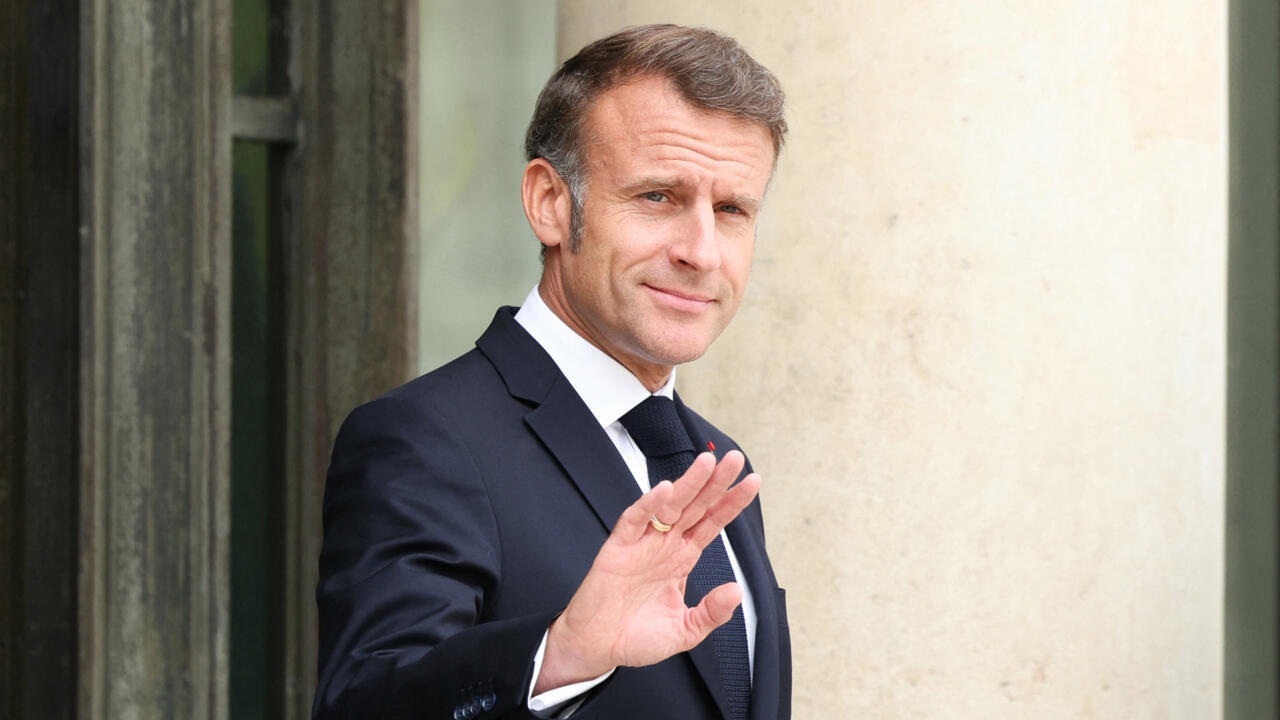
French President Emmanuel Macron has expressed solidarity with Nigeria amid escalating insecurity, particularly the terrorist threat in the North.

After speaking with President Bola Tinubu, Macron pledged to strengthen France’s partnership with Nigerian authorities and support affected communities.

“I spoke with President Tinubu of Nigeria, @officialABAT. I conveyed France’s solidarity in the face of the various security challenges, particularly the terrorist threat in the North.

“At his request, we will strengthen our partnership with the authorities and our support for the affected populations.

“We call on all our partners to step up their engagement. No one can remain a spectator,” he said in the tweet

He also called on the international community to step up engagement, emphasizing, “No one can remain a spectator”.


We are not Aware of 100 Students Release — CAN

0

The Christian Association of Nigeria (CAN), Niger State Chapter, says it has not received any official notification on the reported release of 100 students abducted from St. Mary’s Private Catholic Primary & Secondary School, Papiri.

Chairman of CAN in the state, Bishop Bulus Yohanna, said on Monday that while the news would be a welcome development, the association and affected communities have not been formally informed of any students’ return.

“It will be a thing of joy if some of our children have been released… However, we are not officially aware and have not been duly notified,” he said.

“We hope and pray it’s true and look forward to the release of the remaining students.”

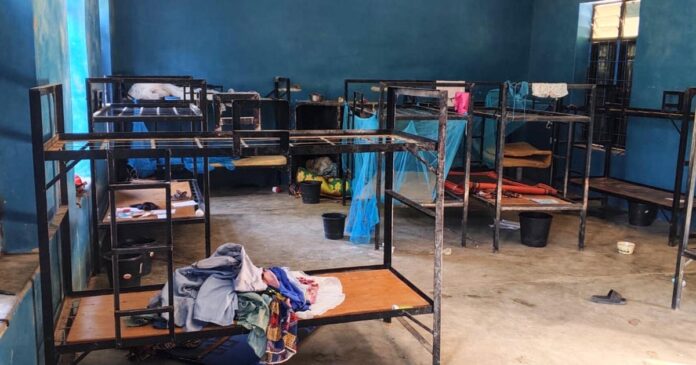
On 21 November, bandits attacked the Papiri school, abducting 315 people—303 students and 12 teachers.

About 50 students escaped within the first 24 hours.

Last week, National Security Adviser Nuhu Ribadu visited the community, assuring parents that the abductees were alive and would soon return home.

Reacting on Channels TV’s Sunday Politics, retired Major General John Enenche commended the Federal Government and security agencies for reportedly securing the freedom of 100 students, noting that such operations are never easy.

Authorities have yet to provide detailed updates on the whereabouts of the remaining abductees.

IPOB committed the worst Christian genocide in Nigeria 

0
IPOB

By Onwuasoanya FCC Jones


If the theory of Christian genocide as propounded and promoted by the very charismatic and courageous Reverend Dachomo is to be taken seriously for what it means, then, there is no group of terrorists that is more guilty of committing Christian genocide than the IPOB, through its terrorist militia wing, the ESN and other splinters.

For context, Christian genocide can be defined as the targeted extermination of Christians for the purpose of destroying or at least discouraging more people from joining or participating in the Christian faith and worship.

Boko Haram, Iswap, Lakaruwa and other Northern based terrorist groups have been blamed for massive extermination of Christians in the North, hence, the campaign by Reverend Dachomo and other people and groups calling the attention of the world to the atrocities against Christians. Without meaning to discredit Dachomo’s campaign or to trivialise the tragedies suffered by Christians in the North over the last decade, the reality is that if we have to determine the truth of this situation by the ratio of Christians affected to Muslims and people of other religions, then, Southeast qualifies far ahead of the North for intervention over the abhorrent persecution and extermination of Christians.

According to HumAngle which describes itself as; “A non-governmental, not-for-profit organisation established in 2022 to address the human fallout of insecurity and conflict, both of which have been documented for half a decade by its progenitor, HumAngle Media”; for every Christian affected by the insecurity in the North, at least, eight Muslims suffered the same or worse fate. This might not explicitly make the claim of Christian genocide in the North completely irrelevant, but it definitely provides an alternative perspective that helps for objective conclusion.

In the Southeast, 99% of those who lost their lives or have been adversely affected by the IPOB orchestrated insecurity, are Christians. One may argue that this is so because a good majority of Southeast residents are Christians. While this is true, we must not fail to take cognisance of the declared intention of the perpetrators of these atrocities against Southeast Christians.

Nnamdi Kanu, the founder and leader of the proscribed and terrorist IPOB did not make any pretences about his revulsion at Christians, from the onset of his criminal enterprise. He started off by trying to introduce and even impose a queer version of Judaism as the official religion of the Southeast. He poured all manner of invectives against Christianity and invited hatred against Christian laity and the clergy in the Southeast. He even banned Christian gatherings, including a planned crusade by members of the Deeper Life Church and other Pentecostal churches. Some of the initial casualties of his violent campaign were Christian clergy.

When people seem alarmed at the violent encroachment on an Anglican Church in Anambra yesterday, which led to the unfortunate killing of the Pastor’s wife and burning of the parish house, I feel that we might have forgotten certain things. This incident in Anambra isn’t an exception, rather it is a furtherance of IPOB’s pattern of attacking Christians. In fact, if we take accurate census of attacks on religious buildings in the Southeast, we might find it difficult locating a single mosque that had been attacked by the IPOB and its affiliates, but more than 300 churches and Christian places of worship and institutions have definitely borne the brunt of Nnamdi Kanu and his IPOB persecution.

The National Security Adviser, Mallam Nuhu Ribadu should not forget to bring this to the notice of his USA guests on Fact-finding mission, so that whatever security or intelligence assistance that may be offered would also be extended to the Southeast. We need to flush out whatever might be left of IPOB terrorism in the Southeast, for peace and prosperity of the zone to be guaranteed.

May Alaigbo Heal!

Onwuasoanya FCC Jones, PhD. is a former Deputy Youth Leader of Ohanaeze Ndigbo Worldwide.

Auntie Esther: Why Jehovah’s Witnesses Don’t Accept Blood Transfusions

0

Again, Nigeria finds itself in the very centre of impassioned argument over the most personal medical decision of a woman for whom many came together to help.

Omolola Mensah, affectionately known as Auntie Esther, became the focal point of a national debate not because she was asking for aid but because of what her faith led her to refuse.

Auntie Esther, famous on X formerly Twitter for her colourful “market runs,” sought public assistance after her diagnosis with breast cancer, and Nigerians contributed about ₦30 million towards her treatment.

It was a moment that showcased our unmatched culture of compassion.

But soon after, a subsequent update she posted shifted the conversation sharply.

The 38-year-old Jehovah’s Witness explained that though her doctors had suggested a blood transfusion to prepare her for chemotherapy, she had declined.

Instead, she opted to depend on injections and recommended foods to boost her blood count an option her medical team agreed to support.

And so, with that, the revelation split the country into two.

Some Nigerians argued that it should go to someone who was prepared to undergo “full” medical treatment.

Others insisted that faith and bodily autonomy were sacrosanct, even when donation money was involved.

And that leads to the question: Why is one woman’s religious conviction shaking an entire nation?

Faith versus Medicine: A Conflict Older Than This Debate

It is no secret that Jehovah’s Witnesses refuse blood transfusions. Specific Bible verses enjoin believers to abstain from blood in any form.

To Witnesses, this is not a symbolic instruction; it is a direct command from God.

Here are the key scriptures their doctrine is built on:

Genesis 9:4 – “But you must not eat meat which still has its lifeblood.”

Leviticus 17:10 – “I will set my face against any Israelite or any foreigner residing among them who eats blood…”

Deuteronomy 12:23 – “Be sure you do not eat the blood, because the blood is the life…”

Acts 15:28–29 – “…you must abstain from food sacrificed to idols, from blood, from the meat of strangled animals, and from sexual immorality.”

Leviticus 17:14 – “Because the life of every creature is its blood… anyone who eats it must be cut off.”

Jehovah’s Witnesses interpret these passages literally.

To them, receiving a blood transfusion is spiritually the same as taking in blood in a way that the scriptures forbid.

This belief forms the foundation of all medical decisions involving blood.

So when Auntie Esther refused the transfusion, she was not rebelling against medical advice; she was obeying a command she believes comes from God Himself.

But the Outrage Says More About Nigeria Than About Her

Nigeria is a religious country; ironically, however, when someone’s religious conviction leads them to make a hard personal choice, many of us struggle to respect it especially when money is involved.

But herein lies the truth:

Charity cannot purchase one’s right to control another person’s body.

People donated to help her fight cancer, not to dictate her conscience.

Those who have been asking for the donations to be transferred to another patient reveal an uncomfortable part of our national character:

We are generous, but we often expect compliance in return.

But compassion is not conditional.

Autonomy is not something to be bargained over.

And just because it becomes inconvenient to us, one’s faith is not invalidated.

The Bigger Lesson for Nigeria

Auntie Esther’s case has made Nigeria face some hard questions:

Do we support only those who follow our preferred medical choices?

Do we respect religious convictions only when they match our expectations?

Does public donation give the public ownership of someone’s body?

Her decision may delay treatment. It may cost more. It may challenge the emotions of donors. But ultimately, it remains her decision, shaped by scriptures she holds sacred.

True pluralism involves respecting choices-even the ones that are uncomfortable-in a diversified country with Muslims, Christians, traditionalists, atheists, and everything else in between.

This is really not about blood. It is about how Nigeria responds to conviction. It is about whether personal belief still has a place in public sympathy.

And above all, it is about defending every citizen’s right to choose how to face illness, life, and God. That’s a right well worth protecting.

Visit www. jw.org for more information on this topic .

Gunmen attack Njikoka LGA in Anambra

0

A yet-to-be-confirmed number of people have been feared killed after gunmen attacked the Afor Market Junction in Nawfia, Anambra State, on Sunday, sparking panic and chaos.

Nawfia is in Njikoka Local Government Area of Anambra State.

Residents described the attackers as opening fire indiscriminately, leaving several fatally injured and many fleeing for safety.

“It was chaos. They came out of nowhere, shooting,” a witness said, with another resident calling it a “senseless act of violence” that has left the community shaken.

Videos circulating online show people running for cover and bodies lying in pools of blood.

Meanwhile, Nawfia Progressive Union’s President General, Chief Daniel Okoye, condemned the attack, saying security agencies have been alerted and investigations are underway.

“I appeal to all Ndi Nawfia to remain calm and cooperate with security operatives,” he said, expressing sympathies to affected families.

The Anambra State Police Command has reportedly launched an investigation, vowing to apprehend the perpetrators.


I still don’t know my exact age — Obasanjo

0
Former president, Chief Olusegun Obasanjo

Former President Olusegun Obasanjo has once again stated that he doesn’t know his exact age, humorously suggesting listeners guess based on his primary schoolmates—six of whom are still alive, all over 90 years old.

Obasanjo spoke on Sunday during the Toyin Falola Interviews series tagged, “A Conversation with His Excellency, Chief Olusegun Obasanjo.”

The interview was anchored by Professor Toyin Falola, a renowned Nigerian Historian as well as Bishop of Sokoto Diocese, Dr. Mathew Kukah and former Presidential Candidate, Professor Kingsley Moghalu.

He also declared that he set up the presidential library to preserve institutional memory, keep records of things, adding, “We have digitalised over 3m materials. We still have about the same number, 3m to digitalise.

“The idea is to make these materials accessible, preserve the past, document the present, and inspire the future,” Obasanjo said.

The library houses his school records, letters (including one to late dictator Sani Abacha about his son’s death), and even crops he grew in prison.

He emphasized the importance of keeping institutional memory, something he feels Nigeria doesn’t do well.


Get Notifications from DDM News Yes please No thanks