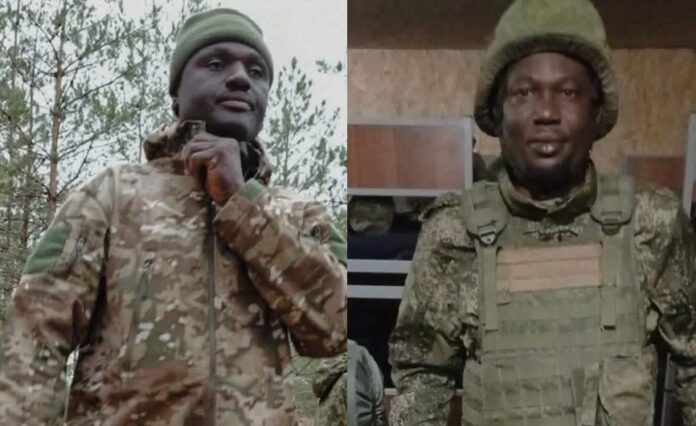
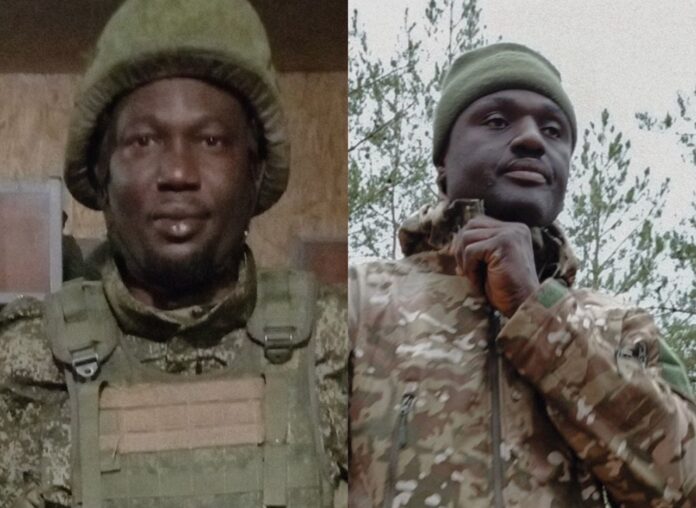
The bodies of two Nigerian nationals, Hamzat Kazeen Kolawole and Mbah Stephen Udoka, have been recovered on the battlefield in eastern Ukraine, specifically in the Luhansk region, after being killed by drone strikes while attempting to storm Ukrainian positions.
Ukrainian intelligence (DIU) has described the situation as the brutal exploitation of African recruits, who were deployed in deadly “meat assault” missions with little or no military training.
The two Nigerians were among foreign recruits allegedly sent directly to the front lines, where they were used in high-risk infantry assaults with extremely high casualty rates.
Udoka, who signed a military contract on September 28, 2025, Diaspora Digital Media gathered, received no formal training before being drafted into active combat just five days later.
Ukrainian intelligence has warned that foreign nationals, particularly from African countries, are being recruited with promises of employment or financial incentives, only to be immediately deployed to front-line combat zones.
The agency has described this as a disturbing pattern, with recruits often used in “meat assaults” designed to exhaust Ukrainian ammunition and expose enemy positions, often at the cost of heavy casualties among poorly trained foreign fighters.
The DIU noted that the brutal cost of Russia’s recruitment of African nationals has been laid bare.
The deaths of the two Nigerians come amid growing reports that African nationals recruited into Russian forces are being used in high-risk operations with little regard for their safety.
Ukraine has announced the discovery of the bodies of two Nigerian nationals in the Luhansk region, alleging that the men were fighting on the side of Russia in the ongoing four-year war.
In a statement issued on Thursday, Ukraine’s Defence Intelligence agency said the men were identified as Hamzat Kazeen Kolawole, 42, and Mbah Stephen Udoka, 38.
According to the agency, both men served in the 423rd Guards Motor Rifle Regiment (military unit 91701) of the 4th Guards Kantemirovskaya Tank Division of the Armed Forces of the Russian Federation.
The statement said Kolawole and Udoka signed contracts with the Russian Army in the second half of 2025 — Kolawole on August 29 and Udoka on September 28.
Udoka was reportedly deployed on October 3, just five days after signing his contract, and was assigned to a unit operating in what Ukraine described as temporarily occupied territories. The intelligence agency claimed he had no prior military training before his deployment.
“No training records for Kolawole have been preserved; however, it is highly likely that he also received no military training. His wife and three children remain in Nigeria,” the statement added.
The Luhansk region in eastern Ukraine has been a focal point of intense fighting since Russia’s invasion began in 2022. Ukrainian authorities did not provide further details on the circumstances surrounding the deaths of the two Nigerians.
As of the time of filing this report, there has been no official confirmation or response from Russian authorities or the Nigerian government regarding the claims.
The United States is preparing to dispatch the world’s largest aircraft carrier to the Middle East to reinforce forces already stationed in the region, according to a person familiar with the plan, adding significant military weight to President Donald Trump’s push to pressure Iran over its nuclear program.
The deployment of the USS Gerald R. Ford follows comments by Trump only days ago indicating that another round of negotiations with Tehran could be imminent.
Those talks have yet to take shape, however, as a senior Iranian security official traveled this week to Oman and Qatar, where messages were exchanged with U.S. intermediaries.
Gulf Arab countries have already cautioned that any strike could trigger a broader regional conflict, at a time when the Middle East is still grappling with the fallout from the Israel-Hamas war in Gaza. At the same time, Iranians are beginning 40-day mourning ceremonies for thousands killed during last month’s violent crackdown on nationwide protests, increasing pressure on the heavily sanctioned Islamic Republic.
The Ford’s deployment, first reported by The New York Times, would mean two U.S. carrier strike groups operating in the region. The USS Abraham Lincoln, along with its guided-missile destroyers, is already positioned in the Arabian Sea.
The individual who spoke to The Associated Press about the move did so on condition of anonymity to discuss military operations.
Ford had been part of Venezuela strike force.
The move represents a rapid redeployment for the Ford, which Trump ordered from the Mediterranean to the Caribbean last October as the administration amassed a large military presence before the surprise raid last month that resulted in the capture of then-Venezuelan President Nicolás Maduro.
The decision also appears to diverge from Trump’s national security strategy, which has emphasized the Western Hemisphere over other regions.
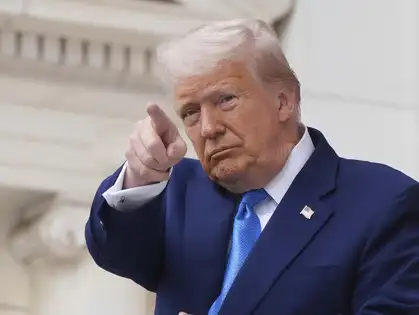
On Thursday, Trump warned Tehran that failing to reach an agreement with his administration would be “very traumatic.” Iran and the United States held indirect talks in Oman last week.
“I guess over the next month, something like that,” Trump said in response to a question about his timeline for striking a deal with Iran on its nuclear program. “It should happen quickly. They should agree very quickly.”
Trump also told Axios earlier this week that he was considering sending a second carrier strike group to the Middle East.
After lengthy talks on Wednesday with Israeli Prime Minister Benjamin Netanyahu, Trump said he had urged Israel’s leader to allow negotiations with Iran to continue. Netanyahu has been pressing Washington to push Tehran to scale back its ballistic missile program and halt support for militant groups such as Hamas and Hezbollah as part of any agreement.
The USS Ford began its deployment in late June 2025, meaning the crew will have been at sea for eight months within two weeks. While the duration of the ship’s stay in the Middle East remains unclear, the move could result in an unusually long deployment for the crew.
The White House did not immediately respond to a request for comment.
Ford’s deployment comes as Iran mourns
Inside Iran, anger remains over the government’s sweeping crackdown on dissent. Tensions could intensify as families begin the traditional 40-day mourning ceremonies for those killed. Online videos have already shown gatherings in different parts of the country, with mourners holding portraits of the dead.
One video appeared to show people at a cemetery in Iran’s Razavi Khorasan province, home to Mashhad, on Thursday. Using a large portable speaker, the crowd sang the patriotic song “Ey Iran,” which dates back to the 1940s during the rule of Shah Mohammad Reza Pahlavi. Though it was initially banned after the 1979 Islamic Revolution, Iran’s current leadership has at times used it to rally public support.
“Oh Iran, a land of full of jewels, your soil is full of art,” they sang. “May evil wishes be far from you. May you live eternal. Oh enemy, if you are a piece of granite, I am iron.”
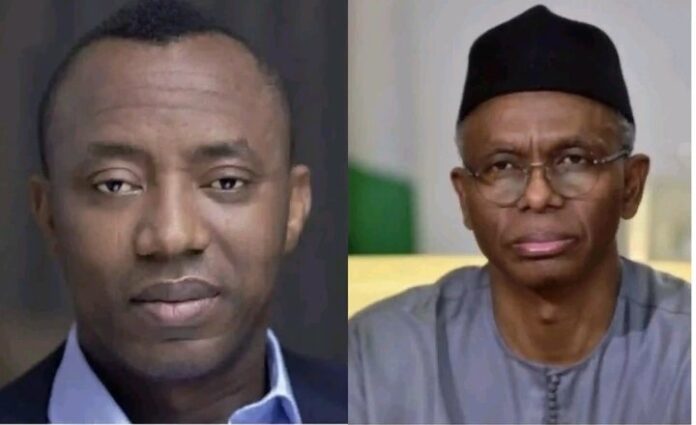
(DDM) – Former presidential candidate Omoyele Sowore has publicly criticised security agencies over reports that they attempted to arrest former Kaduna State governor Nasir El-Rufai upon his arrival in Abuja.
DDM reports that the development has stirred debate about due process, civil liberties, and the conduct of security operatives at Nigeria’s international gateways.
Sowore reacted after reports emerged that security personnel confronted El-Rufai at Nnamdi Azikiwe International Airport on Thursday.
He used his verified account on X to demand the immediate return of the former governor’s passport.
He described the reported conduct of the operatives as harassment and labelled the situation deeply troubling for democratic accountability.
Sowore argued that security institutions must always operate within constitutional limits regardless of the individuals involved.
Media reports said El-Rufai arrived in Abuja aboard a flight operated by EgyptAir from Cairo.
Accounts circulating online claimed that security officers approached him shortly after landing.
Members of his legal team alleged that operatives linked to the Department of State Services tried to detain him without presenting formal documentation.
They also alleged that officers took possession of his international passport during the encounter.
The claims quickly spread across political circles and triggered arguments about legality and proportionality.
Observers noted that airport confrontations involving senior political figures often generate public suspicion.
Supporters of El-Rufai insisted that authorities should follow transparent legal procedures when inviting citizens for questioning.
Critics, however, argued that no public official should receive special treatment before the law.
El-Rufai’s lawyers maintained that he had already shown willingness to cooperate with investigators.
They said he planned to honour an invitation from the Economic and Financial Crimes Commission on a scheduled date.
They added that he never resisted lawful engagement with authorities.
Political commentators said the episode reflects growing tension between opposition figures and federal institutions.
Some analysts warned that dramatic airport incidents can damage Nigeria’s democratic image internationally.
Others said firm law enforcement remains necessary if done within legal boundaries.
Security agencies have not released an official statement directly addressing the allegations.
The absence of a formal response has left room for speculation across social and political platforms.
Civil society voices have called for clarity to prevent misinformation and political escalation.
Legal experts emphasised that passport seizure typically requires clear legal justification.
They warned that irregular enforcement could invite court challenges.
As reactions continue, many Nigerians watch closely to see whether authorities will clarify what truly happened.
The incident has now joined a list of politically sensitive encounters shaping early conversations ahead of the 2027 elections.
The Anambra State Police Command has arrested a 26-year-old man, Chibunna Nwafor, over his alleged involvement in the murder of a pregnant nurse in Ogbunike, Oyi Local Government Area of the state.
The suspect, also known as “Offonwadile,” is alleged to be a native doctor who conspired with gang members to murder and mutilate the victim before taking her remains to his shrine.
The nurse was reportedly killed in July 2025 after being lured to a friend’s residence under the guise of providing medical assistance.
The friend was arrested on July 29, 2025, through community efforts, while the alleged prime suspect went into hiding.
Arrest in Umueri
In a statement issued on Friday, the police spokesperson, SP Tochukwu Ikenga, said the prime suspect was apprehended on February 11, 2026, following sustained intelligence gathering and collaboration with members of the community.
According to Ikenga, Nwafor was arrested at his hideout in Umueri community, Anambra East Local Government Area, as part of ongoing investigations into the case.
“The Anambra State Police Command, through sustained community collaboration and intelligence-driven efforts, took into custody on February 11, 2026, one of the prime suspects in the gruesome murder of a pregnant nurse whose body was mutilated in Ogbunike, Oyi Local Government Area,” the statement read in part.
The Command confirmed that the suspect has been handed over to a higher investigative formation for further discreet investigation.
Police Vow Justice
The Commissioner of Police, CP Ikioye Orutugu, commended community members for providing timely information that led to the arrest.
He reiterated the Command’s commitment to ensuring that all those involved in the crime are brought to justice.
Investigations are ongoing, and the police said further updates would be provided as developments unfold.
Earlier reports indicated that mutilated human body parts were recovered at a native doctor’s shrine during the initial investigation.
Police had also disclosed that a suspect arrested in July 2025 provided information on how body parts were allegedly sold to various native doctors in the area.
Two people were killed and one injured in a shooting late Thursday night at South Carolina State University in the southern United States, officials confirmed.
The university said the campus was placed on lockdown at about 9:15 p.m. (0215 GMT Friday) after reports of gunfire at an apartment inside the Hugine Suites student residential complex.
In a statement, the institution said it had not yet confirmed the identities of the victims or provided details on the condition of the injured individual. Authorities also did not indicate whether any suspects had been taken into custody.
Local law enforcement agencies are assisting campus police in patrolling the university and surrounding areas as investigations continue.
The university announced that Friday classes have been cancelled while the campus remains under lockdown.
The incident comes days after a separate school shooting in British Columbia, Canada, where an 18-year-old gunman killed eight people.
It is the latest in a series of school-related shootings in the United States, where debates over gun control measures continue amid persistent political divisions.
Investigations into the South Carolina incident are ongoing.
—Governor Soludo’s success in Anambra should serve as an inspiration to leaders everywhere that the impossible can be done, and no mission is actually impossible when the political will is there—
In the sphere of leadership, where challenges often loom larger than life, the ethos of Tom Cruise’s hit movie “Mission Impossible” franchise comes to mind as a poignant metaphor for the indomitable spirit of those who refuse to accept defeat.
Just as Ethan Hunt and his team face seemingly insurmountable odds with undaunted determination and surmount them, so too does Governor Chukwuma Charles Soludo, CFR, of Anambra State. His bold and decisive leadership embodies the very essence of this cinematic inspiration, where ‘No’ is never an option and every obstacle is only a stepping stone to success.
All through the history of Nigeria’s subnationals, few moments could have been as phenomenal as the recent actions taken by Governor Chukwuma Charles Soludo. His bold and decisive leadership has not only restored the security of lives and property, but has also brought an end to the economically debilitating Monday sit-at-home practice that plagued the region for five long years. It is instructive that this is not just a victory for Anambra; it is a sign of hope for the entire Southeast region and even the nation.
For years, the people of the South-east suffered under the oppressive shadow of non-state actors and their enforced sit-at-home order. The economic toll was staggering, with Anambra State alone losing a mind-boggling N8 billion weekly in business trade. The region as a whole reportedly lost an estimated N7.6 trillion between 2021 and 2025. Schools, markets, banks, and offices were shut down, and the streets were eerily silent every Monday as in a ghost town. The fear was palpable, and the suffering was immense.
But in the face of such excruciating adversity, Governor Soludo has been leading like a battle angel of hope, courage, and resilience. His administration’s unswerving commitment to security and economic revival has brought about a paradigm shift. As he recently stated, “When I assumed office, so far since I came into office, about 62 criminal camps have been dismantled in Anambra, and we’re not resting for one second. In Anambra, we pride ourselves on being the safest, if not…modestly, one of the safest states in the country.”
Naturally, Governor Soludo’s intrepid actions have been nothing short of game-changing. By dismantling criminal camps and establishing effective vigilante groups like Agunechemba, he has created an environment where law and order now prevail. Besides, the reopening of over 45,000 shops at the Onitsha Main Market, after the catalytic official shutdown weeks ago, with business activities now at their peak, is a veritable proof of his success. The jubilation of traders and the bustling markets across the state have become a stark contrast to the ghost towns of the past. A mission impossible has become possible!
In emphasising the expediency of collaboration towards tackling insecurity, the governor’s words ring true: “Security is everybody’s responsibility. It requires a systemic, collaborative approach to be able to deal with it comprehensively.” His emphasis on collaboration between federal, state, and local governments is a model for the rest of the nation. After all, with the governor himself getting all security agencies in the state working together, his administration has managed to curtail criminality and restore normalcy to the lives of Anambra’s residents.
By and large, the impact of Governor Soludo’s fearless leadership goes beyond Anambra. His actions have shown that the people of the South-east are eager to return to their normal lives. The sit-at-home order was enforced through fear, but the people’s compliance was never voluntary. In Onitsha, the traders’ return to business activities after the governor’s intervention proves that the people are ready to move forward and would not be cowed by fear anymore.
With the economic revival of Anambra being the governor’s vision, the reopening of businesses and the resumption of economic activities are indeed crucial steps towards rebuilding the entire region’s economy. The federal and state governments must continue to collaborate to ensure that the region remains secure and prosperous, as the people have shown that they are tired of the crisis and want to live their normal lives again.
Thus, Governor Soludo’s success in Anambra should serve as an inspiration to leaders everywhere that the impossible can be done, and no mission is actually impossible when the political will is there. The illegitimate sit-at-home order has been banished once and for all. The people have shown their readiness to embrace peace and prosperity. The governments have already designed several economic activities (via various empowerment programmes put in place by Governor Soludo’s administration) for those previously engaged in criminal activities, with the aim of providing them with opportunities for redemption and rehabilitation.
Also, the government would of course continue to play its part by adequately securing the state and preventing any attacks on soft targets that could trigger a return to fear. In the final analysis, Governor Soludo’s leadership has brought about a historic transformation in Anambra State. His bold and decisive actions have restored security, revived the economy, and given hope to the people. His words and actions serve as a therapeutic balm that with courage, collaboration, and determination, we can overcome even the most daunting challenges.
Chukwuemeka Oforah, a 21-year-old US Marine of Nigerian descent, has been confirmed dead after falling overboard from the USS Iwo Jima in the Caribbean Sea on February 7, 2026.
The search operation, involving five ships and 10 aircraft, concluded on February 10, and his death was announced on Wednesday.
Oforah, an infantry rifleman with the 3rd Battalion, 6th Marine Regiment, was deployed with the 22nd Marine Expeditionary Unit as part of Operation Southern Spear, targeting drug-trafficking boats.
His death marks the first known American fatality in Operation Southern Spear, launched under the Trump administration.
The operation has executed 38 lethal strikes on suspected drug boats since September 2025 and played a key role in capturing Venezuelan president Nicholas Maduro.
The US Marines expressed condolences to Oforah’s family, with Col. Tom Trimble stating, “The loss of Lance Cpl. Oforah is deeply felt across the entire Navy-Marine Corps team. He will be profoundly missed, and his dedicated service will not be forgotten”.
An interview featuring Jaden Smith has sparked conversation online after the entertainer suddenly walked off set when asked what many viewers considered a routine question.
The moment, which has since made the rounds across social media, showed the actor and musician appearing uncomfortable as the interviewer pressed him for clarity. Rather than continue, Jaden reportedly chose to end the conversation, standing up and leaving before the segment could properly wrap.
Clips of the incident quickly circulated, dividing fans. Some critics argued that, as a public figure, he should be prepared for direct or even uncomfortable questions during media appearances. Others came to his defense, suggesting the line of questioning may have crossed a personal boundary or caught him off guard.
Jaden, who is the son of Hollywood star Will Smith, has long been known for his unconventional personality and guarded approach to interviews. Over the years, he has spoken about wanting to protect his private life while still engaging with supporters and promoting his creative work.
Neither Jaden nor his representatives have publicly addressed the walkout at the time of writing. However, the debate continues to trend, with many people weighing in on celebrity boundaries, media expectations, and how far interviewers should go when seeking answers.
As conversations about respect and privacy grow louder in the entertainment industry, moments like this keep raising the same question: how much does the public really deserve to know?
“Soon after we landed… We were conducted immediately to the merchant’s yard, where we were all pent up together, like so many sheep in a fold, without regard to sex or age.” — Olaudah Equiano.
History does not shout. It stands. Sometimes it stands as a plinth by the sea. On the waterfront of Bridgetown, where salt and memory mix in the wind, those words remain – unweathered in their wound. Sheep in a fold. No names. No mothers. No sons. Only cargo counted and skin appraised. The grammar of dehumanisation is always efficient: without regard. That phrase is the iron ring around the ankle of history. And yet, from that fold of forced silence rose a voice that would not be shorn.
Olaudah Equiano arrived in Barbados as inventory. He left the world as testimony. Between those two points – merchant’s yard and printed page – stretches one of the most radical journeys in human history: the journey from object to author. His autobiography did not merely narrate pain; it indicted an empire. It did not simply recall suffering; it reorganised memory. He took the language of those who sold him and bent it into a blade of truth. That is why Bridgetown is not merely a port. It is a punctuation mark in the long sentence of Black survival.
Now, centuries later, another journey crosses the Atlantic – not in chains, but in choice. The Regent of Abagana, Dr. Nwachukwu Anakwenze, arrives not as cargo but as kin. Stage Three of an Igbo reconnection mission moves from Antigua and Barbuda, through Montserrat, into Barbados. The route itself is a reversal. Where slave ships once traced triangles of profit, this voyage traces a circle of remembrance. Circles heal what triangles cut.
However, this mission is not driven by sentiment alone. It carries an intellectual compass. The University of Nigeria, through the visionary leadership of the emergent Igbo–Gullah–Caribbean Cultural Heritage Institute, provides the scholarly anchor of this reconnection. Here, memory is not left to monument and emotion; it is curated, researched, archived, and taught. The Institute envisions a transatlantic corridor of ideas, linking Nsukka to Bridgetown, Abagana to the Gullah-Geechee coast, where linguistics, anthropology, history, performing arts, and digital humanities converge to restore fractured genealogies. In doing so, UNN transforms homage into heritage policy, pilgrimage into programme, sentiment into scholarship. It ensures that Equiano’s narrative is not merely quoted at the waterfront but interrogated in classrooms, preserved in repositories, and translated into curricula that future generations will inherit. The fold is studied. The yard is contextualised. The diaspora becomes syllabus rather than footnote.
Equiano’s metaphor – “like so many sheep in a fold”- was not accidental. Sheep are counted, herded, traded. Sheep are denied individuality. The slave yard was a pastoral parody; i.e., a grotesque farm where human beings were livestock in the marketplace of greed. No regard to sex. No regard to age. The flattening of difference was the method; profit was the motive. But here is the paradox history could not foresee: from that fold emerged one who would name the fold. From the yard emerged a witness who would document the yard. The system that sought to erase him unwittingly armed him – with literacy, with mobility, with perspective. Empire educated its own accuser. That is the irony inscribed in Bridgetown’s plinth.
Dr. Anakwenze’s presence there is not ceremonial tourism. It is semiotic repair. It says: the fold did not finish us. It says: the sheep remembered they were shepherds of memory. It says: what was scattered across the Caribbean tide still recognises its ancestral shore. The Igbo story is riverine – always flowing, never entirely lost. In Antigua, in Montserrat, in Barbados, fragments of that river still murmur in surnames, in drum patterns, in the tilt of proverbs half-remembered. Reconnection is not nostalgia; it is restoration of narrative sovereignty. It is the refusal to let the only archive be the slave ledger. Equiano wrote himself back into humanity. That act alone is revolutionary. But it is also instructive. Memory must be curated, or it will be curated for us. History must be narrated, or it will be narrated against us. The plinth in Bridgetown stands as counter-archive, a stone rebuttal to centuries of distortion.
And so the Regent’s homage is layered. It honours the boy torn from his homeland. It honours the man who mastered the master’s language. It honours the millions unnamed whose stories dissolved in saltwater silence. But it also honours something else: continuity. For what is reconnection if not the refusal of “without regard”? The slave yard erased regard. Reconnection restores it. To stand at that waterfront today is to feel the tremor between past and present. Ships once docked there heavy with despair. Now delegations arrive heavy with purpose. The Atlantic, once a corridor of captivity, becomes a bridge of belonging. The very waters that witnessed dispossession now witness return. Not return of bodies in chains, but return of dignity in motion.
Equiano’s words remain haunting because they expose the mechanics of cruelty with chilling simplicity. No theatrics. No ornament. Just sheep in a fold. That image endures because it compresses the horror into something pastoral and therefore obscene. It forces us to confront how ordinary evil can appear when profit dulls conscience.
Still, the greater image is not the fold. It is the book. A sheep wrote a book. A commodity composed a classic. A captive carved his name into history. That is the miracle Barbados commemorates. That is the miracle Abagana acknowledges. That is the miracle this UNN-backed mission institutionalises. History, when reconnected, becomes instruction. It teaches that identity can survive rupture. It teaches that memory can outlive machinery. It teaches that even in the merchant’s yard, the mind can remain unpurchased. The Igbo have always known: what the storm scatters, the sun gathers. The transatlantic trade was a storm of calculated magnitude. But the sun is patient. It gathers through scholarship, through diplomacy, through cultural exchange, through the simple, sacred act of standing where ancestors once stood and whispering: we remember.
Bridgetown’s plinth is more than stone. It is a hinge between centuries. It swings open whenever descendants arrive not in chains but in consciousness. Each visit rewrites the geography of pain into a cartography of connection:
Sheep in a fold.
Yes, that was the beginning of that chapter.
But the ending is different.
The sheep found their names again.
The fold became a forum.
The yard became a yardstick of resilience.
And on a Caribbean shore once marked by auction, a Regent from Abagana and UNN’s intellectual anchor stand – not as relics of grief, but as architects of return. One carries the weight of lineage; the other, the discipline of learning. Authority of ancestry meets authority of inquiry. In that convergence, memory ceases to be a lament and becomes a ledger reclaimed. The plinth no longer speaks alone; it is answered by scholarship, by ceremony, by deliberate reconnection. What was scattered by commerce is gathered by consciousness. The Atlantic listens. And this time, it hears not chains, but footsteps – measured, knowing, confident, and sure-footed.
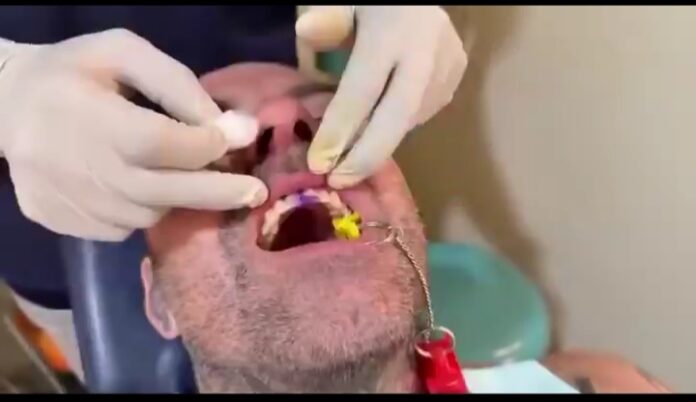
A European man has generated widespread reactions on social media after recounting his experience visiting a dentist in Nigeria to fix a tooth, an incident that has since triggered debate about healthcare standards and online generalisations.
According to posts shared online, the man initially expressed excitement following the procedure. In a video recorded shortly after the treatment, he appeared visibly pleased and even kissed the medical staff on their foreheads to show appreciation for what he believed was a successful outcome.
However, his satisfaction was short-lived. He later claimed that the treated tooth fell out the same day while he was in transit. The development prompted him to return to the clinic, where the procedure was reportedly repeated.
After the second visit, he posted another update, stating that the tooth had been refixed and appeared more secure. He expressed optimism that the issue had been resolved. Days later, however, he alleged that the tooth fell out again, leaving him disappointed.
Following the incident, the man issued a public warning on his social media page advising people not to seek dental care in the country. His statement quickly went viral, drawing mixed reactions from online users.
Some commentators criticised his remarks, arguing that it was unfair to judge an entire nation’s healthcare system based on a single experience at one clinic. Others, however, sympathised with his frustration and used the incident to highlight broader concerns about healthcare service quality.
The episode continues to spark discussion online, with many calling for caution against sweeping generalisations while others urge stronger oversight and improved standards within the medical sector.
The Chinese government has dismissed allegations by five United States lawmakers accusing it of sponsoring illegal mining operations and financing terrorism in Nigeria, describing the claims as “completely baseless.”
In a statement issued Thursday, the Chinese Embassy in Nigeria expressed “firm opposition and strong dissatisfaction” over the accusations, urging relevant media outlets to stop circulating what it called false information.
The response follows a bill introduced in the U.S. Congress titled the Nigeria Religious Freedom and Accountability Act of 2026.
The proposed legislation links alleged illegal mining activities involving Chinese nationals to terrorism financing and religious violence in Nigeria.
The lawmakers behind the bill Riley Moore, Chris Smith, Bill Huizenga, Brian Mast and Mario Diaz-Balart alleged that Chinese nationals engaged in illegal mining were paying protection money to terrorist groups, including Fulani militias, to secure access to mining sites.
According to the bill, such activities have contributed to ongoing violence, particularly in Nigeria’s Middle Belt region, where militant groups have been accused of targeted killings, kidnappings, and destruction of property.
Embassy Denies Funding Militias
The Chinese Embassy categorically rejected claims that it was funding radical Islamic groups or ethnic militias to protect mining interests.
“China requires all its nationals overseas to strictly abide by local laws and regulations,” the statement said, adding that it has “zero tolerance” for companies involved in illegal mining.
The embassy maintained that the majority of Chinese mining firms operating in Nigeria comply with local regulations, contribute to host communities, and support economic development through job creation and environmental protection initiatives.
It further stated that Chinese mining enterprises have themselves been victims of terrorist attacks and have consistently supported the Nigerian government’s efforts to strengthen national security and mining governance.
Previous Reports and Investigations
The controversy comes amid previous reports alleging that some Chinese-linked mining operators paid armed groups for access to mining sites.
A study by SBM Intelligence reportedly detailed instances in which militant leaders claimed Chinese miners paid “rent” to operate in areas under their control.
Additionally, an investigation by WikkiTimes alleged that Chinese-affiliated miners paid members of a terror faction in Niger State to gain access to mining locations.
However, the Chinese Embassy reiterated its commitment to working with Nigerian authorities to ensure lawful and sustainable mining practices, while safeguarding the rights of enterprises from both countries.
As of the time of filing this report, the Nigerian government had not issued an official response to the latest diplomatic exchange.
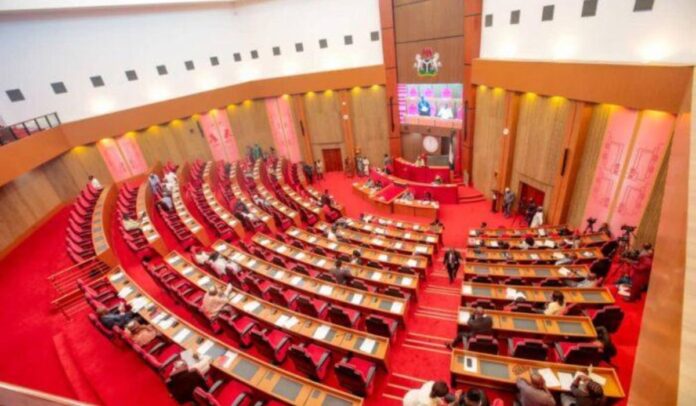
(DDM) – The Presidency has moved to calm rising national tension over the controversial Electoral Act Amendment Bill, insisting that President Bola Ahmed Tinubu will ultimately take a decision that aligns with Nigeria’s democratic realities rather than public pressure.
DDM reports that the assurance came amid nationwide debates and protests triggered by recent amendments passed by the National Assembly on electronic transmission of election results.
The Special Adviser to the President on Media and Public Communications, Sunday Dare, spoke during a televised interview where he defended the administration’s cautious stance on the matter.
Dare stated that while President Tinubu remains committed to democratic ideals, he will not approve any electoral framework that ignores Nigeria’s infrastructural and technological limitations.
The controversy followed the Senate’s passage of a revised Electoral Act Amendment Bill that permits electronic transmission of results from polling units to the Independent National Electoral Commission’s Result Viewing Portal, known as IReV.
However, the same bill allows manual transmission of results whenever network failure or communication challenges occur, a clause critics describe as a dangerous loophole.
Civil society groups, opposition figures, and election observers have staged protests, insisting that real-time electronic transmission without exceptions remains the only credible safeguard against manipulation.
Dare pushed back against those demands, arguing that governance requires practicality rather than emotional responses driven by public agitation.
He described Tinubu as a seasoned democrat who understands the balance between ideal reforms and operational feasibility.
According to him, the president will weigh national realities, especially the uneven spread of digital infrastructure across rural and urban Nigeria.
Dare openly questioned whether Nigeria currently possesses the capacity to sustain a fully electronic electoral process nationwide.
He argued that even advanced democracies still experience technical failures during elections, making absolute real-time transmission unrealistic.
“There is no country with a one hundred per cent flawless electronic election system,” Dare said, challenging critics to acknowledge global precedents.
He warned that forcing a rigid framework without allowances could create logistical chaos during elections.
Supporters of the Senate amendment argue that Nigeria’s weak network coverage, unstable electricity supply, and security challenges justify flexibility in result transmission.
Opponents counter that such flexibility has historically enabled electoral fraud, result substitution, and post-election disputes.
Election transparency advocates insist that allowing manual results to override electronic records undermines public trust in the electoral process.
The debate has also revived memories of past elections where delayed or altered results triggered violence and prolonged litigation.
Political analysts say the Tinubu administration now faces a defining test of its commitment to electoral reform and democratic credibility.
They argue that how the president handles the bill will shape public confidence ahead of the 2027 general elections.
While the Presidency calls for patience, critics accuse the government of using “realities” as an excuse to protect entrenched political interests.
They warn that failure to strengthen electronic transmission could deepen voter apathy and fuel civil resistance.
As pressure mounts, all eyes remain on President Tinubu’s final decision, which many believe will either strengthen democracy or reinforce old suspicions.
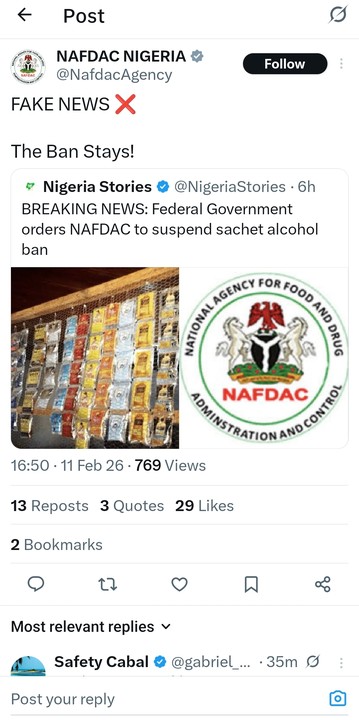
The National Agency for Food and Drug Administration and Control has dismissed as false a report alleging that the Federal Government of Nigeria ordered it to suspend enforcement actions against sachet alcohol and alcoholic products packaged in 200ml PET bottles.
In an official statement issued Wednesday, the agency’s Director-General, Mojisola Adeyeye, clarified that no such directive had been communicated to the regulator through any formal or authorised channel. She emphasised that the publication circulating the claim was misleading and did not reflect the government’s position.
“At no time has the Agency received any formal directive ordering the suspension of its regulatory or enforcement activities in respect of sachet alcohol products,” the statement said, reaffirming that its operations remain guided strictly by established public health regulations and statutory mandates.
NAFDAC disclosed that it has already commenced the evacuation of what it described as “violative sachet alcohol and alcohol in PET bottles less than 200ml” from various manufacturers. According to the agency, some companies have voluntarily begun discontinuing production of smaller-sized alcohol packaging after recognising that the policy is intended to curb underage access to alcoholic beverages.
The regulator cited data indicating that approximately 50 percent of minors reportedly purchase alcohol from retailers selling products in sachets and small PET bottles, a trend it described as alarming and harmful to public health objectives. It stressed that its intervention is primarily aimed at protecting children and reducing youth exposure to alcohol.
Reaffirming its commitment to safeguarding public health, NAFDAC stated that any policy decision affecting national regulatory actions would always be communicated through official government channels. It urged members of the public, industry stakeholders and the media to disregard unverified reports and rely solely on information released via its authorised platforms.
The agency also cautioned against spreading unconfirmed claims capable of generating misinformation, fake news and public misunderstanding of government policy, noting that accurate communication remains essential to maintaining trust in national health regulations in Nigeria.
(DDM) – Goodluck Jonathan has urged African countries to lower age thresholds for major political offices to boost energy and performance.
DDM learned that the former president framed his argument around leadership stamina and the pressures of governance.
He spoke in Abuja during a memorial lecture and leadership conference attended by policymakers, scholars, and civil society actors.
The event was organized by the Murtala Muhammed Foundation to reflect on leadership, nation-building, and public service values in Africa.
Jonathan argued that countries should deliberately search for leaders between ages twenty-five and fifty for executive and legislative responsibilities.
He said people within that bracket often show stronger physical resilience and quicker mental response under intense administrative pressure.
He explained that demanding offices require long hours, rapid decisions, and constant crisis management across security, economy, and social welfare.
He recalled that during his presidency he sometimes slept less than two hours because urgent state matters required overnight attention.
He warned that older officeholders exposed to relentless schedules might spend significant time managing health challenges instead of governing effectively.
Jonathan linked his proposal to productivity, arguing that governance should prioritize capacity to endure pressure rather than seniority or entitlement.
He referenced the record of Murtala Muhammed, who assumed national leadership at thirty-eight and pursued swift reforms.
He noted that the late leader implemented bold changes within about two hundred days, leaving a legacy often cited in governance debates.
Jonathan questioned constitutional provisions that fix minimum ages around forty for senators, governors, and deputy governors, and even higher for presidents.
He suggested that rigid thresholds may unintentionally exclude capable younger Nigerians ready to contribute to national transformation.
He broadened his remarks to criticize absentee leadership patterns that keep some governors frequently outside their states or overseas.
He argued that such travel habits weaken supervision, slow development projects, and complicate responses to local security threats.
He maintained that citizens deserve leaders who remain present, accessible, and physically ready to engage problems as they arise.
Political analysts say his comments may revive debates about constitutional reform and youth inclusion in Nigeria’s political system.
Some critics, however, view age-focused arguments as controversial in societies that respect seniority and accumulated experience.
Supporters counter that demographic realities in Africa favor younger populations who want greater representation in decision-making spaces.
Nigeria’s median age remains low, and youth groups have repeatedly demanded pathways into leadership and policy influence.
Jonathan concluded that effective governance requires matching the nation’s challenges with leaders who possess endurance, clarity, and reformist drive.
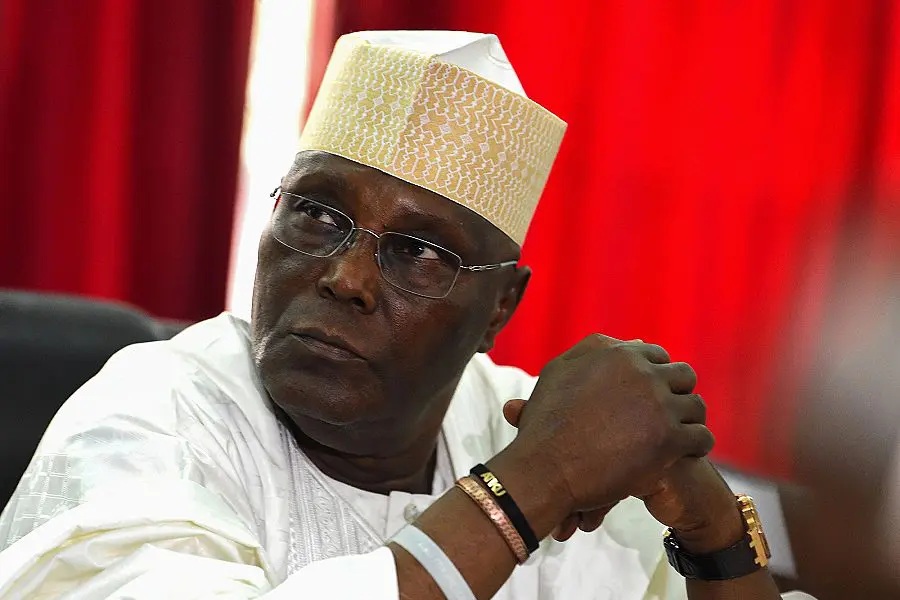
(DDM) – Nigeria’s main opposition party faces fresh uncertainty as multiple court battles threaten its internal stability.
Diaspora Digital Media (DDM) learned that the latest appellate proceedings have intensified the struggle for control within the Peoples Democratic Party.
A sitting of the Court of Appeal in Abuja reserved judgment on nine separate appeals linked to the dispute.
A three-member panel fixed no date but promised to notify all parties when decisions are ready.
Lawyers representing rival factions formally adopted their written arguments before the panel.
They also presented final oral submissions to persuade the justices.
The appeals challenge earlier rulings of the Federal High Court in the Federal Capital Territory.
Those rulings addressed the legality of a controversial party convention.
The internal crisis has split the party into two powerful camps.
One camp follows Saminu Turaki, who claims authority as national chairman.
The other camp recognizes caretaker leadership under Abdulrahman Mohammed.
The dispute has produced months of litigation and political tension.
Turaki insists that his election at the Ibadan convention remains valid.
Opponents argue that the exercise violated party rules and court orders.
The crisis has already drawn in the Independent National Electoral Commission.
The commission recently engaged Mohammed and Samuel Anyanwu in official consultations.
Observers say that move signaled provisional recognition.
Earlier judgments restrained the party from holding the disputed convention.
James Omotosho issued one of the restraining orders.
Peter Lifu delivered another related ruling.
A separate decision from Joyce Abdulmalik also shaped the legal landscape.
Aggrieved party officials had approached the courts to halt the process.
They argued that leaders ignored constitutional requirements.
Former governor Sule Lamido also sued after alleging exclusion from the chairmanship race.
Senior Advocate Chris Uche urged the appellate court to overturn the lower court rulings.
He maintained that his clients followed lawful procedures.
Opposing counsel Joseph Daudu asked the court to uphold the judgments.
He argued that the convention clearly breached legal provisions.
Proceedings lasted nearly ten hours due to the number of appeals.
Legal analysts say the volume shows how divided the party has become.
Many party members now fear prolonged damage before 2027 elections.
Some stakeholders warn that unresolved leadership fights weaken opposition politics.
Others believe court clarity could restore order.
Citizens continue watching the judiciary for direction.
The final rulings may determine who controls party structures nationwide.
The outcome could also influence alliances ahead of future polls.
For now, the PDP remains locked in a high-stakes legal contest.
Nigeria’s political landscape waits for the appellate court’s verdict.
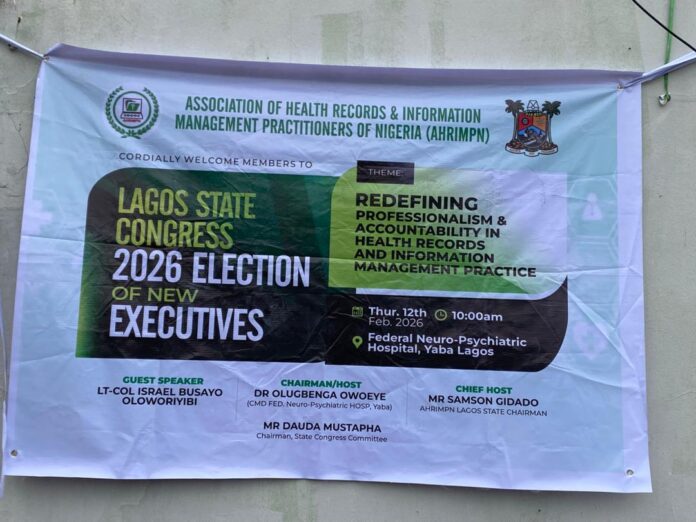
The Association of Health Records and Information Management Practitioners of Nigeria (AHRIMPN), Lagos State chapter, on Thursday convened its highly anticipated state congress at the Federal Neuro-Psychiatric Hospital, Yaba, drawing a large turnout of professionals from across Lagos State.
The congress, which served both as a professional forum and an electoral assembly, marked a defining moment in the association’s leadership structure. In a closely watched general election conducted during the session, Dr. Macaulay B. emerged as the newly elected State Chairman, signaling the beginning of a new administrative era for the organization’s activities within Nigeria.
The event was attended by Comrade Makusidik, the National Internal Auditor, whose presence underscored the national significance of the congress and reaffirmed the association’s commitment to transparency, accountability, and institutional integrity.
A major highlight of the gathering was the keynote lecture delivered by Lt. Col. Isreal Busayo on the theme, “Redefining Professionalism and Accountability in Health Information Management Practice.” The presentation challenged practitioners to raise professional standards, strengthen ethical responsibility, and foster public trust within the country’s rapidly evolving healthcare system.
In a reflective moment, the outgoing State Chairman, Mr. Gidado, delivered his valedictory address titled “Journey So Far.” He recounted the challenges encountered during his tenure — including institutional barriers and advocacy struggles — while highlighting significant milestones achieved in advancing the profession within the state. His remarks drew sustained applause as he detailed both the obstacles overcome and the progress recorded under his leadership.
As proceedings concluded after hours of deliberations, networking, and strategic discussions, participants departed with a shared sense of optimism. Observers noted that the Lagos chapter now stands positioned for a renewed phase focused on professionalism, accountability, and sustainable growth within the health information management sector.
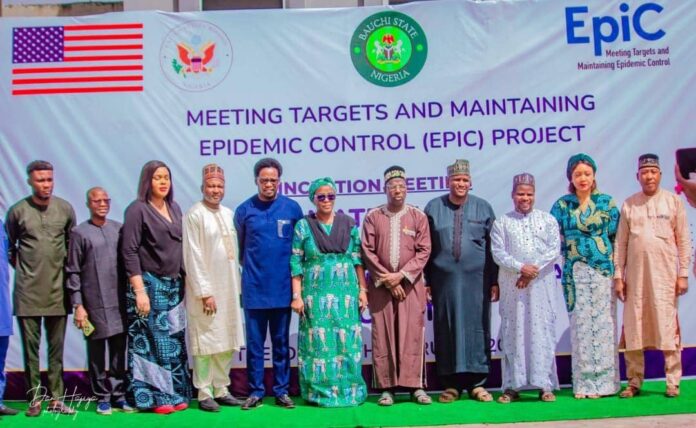
The United States-backed Meeting Targets and Maintaining Epidemic Control (EpiC) Project, implemented by a consortium led by FHI 360, has officially launched a comprehensive Maternal, Newborn and Child Health (MNCH), nutrition, and global health security intervention in the state, marking a new phase in efforts to strengthen healthcare delivery and disease response systems.
The inauguration meeting convened key stakeholders, including officials from the Bauchi State Primary Health Care Development Board, development partners, programme coordinators, and technical teams, to harmonise strategies and establish a coordinated implementation framework.
Representing the Commissioner for Health, Dr. Rilwanu Muhammad, who spoke on behalf of Dr. Sanni Mohammed Dambam, described the intervention as timely and critical to improving health outcomes. He noted that previous support from FHI 360 through funding from the United States has already strengthened HIV, malaria, and maternal health programmes in the state, adding that the expanded initiative would further reinforce the health system.
According to him, the current phase of the project will run for one year and cover 11 MAMI local government areas, with planned activities including healthcare worker training, oxygen system upgrades, distribution of essential medical commodities, and expanded maternal and child health services.
He expressed concern about persistent maternal and child mortality trends in some local government areas but voiced optimism that the intervention would complement existing support from partners such as UNICEF and the World Health Organization, stressing that effective coordination among stakeholders is vital to success.
Project Director Dr. Hadiza Khamofu said the initiative is funded by the United States Department of State as part of an eight-year global award running from 2019 to 2027. She explained that the programme initially focused on tuberculosis and HIV interventions but has since expanded to include COVID-19 response, malaria, nutrition, maternal and child health, and broader global health security strengthening.
She added that the project’s mandate includes supporting HIV/AIDS services, strengthening disease surveillance and laboratory systems, building healthcare worker capacity, and fostering collaboration between government institutions and communities.
Dr. Khamofu further stated that the initiative would help improve integrated case management for childhood illnesses such as diarrhoea, pneumonia, malaria, and malnutrition. It will also enhance maternal and newborn services, strengthen data collection and utilisation, improve supply chains for essential MNCH commodities, and promote community engagement and risk communication.
Earlier, State MNCH Coordinator Jummai Inuwa said the meeting aimed to sensitise stakeholders on the project’s objectives, assess baseline conditions, and identify priority actions. She explained that participants would validate health facility coverage and determine implementation scope across the 11 target local government areas and other high-burden communities.
She added that stakeholders would also develop local government-level rollout plans for MNCH and nutrition activities in line with SWAp DLIS provisions to guide execution.
In goodwill messages, Sulaiman Abdu Kirfi of the Association of Local Governments of Nigeria, Dr Muhammad Sambo Alkali of the Hospital Management Board, and pharmacist Rabiu Fagge of the Gate Foundation commended the initiative and pledged collaboration to strengthen health systems, improve service delivery, and promote healthy practices such as exclusive breastfeeding and proper maternal care.
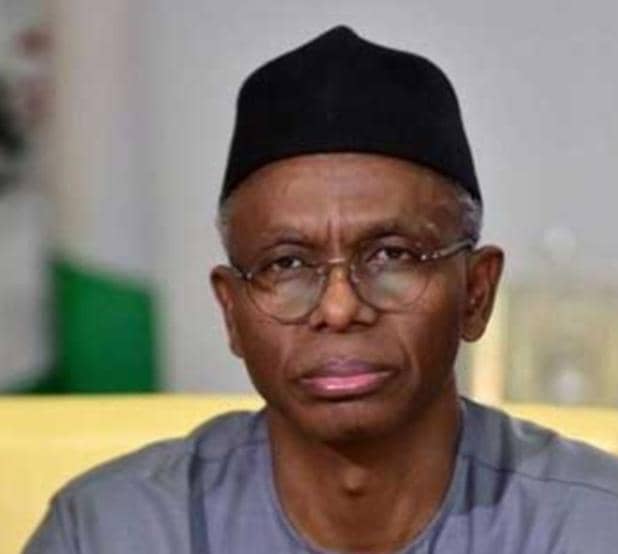
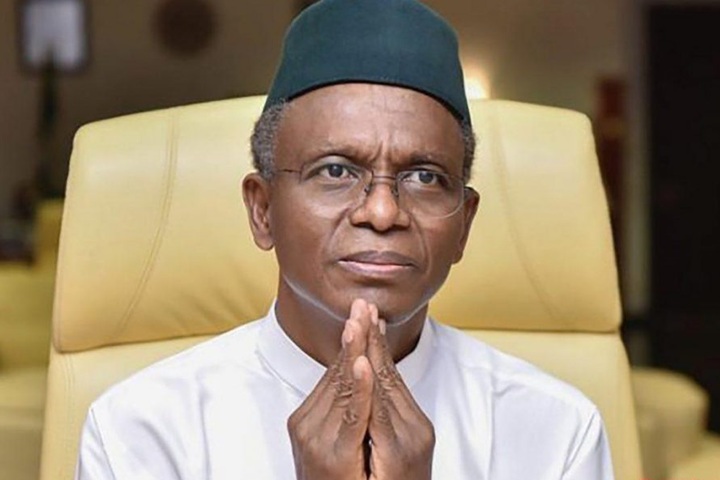
Former Kaduna State Governor, Nasir El-Rufai, will appear before the Economic and Financial Crimes Commission (EFCC) by 10:00 a.m. on Monday, February 16, 2026, his lawyer has confirmed.
Ubong Esop Akpan, counsel to the former governor, disclosed this on Thursday while reacting to an alleged attempt by security operatives to arrest El-Rufai at the Nnamdi Azikiwe International Airport, Abuja.
According to Akpan, El-Rufai was approached by security agents shortly after arriving from Cairo aboard EgyptAir flight MS 877.
The lawyer described the development as a violation of his client’s constitutional rights, accusing authorities of executive overreach and disregard for due process.
Akpan explained that the EFCC’s invitation letter was delivered to El-Rufai’s residence while he was already outside the country, making immediate compliance impossible.
“The invitation from the EFCC was delivered to Malam El-Rufai’s residence while he was already abroad, rendering it illogical to demand immediate attendance,” he said.
He added that his law firm had been in communication with the anti-graft agency since December 2025, assuring the commission that El-Rufai would honour the invitation upon his return to Nigeria.
“We explicitly notified the EFCC that he would voluntarily appear at their office by 10:00 a.m. on Monday, February 16, 2026,” Akpan stated.
The lawyer argued that any attempt to detain the former governor despite the prior commitment to appear voluntarily amounted to arbitrary conduct and a breach of procedural integrity.
He also called for the return of El-Rufai’s passport, which he alleged was seized during the airport encounter.
As of the time of filing this report, the EFCC had not issued an official response to the allegations.
Former Arsenal midfielder Thomas Partey has been hit with two additional counts of rape, bringing the total number of alleged victims in the case to four.
The new accusations stem from a separate complaint made in August, prompting the Metropolitan Police to open another investigation into an alleged incident dating back to 2020. The development comes months after the 32-year-old Ghanaian international was previously charged with five counts of rape involving two women, as well as one count of sexual assault against a third complainant.
Partey is scheduled to appear before Westminster Magistrates’ Court on March 13 for his first hearing related to the latest charges.
The footballer has consistently denied all allegations made against him. During an earlier court appearance at Southwark Crown Court, he entered not-guilty pleas and was granted conditional bail while awaiting trial.
The earlier charges relate to alleged incidents said to have taken place between 2021 and 2022, during his time as a player for Arsenal. Investigations began after police received an initial report in February 2022. Formal charges followed shortly after Partey’s contract with the North London club expired at the end of June.
A full trial under a High Court judge is currently scheduled for November 2.
Since leaving the Premier League, Partey has continued his career in Spain, joining Villarreal on a one-year contract. His signing was confirmed after the initial charges had already been filed.
Partey moved to Arsenal from Atletico Madrid in October 2020 in a deal worth over £45 million and went on to make more than a hundred league appearances for the club.
His lawyer has previously reiterated that the midfielder denies the accusations and looks forward to the legal process as an opportunity to clear his name.
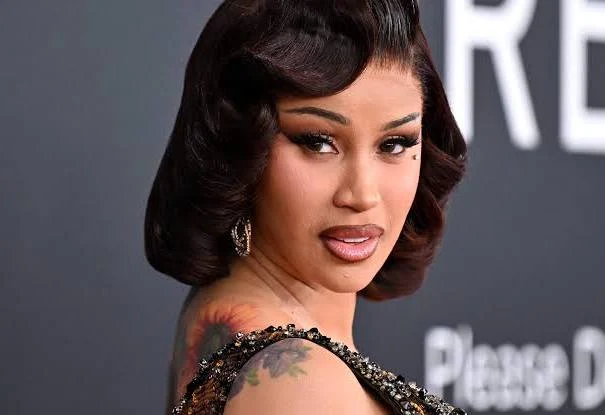
Rapper Cardi B sparked attention on social media after making a bold statement about U.S. immigration enforcement during the opening night of her Little Miss Drama tour in Palm Desert, California.
As Cardi energized a sold-out crowd, she addressed the fear and frustration some fans feel about possible actions by ICE (Immigration and Customs Enforcement), the federal agency responsible for enforcing immigration laws in the United States. In a moment that quickly went viral, Cardi told the audience that if ICE agents were to show up at her show, they would be met with resistance.
The comment highlights growing anxiety among immigrant communities and music fans about the reach of immigration enforcement, even at cultural events. While ICE does not have policies to raid concerts, the fear of raids at large gatherings has been discussed by artists and fans alike. Earlier this month, Cardi praised fellow artist Bad Bunny for speaking out against ICE’s activities and expressing solidarity with immigrant fans.
Cardi’s remarks also came during a segment of her show that celebrated her Latin fan base, punctuated by a playful rendition of La Cucaracha and an impromptu shout-out to Guatemalan and Mexican fans in the arena.
Fans reacting online were divided: some praised Cardi for “standing up” for her audience and taking a vocal stance on social issues, while others cautioned that such remarks, even made in jest, could be misinterpreted or raise unnecessary alarms.
The Little Miss Drama tour marks Cardi’s first headline arena tour in years and continues to blend energetic performances with candid moments that reflect her personality and viewpoints. The tour is scheduled to travel across the U.S. with multiple stops planned through the spring.
A Florida court has scheduled February 2027 as the trial date for US President Donald Trump’s multi-billion dollar defamation lawsuit against the BBC, according to newly released court documents.
The trial, expected to last two weeks, will take place in Miami. The development follows a judge’s decision to reject the BBC’s request to delay the discovery process in the case.
Discovery is the pre-trial phase during which both sides exchange relevant documents and evidence.
The judge ruled that the broadcaster’s request to pause the process was “premature.”
Trump is suing the BBC over the editing of a Panorama programme, alleging that two sections of a speech were cut together in a way that made it appear he had directly encouraged supporters to storm the US Capitol on January 6, 2021.
His legal team has described the edit as “false and defamatory.”
The president is seeking up to $10 billion (£7.5 billion) in damages.
The BBC has previously apologised for the edit but rejected Trump’s demand for compensation and disputed the legal basis for both the defamation and trade practices claims.
In a statement, a BBC spokesperson said: “As we have made clear previously, we will be defending this case. We are not going to make further comment on ongoing legal proceedings.”
Court filings indicate the BBC plans to submit a motion to dismiss the case by March 17, 2026, arguing that the Florida court lacks personal jurisdiction, that the venue is improper, and that Trump has failed to state a valid claim.
The judge’s latest order does not affect the broadcaster’s planned motion to dismiss.