Tragedy struck in Lagos after a gospel singer, Matthew Ogundele, and three members of his crew were discovered dead inside a music studio in the Abraham Adesanya area of Ajah.
According to information available, the Lagos State Police Command has confirmed the arrest of a suspect in connection with the incident as investigations continue into the circumstances surrounding the deaths.
The victims were identified as Matthew Ogundele, Itunu Ogundele, Joseph Sanya, and popular blogger Matthew Awosanya, widely known as JoesTv. Their sudden passing has sent shockwaves through the gospel music community and among followers who had interacted with them shortly before the tragedy.
Reports indicate that the singer and his team hadOlanireti Akinbola been invited to minister on Tuesday, the second day of a three-day birthday praise programme organised by fellow gospel artiste . After completing their assignment late into the night, they reportedly chose to remain at the studio to rest rather than travel elsewhere.
Their bodies were then discovered on Wednesday, prompting immediate concern and the involvement of law enforcement authorities.
While speculation has circulated online, police have urged the public to remain calm and allow investigators to determine what truly happened. Officials say preliminary steps, including securing the location and gathering evidence, are already underway, and further updates will be communicated as facts become clearer.
Friends, fans, and colleagues have taken to social media to express disbelief and grief, remembering Ogundele and his crew as passionate individuals dedicated to spreading the gospel through music and media. Tributes have continued to pour in, with many calling for a thorough investigation and justice for the deceased.
The incident has once again highlighted the risks of misinformation in the early stages of developing stories, as authorities work to piece together timelines and verify accounts from witnesses and organisers.
As families mourn their loved ones, the wider community waits anxiously for answers that might explain how a night of worship and celebration ended in such heartbreaking loss.
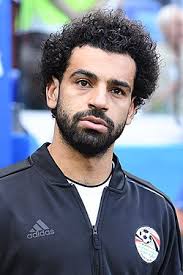
Egyptian international and Liverpool winger Mohamed Salah is mourning the death of his grandfather, Ahmed Abdel Aziz Al Bambi, who passed away on Monday morning, according to reports from Egyptian local media.
The sad news was confirmed by Abdel Aziz Al Bambi, son of the deceased and Salah’s uncle, who also serves as chairman of the board of directors of the Mohamed Salah Youth Center. In an emotional message shared with the public, he conveyed the family’s deep grief and asked for prayers during what he described as an incredibly painful time.
Family sources say the late Ahmed Abdel Aziz Al Bambi was a respected figure within the community and a strong pillar of support for his relatives. His passing has left a profound void among loved ones, friends, and well-wishers.
Although Mohamed Salah has not yet issued a detailed public statement, fans across Egypt and around the world have flooded social media with messages of condolence, solidarity, and prayers for the Liverpool star and his family. Many supporters acknowledged how close-knit Salah is with his roots and relatives, noting that family has always played a central role in his life and career.
The Mohamed Salah Youth Center, which has long been associated with charitable and developmental initiatives in the region, is also expected to observe mourning in honor of the elder Al Bambi, reflecting the deep connection between the footballer’s achievements and the community that raised him.
Moments like this remind supporters that beyond the goals, trophies, and global fame, athletes also face personal losses just like everyone else. For Salah, widely admired not only for his brilliance on the pitch but also for his humility and generosity off it, the period ahead will be one of reflection and remembrance.
As tributes continue to pour in, many are praying that the family finds strength and comfort while honoring the memory of a man whose legacy lives on through those he leaves behind.
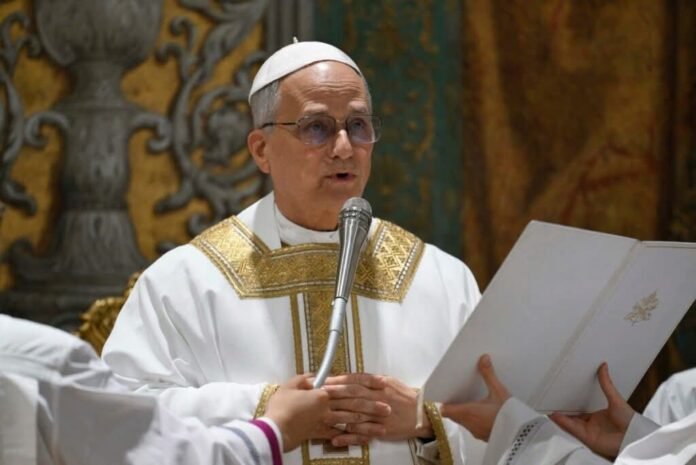
This photo taken and handout on May 9, 2025 by The Vatican Media shows Pope Leo XIV during a mass with cardinals in the Sistine Chapel in The Vatican. (Photo by Handout / VATICAN MEDIA / AFP) / RESTRICTED TO EDITORIAL USE - MANDATORY CREDIT "AFP PHOTO / VATICAN MEDIA" - NO MARKETING - NO ADVERTISING CAMPAIGNS - DISTRIBUTED AS A SERVICE TO CLIENTS
Pope Leo XIV has condemned the recent violent attacks in Nigeria, expressing sorrow over the “heavy loss of life” and urging authorities to safeguard citizens.
In a statement shared on his official X handle, the pontiff said he received news of the attacks with “sorrow and concern,” noting that multiple communities had been targeted.
He expressed solidarity with victims of violence and terrorism and called on relevant authorities to remain resolute in ensuring the safety of all Nigerians.
The Pope’s remarks come amid escalating insecurity in Nigeria, particularly in Kwara State, where gunmen attacked Woro and Nuku villages, killing scores of residents.
Reports indicate 75 deaths were confirmed by police and Kwara State Governor Abdulrahman Abdulrazaq, while community members claim the toll exceeds 200.
Homes and properties were destroyed, and survivors recount widespread destruction.
President Bola Tinubu has deployed additional troops to Kwara and declared a nationwide security emergency.
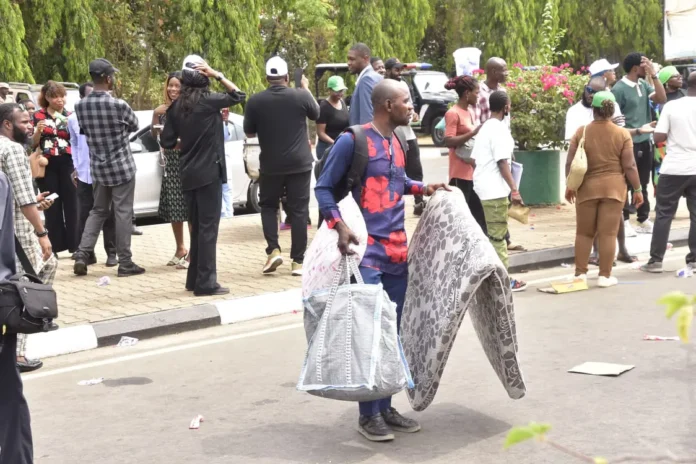
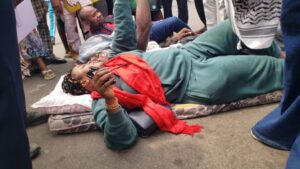
An unusual protest unfolded on Monday at the National Assembly Complex in Abuja as demonstrators arrived with mattresses and pillows to press their demand for the mandatory real-time electronic transmission of election results.
The protesters, who gathered at the entrance of the federal legislature, were seen carrying bedding materials and, in some cases, lying on mattresses at the protest ground.
The symbolic action drew public attention as the demonstrators vowed to remain at the site until their demands were addressed.
The protest is linked to ongoing controversy surrounding amendments to the Electoral Act ahead of the 2027 general elections, particularly the refusal of lawmakers to explicitly mandate real-time electronic transmission of results by the Independent National Electoral Commission (INEC).
Demonstrators insisted that the amended legislation must clearly include the phrase “real-time electronic transmission,” arguing that anything short of this leaves room for manipulation and electoral irregularities.
While several Nigerians and civil society groups have continued to push for compulsory electronic transmission of results to enhance transparency, some lawmakers have maintained that the provision should remain discretionary. Legislators opposing the move have cited logistical challenges, infrastructure gaps and security concerns in certain parts of the country.
Despite repeated clarifications from the Senate leadership that electronic transmission has not been removed from the Electoral Act, protesters remained unconvinced, accusing lawmakers of deliberately weakening safeguards meant to protect the credibility of future elections.
Security was tight around the National Assembly, with a heavy presence of law enforcement personnel deployed to maintain order as the protest continued. There were no reports of violence or arrests as of the time of filing this report.
The demonstration forms part of a broader wave of civic actions across the country calling for electoral reforms and greater accountability in Nigeria’s democratic process ahead of the 2027 polls.
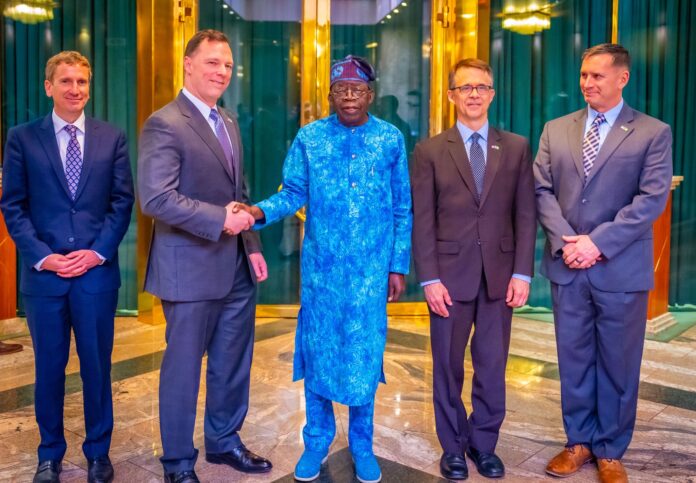
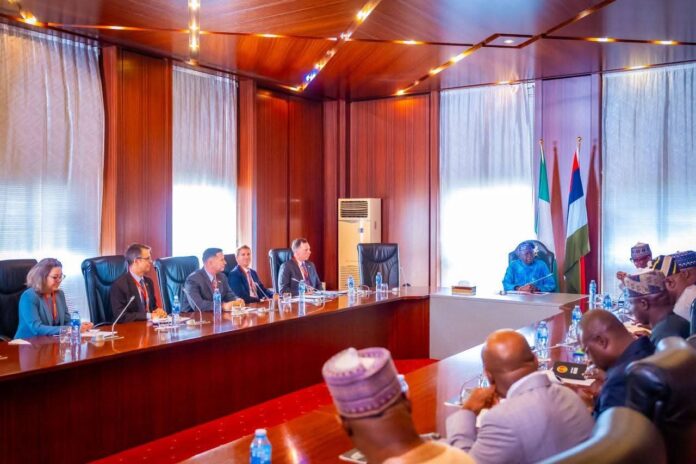
President Bola Tinubu on Sunday received a high-level delegation from the United States Africa Command (AFRICOM) at the State House, Abuja, in a meeting that underscored renewed strategic engagement between Nigeria and the United States on defence, intelligence sharing and regional security cooperation.
The U.S. delegation was led by the Commander of AFRICOM, General Dagvin Anderson, and comprised senior diplomatic and military officials.
They included the Chargé d’Affaires of the United States Embassy in Nigeria, Mr Keith Heffern; AFRICOM’s Senior Foreign Policy Adviser, Ambassador Peter Vrooman; and Command Sergeant Major Garric M. Banfield, AFRICOM’s Command Senior Enlisted Leader.
Although details of the discussions were not made public, the meeting is understood to have focused on security collaboration, counterterrorism efforts, and stability in West and Central Africa, amid ongoing regional security challenges.
President Tinubu was accompanied by top officials in Nigeria’s defence and intelligence community, reflecting the high-level nature of the engagement.
Those present included the National Security Adviser, Mallam Nuhu Ribadu; the Minister of Defence, General Christopher Musa (rtd); the Chief of Defence Staff, General Olufemi Oluyede; the Chief of Army Staff, Lieutenant-General Waidi Shaibu; the Chief of Defence Intelligence, Lieutenant-General Emmanuel Uandiandeye; the Director-General of the National Intelligence Agency, Mohammed Mohammed; and the Director-General of the Department of State Services, Tosin Ajayi.
The meeting comes amid broader efforts by the Tinubu administration to strengthen international partnerships aimed at addressing terrorism, insurgency, and transnational security threats affecting Nigeria and the wider region.
History does not catalogue everything that shapes public life. It records wars and reforms but ignores the softer arts the gestures, the silences, the well-timed strokes that calm power and redirect outrage.
Yet in politics, especially Nigerian politics, these subtleties often matter as much as policy. Few recent episodes illustrate this better than the curious week of Senator Adams Oshiomhole.
In the space of days, the former labour leader occupied two contrasting but strangely connected stages.
First came the viral private-jet footage: Oshiomhole, unbothered and unhurried, massaging a woman’s foot mid-air.
Then came his appearance at the Presidential Villa, where he lavished praise on President Bola Tinubu and the First Lady, celebrating the acknowledgement they received from US President Donald Trump.
To many Nigerians, the juxtaposition was jarring. To seasoned observers of power, it was familiar.
Politics, like massage, is about pressure, timing and knowing where to place the hand.
Oshiomhole’s words at the Villa were carefully chosen. Trump’s public compliment of Nigeria’s First Lady was framed as a moment of national validation proof that Nigeria had been noticed and applauded by a blunt, powerful outsider.
In that telling, pride flowed not from internal achievement but from external recognition.
The applause abroad became a mirror in which the nation was asked to admire itself.
The private-jet episode, meanwhile, triggered the predictable cycle: denial, defence and distraction. Aides blamed artificial intelligence; social media blamed indulgence.
The woman in the video did not argue. She simply stated the obvious and exited the conversation. Silence, in this case, spoke louder than rebuttal.
Yet what stood out was not the scandal itself but Oshiomhole’s response to it. He did not flinch.
He did not retreat. Like a man changing rhythm without breaking stride, he shifted from private controversy to public ceremony, from touch to speech, from sensation to symbolism.
There is a metaphor here, and it stretches back in time. Ancient Rome had public baths where attendants massaged senators and emperors alike.
Those baths were not merely about cleanliness; they were centres of social bonding, political gossip and quiet negotiation.
Power relaxed there. Hierarchies softened. Influence flowed through oil and hands as much as through decrees.
Modern politics has its own baths private jets, closed-door meetings, carefully staged appearances. What differs is not the instinct but the optics.
The same hand that soothes can also signal allegiance; the same gesture that comforts can confer loyalty.
Oshiomhole’s career has long thrived on such duality. Once the firebrand of labour protests, he now speaks the language of state power with ease.
The comrade who confronted authority now congratulates it. The transformation did not happen overnight; it has been massaged into place over time.
Figures of speech help where plain language fails.
This episode is a mirror and a metaphor: a mirror reflecting how easily outrage can be redirected, and a metaphor for a political culture that prizes access over accountability.
It is also a reminder that in Nigeria, power rarely moves by force alone. It is nudged, stroked, reassured.
History may never erect a monument for such skills.
There will be no marble statue for timing well judged, no plaque for knowing when to praise and when to ignore the noise.
But politics remembers what history forgets. It rewards those who understand that influence is often applied not with a clenched fist, but with a gentle touch.
In that understanding, Senator Adams Oshiomhole remains a fluent practitioner comfortable in controversy, at home in power, and adept at turning even the most awkward moment into just another transition in the long choreography of Nigerian public life.
The European Union has stepped up its antitrust scrutiny of Meta Platforms, warning that it may impose interim measures over the company’s decision to restrict rival artificial intelligence (AI) services from operating on WhatsApp.
The European Commission, the EU’s antitrust authority, said in a statement on Monday that it had formally charged Meta with violating EU competition rules by limiting access to WhatsApp’s ecosystem.
The Commission raised concerns that Meta’s policy change, implemented on January 15, 2026, allows only its in-house AI assistant, Meta AI, to function on WhatsApp, effectively blocking competing AI developers.
“The Commission therefore intends to impose interim measures to prevent this policy change from causing serious and irreparable harm on the market, subject to Meta’s reply and rights of defence,” the statement said.
The move underscores the Commission’s worry that delaying action for a full investigation which can take years could allow Meta to cement an unfair advantage in AI-driven services.
With WhatsApp’s user base running into hundreds of millions across Europe, regulators fear the company may be favouring its own AI tools while denying rivals critical access to the platform.
Meta’s clash with EU regulators comes amid broader scrutiny of its data and advertising practices.
In April 2025, the Commission found Meta in breach of the Digital Markets Act (DMA), a landmark law aimed at regulating dominant digital platforms.
Following the ruling, Meta offered EU users more control over how their data is used across its platforms, including Facebook and Instagram.
Despite these measures, regulatory pressure has continued.
The EU has imposed its first major DMA fines, with Apple receiving a €500 million penalty and Meta fined €200 million for issues related to service integration and data processing.
If interim measures are imposed, Meta may be forced to open WhatsApp to rival AI services while the investigation continues.
A final ruling could also result in significant fines and stricter behavioural remedies, setting a precedent for how dominant digital platforms can integrate proprietary AI tools into their services without violating EU competition rules.
Former Deputy National Publicity Secretary of the All Progressives Congress (APC) and political activist, Comrade Timi Frank, has petitioned United States President Donald Trump, raising concerns that Nigeria’s democracy is at risk and warning of potential chaos ahead of the 2027 general elections.
In an open letter dated February 7, 2026, Frank accused the ruling APC and the leadership of the National Assembly of plotting to entrench a one-party authoritarian system, describing the alleged plans as “political genocide” against Nigerians.
Frank called on Trump and the international community to intervene, stressing that failure to act could spark unrest, violent conflict, and a breakdown of law and order.
“Nigeria’s general elections scheduled for February 2027 are under serious threat.
If current developments are not addressed, they may result in widespread unrest, possible anarchy, and a breakdown of law and order,” Frank wrote.
The activist alleged that the Senate leadership was deliberately undermining electoral reforms designed to curb fraud.
He claimed that a critical provision of the Electoral Act 2022, supported by over 80 percent of Nigerians, was being systematically removed to facilitate election manipulation.
“The ruling party, working closely with the Nigerian Senate under a highly compromised Senate President, has begun laying the groundwork to manipulate and rig the 2027 general elections,” Frank asserted.
Frank also criticised the 2023 presidential election, pointing to low voter turnout and observer reports to question the credibility of the process.
“The current President was declared winner with only 36.61 per cent of the total votes cast from an eligible voter population of over 93 million.
These figures alone raise serious concerns about the credibility of the process,” he noted.
Referencing reports from international observers, including the European Union Election Observation Mission and the U.S. Department of State, Frank highlighted gaps in transparency and operational failures, calling for urgent reforms at the Independent National Electoral Commission (INEC).
He urged the U.S. government to consider measures against the Senate President, whom he accused of disenfranchising Nigerians ahead of the 2027 polls. “The current Senate President appears determined to silence opposition voices and disenfranchise Nigerians,” Frank said, adding that the 10th National Assembly is “widely viewed as one of the weakest in Nigeria’s history.”
Frank, who also serves as Ambassador of the United Liberation Movement for West Papua (ULMWP) to East Africa and the Middle East and as a senior adviser to the Global Friendship City Association (GFCA), USA, further alleged that state institutions, including the military, police, and judiciary, were being pressured to enforce partisan control.
He concluded by urging the international community to support credible elections and prevent Nigeria from sliding into authoritarianism. “Continued disregard for democratic principles may spell disaster for an already fragile nation,” he warned.
Senator Rabiu Kwankwaso and Mr. Peter Obi having a chat.
Efforts to float a joint presidential ticket featuring former Anambra State governor Peter Obi and former Kano State governor Rabiu Musa Kwankwaso are gaining momentum within and beyond the African Democratic Congress (ADC), as opposition stakeholders prepare for the 2027 general elections.
While ADC leadership has sought to downplay the agitation, proponents of the proposed alliance argue that an Obi–Kwankwaso ticket would provide the strongest chance of unseating the ruling All Progressives Congress (APC).
Multiple sources told Daily Trust that the push cuts across party lines, involving senior opposition politicians, power brokers, and some retired military officers.
Former President Olusegun Obasanjo is widely believed to be supportive of Obi’s ambition, promoting efforts to build a credible opposition coalition.
Obi and Kwankwaso, who contested the 2023 elections under the Labour Party (LP) and New Nigeria People’s Party (NNPP) respectively, had explored a similar alliance ahead of that election.
The talks, however, collapsed over disagreements about ticket structure and the presidential slot.
The renewed push comes against the backdrop of the 2023 election results, in which Obi secured over six million votes nationwide, dominating in the Federal Capital Territory, Lagos, and all five South-East states, while Kwankwaso maintained a stronghold in Kano State, finishing fourth in the presidential race.
Sources said that opposition figures believe a merger of Obi’s South-East and urban support base with Kwankwaso’s North-West influence could significantly alter the electoral equation in 2027.
A senior ADC member familiar with the discussions said: “The issue of pairing Obi with Kwankwaso has been on since the last election.
Many leaders believe that if Obi had run with Kwankwaso in 2023, they might have won.
They see it as a missed opportunity.”
While the discussions are ongoing, the ADC has not formally adopted the alliance as party policy.
“It is more of party members and leaders thinking aloud and weighing which ticket can best remove the APC from power,” the source added.
Obasanjo’s media aide, Kehinde Akinyemi, confirmed that the former president continues to support Obi’s presidential ambition, as he did during the 2023 election, but denied knowledge of any formal directive on the joint ticket.
Meanwhile, the Kwankwasiyya Support Group (KSG) has openly backed the proposed alliance, arguing that a partnership between Obi and Kwankwaso would create a powerful coalition capable of challenging the APC.
The group emphasized that any merger must come with a clear offer of either the presidential or vice-presidential slot.
Speaking in Kano, KSG leader Abba Gwale said: “As Kwankwaso supporters, we have proposed and thrown our weight behind a joint presidential ticket with Peter Obi.
The current political trajectory shows where the tide is shifting.
Gwale added that the proposed alliance would harness growing dissatisfaction with the current administration, offering hope for better governance and addressing issues such as insecurity, hunger, and economic hardship.
With political negotiations ongoing, observers say the Obi–Kwankwaso push underscores the increasing importance of cross-regional alliances in Nigeria’s opposition politics ahead of the 2027 elections.
Nollywood actor Freddie Leonard has reportedly filed a legal petition against movie producer Stanley Ontop following statements Ontop made regarding Leonard’s marriage to actress Peggy Ovire.
In December 2025, Stanley Ontop publicly alleged that Freddie and Peggy’s marriage had ended, describing it as a “forced marriage” and claiming that the couple was too “violent” to live together. He further stated that Peggy had helped Freddie rise in the Nollywood industry “from the gutters” and advised women not to “feed men” who might later disappoint them.
Ontop also challenged the couple to collaborate on a photoshoot or movie project, implying that such a joint effort would fail, further intensifying public speculation about the state of their marriage.
Reacting to these statements, Freddie Leonard reportedly filed a petition against Ontop, citing that the comments were false and damaging to both his personal life and professional reputation. Sources say the actor is seeking legal recourse to defend his marriage and public image.
At this time, the petition is reportedly ongoing, and no court ruling has been made public. Both Freddie Leonard and Peggy Ovire have not made further public comments since the filing.
The incident has reignited discussions in Nollywood about the responsibilities of public figures when speaking about the personal lives of fellow actors and the potential legal consequences of spreading unverified claims.
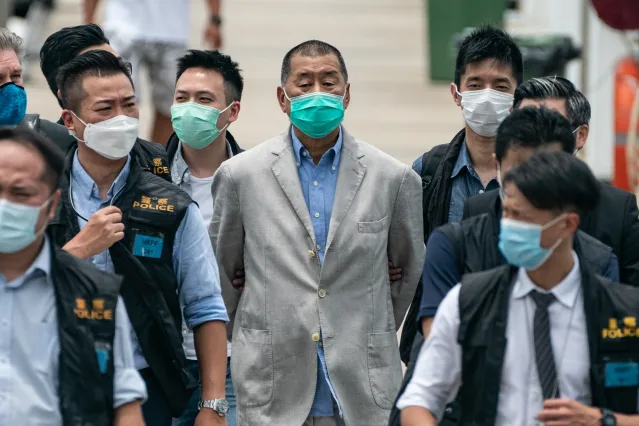
Hong Kong pro-democracy media mogul Jimmy Lai, 78, was sentenced to 20 years in prison on Monday for national security offences, in a case widely condemned by rights groups as “effectively a death sentence” and a stark blow to press freedom in the city.
Lai, a British citizen and founder of the now-defunct Apple Daily, was convicted in December of urging foreign countries to impose sanctions on Hong Kong and publishing “seditious” articles. Two years of his sentence will overlap with his existing prison term, meaning he faces 18 additional years behind bars.
Rights organizations, including Human Rights Watch and Amnesty International, called the ruling “cruel and profoundly unjust,” warning it signals the shrinking space for press freedom in Hong Kong. Supporters and family members expressed grave concern for Lai’s health, calling the sentence “heartbreakingly cruel” and life-threatening.
Lai has been imprisoned since 2020 and was previously held in solitary confinement at his request. Apple Daily, his pro-democracy newspaper, was forced to close in 2021 following police raids.
Eight other former executives of the newspaper received sentences of up to 10 years.
International reactions included calls from UK Prime Minister Keir Starmer, US President Donald Trump, and Taiwan for Lai’s release, while Beijing defended the ruling as “reasonable, legitimate and legal.”
The case underscores the ongoing crackdown under the 2020 national security law imposed by Beijing, which has led to hundreds of arrests and convictions in Hong Kong’s pro-democracy movement.
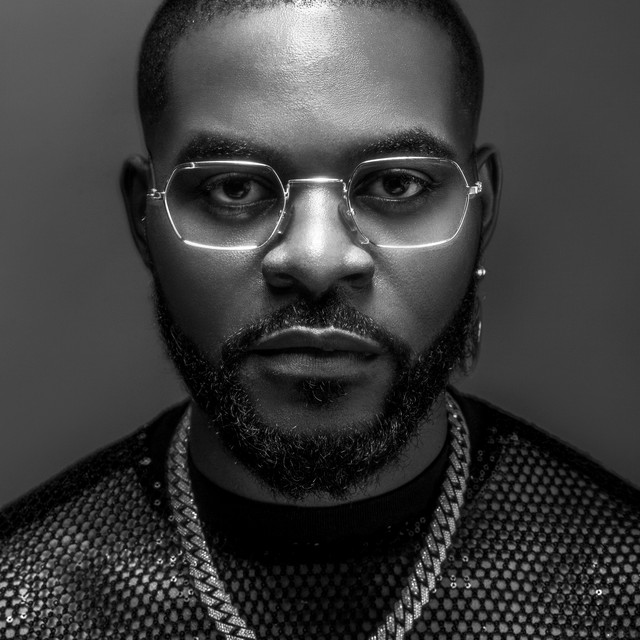
Nigerian rapper and activist Falz has once again stirred public debate, this time criticizing religious leaders who allow politicians to use church platforms for personal campaigns. According to Falz, the practice undermines both the spiritual authority of the pulpit and the integrity of the political system.
Speaking on social media, Falz condemned pastors who allegedly invite politicians into their churches to preach, campaign, or solicit support, describing the phenomenon as “a dangerous mix of religion and politics that exploits people’s faith.” He argued that many of these politicians have questionable track records, yet are given opportunities to influence congregations through the moral authority of the clergy.
Falz emphasized that the pulpit should remain a place for spiritual guidance, community development, and moral reflection, not political maneuvering. He warned that by enabling politicians with “evil intentions” to leverage religious influence, pastors risk turning houses of worship into tools for personal gain and manipulation.
The rapper’s comments have reignited a broader conversation in Nigeria about the role of religious institutions in politics. Critics argue that many churches have become stages for partisan interests, with some pastors openly endorsing candidates during election periods. Supporters of Falz’s viewpoint say that this trend blurs the line between spiritual guidance and political campaigning, leaving congregants vulnerable to persuasion based on faith rather than informed civic judgment.
Falz’s remarks come amid a growing awareness among Nigerian citizens about accountability and transparency in governance. Many young people, in particular, have expressed frustration over politicians who use faith and religious symbolism to gain votes while failing to deliver tangible results for communities.
While some religious leaders defend their actions as expressions of personal freedom or civic responsibility, Falz and other critics insist that the moral authority of the pulpit should never be co-opted for political advantage. They argue that churches have a unique role in shaping ethical behavior and civic awareness, which can be compromised when political interests dominate sermons or church events.
The rapper concluded by urging both religious leaders and political aspirants to act responsibly, calling for a clear separation between the pulpit and the campaign trail. According to him, maintaining this boundary is essential to protect the integrity of both the church and the democratic process in Nigeria.
Falz’s outspoken stance has sparked conversations across social media platforms, with many Nigerians weighing in on the ethics of political endorsements in religious spaces. While opinions remain divided, one thing is clear: the debate over the intersection of faith and politics in Nigeria is far from over.
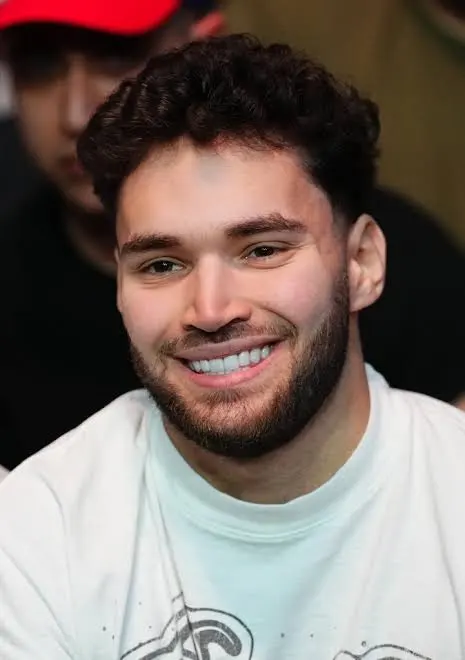
Debate around the Super Bowl halftime show is once again heating up online, and this time streamer Adin Ross has jumped right into the middle of it.
After some viewers labeled Bad Bunny’s performance as one of the weakest in recent memory, Ross pushed back on the narrative. During a live stream, he argued that regardless of the criticism, he still found it more entertaining than Kendrick Lamar’s set the year before.
According to Ross, his main issue with Kendrick’s show was the perception that too much attention was placed on shots at Drake rather than celebrating Kendrick’s own catalog and artistry. He suggested that the Super Bowl stage should be about delivering crowd-pleasing hits and unifying moments, not continuing rap feuds.
His comments quickly made the rounds on social media, sparking intense reactions from fans on both sides. Supporters of Kendrick pointed out that the Pulitzer Prize–winning rapper’s performance was layered, theatrical, and widely praised by critics at the time. Others agreed with Ross, saying they prefer halftime shows that feel lighter and less confrontational.
Meanwhile, Bad Bunny’s supporters argue that the global superstar brought cultural representation, energy, and massive appeal to Latino audiences, even if the performance didn’t resonate with everyone watching at home.
As with most Super Bowl shows, opinions seem to depend on what viewers want from the spectacle, hit songs, storytelling, star power, or viral moments.
One thing is certain: the halftime stage remains one of the biggest and most scrutinized platforms in entertainment, and every performance will have its fans, its critics, and plenty of hot takes to keep the conversation going long after the lights go down.
There were indications on Monday of a possible easing of the political crisis in Rivers State following a high-level meeting convened by President Bola Tinubu at the Presidential Villa, Abuja.
The closed-door meeting was attended by the Minister of the Federal Capital Territory, Nyesom Wike, Rivers State Governor Siminalayi Fubara, and other key political leaders from the state.
While official details of the discussions were not disclosed, the meeting is widely seen as part of ongoing efforts by the presidency to resolve the prolonged political standoff that has strained governance and party relations in Rivers State.
Sources familiar with the development told Diaspora Digital Media that Governor Fubara later accompanied Minister Wike to his residence in Guzape, Abuja, after the Aso Rock meeting, suggesting a continuation of reconciliation talks.
According to the source, the Rivers governor expressed remorse over the breakdown in their relationship and pledged to maintain respect for the former governor, though neither party has publicly confirmed the claims.
The political rift between Wike and Fubara, once close allies, has dominated the state’s political landscape for months, leading to divisions within the Peoples Democratic Party (PDP) and tensions between the executive and the legislature.
Monday’s meeting marks the first publicly known direct intervention by President Tinubu involving both men since the crisis escalated, raising hopes among stakeholders that a negotiated settlement may be imminent.
Analysts say any resolution could have significant implications for political stability and governance in Rivers State, as well as for broader party dynamics ahead of future elections.
No official statement has yet been issued by the Presidency, the Rivers State Government, or the FCT Minister on the outcome of the meeting.
Bad Bunny turned the Super Bowl halftime stage into more than a concert, he made it a moment about culture, identity, and unity.
Taking command of one of the most watched entertainment platforms in the world, the Puerto Rican superstar delivered a vibrant, high-energy set filled with color, movement, and pride. From the instant he appeared, the stadium transformed into a celebration. Fireworks flashed, dancers flooded the field, and the rhythm of reggaetón pulsed through tens of thousands of fans while millions more watched from home.
The performance was designed as both spectacle and statement. Bad Bunny powered through fan favorites with charisma and control, reminding audiences why he has become one of the most influential artists of his generation. Every transition, every camera sweep, and every beat drop felt intentional — built to keep viewers locked in.
Beyond the music, the show leaned heavily into representation. Visual elements drew inspiration from Latin heritage and community life, mixing street energy with global pop shine. The staging reflected pride in roots while also highlighting how far the culture has traveled, now commanding the biggest stage in American sports.
It was loud. It was joyful. It was unapologetic.
Yet while the performance thrilled many, it was the final minutes that left the most lasting impression.
As the set approached its climax, the field filled with flags from across the Americas. They waved side by side, creating a powerful image of connection that stretched far beyond geography. The celebratory atmosphere softened into something more reflective, more human.
Then came the words that would define the night.
Behind Bad Bunny, illuminated for the entire stadium and a global television audience, appeared the phrase:
“The only thing more powerful than hate is love.”
In an instant, the spectacle turned into a message.
For many viewers, the moment felt like an appeal for empathy at a time when division often dominates headlines. It was simple, direct, and emotional, a reminder of the shared experiences that bind people together regardless of language or nationality. For others, it served as an uplifting and poetic way to close an already monumental show.
Bad Bunny reinforced the theme by lifting a football marked “Together, We Are America,” holding it high before the music faded and the lights shifted back toward the game.
As with every halftime show, opinions quickly poured in. Admirers praised the cultural visibility, the energy, and the heart behind the finale. Critics debated whether the performance matched their expectations of a Super Bowl spectacle. Supporters countered that the night was never meant to please everyone. It was meant to represent something real.
Love it or question it, the performance accomplished what the Super Bowl stage does at its best: it created a moment impossible to ignore.
By the time Bad Bunny exited the field, one image remained burned into the minds of viewers. Everywhere the artist standing tall beneath a glowing declaration that love, in the end, is stronger.
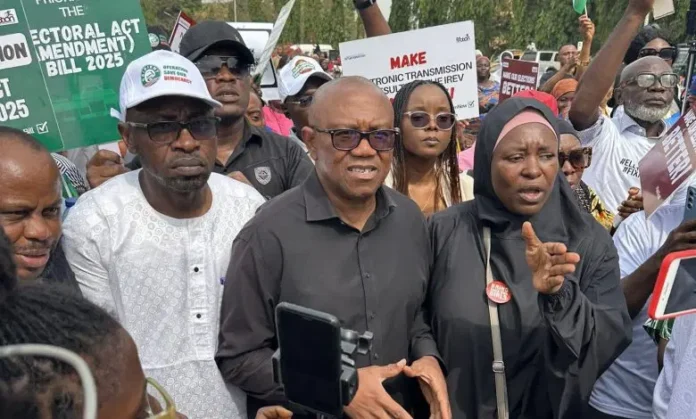
DDM NEWS — In the heart of Abuja on a tense Monday morning, the usually orderly precincts of the National Assembly complex became the focal point of a deeply symbolic protest that has now captured the attention of citizens, civil society, and political commentators nationwide. Former presidential candidate and leading opposition figure Peter Obi stepped out of the corridors of conventional political engagement and stood shoulder to shoulder with youth groups, pro-democracy activists, and ordinary Nigerians under the banner of “Occupy National Assembly,” to demand a seemingly technical, yet profoundly consequential reform: real-time electronic transmission of election results.
The protests were triggered by the Senate’s recent decision during the third reading of the Electoral Act 2022 (Repeal and Reenactment) Amendment Bill 2026 to remove the phrase “real-time electronic transmission” from a clause that many Nigerians hoped would finally make such technology mandatory for all elections. While lawmakers and the Senate leadership have denied that the chamber outright rejected electronic result transmission — insisting that the law still permits transmission in a manner prescribed by the Independent National Electoral Commission (INEC) — protesters remained unconvinced. They argue that the explicit removal of “real-time” weakens the reform and opens the door for continued manipulation of election outcomes.
Watch the video below:
In the protest that unfolded outside the National Assembly gates, Peter Obi — now a member of the African Democratic Congress (ADC) — was a visible and vocal presence. His decision to join the demonstration marked not only a moment of political convergence with youth activists and civil society, but also a powerful public statement on the future of Nigeria’s democratic process. Chanting slogans calling for transparent elections and holding placards demanding that “Our Votes Must Count,” protesters made clear that their focus is not political point-scoring, but a structural transformation of the electoral system itself.
Security was heightened as personnel from the Nigeria Police Force, the Nigerian Army, and the Nigeria Security and Civil Defence Corps were deployed around the National Assembly complex to manage the gathering and prevent any breach of the legislature’s boundaries. Despite the heavy presence, the mood among the crowd was determined rather than confrontational. Supporters sang, chanted, and stood firm in solidarity for what they described as a simple yet non-negotiable democratic principle: that election results should be transmitted directly from polling units to a central server in real time, without manual interference or opportunity for manipulation.
Peter Obi’s presence at the protest added gravitas to the demonstration. Known for his outspoken advocacy of electoral reforms, Obi articulated what many Nigerians feel: that the exclusion of mandatory real-time electronic transmission undermines public confidence and potentially compromises the integrity of future elections. In remarks to reporters, he emphasized that genuine democratic progress requires clear, unambiguous legal provisions that close loopholes and limit chances for human intervention in result collation and transmission. While he couched his comments in composed language, the urgency in his voice was unmistakable — reflecting broader public frustration with perceived political resistance to transparent ballot reporting.
For many activists and voters present at the protest, real-time electronic transmission is more than a technicality: it is a safeguard against the kind of glitches and discrepancies that marred previous elections, including the 2023 polls. Critics of the Senate’s action argue that removing explicit mention of real-time transmission weakens a key accountability tool and leaves the electoral process vulnerable to old practices of results manipulation. The protesters have made it clear that the current wording, which allows INEC to decide “the manner” of result transmission, falls short of what is needed to rebuild trust in the system.
The protest also drew members of various non-governmental organisations, women’s groups, human rights activists, and smaller opposition parties, signalling a broad coalition of Nigerians united by a shared demand for electoral integrity. As civil society representatives told DDM NEWS, this issue transcends party lines — it speaks to fundamental principles of fairness, transparency, and respect for the will of the people. Many feared that without explicit legal teeth, the reforms risked becoming symbolic rather than substantive.
Among the slogans and placards outside the National Assembly were calls for lawmakers to reverse course and reinstate the real-time electronic transmission clause “as written” rather than leaving it to interpretive discretion. Protesters repeatedly underscored that outcomes should be transparent from the polling unit to the national collation centre — a system they believe would dramatically reduce opportunities for electoral fraud and bolster the credibility of Nigeria’s democratic process.
This protest does not exist in isolation. It is part of a wider dialogue happening across civic spaces in Nigeria about how to forestall electoral malpractice ahead of the 2027 general elections. Just days earlier, groups such as the Obidient Movement and the Movement for Credible Elections had warned that failure to enshrine mandatory real-time electronic transmission in law would amount to deliberate sabotage of democratic safeguards. These coalitions argue that stronger legal protections are essential to protect citizen votes and strengthen the legitimacy of future electoral outcomes.
DDM NEWS notes that the stakes of this debate are high. With Nigeria’s democratic evolution under scrutiny and public trust in institutions fragile, the battle over electronic transmission is emblematic of larger issues about technology, accountability, and citizens’ rights. For many Nigerians, meaningful reforms must ensure visibility, verifiability, and public accessibility of election results — not optional or discretionary practices that can be altered at the whim of political actors.
As the “Occupy National Assembly” protest continues to unfold, eyes across the country remain fixed on how lawmakers will respond. Will the National Assembly listen to the voices pressing for deepened transparency, or will it cling to a more flexible interpretation that critics say risks preserving the very vulnerabilities reform was meant to eliminate?
In a democracy, the legitimacy of leaders begins with the acceptance of results by the governed. For the protesters in Abuja, and for Peter Obi who stood among them, demanding real-time electronic transmission of election results is not just about technology — it is about restoring faith in the most sacred act of democratic participation: the vote.
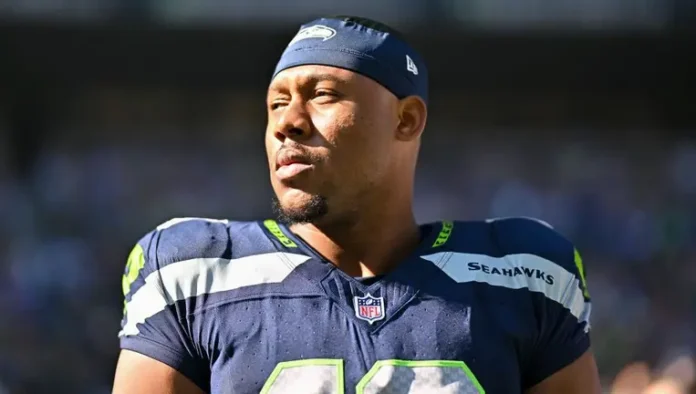
Uchenna Nwosu delivered a moment that Seahawks fans will replay for a long time. With the game hanging in the balance and the tension inside the stadium thick, Nwosu powered through to make the decisive play that sealed a gritty 12–9 win over the New England Patriots.
It wasn’t just another highlight on the stat sheet. It was the kind of clutch, heart-stopping sequence that defines careers and cements a player’s importance to his team. When Seattle needed someone to rise, he answered.
For many supporters, the moment carried deeper meaning. Nwosu, whose parents Henry and Amara are of Nigerian descent, represents a growing list of athletes in the diaspora making their mark at the highest levels of American sports. Though he was raised in Carson, California, his heritage remains a proud part of his identity, and fans from Nigeria and across Africa celebrated the victory as one of their own.
Social media quickly lit up with messages praising his relentless motor, discipline, and ability to step up under pressure. Teammates swarmed him after the play, knowing just how critical it was in such a tight defensive battle.
Beyond the result, it spoke to preparation and resilience. Games like this are rarely pretty; they’re wars of inches, patience, and timing. Nwosu’s awareness and execution in that defining instant showed why he is trusted in big situations.
From Carson to the NFL spotlight, and with Nigerian roots shining through, Uchenna Nwosu’s game-winning heroics became more than a play. It became a proud cultural moment for many watching around the world.
A recent study suggests Generation Z (Gen Z), born between 1997 and 2010, is “less cognitively capable” than other generations due to excessive technology use.
Neuroscientist Jared Cooney Horvath stated that Gen Z exhibits lower intelligence levels, weak attention spans, poor problem-solving skills, and reduced reading and math abilities.
He stated this while addressing the United States Senate Committee on Commerce, Science, and Transportation.
“A sad fact our generation has to face is that our kids are less cognitively capable than we were at their age. Every generation has outperformed their parents until Gen Z,” Mr Horvath told the New York Post.
He added: “Most of these young people are overconfident about how smart they are. The smarter people think they are, the dumber they actually are.”
Scoring lower academic grades than the Millennials, the preceding age group, Mr Horvath argued that teenagers spend excessive hours on screen devices rather than engaging in deep, face-to-face interactions.
“More than half of the time a teenager is awake, half of it is spent staring at a screen. Humans are biologically programmed to learn from other humans and from deep study, not flipping through screens for bullet point summaries,” Mr Horvath said.
“What do kids do on computers? They skim. So rather than determining what we want our children to do and gearing education towards that, we are redefining education to better suit the tool. That is not progress; that is surrender,” he noted.
Mr Horvath said the underperformance has been observed in no fewer than 80 countries, as academic excellence has reduced, resulting from the unregulated adoption of digital technology in classrooms.
“The answer appears to be the tools we are using within schools to drive that learning. If you look at the data, once countries adopt digital technology widely in schools, performance goes down significantly,” the neuroscientist stated.
“Across 80 countries, if you look at the data, once countries adopt digital technology widely in schools, performance goes down significantly,” he said.
The study noted that the arbitrary use of technological devices like phones, tablets, and laptops during real-time studying has turned students into skimmers.
Horvath suggested governments should formulate policies to help future generations, like Gen Alpha, maximize their cognitive abilities.
Peter Obi is leading from the front as patriotic Nigerians gather at the National Assembly demanding the immediate passage of the Electoral Amendment Bill, particularly the provision for mandatory electronic transmission of election results ahead of the 2027 general elections.
Protesters say the reform is essential to strengthening transparency and restoring confidence in Nigeria’s electoral process.
A combined team of security personnel remains on ground as the demonstration continues peacefully.
Protesters on Monday assembled at the entrance of Nigeria’s National Assembly in Abuja to demand the inclusion of mandatory real-time electronic transmission of election results in the proposed Electoral Act amendment.
The demonstration, tagged “Occupy National Assembly,” drew members of civil society organisations, women’s groups, and a small number of supporters of the opposition African Democratic Congress (ADC).
Security was heightened at the scene, with personnel deployed from the Nigeria Police Force, the Nigerian Army, and the Nigeria Security and Civil Defence Corps. Police barricaded access to the National Assembly complex, although protesters said they had no intention of entering the premises.
The protest follows the Senate’s passage of the Electoral Act 2022 (Repeal and Re-enactment) Amendment Bill 2026, which was approved on third reading last week. However, the upper chamber rejected a proposed amendment to Clause 60(3) that sought to make electronic transmission of election results mandatory.
The rejected provision would have required Independent National Electoral Commission (INEC) presiding officers to electronically transmit polling unit results to the INEC Result Viewing (IREV) portal in real time, after signing and stamping the appropriate result forms.
Instead, the Senate retained the existing provision of the Electoral Act, which allows results to be transferred “in a manner as prescribed by the Commission,” thereby leaving the mode and timing of transmission to INEC’s discretion.
Although Senate President Godswill Akpabio later clarified that the Senate did not abolish electronic transmission, protesters insist that the law must explicitly state “real-time electronic transmission” to prevent ambiguity.
“Electronic transmission has always been in our Act,” Akpabio said. “What we did was retain the existing provision, which already makes provision for electronic transmission.”
Protesters, however, argue that the absence of a clear legal mandate for real-time transmission undermines electoral transparency and increases the risk of manipulation during collation.
Some civil society representatives told journalists that the protest would remain peaceful and confined to the National Assembly gate. The demonstrators reportedly began their march from the Federal Secretariat before converging on the National Assembly complex.
The protest comes amid growing public debate over electoral reforms ahead of the 2027 general elections, with civil society groups and opposition parties calling for stronger safeguards to ensure credible and transparent polls.
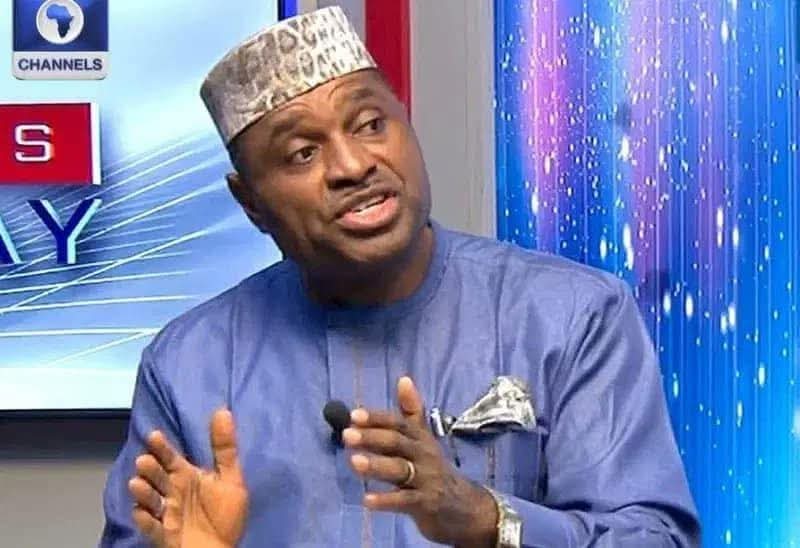
Kenneth Okonkwo, a chieftain of the African Democratic Congress (ADC), has called for Senate President Godswill Akpabio’s removal, accusing him of undermining democratic principles by supporting provisions that encourage electoral malpractice.
Okonkwo made this statement during an interview on Channels Television.
According to Okonkwo, retaining such clauses places the Senate President in direct opposition to democracy and aligns him with election rigging, manipulation, falsification, and subterfuge.
He added that Akpabio should either step down or be removed from office if he fails to resign voluntarily.
Recall that the Electoral Act Amendment Bill passed its third reading in the Senate last week.
Clause 60(30) of the bill relates to the electronic transmission of election results. On Wednesday, the Senate opted to retain the existing provision on electronic transfer of results as contained in the 2022 Electoral Act.
However, lawmakers rejected proposals for real-time transmission of results and a 10-year ban on vote buying, choosing instead to maintain penalties involving jail terms and fines.
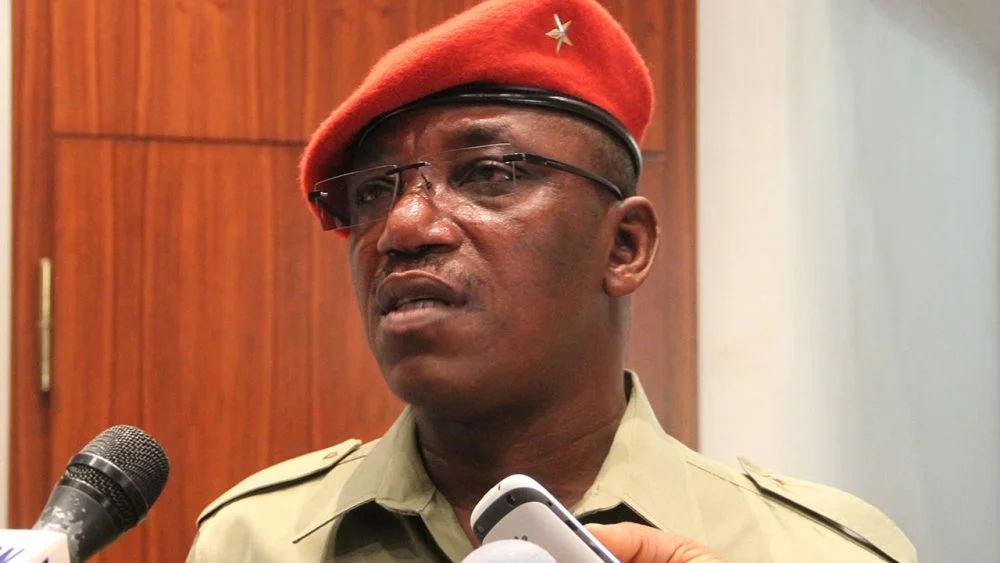
Former Sports Minister Solomon Dalung has criticized President Bola Tinubu, saying he’s a “dwarf” in Nigeria’s political history and shouldn’t be compared to leaders like Sardauna and Awolowo.
Dalung said Tinubu’s strategies as president haven’t translated to improvements in the economy or security, and he’s not living up to his reputation as a political heavyweight.
Dalung, while speaking on Channels Television, questioned Tinubu’s performance as president, citing issues with insecurity, economic struggles, and corruption.
The ex-minister said Tinubu has not been able to replicate his performance as Lagos governor on the national stage.
“Tinubu is a dwarf in Nigerian political history and he should not be compared with great leaders like Sardauna and Awolowo,” Dalung said.
“Because great leaders build legacies. They served the people. They worked for the people. If he is a great strategist as is being speculated, let us see this being translated into action.
“Tinubu cannot manage insecurity, economy, and even a common palliative rolled out for the purpose of augmenting some of his economic policies.
“His strategies should be seen in his performances, not somebody who is failing in everything. The economy is in shambles, corruption is flourishing.
“Where did this great strategist make an impact for the benefit of Nigerians?”
The politician said the African Democratic Congress (ADC) is ready to challenge Tinubu for the presidency in 2027.
“I think we have so many people to challenge Tinubu,” Dalung said.
“We are going to conduct a transparent primary, and we have also resolved that whoever wins a transparent primary will be the person all of us support to challenge Tinubu.”
Dalung served as minister from 2015 to 2019 under the APC-led administration of former President Muhammadu Buhari.
The Nigeria Labour Congress (NLC) is threatening nationwide protests and election boycotts over the Senate’s unclear stance on electronic transmission of election results in the amended Electoral Act.
The union claimed the Senate’s decision undermines public confidence in the electoral system and could lead to electoral irregularities.
According to NLC President Joe Ajaero, the Senate’s rejection of Clause 60(3), which would have made real-time electronic transmission mandatory, has created uncertainty and confusion.
“The Nigeria Labour Congress (NLC) expresses deep concern over the confusion and contradictory narratives emerging from the Senate regarding the amendment to the 2022 Electoral Act, particularly on electronic transmission of results,” NLC President Joe Ajaero said in a statement on Sunday.
“Public records suggest the proposed amendment to mandate the Independent National Electoral Commission (INEC) to transmit results electronically in real time was not adopted, with the existing discretionary provision retained.
“This has generated nationwide apprehension, and subsequent explanations have only added to the confusion”.
The Congress cautioned that “legislative ambiguity” at such a critical time after the 2023 general elections could entrench doubt in the electoral process.
It called on the Senate to provide an “immediate, official, and unambiguous account” of the provisions passed, including the final wording and the reasons for its decision.
“The National Assembly leadership must also ensure the harmonisation process produces a final bill with crystal-clear provisions; any ambiguity in the transmission and collation of results is a disservice to our democracy,” the statement added.
The NLC maintained that the amended Electoral Act must clearly compel INEC to electronically transmit and collate results from polling units in real time, warning that failure to do so could spark mass action.
“Failure to add electronic transmission in real time will lead to mass action before, during and after the election, or total boycott of the election,” the Congress said.
“Nigerian workers and citizens are watching closely. Our nation must choose the path of clarity and integrity. We need to avoid the same confusion that trailed the new Tax Acts. The time for honest, people-focused legislation is now.”
The warning came after the Senate passed the Electoral Act 2022 (Repeal and Re-enactment) Amendment Bill 2026 through its third reading on February 4, 2026.
During the passage, the upper chamber rejected Clause 60(3), which would have required presiding officers to electronically transmit results from polling units directly to the Independent National Electoral Commission’s Result Viewing portal in real time.
The clause had sought to make the process compulsory.
Lawmakers instead retained the current discretionary provision, which allows electronic transmission only after votes have been counted and publicly declared at polling units.
However, Senate President Godswill Akpabio has defended the chamber, stating at a public event that the Senate did not reject electronic transmission and insisting it would not be intimidated.
United States lawmakers have sharply criticised the Nigerian government over reports that it spent up to $9 million on lobbying firms in Washington, accusing Abuja of prioritising image management abroad over addressing worsening insecurity and religious persecution at home.
The criticism was voiced during a US congressional hearing on international religious freedom, where members of the House of Representatives expressed concern that Nigeria was allegedly funding lobbyists to downplay the scale of violence and persecution in the country.
During the hearing, lawmakers referenced the International Religious Freedom Act, enacted in 1998, stressing its continued relevance and warning against ignoring signs of escalating abuse.
“We can’t take our eyes off this,” one lawmaker said, noting that the legislation had made a significant global impact, including in Nigeria.
The chairman of the subcommittee was particularly critical of Nigeria’s spending priorities, disclosing details of the lobbying arrangements.
“I’m deeply concerned that Nigeria has hired the K Street lobbying firm DCI to the tune of $9 million about $750,000 a month while a Nigerian billionaire has reportedly entered into a $120,000-per-month contract with BALCORP to influence Congress and the executive branch,” the chairman said.
Another lawmaker warned that such lobbying efforts were a familiar tactic used by governments accused of human rights violations to sanitise their international image.
“They hire these firms to say there’s nothing to see here,” he said, drawing parallels with past regimes accused of persecuting religious groups while maintaining favourable narratives abroad.
Adding a personal reflection, one member of the panel criticised lobbying firms for prioritising clients over victims, urging greater advocacy for freedom and an end to religious persecution.
The chairman later thanked participants and handed proceedings to the ranking member, who acknowledged the importance of the testimonies presented during the hearing.
The hearing highlights growing frustration in Washington over Nigeria’s handling of insecurity and violence linked to religious persecution, raising fresh questions about the government’s decision to invest heavily in foreign lobbying rather than strengthening protection for its citizens at home.
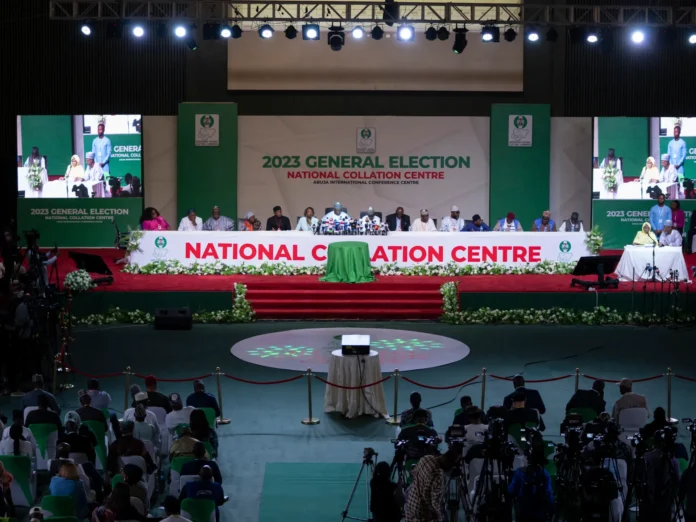
At DDM NEWS, we believe that democracy is not sustained by slogans, half-measures, or technical gymnastics designed to look modern while preserving the rot of the past. Democracy is sustained by systems that are transparent, verifiable, tamper-proof, and trusted by citizens. That is why the ongoing debate around electronic transmission of election results in Nigeria must be confronted with honesty and clarity, not deliberate confusion.
Let us state this plainly: electronic transmission of election results is not the same thing as uploading photographs of result sheets. Treating the two as interchangeable is either a grave misunderstanding of technology or a calculated attempt to weaken electoral integrity while pretending to support reform. Nigerians are not asking for cosmetic digital compliance; they are demanding structural transformation.
What the political class, sections of the National Assembly, and even some electoral officials continue to sell as “electronic transmission” is, in truth, the barest minimum—taking pictures of manually collated results at polling units and uploading them to the INEC Result Viewing (IREV) portal. That alone does not eliminate manipulation. It only postpones it.
DDM NEWS Editorial maintains that true electronic transmission must involve both electronic entry and electronic collation of results, not just visual documentation after the fact. Anything short of this keeps Nigeria trapped in a dangerous grey zone where elections appear digital but remain fundamentally vulnerable to human interference.
Let us explain, clearly and without ambiguity, what Nigerians are demanding.
At the polling unit level, presiding officers should be required to input the results for each political party directly into the BVAS device. This process must not be optional, discretionary, or subject to vague “INEC guidelines.” Once entered, these results should be electronically transmitted in real time to a central online collation server. That server must automatically collate results across polling units, wards, local governments, states, and eventually at the national level.
This is how modern electoral systems work. This is how transparency is enforced by design, not by goodwill.
Only after this electronic transmission and collation should the photographs of the signed and stamped result sheets be uploaded to the IREV portal—not as the primary data source, but as audit evidence. These images should exist for verification, cross-checking, and post-election scrutiny by parties, observers, the media, and citizens.
Anything that reverses this logic—manual collation first, digital upload later—is fundamentally flawed.
DDM NEWS strongly rejects the idea that Nigeria should continue to rely on manual collation centres staffed by compromised officials, sometimes infamously referred to as “corrupt professors,” sitting for hours or days tabulating figures with analog calculators. This system has repeatedly proven to be the weakest link in Nigeria’s electoral chain. It is at collation centres, not polling units, that elections are routinely subverted.
Let us be honest: ballot box snatching is no longer the primary threat to Nigerian elections. Result manipulation during collation is.
This is no longer 2011. This is 2026. Nigeria cannot continue to conduct elections with tools and processes that belong to a bygone era while pretending that uploading pictures makes the process modern. The world has moved on, and Nigerian voters have moved with it.
However, if members of the National Assembly insist—against logic, against public demand, and against global best practices—on retaining a manual collation framework, then the Electoral Act must, at the very least, enforce critical digital safeguards. DDM NEWS Editorial insists that three categories of data must be mandatorily transmitted to the IREV portal electronically if manual collation is to persist.
First, photographs of polling unit results must continue to be uploaded without exception. This is the minimum transparency requirement and must not be subject to network excuses, administrative discretion, or selective enforcement.
Second, and critically, the number of accredited voters as automatically captured by the BVAS device must be electronically transmitted and published. This data point is non-negotiable. It is the most powerful tool for detecting over-voting and result inflation. Without public access to BVAS accreditation figures, uploading result sheets becomes an exercise in deception rather than transparency.
Third—and this is where INEC and lawmakers have consistently failed Nigerians—photographs of results from all collation centres at every level must be uploaded to the IREV portal. Polling unit results alone are not sufficient. Manipulation rarely happens at the polling unit; it happens during aggregation. If ward, local government, state, and national collation results are not published for public scrutiny, then the entire system remains compromised.
This third requirement is perhaps the most important, yet it is routinely ignored. DDM NEWS Editorial finds it unacceptable that Nigerians are expected to trust figures announced at collation centres without having digital access to the documentary trail that produced them. Transparency cannot be selective.
The resistance to full electronic transmission is not technical. It is political.
As multiple democracy advocates have pointed out, the fear is not that the system will fail, but that it will work. Electronic transmission reduces discretion, limits human interference, creates instant public visibility, and establishes an immutable digital record. These are precisely the things that undermine electoral manipulation.
DDM NEWS believes that a democracy where leaders fear transparency is already in danger.
If Nigeria truly wants elections that reflect the will of the people, then electronic transmission must be mandatory, comprehensive, and enforceable by law, not left to administrative convenience. Anything less is a deliberate attempt to preserve the loopholes that have repeatedly robbed citizens of their votes.
This editorial position is not partisan. It is democratic. It is constitutional. And it reflects the growing consensus among voters, civil society, legal experts, and credible observers that you cannot modernise elections halfway.
Nigeria must choose: real reform or digital theatre.
At DDM NEWS, we choose real reform—and we urge lawmakers, electoral authorities, and all stakeholders to do the same.