ARISE News anchor, Ojy Okpe, has lost her father, retired Commissioner of Police, Chief Matthew Egwuenu, who passed away peacefully at the age of 80.
In a statement released by the family, Chief Egwuenu died on Friday, February 6, 2026. He hailed from Ukwuani Local Government Area of Delta State and was described as a respected patriarch whose life was marked by honour, discipline, and dedicated public service.
A retired Commissioner of Police, Chief Egwuenu was widely regarded for his commitment to duty, integrity, and leadership throughout his career in law enforcement. The family noted that he lived a life devoted not only to national service but also to the wellbeing of his family and community.
According to the announcement, he was a man of strong values whose wisdom, warmth, and quiet strength left a lasting impression on all who knew him. His legacy, the family said, will continue to inspire those whose lives he touched.
Chief Matthew Egwuenu is survived by one son, five daughters — including ARISE News anchor Ojy Okpe — as well as grandchildren and a large extended family.
The family stated that details of his funeral arrangements will be communicated at a later date. They also expressed appreciation for the prayers, kindness, and support received during this period of mourning.
They prayed for the peaceful repose of his soul and thanked well-wishers for standing with them as they honour the life and legacy of the late elder statesman.
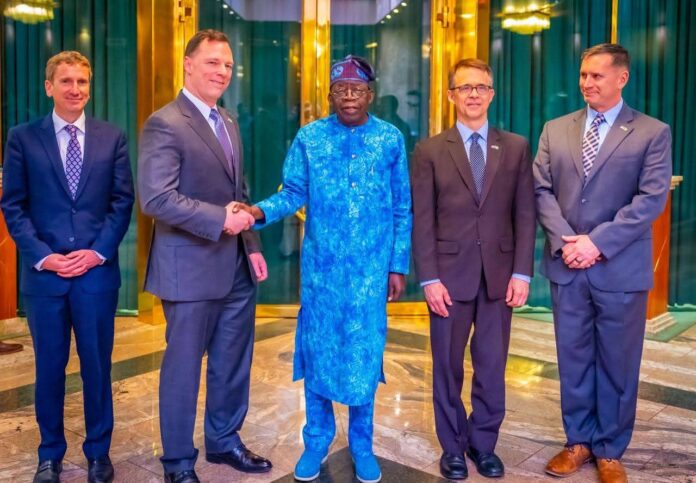
President Bola Ahmed Tinubu on Sunday received a high-powered delegation from the United States Africa Command (AFRICOM) at the Presidential Villa in Abuja, in a meeting that underscored the growing strategic importance of Nigeria–United States security cooperation amid evolving regional and global threats.
The visit, led by the Commander of AFRICOM, General Dagvin R. M. Anderson, brought together senior U.S. military and diplomatic officials with Nigeria’s top security leadership in what observers describe as a carefully calibrated engagement focused on regional stability, counterterrorism, intelligence sharing, and defence collaboration.
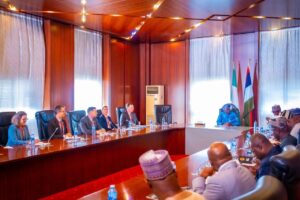
Photographs from the meeting, obtained by DDM NEWS, showed President Tinubu seated alongside his principal security chiefs, facing the AFRICOM delegation in a formal but cordial atmosphere that reflected the significance both countries attach to their long-standing partnership.
General Anderson’s visit comes at a time when Africa’s security landscape is undergoing profound shifts, with terrorism, transnational crime, maritime insecurity, cyber threats, and political instability presenting complex challenges for governments across the continent. Nigeria, as Africa’s most populous country and one of its largest economies, remains central to any meaningful security architecture in West and Central Africa.
According to DDM NEWS, the AFRICOM delegation included key figures from the U.S. defence and diplomatic community. Among them was the Charge d’Affaires of the United States Embassy in Nigeria, Keith Heffern, whose presence highlighted the diplomatic weight attached to the visit. Also in attendance were AFRICOM’s Senior Foreign Policy Adviser, Ambassador Peter Vrooman, and the Command Sergeant Major and Command Senior Enlisted Leader, Garric M. Banfield, reflecting the command’s integrated military-diplomatic approach to engagement on the continent.
President Tinubu, on his part, was joined by an array of Nigeria’s top security and intelligence officials, signaling a whole-of-government approach to discussions with the U.S. delegation. Present at the meeting were the National Security Adviser, Mallam Nuhu Ribadu; the Minister of Defence, General Christopher Musa (Rtd); the Chief of Defence Staff, General Olufemi Oluyede; the Chief of Army Staff, Lieutenant-General Waidi Shaibu; the Chief of Defence Intelligence, Lieutenant-General Emmanuel Uandiandeye; the Director-General of the National Intelligence Agency, Mohammed Mohammed; and the Director-General of the Department of State Services, Tosin Ajayi.
DDM NEWS understands that the breadth of Nigeria’s representation was deliberate, reflecting the multidimensional nature of contemporary security threats and the need for coordination across military, intelligence, and internal security institutions.
While official statements released after the meeting were measured, sources familiar with the engagement told DDM NEWS that discussions focused on strengthening cooperation in counterterrorism operations, particularly in Nigeria’s North-East and North-West, where insurgency, banditry, and violent extremism continue to pose serious challenges. The role of intelligence sharing, capacity building, and training support reportedly featured prominently in the talks.
AFRICOM, established in 2007, serves as the U.S. military’s unified combatant command responsible for Africa. Over the years, it has played a key role in supporting African partners through training missions, joint exercises, intelligence collaboration, and logistical assistance. Nigeria has remained one of AFRICOM’s most significant partners in the region, given its size, influence, and security challenges.
DDM NEWS notes that General Anderson’s visit also comes against the backdrop of shifting geopolitical dynamics, as African countries reassess their external partnerships and seek to balance relations with multiple global powers. In recent years, debates around sovereignty, military presence, and foreign influence have intensified across the continent, making diplomatic sensitivity a critical component of security cooperation.
For President Tinubu’s administration, the meeting aligns with its broader agenda of repositioning Nigeria as a stabilising force in the region while modernising the country’s security infrastructure. Since assuming office, Tinubu has emphasised the need for intelligence-driven security operations, institutional reform, and stronger international partnerships to address Nigeria’s complex security environment.
DDM NEWS gathered that maritime security in the Gulf of Guinea was another area of mutual interest discussed during the meeting. The Gulf remains a critical corridor for global energy supplies and international trade, and while incidents of piracy have declined in recent years, stakeholders continue to stress the need for sustained vigilance and cooperation.
The presence of senior intelligence officials at the meeting also suggests that cyber security and emerging threats may have been part of the conversation. As digital infrastructure becomes increasingly central to national security, both Nigeria and the United States have expressed concern over cybercrime, digital espionage, and the protection of critical systems.
Observers say the meeting reflects a pragmatic approach by both sides, focused less on symbolism and more on practical outcomes. For AFRICOM, Nigeria remains a pivotal partner in addressing security challenges that often transcend national borders. For Nigeria, collaboration with AFRICOM offers access to technical expertise, training, and intelligence that can complement domestic efforts.
DDM NEWS also notes that the visit carries diplomatic significance beyond security cooperation. It reinforces Nigeria’s standing as a key interlocutor for the United States in Africa at a time when Washington is seeking to deepen engagement with the continent on security, economic development, and democratic governance.
Although no formal agreements were announced at the end of the visit, analysts suggest that such high-level engagements often lay the groundwork for future initiatives, whether in the form of expanded training programmes, joint exercises, or enhanced intelligence collaboration.
As images of the meeting circulated online, reactions among Nigerians were mixed. Some welcomed the engagement as a necessary step toward addressing the country’s security challenges, while others urged transparency and caution in foreign military partnerships. DDM NEWS understands that these debates reflect broader public concerns about sovereignty, accountability, and the effectiveness of security strategies.
What remains clear is that the meeting between President Tinubu and the AFRICOM delegation signals continuity and renewed emphasis in Nigeria–U.S. security relations. At a time of uncertainty and rapid change, both sides appear keen to reaffirm their partnership and explore ways to adapt it to emerging realities.
(DDM) – A new civic accountability report has raised serious concerns about how federal projects are executed across Nigeria after uncovering dozens of cases described as fraudulent, abandoned, or poorly delivered.
The findings have triggered renewed debate about transparency and public spending under the current administration.
Tracka, the citizen-led monitoring platform of BudgIT, released the 2024/2025 project tracking report detailing the outcomes of thousands of government-funded projects.
The platform said it tracked 2,760 projects spread across 28 states in Nigeria.
According to the report, 1,438 projects reached completion.
Another 660 projects remain ongoing.
The report also found that 471 projects were never executed despite budgetary allocations.
Ninety-nine projects were classified as abandoned.
More controversially, Tracka flagged 92 projects valued at N15.07 billion as fraudulently delivered.
The report defined fraudulent delivery as cases involving diversion of funds, relocation of projects, payments for already executed works, partial delivery, or substandard implementation.
Imo, Lagos, Kwara, Abia, and Ogun states recorded the highest numbers of such projects.
Tracka said these five states alone accounted for 57.1 percent of the fraud cases.
That portion represents N8.61 billion in project value.
The platform expanded its monitoring to key infrastructure sectors.
It examined dams, healthcare facilities, and Niger Delta interventions.
The report linked dam monitoring to Nigeria’s repeated national grid collapses recorded in 2024.
Tracka assessed 16 dam projects across 13 states worth N432 million.
None of those dam projects had reached completion.
Four were abandoned.
Six were moving slowly.
Six had not even started despite funding approval.
Healthcare infrastructure also showed mixed results.
Tracka assessed 47 revitalised primary healthcare centres across 25 states.
Twenty-six showed visible improvements.
Twelve were still under renovation.
Eight showed no sign of work.
One facility was completely abandoned.
The report said poor staffing, limited equipment, and sanitation challenges still affect many communities.
Residents in such areas often travel long distances to seek medical care.
In the Niger Delta region, Tracka tracked 48 federal projects across four states.
These states include Akwa Ibom, Cross River, Delta, and Rivers.
Twenty-nine projects were completed.
Thirteen never commenced.
Four remained ongoing.
Two could not be located despite confirmed funding.
Despite the negative findings, the report highlighted positive examples.
Tracka documented 15 cases where citizen engagement improved outcomes.
These included a revitalised primary healthcare centre in Kaida Sabo.
It also listed a renovated primary school in Plateau State.
A previously stalled healthcare centre in Ikirun reached completion.
Some empowerment programs for persons with disabilities in Katsina progressed.
Erosion control efforts in Rivers and borehole projects in Akwa Ibom also recorded success.
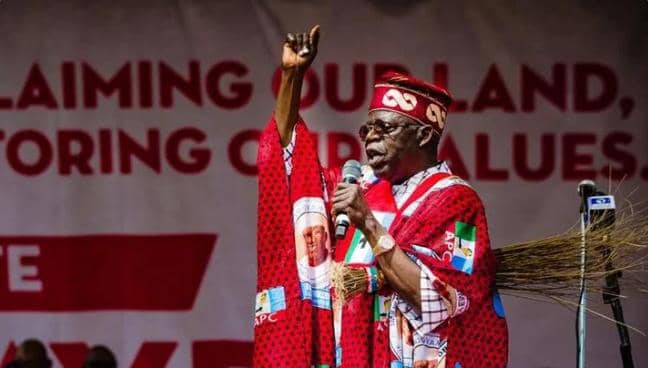
DDM NEWS reports that the renewed debate over electronic transmission of election results has once again exposed the deep anxieties within Nigeria’s political establishment, following fresh comments by Samson Itodo, Executive Director of Yiaga Africa, who laid bare what he described as the real reasons behind the Senate’s resistance to making e-transmission compulsory.
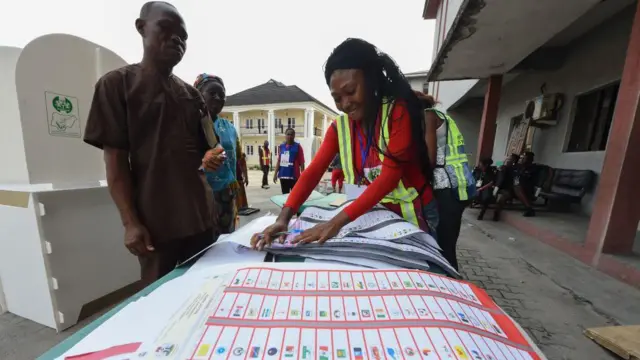
Speaking during an appearance on Sunday Politics, a current affairs programme aired on Channels Television, Itodo offered a candid and far-reaching assessment of why the issue of electronic result transmission continues to divide lawmakers, electoral stakeholders, and civil society groups. His remarks came against the backdrop of reports that the Senate had, on Wednesday, declined a proposed amendment to Clause 60, sub-section 3 of the Electoral Amendment Bill, which sought to make the electronic transmission of election results mandatory.
According to DDM NEWS, the decision has reignited concerns among democracy advocates who argue that Nigeria is deliberately stalling reforms that could significantly strengthen the credibility of its elections. For Itodo, however, the matter goes far beyond technical arguments or fears about cyber security. At its core, he insists, is the political class’s discomfort with a system that limits human interference and exposes manipulation.
In his analysis, Itodo dismissed the notion that electronic transmission is being resisted purely because of vulnerabilities in digital systems. He acknowledged that no technological system in the world is completely immune to attacks or failures, stressing that perfection should not be the benchmark for reform.
“What you do about vulnerabilities,” Itodo explained, “is that you institute mechanisms that limit the extent of those vulnerabilities. You prevent attacks as much as possible. There is no system in the world that is totally insulated from penetration.”
DDM NEWS notes that this argument directly challenges the common justification offered by opponents of e-transmission, who frequently cite hacking, system failure, or poor connectivity as reasons to retain manual processes. For Itodo, these concerns, while valid, are not unique to elections and are routinely addressed in sectors such as banking, aviation, and telecommunications, where digital systems are already deeply entrenched.
He argued that the real fear lies in what electronic transmission represents: a fundamental shift in power dynamics within Nigeria’s electoral process. According to him, e-transmission reduces opportunities for manipulation, especially at the collation stage, which he described as the weakest link in the country’s results management system.
DDM NEWS understands that result collation has historically been one of the most controversial stages of Nigerian elections. While voting at polling units is often conducted under public scrutiny, the movement of results from polling units to ward, local government, and state collation centres has long been associated with allegations of tampering, substitution, and outright falsification.
Itodo stressed that electronic transmission directly confronts this problem by creating a digital trail that is visible, time-stamped, and accessible. Once results are uploaded from the polling unit, they become difficult to alter without detection.
“At the lowest and perhaps the weakest link of our entire results management process is at the collation level,” he said. “That is where results are manipulated.”
He explained that the introduction of electronic platforms by the Independent National Electoral Commission (INEC), including the INEC Result Viewing portal (iReV), was designed to close this gap. Under this system, results are collated at the polling unit, entered into official result sheets, and then uploaded to a portal designated by INEC.
DDM NEWS reports that this process fundamentally changes how elections are monitored. By making results publicly accessible almost immediately after polling, electronic transmission ensures that citizens, political parties, observers, and the media can independently track outcomes as they move through the collation chain.
“That way, it enhances accessibility,” Itodo noted. “When it goes to the collation centre, everyone already sees the result.”
This visibility, he argued, creates a deterrent effect. Knowing that results are already in the public domain discourages officials or political actors from attempting to alter figures at later stages. It also empowers voters, who can compare what was uploaded at their polling unit with what is eventually declared.
DDM NEWS observes that this deterrent effect is precisely what makes electronic transmission uncomfortable for segments of the political class that have historically benefited from opaque processes. In a system where outcomes can be reshaped away from public scrutiny, power often lies not with voters but with those who control collation points. E-transmission disrupts that arrangement.
The Senate’s reported refusal to amend Clause 60 to make e-transmission compulsory has therefore been interpreted by many observers as a deliberate attempt to preserve discretion. As long as electronic transmission remains optional rather than mandatory, critics argue, there is room for selective application, inconsistency, and political influence.
For Itodo and other election reform advocates, this ambiguity undermines the spirit of the Electoral Act. While the 2022 Electoral Act introduced provisions for technology in elections, subsequent interpretations by INEC and rulings by the courts have effectively allowed the commission to decide when and how electronic transmission is applied.
DDM NEWS understands that this discretionary framework has fueled frustration among civil society groups, who believe that without compulsion, technological reforms lose much of their impact. They argue that a system designed to enhance transparency cannot rely on goodwill alone, especially in a political environment where stakes are high and trust is fragile.
Beyond transparency, Itodo highlighted broader democratic implications. He suggested that electronic transmission strengthens public confidence in elections by reducing suspicion and speculation. When citizens can independently verify results, the likelihood of post-election violence, legal disputes, and prolonged uncertainty is reduced.
In contrast, opaque processes often breed mistrust, protests, and legitimacy crises. Nigeria’s electoral history, marked by disputed outcomes and prolonged litigation, offers ample evidence of the costs of weak result management systems.
DDM NEWS notes that the debate over e-transmission is unfolding at a critical moment for Nigeria’s democracy. With voter turnout declining and public confidence in institutions under strain, reforms that promote openness and accountability are increasingly seen as essential rather than optional.
For Itodo, the conversation should not be about whether electronic transmission is flawless, but whether Nigeria is willing to confront the political interests that benefit from the status quo.
“The power of electronic transmission,” he implied, “is not in the technology itself, but in what it takes away — the ability to quietly change outcomes.”
As lawmakers continue to debate electoral reforms, DDM NEWS will closely monitor how the Senate’s stance on e-transmission shapes the future of Nigeria’s elections. What remains clear is that the issue has moved beyond technicalities, becoming a defining test of political will, democratic commitment, and the country’s readiness to embrace transparency in its purest form.
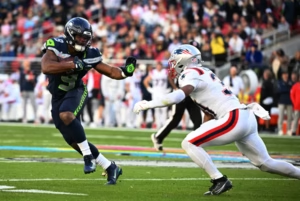
DDM NEWS brings you an exclusive, in-depth account of a Super Bowl night that blended elite football, redemption narratives, and pop-culture spectacle, as the Seattle Seahawks clinched Super Bowl 60 with a convincing 29–13 triumph over the New England Patriots, sealing one of the most memorable championship moments in recent NFL history.
Under the glare of the world’s brightest sporting spotlight, the Seahawks delivered a performance that was as disciplined as it was explosive, outclassing a Patriots side that entered the game hoping to add another historic chapter to its storied Super Bowl legacy. From kickoff to the final whistle, Seattle dictated the tempo, controlled key moments, and showcased why preparation, balance, and belief remain the ultimate currency on football’s biggest stage.
The atmosphere inside the packed stadium was electric long before the opening snap. Fans clad in blue, green, silver, and red filled the stands, while millions more tuned in globally, anticipating a clash between two franchises with contrasting identities. For Seattle, Super Bowl 60 represented a chance to reaffirm its place among the NFL’s elite. For New England, it was an opportunity to revive the dynasty aura that once defined the franchise.
From the opening drive, it was clear that the Seahawks arrived with purpose. Their offense moved the ball efficiently, blending short, precise passes with well-timed runs that kept the Patriots’ defense guessing. Seattle’s quarterback displayed poise and maturity, spreading the ball across multiple targets and avoiding costly mistakes. The Seahawks struck first with a methodical drive capped by a touchdown that immediately shifted momentum in their favor.
New England responded with determination, piecing together a scoring drive of its own to keep the contest competitive in the early stages. However, as the first quarter progressed, cracks began to appear in the Patriots’ execution. Missed assignments, stalled drives, and an inability to sustain offensive rhythm allowed Seattle to seize control.
DDM NEWS observed that the defining feature of the Seahawks’ game plan was balance. Their running game consistently picked up positive yardage, wearing down the Patriots’ defensive front and opening space for play-action passes. On defense, Seattle’s unit was relentless, applying pressure at crucial moments and forcing New England into uncomfortable situations. The Seahawks’ secondary, in particular, delivered a masterclass in coverage, limiting big plays and capitalizing on rushed decisions.
By halftime, Seattle had built a commanding lead that reflected their dominance on both sides of the ball. While the Patriots struggled to convert opportunities into points, the Seahawks maximized theirs, entering the break with confidence firmly on their side. Yet, the halftime interval offered more than tactical regrouping—it delivered a cultural moment that captured global attention.
The Super Bowl 60 halftime show, headlined by international superstar Bad Bunny, transformed the stadium into a pulsating celebration of music and movement. Backed by dazzling visuals, intricate choreography, and a powerful live band, Bad Bunny delivered a performance that seamlessly fused Latin rhythms with mainstream pop energy. The crowd erupted as hit after hit reverberated through the arena, while viewers worldwide praised the show for its creativity, inclusivity, and unmistakable star power.
DDM NEWS notes that the halftime spectacle added a unique layer to the evening, reinforcing the Super Bowl’s reputation as a global entertainment phenomenon that transcends sport. As the lights dimmed and the field was reset, attention shifted back to the football, with the Patriots facing an uphill battle to stage a comeback.
The second half began with renewed urgency from New England, who attempted to inject pace into their offense. A field goal provided a brief spark, but any hope of a sustained rally was quickly extinguished by Seattle’s composure. The Seahawks answered decisively, orchestrating a drive that culminated in another touchdown, extending their lead and draining belief from the Patriots’ sideline.
Seattle’s defense continued to assert itself, recording crucial stops and forcing turnovers that swung momentum decisively. Each failed Patriots possession was met with roars from Seahawks fans, as the realization grew that the Lombardi Trophy was edging closer to Seattle’s grasp. The Patriots managed another scoring play, but it proved too little, too late against a Seahawks side that refused to loosen its grip.
As the final quarter unfolded, the Seahawks shifted into control mode, prioritizing clock management and field position. Their execution remained sharp, reflecting a team fully aware of what was at stake. When the final whistle sounded, the scoreboard read 29–13, confirming a comprehensive Seattle victory and igniting celebrations across the stadium and beyond.
Players embraced on the field, coaches exchanged congratulations, and confetti rained down as the Seahawks lifted the Lombardi Trophy high. For the franchise, the win marked a defining moment—one that blended strategic excellence with emotional payoff. Veterans savored redemption, younger players etched their names into history, and fans reveled in a championship earned through resilience and unity.
In contrast, the Patriots were left to reflect on a missed opportunity. Despite flashes of promise, they were ultimately undone by inconsistency and an inability to match Seattle’s intensity. While the loss stings, DDM NEWS understands that New England’s presence in yet another Super Bowl underscores the enduring competitiveness of the franchise, even as it navigates a new era.
Beyond the scoreline, Super Bowl 60 will be remembered as a night where sport and culture converged seamlessly. From the Seahawks’ commanding display to Bad Bunny’s electrifying halftime show, the event captured the imagination of audiences worldwide, reinforcing why the Super Bowl remains one of the most powerful stages in global entertainment.
As celebrations continue in Seattle and analysis begins across the league, one truth stands clear: on this unforgettable night, the Seahawks soared above the rest. DDM NEWS will continue to bring you exclusive insights, reactions, and behind-the-scenes stories from Super Bowl 60 and beyond, as the NFL turns its gaze toward the challenges and rivalries of the season ahead.
Former Chairman of Nigeria's National Human Rights Commission (NHRC), Prof. Chidi Anselm Odinkalu
By Chidi Anselm Odinkalu
When he presented his budget proposals for 2024 to Nigeria’s National Assembly, the first full year of appropriations under his presidency, President Bola Ahmed Tinubu identified human asset development, poverty reduction and fighting insecurity as priorities. Last week, his official spokesperson, Bayo Onanuga, appeared to forget or renounce that policy direction when he acknowledged that 133 million Nigerians were multi-dimensionally poor but claimed that had nothing to do with the Federal Government. According to Mr Onanuga, the states and local governments were responsible for that.
On the same day, 450 kilometres away, Vice-President Kashim Shettima provided a full rebuttal of Mr Onanuga’s escape into sovereign abdication. The occasion was the launch of the Stakeholder consultation of the South East Development Commission (SEDC) for its regional development plan called Southeast Vision 2050 (SEV2050). At the event, the Vice-President went beyond merely reaffirming the leadership and responsibility of the Federal Government in eliminating poverty. He also underscored that this had to be “inclusive, sustainable, and anchored on peace and productivity.”
This was not an unveiling of the SEV2050. Rather, it kicked off the process to evolve one. It was also the promenade of the SEDC.
The Commission is one of the four regional development commissions established by President Tinubu under the Ministry of Regional Development. The others are in the north-central, north-west, and south-west. Preceding these, the Niger Delta Development Commission (NDDC) has been in existence since 2000, and the North-East Development Commission (NEDC) since 2017.
The Stakeholder consultation in Enugu was a credit to the SEDC Board, chaired by Emega Wogu, and the management led by the Managing Director, Mark Okoye. It was clearly a pitch for political support and constituency building for the Commission. The SEDC achieved a significant feat by lining up the public support of the governors of all five south-eastern states. By contrast, when its north-west counterpart organised a similar event last month, none of the seven governors of the zone attended.
Imo State Governor, Hope Uzodinma, coincidentally the Chair of the South-East Governors Forum, was the only one of the five governors who did not attend in person. He sent the Speaker of the Imo State House of Assembly instead. It appears the SEDC will not be short of goodwill as it sets out on its mission. Quite clearly, it will not be short of human obstacles in its path.
As its primary mission, the SEDC Act of 2024 charges the Commission with responsibility to “receive and manage funds from allocations of the Federation Account for the reconstruction and rehabilitation of roads, houses and other infrastructural damages suffered by the region as a result of the effect of the Civil War….” The SEDC is the only regional development commission with an explicit mission of post-war reconstruction. One question that the consultation put before the Commission was: reconstruction from which war?
Anambra State Governor, Chukwuma Soludo, addressed this question in his remarks, arguing that the region was in recovery from not one war but “two major wars”. One was the Nigeria-Biafra war, which was supposed to have officially ended on 15th January 1970. The second was what he called “an internal war of self-destruction that has been on since 2021.” Some people may argue that his dating of this second conflict to 2021 is either artificial or unrealistically recent.
It was notable that Governor Soludo failed to mention the parties to this second war. Pointedly, however, he noted that “after the (first) civil war, there was a promise of rehabilitation and reconstruction; and…. this is yet to happen.” What he left unsaid was that the failure to fulfill that promise made what he described as the second war all but inevitable. Whether that was deliberate or inadvertent is immaterial.
Even as it sought to project an ambition over the next quarter-century, the SEV2050 consultation could not escape the enduring backdrop of reconstruction that frames its search for a mission. The mistake will be to focus on brick and mortar and forget to prioritise a reconstruction of minds, memories, and mentalities.
Vice-President Shettima acknowledged as much with some deftness in his opening remarks when he paid tribute to “a region defined not only by memory, but by motion.” Like Governor Soludo, what he left unsaid was even more eloquent. It was impossible to miss that he felt unable to say that this motion led to movement or progress.
How to transform motion into movement and ultimately to regional progress, more than half a century after the end of the conflict that continues to define independent Nigeria, is what the SEDC seeks
.
On show were early signs of constructive competition among the states of the Southeast. It begs to be harnessed.
Abia State offers a vision for energy transition to inspire value-added processing and industry.
Anambra State is willing to lead in enterprise and innovation.
Ebonyi State’s value offer is in the food security and agriculture value chain.
Enugu State offers a secure home for a shared mission of coordination for regional prosperity.
These are reassuring. But the Enugu event equally advertised the daunting challenges that confront the Commission along its path. Three were evident.
One is a crisis of mismatched expectations. This was best illustrated by Governor Soludo. Having advised the Commission to be realistic in its ambitions, he nevertheless urged the Commission to lead the delivery of a “Marshall Plan” for the South-east, a reference to the US-led plan for Europe’s reconstruction after World War II. According to Governor Soludo, this regional Marshall Plan should include a regional security framework, and “super inter-state infrastructure” such as regional railways and regional highways. The problem, however, is that an SEDC that purports to lead on the former is likely to antagonise the state governors, and a Commission that claims to lead on the latter will be on a fool’s errand.
Two is the problem of evolving a viable business model for the SEDC. For long, the NDDC has defined the business model of the regional development commissions. Under this model, the commissions operate largely as front offices for extortion, which holds the fate of citizens of the affected region/s hostage in carve-ups by political insiders sharing development funds as private loot. By 2022, according to one report on the NDDC, “12,000 out of 13,377 projects were abandoned after paying trillions of Naira for them.” As development agents, they have been largely ineffectual. The SEDC can’t afford this.
Three, therefore, SEDC will face push-back from the usual species of greedy political grubbiness. The event in Enugu had in attendance the Vice-President, the Governors of all the South-east States, and the Speaker of the House of Representatives, who was represented by the Majority Leader, Prof. Julius Ihonvbere. But it was impossible not to notice the absence of the Chairman of the SEDC Committee in the Senate and former Governor of Abia State, Orji Uzor Kalu; his counterpart in the House of Representatives, Chris Nkwonta; and the man who refers to himself as “Number Six Citizen”, Deputy Speaker, Benjamin Kalu. Senator Orji Kalu reportedly sent one of his daughters to represent him. She holds no relevant public office. Anyone who thinks the near collective absence of the National Assembly caucus of the region was a coincidence misunderstands how the place works.
The SEV2050 event in Enugu was arguably as successful as its planners could have hoped for. In terms of its symbolism and optics, it may have exceeded expectations. The SEDC will not be short of ideas as it goes forward; nor will it be short of determined antagonists.
Post-war reconstruction is an existential undertaking. The SEDC has neither the budget nor the latitude for the errors that have become the NDDC habits. If the Commission can confine its mission and secure protection against baleful political extortion from predictable sources, it may lay durable foundations under its current leadership for a business model suited to its unique and historic mission.
A lawyer and a teacher, Odinkalu can be reached at chidi.odinkalu@tufts.edu.
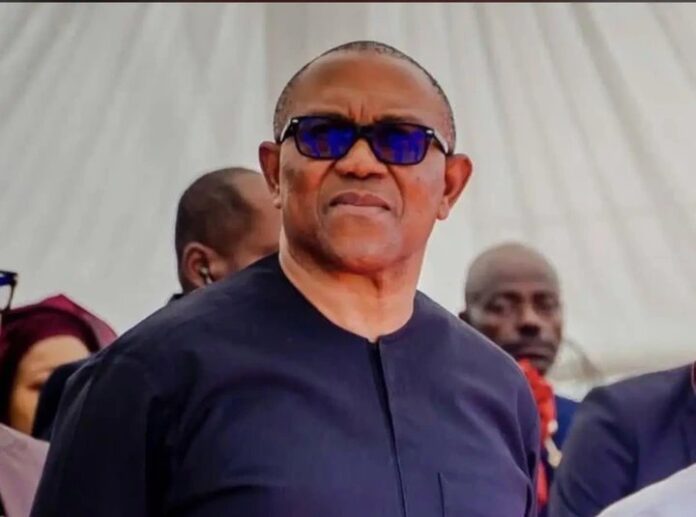
(DDM) – Aloy Ejimakor, a lawyer and legal consultant to IPOB leader Nnamdi Kanu, has openly criticized suggestions that Peter Obi should drop his reported 2027 presidential ambition, calling such advice cowardly and misleading.
He pushed back against narratives that Obi cannot succeed because President Bola Tinubu allegedly controls key institutions.
Ejimakor described the argument as both defeatist and historically inaccurate.
He shared his position in a post on the social media platform X, where political debates often attract large Nigerian audiences.
He insisted that democratic contests should not be reduced to assumptions about institutional control.
According to him, telling a politician to quit based on fear undermines democratic choice.
He argued that voters, not political rumors, decide elections.
Ejimakor specifically rejected claims that Tinubu controls the Independent National Electoral Commission and security agencies in a way that guarantees victory.
He said such claims promote political discouragement rather than civic participation.
He also reminded readers that Nigerian political history offers counterexamples.
He pointed to the 2015 presidential election where incumbent President Goodluck Jonathan lost to Muhammadu Buhari.
Jonathan controlled federal power and state resources at the time.
Yet voters still chose a different candidate.
Ejimakor used that example to argue that incumbency does not equal automatic victory.
He said Nigerian democracy has shown the ability to produce surprises.
Peter Obi, a former Anambra State governor, remains one of Nigeria’s most talked-about opposition figures.
He gained national momentum during the 2023 presidential election.
His campaign energized many young and urban voters.
Supporters praised his message on fiscal discipline and governance reform.
Critics questioned the depth of his political structure nationwide.
Since the last election, Obi has stayed active in public discourse.
He comments on economic issues, governance, and national development.
Speculation about 2027 has already started among supporters and rivals.
Nigeria’s political environment often sees early positioning years before elections.
Analysts say early debates help shape alliances and narratives.
They also warn that social media amplifies both facts and speculation.
The role of INEC often becomes a hot topic before elections.
The commission oversees voter registration, election logistics, and result management.
Public trust in INEC influences how citizens view election credibility.
Security agencies also draw attention because they maintain order during polls.
However, election outcomes still depend heavily on turnout, party agents, and public perception.
Political scientists note that incumbents enjoy visibility and access to state platforms.
But they also face public scrutiny and performance judgments.
Economic conditions, security situations, and public mood often shape results.
Ejimakor’s comments reflect a broader debate about optimism versus caution in opposition politics.
Some believe strong competition strengthens democracy.
Others worry about structural disadvantages.
For now, discussions about 2027 remain speculative.
No official campaign season has begun.
Yet political actors continue to test narratives early.
Ejimakor’s intervention adds to the chorus urging participation over withdrawal.
His message frames elections as contests decided by citizens.
As Nigeria’s democracy evolves, arguments about fairness and competitiveness will likely continue.
Voters will ultimately determine which narratives carry weight.
(DDM) – The All Progressives Congress has rolled out a 137-member National Campaign Council to drive its strategy for the 2026 Federal Capital Territory area council elections, signaling an early and coordinated push to secure grassroots victories in Abuja.
The party released the list as preparations intensify for the polls scheduled for Saturday, February 21, 2026, across the six area councils that make up the FCT.
The councils include Abaji, Abuja Municipal Area Council, Bwari, Gwagwalada, Kuje, and Kwali.
APC leaders say the large council reflects the party’s determination to dominate the local elections in the nation’s capital.
The party confirmed that it will formally inaugurate the campaign council before active campaigning begins.
According to an official statement, the inauguration will hold at 10 a.m. on Wednesday, February 11, at the APC National Secretariat on Blantyre Street in Abuja.
The APC placed several high-profile political figures at the top of the council.
Kwara State Governor AbdulRahman AbdulRazaq will chair the campaign council.
Imo State Governor Hope Uzodimma will serve as Co-Chairman I.
Yobe State Governor Mai Mala-Buni will act as Co-Chairman II.
Niger State Governor Umar Bago will take the role of Co-Chairman III.
Deputy Speaker of the House of Representatives Benjamin Kalu will serve as Secretary.
Sanasi Evelyn will function as Assistant Secretary.
The list also features heavyweight political officeholders from across Nigeria.
Senate President Godswill Akpabio and House Speaker Tajudeen Abbas both appear on the council.
Several sitting governors also joined the lineup.
They include Umo Eno of Akwa Ibom, Monday Okpebholo of Edo, Bassey Otu of Cross River, Hyacinth Alia of Benue, Peter Mbah of Enugu, and Francis Nwifuru of Ebonyi.
Other governors named include Inuwa Yahaya, Lucky Aiyedatiwa, Abdullahi Sule, Babajide Sanwo-Olu, Umar Radda, Usman Ododo, Nasir Idris, Uba Sani, Umar Namadi, and Dapo Abiodun.
Political observers say the APC intentionally assembled a broad mix of national and state figures to project strength.
They note that local council elections in the FCT often carry symbolic weight because Abuja hosts federal power.
Winning council seats in the capital can shape political narratives ahead of national contests.
Area council elections also influence control over local development priorities, markets, and community projects.
Major parties typically invest heavily in these races despite their local scope.
Analysts argue that the APC wants to avoid complacency in Abuja, where urban voters can swing unpredictably.
The FCT has a diverse population that includes civil servants, business owners, and migrants from across Nigeria.
That diversity often produces competitive results.
Some critics say large campaign councils sometimes serve more as political reward systems than operational teams.
Others believe broad inclusion helps unify party structures.
The APC has recently emphasized internal unity after periods of factional tensions in some states.
Early campaign planning may help the party prevent last-minute disputes.
Opposition parties are also expected to unveil their own structures soon.
Voters in the FCT will ultimately judge performance at the grassroots level.
For now, the APC has made a bold show of organization and reach.
The coming weeks will test whether the large council converts influence into electoral success.
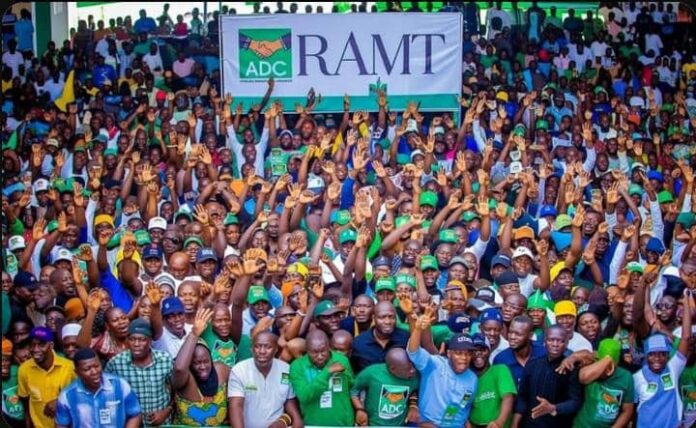
(DDM) – The Rotimi Amaechi Mobilization Team (RAMT) has declared total support for former Minister of Transportation, Rotimi Amaechi, after holding an emergency meeting in Enugu, a development that has stirred fresh political conversations in the state.
Leaders of the group said their position remains firm and non-negotiable regarding Amaechi’s political future.
Members described the gathering as an urgent strategy meeting focused on current political developments and future alignments.
RAMT’s State Media and Publicity Secretary, Dr. Chris Asogwa, made the group’s stance public while speaking with journalists in Enugu on Sunday.
He said members reached a unanimous agreement on their position.
He stated that the team believes Amaechi represents the leadership direction they want.
He added that discussions centered on strengthening mobilization efforts and maintaining loyalty.
According to him, the group would not support any alternative candidate outside their preferred choice.
He framed the decision as one rooted in confidence in Amaechi’s political experience and national profile.
Amaechi remains a prominent figure in Nigerian politics.
He previously served as Governor of Rivers State for two terms.
He was the chairman of Nigerian governors forum two terms. The speaker of the River state assembly, two terms.
He later held office as Nigeria’s Minister of Transportation two terms.
He also played key roles in national party politics and campaign structures.
Supporters often describe him as bold, experienced, and influential.
Critics sometimes question his alliances and political calculations.
Political mobilization teams like RAMT often operate as support blocs that promote specific leaders.
They organize meetings, endorsements, and media briefings to show strength.
Observers say emergency meetings usually signal internal planning ahead of political contests.
Enugu frequently serves as a meeting point for regional political coordination in the Southeast.
Analysts note that endorsements from organized groups can influence supporters and shape narratives.
However, they also say strong declarations can attract opposition.
Nigeria’s political environment often rewards coalition-building and negotiation.
Firm public positions sometimes function as bargaining signals.
Dr. Asogwa emphasized that the team wants unity among supporters.
He said clear positions prevent confusion within their ranks.
Political watchers say such messaging helps groups stay relevant.
Some Enugu residents view the declaration as routine political signaling.
Others see it as an early move ahead of bigger political activities.
As political momentum gradually builds nationwide, more groups may unveil alignments.
Whether RAMT’s stance will carry wider influence remains uncertain.
For now, the group has made its loyalty to Amaechi unmistakably clear.
(DDM) – Manchester City have reignited the Premier League title debate after a dramatic 2–1 comeback victory over Liverpool, a result that pushed fresh predictions from a well-known football supercomputer and stirred new arguments among fans.
City overturned a deficit to claim all three points in a high-stakes clash that many observers see as a potential turning point in the season.
Pep Guardiola’s side showed resilience and patience, qualities that have defined several of their past title runs.
Erling Haaland delivered the decisive moment when he converted a late penalty that sealed the comeback win.
Players and supporters celebrated the result as a statement that the champions still intend to fight until the final weeks.
The victory keeps Manchester City six points behind league leaders Arsenal.
Thirteen matches remain on the calendar, leaving enough room for momentum swings.
Football analysts often say the final stretch of the Premier League season rewards squad depth and mental strength.
City have built a reputation for strong finishes under Guardiola.
Data platform PolyMarket, described as a supercomputer-style prediction model, reacted quickly to the result.
The model increased City’s title probability from 15 percent to 19 percent.
That jump, while modest, signals renewed belief in City’s chances.
Arsenal still lead the projections, but their numbers dipped slightly.
The Gunners saw their probability fall from 81 percent to 79 percent.
That drop came despite Arsenal recording a convincing 3–0 win over Sunderland.
The shift shows how predictive models weigh long-term patterns, not just single results.
Manchester United remain distant outsiders in the title picture.
Their projected chance stays at 2 percent.
Such numbers underline how tight competition at the top still favors Arsenal and City.
Supercomputer predictions have grown popular among fans in recent years.
Supporters use them to debate likely outcomes and pressure points.
However, algorithms cannot account for every real-world factor.
Injuries, suspensions, dressing-room morale, and fixture congestion often disrupt forecasts.
The Premier League has a long history of late drama.
Famous title races have swung on single goals, controversial decisions, and surprise defeats.
City themselves have benefited from final-day twists in past seasons.
Arsenal, meanwhile, chase a title many of their fans have awaited for years.
Their young squad has earned praise for energetic, attacking football.
Neutral observers say the psychological battle may prove as important as tactics.
Every dropped point now carries greater weight.
Managers also juggle domestic and European commitments, which test squad rotation.
Fans across England and beyond continue to track every update.
Debates over who will lift the trophy dominate sports media and social platforms.
While supercomputers offer probabilities, players still decide outcomes on the pitch.
For now, City’s comeback win has injected fresh suspense into the race.
The title contest remains open, intense, and highly watchable as the season enters its decisive phase.
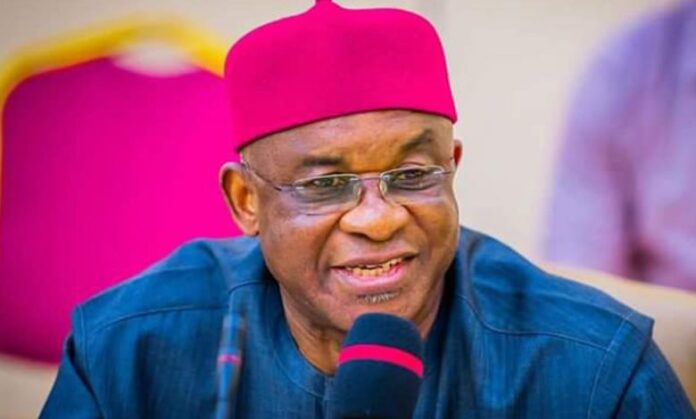
(DDM) – Former Senate President David Mark has publicly urged the Nigerian Senate to allow the Independent National Electoral Commission (INEC) to determine whether it can electronically transmit election results, rather than lawmakers speaking on the commission’s behalf.
Mark made the remarks in Abuja during the launch of The Burdens of Legislators in Nigeria, a book written by former Senator Effiong Bob, where political leaders and stakeholders gathered to reflect on governance and lawmaking.
He directed his comments at Senate President Godswill Akpabio amid ongoing debates over proposed amendments to Nigeria’s Electoral Act, especially the controversial issue of electronic transmission of results.
Mark argued that the electoral body should have the space to test and demonstrate its own capabilities.
He said the National Assembly should focus on creating the legal framework that permits electronic transmission instead of pre-judging INEC’s readiness.
According to him, public demand clearly favors real-time electronic transmission from polling units.
He stressed that the debate over INEC’s technical capacity should not overshadow the broader democratic goal of transparency.
Mark maintained that once the law allows electronic transmission, responsibility for execution should rest with INEC.
He cautioned lawmakers against appearing to limit reforms that many Nigerians see as critical to credible elections.
Addressing Akpabio as a friend, Mark noted that the Senate President carries the duty of representing the legislature’s collective voice.
However, he emphasized that speaking for INEC could blur institutional boundaries.
He stated that if INEC fails after being given the legal backing, accountability should fall on the commission, not the lawmakers.
Nigeria has debated electronic transmission for several election cycles.
Supporters argue that digital transmission reduces manipulation, delays, and disputes that often follow manual collation.
Critics, however, frequently raise concerns about infrastructure, network coverage, and cybersecurity risks.
The controversy intensified after past elections where result collation delays fueled allegations and court cases.
Electoral credibility remains a sensitive topic in Nigeria because disputed outcomes have historically triggered political tension and litigation.
Reforms to the Electoral Act in recent years have aimed to strengthen INEC’s independence and improve transparency.
Civil society groups and election observers often push for technology-driven solutions to build public trust.
Mark’s intervention adds the voice of a seasoned lawmaker who once presided over the Senate during key democratic periods.
Analysts say his comments reflect a wider concern among reform advocates that political caution may slow innovation.
Some lawmakers prefer gradual reforms, arguing that failed technology could damage confidence.
Others believe Nigeria must modernize its election process in line with global trends.
Countries across Africa and beyond increasingly test electronic systems to improve speed and accuracy.
Still, experts warn that technology alone cannot fix political interference or weak institutions.
They argue that legal clarity, funding, and training matter just as much.
As the National Assembly continues deliberations, Nigerians watch closely because electoral rules shape future contests.
Many citizens view transparent elections as essential to stability and development.
Mark’s message ultimately centers on letting institutions perform their assigned roles.
Whether lawmakers adopt that approach may influence the direction of Nigeria’s next electoral reforms.
(DDM) – Fresh political intrigue has followed the All Progressives Congress after the party replaced Imo State Governor Hope Uzodimma as chairman of its National Convention Central Coordination Committee, naming former Katsina State Governor Aminu Masari to lead the body instead.
The decision has stirred debate within party circles because Uzodimma previously headed the committee and remains a prominent APC governor.
Party insiders say leaders made the change to satisfy zoning arrangements and to honor senior figures who no longer seek elective positions.
The APC announced the reshuffle in an official statement signed by National Secretary Ajibola Basiru.
The statement confirmed Masari as chairman and listed former Senate President Pius Anyim as Vice Chairman I of the committee.
The party reassigned Uzodimma to serve as treasurer of the same committee.
Sources inside the National Working Committee insist leaders did not punish Uzodimma.
They argue that the party simply recalibrated positions to reflect experience, geography, and internal balance.
One senior official explained that veteran politicians who are not chasing offices can supervise the process more neutrally.
He said the party wanted respected elders to occupy sensitive roles ahead of the national convention.
He added that Masari and Anyim bring long records of party service and administrative experience.
Another party figure linked the decision to regional considerations within Nigeria’s power-sharing culture.
He noted that President Bola Tinubu comes from the South, which influenced the push for a northern chairman.
Zoning remains a powerful, though unofficial, tool in Nigerian party politics.
Major parties often rotate leadership roles to calm regional tensions and maintain loyalty.
Analysts say such balancing acts aim to prevent internal fractures before major conventions.
The APC prepares for its national convention scheduled for March 27 and 28, 2026.
The convention will help determine the party’s organizational direction before future elections.
Delegates will also shape the next National Working Committee.
Party members have already begun purchasing nomination forms for various positions.
Officials say they expect a consensus-driven and peaceful gathering.
They publicly project unity despite private negotiations among blocs.
Uzodimma still holds influence as Chairman of the Progressive Governors Forum.
That role keeps him at the center of coordination among APC governors nationwide.
Observers note that governors often shape delegate behavior at conventions.
Some political watchers believe the reassignment preserves Uzodimma’s relevance while reducing controversy.
Others see it as a strategic compromise among competing interests.
The APC has faced internal contests before major meetings in the past.
Those contests sometimes reflected rival ambitions and regional loyalties.
The party leadership often resolves disputes through negotiation rather than open conflict.
When journalists asked Basiru to explain Uzodimma’s removal, he declined detailed comment.
His brief response added to speculation among political followers.
Political analysts say silence sometimes signals delicate internal talks.
They expect more clarity as the convention approaches.
For now, the reshuffle highlights how Nigerian parties constantly juggle loyalty, zoning, and experience.
It also shows how internal decisions can trigger public debate even without open disputes.
Many party supporters ultimately judge success by whether the convention runs smoothly.
If consensus holds, the controversy may fade quickly.
If disagreements grow, the leadership may face tougher negotiations ahead.
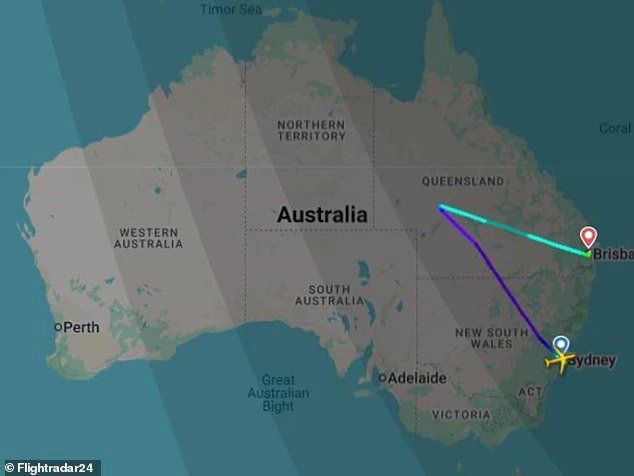
(DDM) – An AirAsia long-haul flight from Australia to Malaysia made an emergency landing in Brisbane after pilots detected a problem mid-journey and declared a general emergency.
The incident involved AirAsia flight D7221, which departed Sydney on Sunday night heading for Kuala Lumpur.
Flight tracking data showed the aircraft left Sydney around 10 p.m. and initially climbed to normal cruising altitude.
Passengers expected a routine overnight international trip between Australia and Malaysia, a popular route for business and family travel.
However, the situation changed about two hours into the flight when the aircraft transmitted a general emergency signal.
Aviation monitors reported that the pilots squawked “7700,” the international transponder code that alerts air traffic control to a serious issue onboard.
Air traffic controllers treat a 7700 signal as a priority because it can indicate technical trouble, medical emergencies, or other urgent concerns.
Tracking data showed the plane descending from about 34,000 feet to roughly 10,000 feet after the emergency call.
Commercial jets often lower altitude in emergencies to manage cabin pressure, weather, or mechanical risks.
The aircraft then made a U-turn and diverted to Brisbane instead of continuing across the ocean toward Southeast Asia.
The plane landed safely in Brisbane and authorities grounded it for inspection.
Reports said the diversion left many passengers stranded while airline staff arranged assistance and onward plans.
Neither AirAsia nor airport authorities immediately confirmed the exact cause of the emergency.
AirAsia had not released a detailed technical explanation at the time of reporting.
Aviation experts note that emergency diversions, while alarming, form a standard part of global flight safety systems.
Pilots receive strict training to choose the safest airport quickly when warning systems or unusual readings appear.
Modern aircraft include multiple backup systems that allow safe landings even when problems arise.
Australia maintains strong aviation safety oversight through the Civil Aviation Safety Authority, which monitors incidents and airline compliance.
AirAsia operates as one of Asia’s largest low-cost carriers, connecting millions of passengers yearly across the Asia-Pacific region.
The airline built its reputation on affordable fares and an extensive regional network.
Like many global carriers, it has faced occasional technical incidents, though most flights operate without problems.
Aviation analysts say social media and flight-tracking apps now make in-flight events more visible to the public.
Passengers today can watch altitude, speed, and route changes in real time, which quickly spreads news of diversions.
Some travelers say such visibility increases anxiety, while others believe it improves transparency.
Industry data still shows air travel remains statistically one of the safest transport modes worldwide.
Investigators typically review maintenance logs, pilot reports, and aircraft data after emergency landings.
Those reviews help determine whether issues involve equipment, procedures, or external factors.
For passengers on flight D7221, the priority remained a safe landing, which the crew achieved.
Many travelers reportedly expressed relief after the plane touched down without injuries.
The airline will likely rebook affected passengers once it resolves the aircraft’s status.
This incident adds to ongoing public conversations about airline reliability, cost-cutting, and safety margins in budget travel.
Regulators and airlines alike continue to emphasize that declaring emergencies shows caution, not failure.
In this case, the crew’s decision to divert early may have prevented greater risk later in the journey.
Travelers now await AirAsia’s full explanation as investigators review what triggered the midair alert.
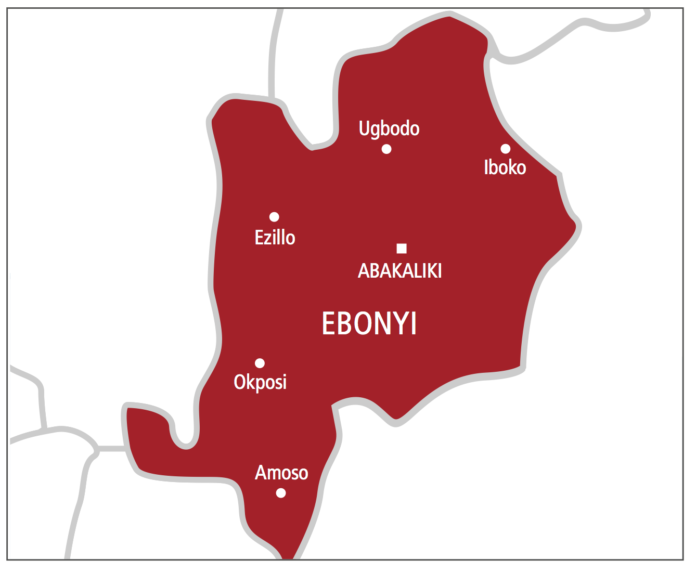
(DDM) – Fear has swept through Nkwagu community in Izzi Local Government Area of Ebonyi State after unknown women allegedly abducted three toddlers from a residential compound located opposite a Nigerian Army barracks.
Residents say the incident has shaken confidence in local security because it happened near a military facility many people consider a safe zone.
The incident occurred in the early hours of Saturday when the children disappeared from their homes inside the shared compound.
The missing children include two baby boys and a one-year-old girl, according to families and community members.
Their mothers, Mrs. Happiness Okpuno Gladys and Mrs. Nworie Oluchi, said three unfamiliar women entered the compound as overnight guests of the landlord two days before the incident.
The women reportedly arrived on Thursday, February 6, and slept in the compound without raising immediate suspicion.
Mrs. Gladys said she went to the market on Saturday morning for her trading business before neighbours alerted her that her children were missing.
She said she rushed home and met a crowd already searching the compound and surrounding area.
She explained that she had never seen the women before and did not know their identities.
She added that the strangers spoke English and Central Igbo but could not speak the local dialect, which later made residents suspicious.
She alleged that the landlord personally allowed the women to stay overnight despite the compound not operating as a lodge or guest house.
She reported that the suspects took her two-year-old son and her one-year-old daughter.
Mrs. Oluchi said one of the same women approached her son and claimed she wanted to buy him biscuits.
She said she initially allowed it but quickly became worried because the child was unwell and needed medication.
She sent her older children to retrieve him, but they could not find the woman.
She said two other women remained in the compound and tried to calm her while asking her to wait.
She insisted on getting her child back immediately.
She said she briefly entered her room to change clothes so she could search outside.
Neighbours then reported seeing one of the women leave in a commercial tricycle.
She raised an alarm, but the remaining women also disappeared before residents could stop them.
Both mothers said their husbands were away when the incident happened.
Community members described the abduction as bold and emotionally distressing.
Many parents in the area now keep their children indoors and monitor strangers more closely.
Residents have shared descriptions of the missing children and urged transport workers and traders to watch for suspicious movements.
An emergency contact number has circulated to encourage information sharing with authorities.
The Ebonyi State Police Command confirmed the case and said officers recorded it at the Central Police Station in Abakaliki.
Police spokesperson SP Joshua Ukandu said investigators have begun efforts to trace the suspects and recover the children.
He also reminded landlords and residents to verify the identities of strangers and request guarantors before offering accommodation.
Child abduction and trafficking remain concerns in parts of southeastern Nigeria, where advocacy groups have repeatedly called for stronger community surveillance and faster reporting.
Security experts say traffickers often exploit trust within shared compounds and busy neighborhoods.
Local leaders in Izzi have urged calm while promising cooperation with police.
Families in Nkwagu now hope swift action will reunite the children with their parents and restore a sense of safety in the community.
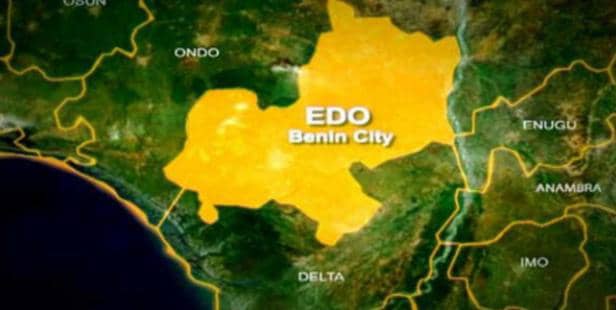
(DDM) – The Edo State Police Command has announced major arrests in the kidnapping of young doctor Abu Babatunde, a case that stirred outrage across Edo State and renewed fears about insecurity in Auchi.
Police operatives arrested three suspected members of the kidnapping gang during coordinated operations in Warake Forest and Auchi town, according to an official statement.
ASP Eno Ikoedem, the Police Public Relations Officer in Edo State, confirmed the developments in a statement on Sunday and described the arrests as a breakthrough in a wider crackdown on criminal networks.
Officers from the Auchi Division worked with local hunters and vigilante groups to comb bush paths and forest hideouts where kidnappers often operate.
The team arrested a suspect, Saminu Kawujie, on February 3, 2026, during one of those bush-combing operations in Warake Forest.
Police searched him and recovered two knives, two mobile phones, a UBA ATM card, and ₦20,250 in cash.
Investigators organized an identification parade where the victim reportedly identified Kawujie as one of his abductors.
Police said new intelligence led officers to two more suspects on February 8 at about 9:00 a.m. inside the Specialist Hospital in Auchi.
Officers arrested Idris Abubakar and Sani Abubakar at the hospital following a tip-off.
Authorities identified both men as members of the gang responsible for the January 2 kidnapping.
Police specifically named Idris Abubakar as the person who allegedly collected the ransom money.
The command stated that detectives would pursue a “comprehensive and discreet investigation” to dismantle the entire network behind kidnappings in the area.
Separate sources said the case took a dramatic turn when some suspects reportedly visited the same hospital where the victim works.
According to those sources, the doctor recognised the men when he entered a ward where they had brought their children for treatment.
Security personnel then alerted the police, who moved in and took the suspects into custody.
The abduction itself occurred on January 2, 2026, at the doctor’s residence on City Pride Road in Igbira Camp, Auchi.
Gunmen seized Babatunde and his younger brother, Abu Tahir, as they opened the gate to their compound.
The incident shocked residents, who said kidnappers increasingly target homes rather than highways.
Tragedy followed days later when authorities found Tahir’s body near Orley River on January 5.
Family members and community leaders mourned his death and demanded swift justice.
The kidnappers later released Babatunde after his family paid a ₦50 million ransom.
His father revealed that relatives and supporters raised the money in two parts of ₦20 million and ₦30 million.
Friends, non-governmental organisations, and well-wishers contributed to the fund, showing the emotional weight of the case.
Kidnapping for ransom has plagued parts of Edo State and the wider region for years.
Criminal groups often exploit forests and rural routes to hide victims and evade security patrols.
Community vigilantes have stepped up support for police, but residents still demand stronger prevention.
Many locals argue that frequent arrests must lead to prosecutions to deter future crimes.
Police insist the latest arrests show progress and promise more operations ahead.
For many families in Auchi, however, the case represents both relief and a reminder of persistent danger.
Residents now watch closely as authorities move to charge the suspects and continue the investigation.
(DDM) – A Nigerian lawyer, Moses Oddiri, remains in DSS custody despite a court order granting bail and release.
DDM gathered that the continued detention has sparked outrage among his relatives and associates.
The family alleges that authorities ignored valid court directives ordering his freedom.
They say the situation raises serious concerns about respect for the rule of law.
Oddiri’s brother, Doro Oddiri, spoke publicly about the detention and legal battle.
He confirmed that lawyers filed a fundamental rights suit at the Federal High Court in Lagos.
The suit sought enforcement of Oddiri’s constitutional rights and immediate release.
Court records show the case was filed on December ten, twenty twenty-five.
The court later reviewed arguments from both the applicant and government representatives.
The judge granted bail to Moses Oddiri in mid-January twenty twenty-six.
The court attached specific bail conditions to guarantee his appearance when required.
Family members and sureties quickly worked to meet those conditions.
Doro stated that they fulfilled every requirement without delay.
The court then issued a formal release warrant to the DSS.
That release warrant carried a January twenty-three date.
Court officials served the bail order and warrant on the DSS days later.
The family insists the DSS received the documents on January twenty-six.
They accuse the agency of refusing to act on the order.
They argue that such refusal undermines judicial authority.
The court also directed DSS to give seven days’ notice before any arraignment.
The order aimed to give Oddiri time to prepare a legal defence.
Doro says DSS still kept his brother in custody after meeting conditions.
He estimates that detention has approached one hundred days.
He describes the situation as a violation of constitutional rights.
He accuses the DSS of showing contempt for the judiciary.
Security agencies in Nigeria often claim national security powers during investigations.
Legal experts, however, stress that court orders remain binding on all authorities.
Background sources link Oddiri’s arrest to a petition against the EFCC chairman.
The petition reportedly went to the National Fraud Intelligence Bureau in London.
It accused the EFCC chairman of diverting community development funds.
Those funds allegedly belonged to the Orogun oil producing community in Delta State.
The dispute over the money has lasted for several years.
Community representatives had earlier demanded accountability for billions of naira.
They petitioned the EFCC to investigate missing statutory payments.
Sources claim the EFCC later reported recovering large sums.
Controversy followed over control and transparency of the recovered funds.
Supporters say Oddiri advocated for a marginalized community.
They argue his actions challenged powerful interests.
The DSS has not publicly detailed reasons for the continued detention.
Observers say the case tests Nigeria’s commitment to due process.
Many citizens now watch how authorities will respond to the allegations.
The family continues to demand compliance with the court’s orders.
They insist that justice requires immediate release or lawful arraignment.
The matter remains a subject of debate in legal and civic circles.
The Nigeria Labour Congress (NLC) has threatened nationwide protests and a possible boycott of future elections over what it described as confusion and contradictory signals from the Senate regarding amendments to the Electoral Act, particularly on the electronic transmission of election results.
In a statement issued on Sunday, NLC President, Joe Ajaero, expressed concern that the Senate has failed to clearly state whether electronic transmission of results would be mandatory, warning that the ambiguity could undermine public confidence in Nigeria’s electoral process.
According to the labour union, recent developments surrounding the Electoral Act amendment have created widespread uncertainty, especially following the Senate’s decision to retain provisions that allow the Independent National Electoral Commission (INEC) discretion in transmitting election results.
The NLC noted that public records indicate the Senate rejected a proposal that would have made real-time electronic transmission of results compulsory, choosing instead to preserve the existing clause that permits INEC to determine the method of result transmission.
“This situation has generated nationwide apprehension, and subsequent explanations have only deepened the confusion,” the Congress said, stressing that Nigerians deserve a transparent electoral system where votes are not only counted but seen to be counted.
The labour body warned that legislative ambiguity at such a critical time could weaken electoral integrity and institutionalise doubt ahead of future elections.
It therefore demanded that the Senate provide an immediate, official, and unambiguous explanation of the final provisions passed, including the exact wording and rationale behind its decision.
The NLC also called on the leadership of the National Assembly to ensure that the harmonisation process between the Senate and the House of Representatives produces a clear and decisive legal framework, particularly on the transmission and collation of election results.
It insisted that the amended Electoral Act must explicitly compel INEC to electronically transmit and collate results from polling units in real time, warning that failure to do so could trigger mass protests before, during, and after elections.
The warning follows the Senate’s passage of the Electoral Act 2022 (Repeal and Re-enactment) Amendment Bill 2026 on February 4. During the process, lawmakers rejected an amendment to Clause 60(3) that sought to mandate real-time electronic transmission of results to the INEC Result Viewing (IReV) portal.
The Senate’s decision has drawn criticism from opposition parties and civil society groups, especially as it contrasts with the position of the House of Representatives, which earlier approved mandatory electronic transmission. The difference now requires reconciliation by a conference committee before the bill can be forwarded to the President for assent.
Meanwhile, Senate President Godswill Akpabio has defended the Senate’s action, saying lawmakers did not scrap electronic transmission but merely removed the term “real-time” to avoid legal and technical challenges. He said the change was intended to give INEC flexibility in addressing network and security concerns.
Despite the controversy, the amendment bill introduces other reforms, including digital voter identification using QR codes and tougher penalties for electoral offences.
The NLC, however, warned that Nigerian workers and citizens are closely watching developments, urging lawmakers to prioritise clarity, transparency, and public trust in the nation’s electoral laws.
The Chief of Staff to British Prime Minister Keir Starmer, Morgan McSweeney, has resigned following intense political fallout surrounding the appointment of Peter Mandelson as the United Kingdom’s ambassador to the United States, despite his past links to disgraced financier Jeffrey Epstein.
McSweeney stepped down on Sunday after a week of mounting pressure within government and the Labour Party over the decision, which has triggered public backlash and a police investigation in the United Kingdom.
In a statement to reporters, McSweeney acknowledged responsibility for advising Prime Minister Starmer to approve Mandelson’s appointment last year, describing the decision as a serious error.
“The decision to appoint Peter Mandelson was wrong. He has damaged our party, our country and trust in politics itself,” McSweeney said. “In the circumstances, the only honourable course is to step aside.”
McSweeney, the most senior political adviser to the prime minister, said he did not personally oversee the due diligence and vetting process for the appointment but stressed that the system must now undergo a fundamental overhaul.
“This cannot simply be a gesture but a safeguard for the future,” he added.
Prime Minister Starmer accepted the resignation and praised McSweeney’s contribution to the Labour Party and his role in the party’s recent electoral success.
“It is largely thanks to his dedication, loyalty and leadership that we won a landslide majority and have the chance to change the country,” Starmer said in a statement.
The controversy surrounding Mandelson intensified following the recent release of additional files related to Epstein by the United States Department of Justice. The documents prompted British police to open an investigation into allegations that Mandelson may have passed market-sensitive government information to Epstein following the 2008 global financial crisis.
As part of the investigation, police reportedly raided two properties linked to Mandelson on Friday. Authorities are probing possible misconduct in public office.
Mandelson resigned from the Labour Party last Sunday and stepped down from the House of Lords on Wednesday. Efforts to reach him for comment have been unsuccessful.
The scandal has plunged Starmer’s administration into political turbulence, with critics questioning the prime minister’s judgment in appointing Mandelson despite his well-documented association with Epstein, which continued even after the financier’s 2008 conviction for soliciting prostitution from a minor.
Political analysts say the episode has raised broader concerns about transparency, accountability and vetting processes for senior diplomatic appointments, as pressure mounts on the government to restore public confidence
The Indigenous People of Biafra (IPOB) has announced the permanent cancellation of the weekly Monday sit-at-home directive across Nigeria’s South-East region, with effect from Monday, February 9, 2026.
The group said the decision was taken on the direct instruction of its leader, Mazi Nnamdi Kanu, who urged residents of the region to resume normal economic and social activities without fear or intimidation.
In a statement issued on Sunday by IPOB’s spokesperson, Emma Powerful, the group said markets, schools, offices, transport services and other business activities should operate fully every Monday going forward.
“The era of Monday sit-at-home is over. All markets, schools, offices, transport services and economic activities must resume fully and normally,” the statement read.
IPOB warned that any individual or group attempting to enforce a sit-at-home order would be acting against the explicit directive of Nnamdi Kanu and the broader objectives of the organisation.
The group stressed that such actions should not be associated with IPOB or its leadership.
The organisation also cautioned residents against possible intimidation or false-flag operations by individuals seeking to undermine the directive.
It urged people across the South-East to remain calm, vigilant and law-abiding while going about their daily activities.
IPOB further clarified that no state government has the authority to threaten or forcibly shut down markets or businesses under the guise of sit-at-home enforcement.
According to the group, any decision involving market renovation, relocation or closure must be carried out with the consent of stakeholders and accompanied by the provision of temporary trading locations.
The statement called on parents to ensure that children return to school and encouraged traders, civil servants and transport operators to resume work without apprehension.
The cancellation marks a major shift in IPOB’s long-standing policy, which for years resulted in weekly shutdowns across the South-East, significantly affecting economic activities, education and public life in the region.
Observers say the development could ease social and economic disruptions in the zone, as residents and businesses adjust to the end of a practice that had become a regular feature of Mondays in the South-East.
The Senate has announced plans to reconvene for an emergency plenary sitting on Tuesday, February 10, 2026, amid mounting controversy surrounding recent amendments to Nigeria’s Electoral Act.
The announcement was made on Sunday in a statement signed by the Clerk of the Senate, Emmanuel Odo, who said the directive came from the President of the Senate, Godswill Akpabio.
According to the statement, all senators have been formally requested to attend the emergency session, which is scheduled to commence at noon.
“The President of the Senate, Godswill Akpabio, has directed the reconvening of plenary for an emergency sitting on Tuesday, February 10, 2026,” the statement read.
The decision to hold the emergency sitting follows the Senate’s rejection on February 4 of a proposed amendment seeking to mandate real-time electronic transmission of election results. While the Senate passed the Electoral Bill 2026 after hours of debate, it voted against making real-time upload of results compulsory.
At the heart of the controversy is Section 60 of the Electoral Act, which governs the transmission of polling unit results. Lawmakers rejected a recommendation by the Senate Committee on Electoral Matters that would have required presiding officers to upload results to the Independent National Electoral Commission’s (INEC) Result Viewing Portal (IReV) immediately after votes are counted.
Instead, the Senate retained provisions from the 2022 Electoral Act, which allow electronic transmission of results after votes are counted and publicly announced at polling units, without explicitly mandating real-time upload.
The rejection has sparked widespread criticism from civil society groups, opposition parties, and public figures. Former Minister of Education, Oby Ezekwesili, and pan-Yoruba socio-political group Afenifere have both criticised the decision, arguing that it undermines transparency and public confidence ahead of the 2027 general elections.
The African Democratic Congress (ADC) has also expressed concern over delays in finalising amendments to the Electoral Act, warning that prolonged uncertainty could expose political parties to legal and technical challenges ahead of the next general elections.
Meanwhile, the Independent National Electoral Commission has indicated that it is unable to release the timetable and schedule of activities for the 2027 polls due to the ongoing legislative process.
INEC has also raised concerns over the inclusion of deceased persons on the voters’ register, prompting plans for a nationwide verification exercise.
Under the retained provisions of the Electoral Act, presiding officers are required to count votes at polling units, record results on official forms, announce them publicly, and transmit them electronically to the appropriate collation centres.
Copies of the results must also be provided to polling agents and security personnel where available.
Violations attract penalties of up to ₦500,000 or a minimum of six months’ imprisonment.
Observers say Tuesday’s emergency plenary could provide lawmakers an opportunity to revisit the contentious amendment in response to public pressure and possible legal challenges from figures such as human rights lawyer Femi Falana.
The outcome of the session is expected to play a significant role in shaping Nigeria’s electoral framework and determining how technology is deployed to enhance transparency and credibility in future elections
A heavy cloud of grief and unanswered questions hangs over the gospel music community in Lagos following the shocking discovery of four lifeless bodies inside a music studio in the Abraham Adesanya area of Ajah. What was meant to be a night of praise, worship, and celebration has ended in sorrow, igniting widespread concern and calls for a thorough investigation into the circumstances surrounding the deaths.
The victims have been identified as popular gospel musician Matthew Ogundele, three members of his crew — Itunu Ogundele and Joseph Sanya — and a well-known gospel blogger and media personality, Matthew Awosanya, widely recognised online as JoesTv. Their sudden deaths have not only devastated their families and friends but have also shaken the faith-based creative community across Nigeria.
According to findings obtained by DDM NEWS, the deceased were invited to minister on Tuesday, the second day of a three-day birthday praise programme organised by fellow gospel artiste Olanireti Akinbola. The programme, designed as a virtual and studio-based praise session, began on Monday and featured several gospel ministers across the three days.
A police source disclosed that Matthew Ogundele and his team arrived at the studio on Tuesday evening and performed late into the night. With the programme stretching into the early hours and considering the distance between the studio and their various homes, the artistes reportedly agreed to spend the night at the studio rather than travel back.
“The convener organised a three-day birthday praise which began on Monday. Matthew Ogundele and his crew were scheduled to minister on Tuesday. Because the programme ended late, they decided to sleep over in the studio. It was the next morning that information filtered in that their lifeless bodies had been found,” a police source said.
The tragic development quickly spread across social media after Christian platforms and colleagues of the deceased began sharing the news. A Christian blog, Omojesu, in a Facebook post, confirmed that the victims had chosen to remain overnight at the studio due to logistical reasons.
“In pursuit of a better life, a blogger known as JoesMediaTv and three musicians were reportedly invited to perform at a virtual birthday praise event at a studio around Ajah. Due to the distance, they decided to sleep over. Sadly, they were said to have passed away in their sleep,” the post read.
By Wednesday morning, panic set in when efforts to reach the artistes failed. According to official police accounts, the incident was reported at the Ajiwe Police Station, Ajah, by the studio owner, Akintayo Akinbola, who is also the husband of the birthday celebrant and programme convener.
Confirming the incident, the Lagos State Police Public Relations Officer, SP Abimbola Adebisi, said the report was made after the studio owner returned to the premises and discovered something was wrong.
She explained that Akinbola told the police he had left the artistes in his studio, located within the HFP Shopping Complex, on Tuesday night after buying food for them while they prepared for their music concert and recording activities.
“He stated that the artistes returned to the studio with the food while he went home. However, at about 11 a.m. on Wednesday, he returned and discovered that the studio door was locked from the inside,” Adebisi said.
Alarmed by the unusual silence and the locked door, the studio owner reportedly raised an alarm. The door was subsequently forced open by concerned individuals, only for a horrifying discovery to be made.
“Upon entry, the lifeless bodies of the four artistes were found inside the studio,” the police spokesperson confirmed.
Detectives were immediately dispatched to the scene, where preliminary documentation and assessments were carried out. According to DDM NEWS findings, the scene sparked intense public speculation after images began circulating online showing what appeared to be traces of blood around the noses, mouths, and ears of the deceased. These visuals heightened anxiety and fuelled debate over whether the deaths were truly natural or the result of foul play.
However, the police have urged restraint, stressing that initial observations did not reveal visible signs of physical violence on the bodies.
“No visible signs of violence were observed during the preliminary examination,” SP Adebisi stated. “The corpses were taken to the Mainland Hospital, Yaba, where a medical doctor confirmed them dead. They were later deposited at the Mainland General Hospital mortuary for autopsy and preservation.”
She further disclosed that, due to the sensitive nature of the case and the widespread public interest, the matter has been transferred to the State Criminal Investigation Department (SCID), Panti, Yaba, for a comprehensive and detailed investigation.
According to the police, the autopsy results and forensic analysis will be crucial in determining the exact cause of death, including whether factors such as environmental conditions, possible inhalation of toxic substances, or other unseen elements played a role.
As investigations continue, colleagues, fans, and members of the gospel music community have taken to social media to express grief, shock, and outrage. Many have described Matthew Ogundele as a passionate worshipper and dedicated minister whose music touched lives both within and outside the church. JoesTv, on the other hand, was known for promoting gospel content and uplifting Christian creatives through digital media.
DDM NEWS observed that beyond mourning, there is a growing demand for transparency and justice. Friends of the deceased insist that only a thorough and credible investigation can restore public confidence and bring closure to the families affected by the tragedy.
The incident has also reignited conversations around safety standards in studios, overnight stays at workspaces, and the need for stricter regulations and emergency preparedness within creative environments.
For now, the gospel music community waits in grief and hope — grief for four lives cut short in the pursuit of worship and service, and hope that the truth behind their deaths will be uncovered without compromise.
As tributes continue to pour in, one question lingers heavily in the air: how did a night of praise end in silence? DDM NEWS will continue to follow developments closely and provide updates as more facts emerge from ongoing investigations.