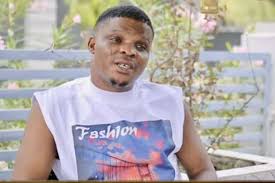
Human rights activist and social commentator Harrison Gwamnishu has finally confirmed that he received ₦10 million from renowned music executive and Mavin Records boss, Don Jazzy, putting to rest weeks of speculation and online debate.
Speaking openly about the donation, Harrison explained that the funds were given as support for his humanitarian and advocacy work, particularly his efforts in assisting vulnerable individuals, victims of injustice, and people in urgent need of help. He clarified that the money was not a personal gift for luxury or private use, but a contribution meant to strengthen the impact of his ongoing social interventions.
According to Gwamnishu, Don Jazzy reached out quietly and offered the support without any conditions or public display, a gesture he described as thoughtful and deeply encouraging. He emphasized that the music executive did not ask for publicity or recognition, noting that the decision to disclose the donation was solely to address misinformation and maintain transparency with the public.
Harrison also expressed gratitude to Don Jazzy, praising him for using his influence and resources to support causes that positively affect lives beyond the entertainment industry. He added that such acts of generosity often go unnoticed because many benefactors prefer to give privately rather than seek public applause.
The revelation has sparked widespread reactions online, with many Nigerians commending Don Jazzy for his consistent acts of charity and applauding Harrison Gwamnishu for his advocacy work. Others have highlighted the importance of transparency when public figures and activists receive large donations, especially in the context of social causes.
Gwamnishu reaffirmed his commitment to accountability, stating that the funds would be channeled strictly toward humanitarian efforts, as intended. He concluded by encouraging more influential individuals to support credible causes, stressing that collective effort remains key to addressing social challenges in the country.
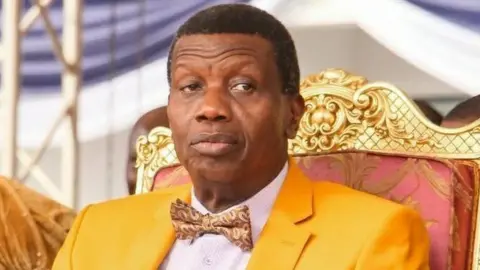
Renowned cleric and General Overseer of the Redeemed Christian Church of God (RCCG), Pastor Enoch Adeboye, has spoken candidly about accusations that pastors are only in ministry for financial gain, using a personal experience to challenge that narrative.
According to Pastor Adeboye, there was a time when someone gifted him three Mercedes-Benz cars in a single day, yet he chose not to use them. He shared this to emphasize that material wealth has never been his motivation for answering God’s call. The respected preacher expressed concern over the growing perception that pastors are driven by money, saying such assumptions overlook the sacrifices many ministers make.
Pastor Adeboye noted that before entering full-time ministry, he had a promising and comfortable career, which he willingly walked away from in obedience to God’s call. He stressed that becoming a pastor was not a financial upgrade for him, but a spiritual assignment that came with its own challenges, responsibilities, and personal sacrifices.
Reflecting on public criticism, the cleric said he leaves judgment to God, adding that he hopes those who hastily label pastors as money-hungry will seek understanding and receive forgiveness. He maintained that while there may be individuals who abuse the pulpit, it is unfair to generalize and dismiss the genuine labor, discipline, and self-denial required in true ministry.
His remarks have resonated with many believers, sparking conversations about faith, sacrifice, and the unseen costs of religious leadership. For Pastor Adeboye, the message was clear: ministry, for him, has always been about obedience, service, and purpose not material possessions.
In the vibrant and often turbulent landscape of Nigerian politics, the Igbo people have always been known for their intellectual depth and democratic spirit. However, in recent years, a worrying trend has emerged: the persistent insults and vitriol directed at Senator Orji Uzor Kalu by some sections of the Igbo community based on his political leanings. It is time for a sober reflection on why this approach is counterproductive and why Senator Kalu deserves respect as an illustrious son of Igboland.
Senator Orji Uzor Kalu belongs to the “Class of 1999–2007” governors. While many of his peers from that era have faded into political obscurity, Kalu remains a formidable and actively relevant figure in national politics. This longevity is not accidental; it is a proof to his political sagacity and the foundation he laid during his tenure as Governor of Abia State.
His ability to navigate the complex corridors of power in Abuja ensures that the Igbo voice remains present at the highest levels of decision-making.
A striking observation is that approximately 99% of those criticizing his gubernatorial record are not from Abia State, nor were they present in the state during his administration. Much of the criticism stems from:
1. Echo Chambers: Relying on narratives pushed by aggrieved opposition politicians.
2. Lack of Context: Ignoring the specific socio-political challenges of the early 2000s.
3. Political Misunderstanding: Mistaking strategic national alliances for a lack of regional loyalty.
For those who didn’t experience his administration firsthand, it is easy to “cling” to hearsay. However, his continued electoral success and his role as a high-ranking Senator suggest a deep-rooted relevance that transcends internet commentary.
Politics is the art of the possible. Senator Kalu has often put his reputation at risk on the “home front” to build bridges with other regions of Nigeria. This is a strategic necessity. For the Igbo people to thrive in a multi-ethnic Nigeria, they need national figures who can negotiate, compromise, and secure seats at the table.
Senator Kalu acts as a crucial link between the Southeast and the national center. Criticizing him for his “political stand” often misses the bigger picture: he is positioning the region for long-term advantage in a federation where numbers and alliances matter.
A Call for Respect
Every well-meaning Igbo son and daughter should recognize that internal sabotage only weakens the collective bargaining power of the South East. Senator Orji Uzor Kalu is an illustrious son and a national figure who has earned his stripes.
We must desist from the culture of insults and instead embrace a culture of strategic support. Even where political views differ, the respect due to a leader of his stature should remain sacrosanct.
”A house divided against itself cannot stand. If we do not value our leaders, we cannot expect others to value our interests.”
Let us stop playing into the hands of those who wish to see the Igbo political front fractured. It is time to support those who have the experience and the reach to represent us on the national stage.
~ Chijioke Paul Okeifufe
Member, Governing Council,
Federal University Dutse,
Jigawa State
Content creator and influencer Tunde Perry has shared details of an alleged conversation involving Afrobeats superstar Wizkid, Carter Efe, and a TikTok live invitation that never happened.
According to Tunde Perry, he once suggested that Wizkid should join one of Carter Efe’s TikTok live sessions to engage fans and create viral moments. However, he claimed the idea was quickly shut down by the Grammy-winning singer. Perry alleged that Wizkid made it clear he had no interest in appearing on such platforms, reportedly saying he could “never be on that kind of nonsense level.”
The revelation has since stirred reactions online, with many fans interpreting the comment as Wizkid drawing a clear line between his brand and certain social media content styles. While some supporters agreed that the singer is known for being selective about his public appearances, others felt the statement sounded dismissive of content creators who thrive on platforms like TikTok.
Wizkid, who is famously private and rarely engages in casual social media activities, has long maintained a carefully curated public image, often letting his music speak for him. Carter Efe, on the other hand, is known for his high-energy, comedic skits and frequent TikTok live sessions that resonate strongly with younger audiences.
As of now, Wizkid has not publicly addressed Tunde Perry’s claims, leaving fans to debate whether the comment was taken out of context or simply reflects the singer’s well-known aversion to online drama and unserious engagements.
The conversation has once again highlighted the growing contrast between traditional celebrity branding and the fast-paced, unfiltered culture of social media entertainment.
A Nigerian law firm has accused Zenith Bank Plc of failing to address an alleged breach by one of its former staff members, who is said to have abused her position to facilitate the diversion of more than N188 million belonging to a long-standing customer, AMSCO Nig. Ltd.
The allegation is contained in a formal letter dated January 21, 2025, written by Seasons Law Firm, Abuja, solicitors to AMSCO Nig. Ltd. According to the firm, Mrs. Anwulika Esekody, who served as AMSCO’s account officer at Zenith Bank’s Itire branch, exploited the banker-customer relationship to advise the placement of funds in a manner that benefited PFI Capital Limited, a company on whose board she is alleged to sit as a director.
The letter was addressed to the Managing Director of Zenith Bank and copied to John Ajibade of Legal Services and Michael Osilama Otu, the Company Secretary and General Counsel. It also made reference to earlier correspondence, including a letter dated July 16, 2025, and the bank’s response of August 8, 2025.
Seasons Law Firm expressed concern that more than six months after the initial complaint, the bank had allegedly failed to take any meaningful action on the matter.
The firm criticised Zenith Bank for not sending a delegation to engage with the client, described as a valued customer of several years, or taking steps to compel Mrs. Esekody or PFI Capital Limited to refund the funds.
It further alleged that the bank’s only responses had been threats to report the directors of AMSCO Nig. Ltd to law enforcement agencies and the transfer of Mrs. Esekody to another branch.
According to the letter, Mrs. Esekody had visited the client’s office in her official capacity as Zenith Bank’s account officer and was fully aware of the funds available in the company’s accounts. The firm argued that this banker-customer relationship enabled the discussions and advice that ultimately led to the funds being “fixed” for the benefit of PFI Capital Limited.
Adekunle Kosoko, Esq., writing on behalf of Seasons Law Firm, said the transaction was a direct result of the relationship between the bank and its customer.
“It is obvious that it was this banker-customer relationship between our client and your bank, in which your said staff represented you, that led to the discussion resulting in our client fixing her funds, howbeit to the benefit of PFI Capital Limited, on the advice of your staff,” he stated.
The law firm disclosed that it plans to institute legal action against PFI Capital Limited, Mrs. Esekody in her personal capacity, and Zenith Bank as her principal employer.
It also revealed that it had been instructed by its client to place the full facts and circumstances of the transaction in the public domain throughout the duration of the proposed suit and until the matter is resolved.
“We have our client’s further instructions to ensure that the facts and circumstances of this transaction be placed in the public space during the pendency of our impending suit and until the matter is resolved, in order to educate the general public and to forestall present and future customers of your bank from the fate that has befallen our client.”
Actor and comedian Kehinde Ganiyu, popularly known as Ijoba Lande, has raised alarm over an alleged brutal assault by operatives of the Nigerian Police Force, claiming the incident nearly cost him his life.
According to the comedian, the incident occurred during an encounter with police officers, which he described as violent and unprovoked. Ijoba Lande alleged that the officers physically assaulted him, leaving him badly injured and traumatized. He said the situation escalated to the point where he genuinely feared he would not survive the ordeal.
In addition to the alleged assault, the comedian claimed that the police officers confiscated his iPhone 16 Pro Max, while also allegedly extorting $1,200 from his brother, who was present during the incident. He stated that despite pleas and explanations, the officers reportedly ignored them and went ahead with the alleged seizure of the valuables.
Ijoba Lande’s account has sparked outrage on social media, with fans, fellow entertainers, and human rights advocates calling for a thorough investigation into the matter. Many have demanded that the police authorities identify and discipline any officers found culpable, stressing that no Nigerian citizen deserves to be treated in such a manner.
The comedian emphasized that he decided to speak out not just for himself, but to draw attention to what he described as a recurring pattern of police brutality and abuse of power. He urged the authorities to ensure justice is served and appealed to the public to continue speaking up against oppression and unlawful conduct.
As of the time of this report, the Nigerian Police Force has not issued an official statement addressing the allegations. However, the incident has reignited conversations around police accountability, citizens’ rights, and the urgent need for reforms within law enforcement agencies in the country.
Nollywood actor Yul Edochie has opened up about why he no longer shares photos of his children with his estranged wife, May Edochie, on social media, while stressing that his decision does not reflect any strain in his relationship with them.
In a recent statement, the actor explained that stepping back from posting his children online was a deliberate choice aimed at protecting their privacy and shielding them from the intense public scrutiny surrounding his personal life. According to Yul, the constant attention and commentary on social media can be overwhelming for children, especially amid ongoing family issues that continue to attract widespread discussion.
He was quick to clarify that despite no longer posting their pictures, he remains very much involved in their lives. Yul emphasized that he maintains a cordial and respectful relationship with his children, adding that they are doing well and that his bond with them remains strong away from the public eye.
The actor noted that not everything needs to be shared online and that some aspects of family life are better kept private. He described his decision as a mature step focused on peace, growth, and the well-being of his children, rather than a reaction to public opinion or ongoing controversies.
Yul Edochie’s comments come amid continued interest in his personal life, but his message was clear: while social media may change, his role and responsibility as a father do not.
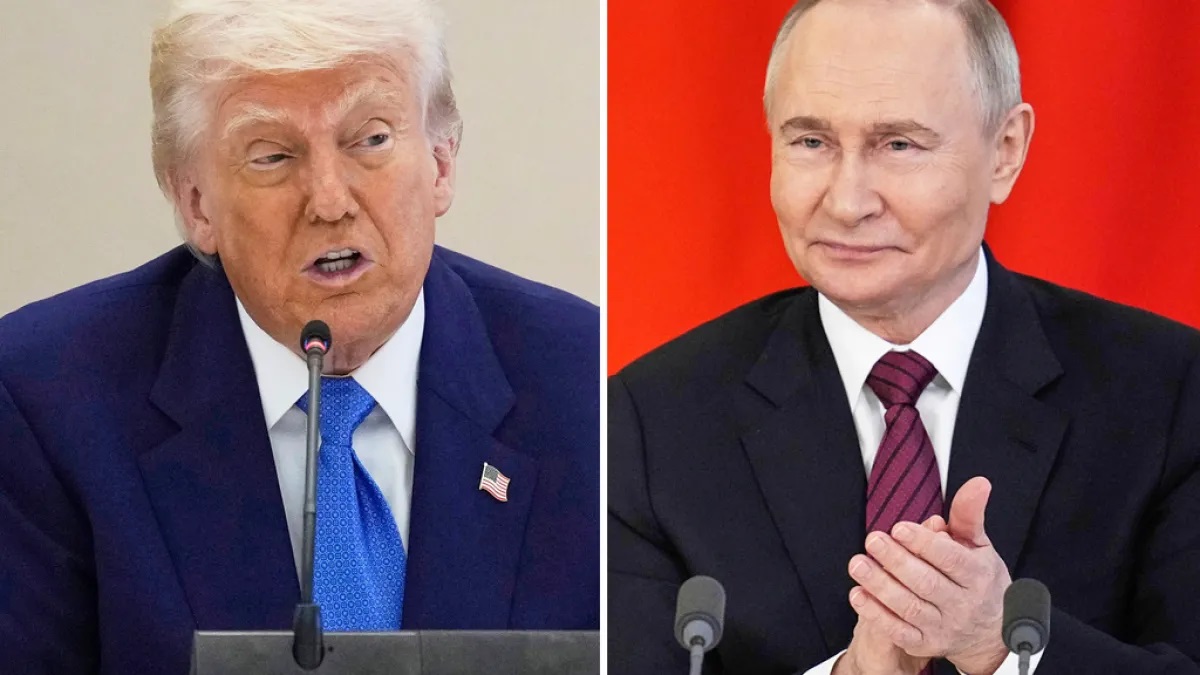
The United States and Russia have agreed to re-establish high-level military contacts for the first time since 2021, the US European Command said on Thursday.
The agreement came on the sidelines of trilateral peace talks in Abu Dhabi, aiming to settle the war in Ukraine, where the command’s General Alexus G. Grynkewich met high-ranking Russian and Ukrainian military officials.
U.S. Special Envoy Steve Witkoff and U.S. President Donald Trump’s son-in-law, Jared Kushner, also took part in the talks on ending the war in Ukraine.
The channel of communication between top U.S. and Russian military representatives was cut in late 2021, shortly before Russian President Vladimir Putin ordered the invasion of Ukraine in February 2022.
“Maintaining dialogue between militaries is an important factor in global stability and peace, which can only be achieved through strength, and provides a means for increased transparency and de-escalation,” the U.S. European Command said.
“This channel will provide a consistent military-to-military contact as the parties continue to work towards a lasting peace,” the statement continued.
Grynkewich also has existing authorities to maintain military dialogue with Russia’s Chief of General Staff Valery Gerasimov in his capacity as commander-in-chief of NATO forces in Europe, the statement noted.
This is intended “to avoid miscalculation and to provide a means for avoiding unintended escalation by either side.”
Moscow and Washington have only had limited contact – consisting of telephone calls between defense ministers and chiefs of staff – since the beginning of the Ukraine war in 2022.
Trump is re-establishing bilateral contacts at various levels. He has spoken to Putin several times on the phone and met the Russian president in Alaska in August 2025.
The U.S. president is pushing to end the war, but despite the latest talks, there is still no ceasefire in sight.
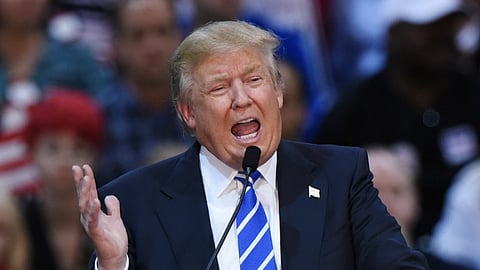
United States President Donald Trump on Thursday posted a video on his Truth Social platform that depicted former President Barack Obama and former First Lady Michelle Obama as monkeys, sparking outrage among Democrats and political commentators.
The one-minute video, which repeats false claims about Dominion Voting Systems allegedly manipulating the 2020 election, shows the Obamas’ faces superimposed on monkeys for approximately one second near its conclusion.
By early Friday, the post had received over 1,000 likes on Trump’s social media network.
California Governor Gavin Newsom, a prominent Democratic critic and potential 2028 presidential candidate, condemned the video.
“Disgusting behaviour by the President. Every single Republican must denounce this. Now,” his office said via X (formerly Twitter).
Ben Rhodes, former national security advisor to Barack Obama, also denounced the imagery, writing on X, “Let it haunt Trump and his racist followers that future Americans will embrace the Obamas as beloved figures while studying him as a stain on our history.”
The post follows a pattern of him using hyper-realistic but fabricated visuals to target political opponents.
It could be recalled that last year, Trump shared an AI-generated video showing Barack Obama in an orange jumpsuit as if arrested in the Oval Office, and another clip showing House Minority Leader Hakeem Jeffries wearing a fake moustache and sombrero.
The video has reignited debates over misinformation and the use of AI-generated content in political messaging, raising concerns about the impact of such posts on public discourse and social cohesion.
No response from Trump’s office regarding the backlash was immediately available.
Authorities and social media watchdogs continue to monitor the circulation of manipulated videos amid rising scrutiny of digital content ahead of the 2026 midterm elections.
The wisest and free advice that the Nigerian Senate, as well as the House of Representatives, can receive from all well-meaning citizens of our country now is to know when to stop playing with fire.
Nigerians mostly see the Senate as an ignoble and withering institution that delights in deliberate betrayal of public trust. Our lawmakers at large are well known for consistently prioritizing personal and partisan interests over constituent welfare: blocking or watering down reform legislation (electoral reform, anti-corruption measures, constitutional amendments for devolution of power); their selfish custom of inflated budgetary allocations for the legislature while public services collapse; a pattern of confirming clearly unfit nominees for executive positions in exchange for political favours; and several other perfidious actions at the public expense.
The Senate (on 4th February 2026) voted against a proposed amendment to make electronic transmission of election results mandatory in the Electoral Act (Amendment) Bill and then proceeded to try to deceive Nigerians by claiming that it “did not reject electronic transmission.”
What the Senate did… is worse, and their denial is disingenuous. Let us dispense with euphemisms and doublespeak. What the Senators did in that opaque Closed Plenary Session yesterday was retain the critical clause- Section 60 of the Electoral Act 2022, specifically subsection (5) with the current wording: “the presiding officer shall transfer the results, including the total number of accredited voters and the results of the ballot, in a manner as prescribed by the Commission.”
By deliberately retaining the vague language that leaves the method and timing of transmitting election results to the discretion of the Independent National Electoral Commission (INEC), rather than requiring real-time uploads from polling units, the Senate has once again weaponized ambiguity in our electoral law.
The brazen actions of the Senators were neither an innocent choice nor some sort of technical oversight. It was also not a neutral legislative compromise of “letting sleeping dogs lie,” because there must surely be a few of them who know better, as they are daily in touch with our public reality and the extremely angry mood of the majority of impoverished citizens who are exhausted by corruption and bad governance.
Calling a spade a spade, as I am wont to do, the Senators took a calculated decision despite their full knowledge of recent history. No reasonable Nigerian is fooled by the Senate’s shenanigans. Every Nigerian who paid attention to the 2023 general elections knows that the exact clause the Senate deliberately reaffirmed yesterday is there same discretionary loophole that was at the centre of the crisis that terribly eroded public trust and fatally damaged the integrity of our democracy.
Real-time electronic transmission from polling units was promised in practice but not enforced in law. When it failed, Nigerians were told to accept “procedural explanations” instead of verifiable outcomes.
It was that same clause retained by the Nigerian Senate at their sitting yesterday that created a gap between what Nigerians were repeatedly reassured would happen in the 2023 elections and the fiasco that the law permitted INEC to actually carry out in betrayal of public trust. It was that clause that offered a badly compromised judiciary the opportunity to pronounce a judgment which created confusion, distrust, national tension, and delegitimized the government that was sworn into office.
That gap nearly pushed the country into turmoil.
For the Senate to now deliberately preserve the same ambiguity, after witnessing its consequences, is an act of grave irresponsibility. When lawmakers reject clear, enforceable safeguards and instead cling to ambiguity, they are not protecting institutions- they are protecting a predetermined outcome.
Adding salt to injury, the Senate’s statement that “we did not reject electronic transmission” while refusing to make it mandatory is political sleight of hand. Electronic transmission that is optional, discretionary, and unenforceable is no safeguard at all against the systemic electoral fraud that has plagued our country with a long history of electoral manipulation and weak institutional trust.
The Senate knows that “discretion” does not reassure citizens. That is why Nigerians see this Senate vote against a legal mandate for electronic transmission of results for what it is- a willful and deliberate refusal to close the door that was abused in 2023. This action sends a clear signal to Nigerians that lessons from 2023 have been ignored, that transparency is negotiable, and that those in power prefer plausible deniability to democratic certainty.
No one is deceived. The Senators must never again insult the intelligence of Nigerians by pretending this is about “INEC’s independence” or “operational flexibility.” Institutional independence does not require opacity, and flexibility should never be a cover for unverifiability. Every serious democracy hardwires clarity, transparency, and compulsion into its electoral laws precisely to protect the system from bad actors- especially those in power in the case of Nigeria.
The 2023 elections tested Nigeria’s cohesion.
Our country survived not because the system worked well, but because citizens restrained themselves in the face of deep frustration. If future elections are again disputed under the cover of discretionary loopholes, responsibility will be clear.
It will lie with those who saw the danger, understood it fully, and chose to plunge Nigerians into it anyway.
I am certain that by now the Senators have heard the unified stance of Nigerians on electronic transmission of results since the news of their unpopular decision was published, and will therefore avoid plunging the country into crisis.
I am therefore certain that the Nigerian Senate now knows what it must do immediately.
Senators, cancel that emergency two-week break announced today, all return to the Red Chamber of the National Assembly complex, and in a broadcast Plenary Session, unanimously pass into law the exact text of the reform that was proposed to the clause on electronic transmission of results.
For avoidance of any confusion, here is the exact text of the key proposed provision from the Electoral Act (Amendment) Bill: “The presiding officer shall electronically transmit the results from each polling unit to the INEC Result Viewing Portal (IReV) in real time, and such transmission shall be done after the prescribed Form EC8A has been signed and stamped by the presiding officer and, where available, countersigned by candidates or polling unit agents.”
It is not wise to play with fire. Transparency is always better.
Dr Obiageli “Oby” Ezekwesili, a former Vice President, World Bank, Minister of Education and Solid Minerals, is an Advocate for Transparency, Accountability, Good Governance, and Founder, SPPG – School of Politics, Policy and Governance.
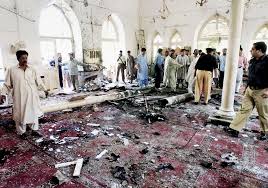
At least 31 people have been killed and 169 others injured following an explosion at a Shiite mosque in Islamabad, Pakistan, on Friday, authorities confirmed.
The blast, which occurred during Friday prayers, marks the deadliest attack in Pakistan since the Peshawar mosque bombing in January 2023.
Police have indicated that the explosion was carried out by a suicide bomber.
Preliminary investigations suggest that Tehrik-i-Taliban Pakistan (TTP), also known as the Pakistani Taliban, may be responsible, though no group has officially claimed responsibility for the attack.
Security personnel have secured the area, and rescue operations continue as authorities work to assist the injured and investigate the incident.
The mosque, filled with worshippers at the time, suffered significant damage.
This latest attack highlights the ongoing threat posed by militant groups in Pakistan and raises concerns over the protection of religious sites amid rising sectarian tensions.
Authorities have called for calm and assured the public that a thorough investigation is underway to bring the perpetrators to justice.
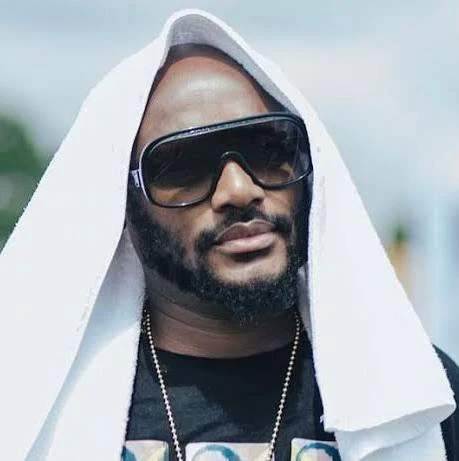
Veteran Nigerian music icon Innocent “2Baba” Idibia has sparked thoughtful conversation online after addressing the ongoing debate comparing Afrobeat pioneer Fela Anikulapo-Kuti to global Afrobeats superstar Wizkid. According to 2Baba, the comparison does a disservice to both artists though in very different ways.
Speaking candidly, the legendary singer described such comparisons as “ridiculous and disrespectful” to Fela, whose influence went far beyond music. He explained that Fela was not just an entertainer but a revolutionary figure who used his sound as a weapon against political oppression, social injustice, and colonial legacies. For 2Baba, Fela’s legacy is rooted in activism, cultural rebellion, and fearlessness — elements that cannot be measured by charts, awards, or streaming numbers.
At the same time, 2Baba was quick to note that placing Wizkid side-by-side with Fela is also unfair to the contemporary star. He emphasized that Wizkid represents a completely different era, purpose, and musical lane. Wizkid’s impact lies in taking Afrobeats global, breaking international barriers, and reshaping how African pop music is consumed worldwide.
According to 2Baba, the industry often makes the mistake of forcing comparisons across generations instead of appreciating artists within the context of their time. “Fela fought with music,” he implied, while Wizkid connects cultures, charts new territories, and inspires a younger generation through global visibility and sonic evolution.
The comment has drawn mixed reactions online, with some fans applauding 2Baba’s perspective as mature and historically grounded, while others continue to argue over influence, reach, and relevance. Still, many agree that both artists deserve recognition on their own terms.
Ultimately, 2Baba’s message was clear: legends are not created by comparison. Fela remains irreplaceable, and Wizkid’s journey stands firmly on its own — each powerful, each important, and each unmatched in their own way.
The Edo State secretariat of the African Democratic Congress (ADC) was attacked by suspected political thugs, who smashed windows and damaged property, attempting to set the building on fire.
The attackers, allegedly carrying a 10-litre container of fuel, were resisted by residents and ADC sympathisers.
The Edo State chairman of the ADC, Kennedy Odion, confirmed the attack, stating that the suspected thugs came with the intention of setting the building ablaze.
He said: “They destroyed all the windows and other items in the building before ADC sympathisers in the area came to the rescue.”
Odion further alleged that the attackers arrived with a 10-litre container of fuel, insisting their mission was to burn the secretariat.
According to him: “Some politicians want the ADC to leave the state so that no other political party will contest the 2027 election with them.”
“Elections are a democratic process that requires participation by all. There is freedom of association, which is still in force, and nobody can be forced to join a political party of another person’s choice,” he added.
He said the incident had been reported to security agencies and urged them to track down those responsible and bring them to justice.
While confirming the development, the spokesman of the Edo State Police Command, Eno Ikoedem, said the incident was reported at about 8pm on Wednesday.
She said police operatives were immediately dispatched to the scene to restore calm, adding that a preliminary assessment showed malicious damage to party flags and two shattered windows at the premises.
According to her, security operatives have been stationed in the area to prevent further attacks, while investigations are ongoing to identify and apprehend those behind the incident.
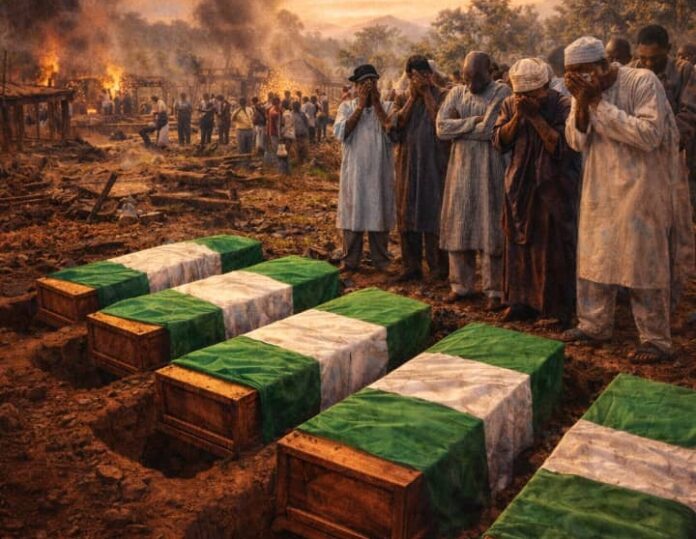
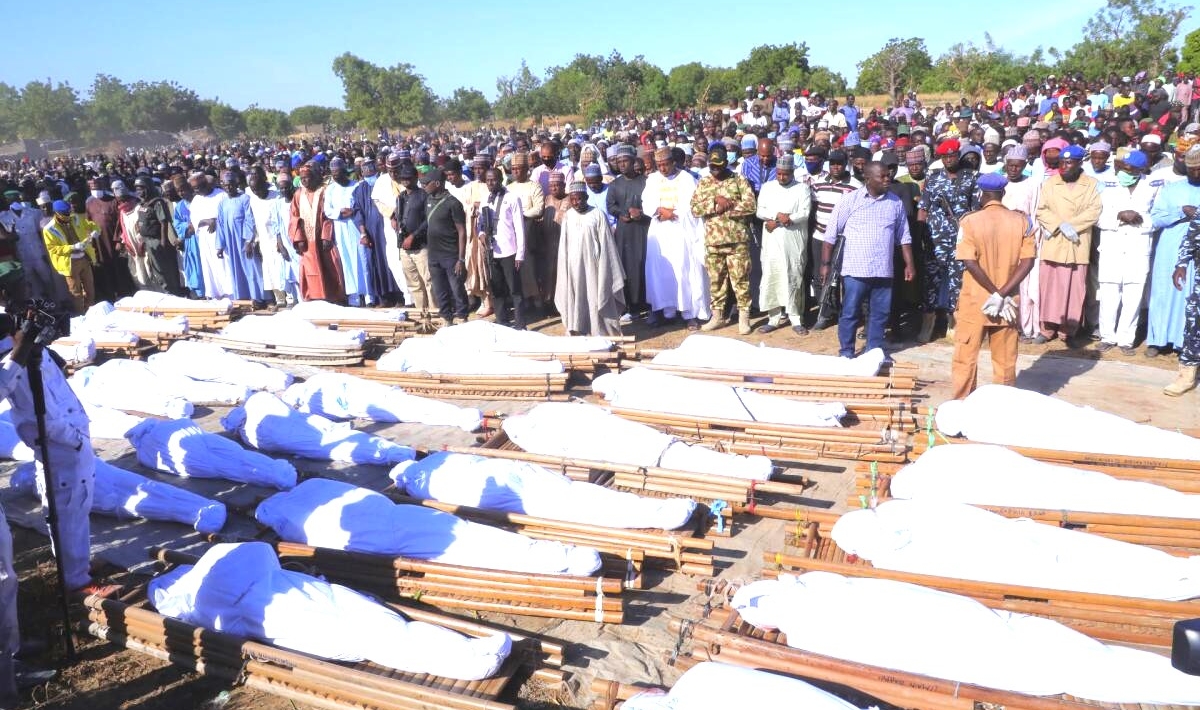
Nigeria has been plunged once again into mourning following the gruesome killing of over one hundred and seventy five innocent citizens in Kwara State. This tragedy is not merely a local calamity, it is a national wound that exposes the fragility of human life under a failing security environment. These were ordinary people whose only crime was to live, work, and hope within the borders of their own country. Their lives were violently taken, and with them, the sense of safety that binds any society together.
Behind the numbers are shattered homes and irreparable loss. Children will grow up without parents, parents will grow old without the comfort of their children, and communities will carry scars that time alone cannot heal. Farms, villages, and neighbourhoods that once echoed with daily life are now marked by silence, grief, and fear. No responsible nation can look upon such devastation without profound sorrow and righteous concern.
As a patriot and a committed citizen, silence in moments like this would amount to complicity. The first and most sacred responsibility of any government is the protection of lives and property. When over one hundred and seventy five people are murdered within their communities, it is no longer acceptable to speak in abstractions. This scale of loss is not an unfortunate accident, it is a glaring failure of governance and security.
This condemnation is not rooted in political antagonism but in moral obligation. The government exists to serve, protect, and preserve life. When it falls short, it must be told plainly, firmly, and respectfully. Expressions of sympathy, while humane, cannot replace decisive action, institutional reform, and accountability. Nigerians are exhausted by condolences that are not followed by consequences.
The tragedy in Kwara State reflects a deeper and more troubling pattern. Across the country, insecurity has become recurrent, predictable, and increasingly deadly. Communities raise alarms, yet protection arrives late or not at all. Criminal elements operate with alarming confidence, suggesting not only operational gaps but a dangerous erosion of deterrence. A state that cannot anticipate, prevent, or respond swiftly to threats is one that has lost its strategic grip.
It is painful to acknowledge that many of these deaths were preventable. Intelligence failures, inadequate surveillance, overstretched security personnel, and poor coordination continue to cost innocent lives. These are not mysteries beyond human solution, they are problems that persist due to neglect, inertia, and lack of political urgency. Each unaddressed weakness becomes an invitation to violence.
The people of Kwara State deserved better. They deserved visible security presence, early intervention, and a government that treats every warning sign as urgent. Instead, they were left exposed. The question that must be asked, soberly and honestly, is this, if the state cannot protect rural and semi urban communities, what protection truly exists for the average citizen.
This moment demands leadership that is courageous enough to accept responsibility. Defensive rhetoric and institutional finger pointing only deepen public anger and grief. True leadership acknowledges failure, corrects course, and reassures citizens through action rather than promises. The credibility of the state depends not on perfection, but on responsiveness and accountability.
Beyond the immediate security lapse lies a broader governance crisis. Persistent poverty, unemployment, weak justice systems, and social dislocation create fertile ground for violence. Security cannot be sustained by force alone. It requires social investment, community trust, effective policing, and a justice system that punishes crime decisively and fairly. Where justice is absent, violence thrives.
The families of the deceased deserve more than sympathy. They deserve truth, justice, and lasting support. Investigations into this massacre must be transparent and thorough. Perpetrators must be identified, prosecuted, and punished without delay or political interference. Justice delayed in moments like this becomes justice denied, and denial compounds grief.
Communities affected by this atrocity must not be abandoned once the news cycle moves on. Rehabilitation, psychological support, reconstruction, and renewed security presence are essential. Healing is not spontaneous, it must be nurtured by deliberate state action and sustained engagement. A nation proves its humanity by how it treats its wounded communities.
To the people of Kwara State, the nation owes solidarity that goes beyond words. Your pain is national pain. Your loss diminishes us all. Nigeria cannot claim unity while allowing any part of the country to bleed unnoticed or unsupported. Every Nigerian life carries equal worth, regardless of geography or status.
Citizens, too, must resist resignation. Patriotism is not passive acceptance of failure, it is the insistence that the country can and must do better. Speaking out against injustice and incompetence is an act of national loyalty, not rebellion. Silence emboldens failure, while principled voices strengthen democracy.
The government must understand that public trust is fragile and easily broken. Each massacre that goes unanswered erodes confidence further. Restoring that trust requires urgency, transparency, and measurable change. Nigerians are not asking for miracles, they are asking for commitment, competence, and protection.
At the heart of this tragedy are human beings whose dreams were cut short. Their laughter, labour, and love mattered. Their absence leaves a void that statistics cannot capture. We must refuse to reduce them to numbers or footnotes in national discourse. Memory itself is a form of justice.
We pray for the souls of the departed, that God grants them eternal rest. We pray for their families, that strength, comfort, and healing will surround them in this dark hour. We pray for the communities affected, that peace will return and fear will not define their future.
Finally, we pray for Nigeria’s leadership, that this tragedy will awaken a renewed sense of responsibility. A nation that fails to protect its people must summon the courage to reform itself. May this moment mark a turning point where life is valued, failure is confronted, and governance rises to meet its most basic duty.
Akin Samuel KAYODE.
Assistant Secretary, Monitoring and Feedback Committee, The Narrative Force.
The Federal Road Safety Corps (FRSC) has described the conviction and life imprisonment of a truck driver, Okpara Kingsley Onyekachi, for the death of an officer on duty as a significant milestone for justice and road safety enforcement in Nigeria.
In a statement issued on Thursday night by the Corps Public Education Officer, Assistant Corps Marshal Olusegun Ogungbemide, the FRSC said the judgment was delivered on Tuesday, January 14, 2026, by the High Court of Lagos State, TBS Division, in Suit No. LD/24692C/2024, The State v. Okpara Kingsley Onyekachi.
According to the FRSC, the case stemmed from a fatal road crash that occurred on November 16, 2023, in the Orile Iganmu area of Lagos State.
The incident claimed the life of Deputy Chief Road Marshal Assistant (DCRMA) Ajomale, who was lawfully on duty during a routine traffic enforcement exercise.
The Corps explained that an FRSC patrol team had flagged down a mini truck for inspection when the defendant, who was driving a 40-foot container-laden truck at high speed, failed to exercise due care and rammed into the stationary vehicle.
The impact reportedly crushed DCRMA Ajomale, causing fatal injuries while he was actively carrying out his official duties.
Following investigations and trial, the court found the driver’s actions to be “grossly negligent, reckless, and unlawful.”
The court rejected claims that the incident was accidental and convicted the defendant of involuntary manslaughter.
He was subsequently sentenced to life imprisonment under the Criminal Law of Lagos State, 2015.
Reacting to the judgment, the Corps Marshal of the FRSC, Shehu Mohammed, said the ruling sent a strong warning to motorists, particularly operators of heavy-duty vehicles, that reckless driving would not be tolerated.
“When a life is lost due to gross negligence, especially the life of an officer on lawful duty, the law will take its full course,” Mohammed said.
He added that the Corps would continue to pursue justice for fallen officers and innocent road users.
The FRSC further stated that it would intensify enforcement activities, provide support for prosecutions, and strengthen collaboration with stakeholders to curb dangerous driving practices across the country.
It warned that drivers who violate traffic regulations and endanger lives should expect severe legal consequences.
The Corps also said its management and staff honoured the memory of DCRMA Ajomale, describing his death as a reminder of the risks faced daily by road safety personnel in the course of their duties.
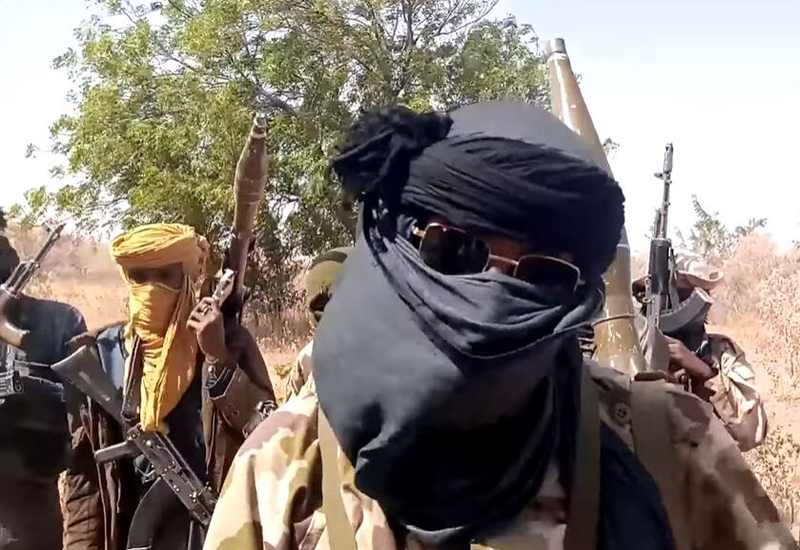
Tension was high in Jenau community, Kaduna State, after a suspected bandit informant was killed by unidentified persons.
The victim was accused of supplying intel to bandits, enabling kidnappings and attacks.
Security analyst Bakatsine, who disclosed the incident on Thursday, quoted local sources as saying the man had long been suspected of collaborating with armed groups terrorising villages in the area.
Although the circumstances surrounding his killing remain unclear, but residents said the development has heightened anxiety in the community, with many questioning how deeply informant networks may be embedded within conflict-affected areas.
Kubau and several other local government areas in Kaduna State have experienced repeated attacks by armed bandits in recent time.
The criminals, who operate mainly from forest enclaves, have been linked to mass abductions, cattle rustling, killings, and extortion of rural communities.
Security experts say informant networks often play a crucial role in the operations of bandit groups.
These networks, sometimes made up of coerced or willing collaborators within communities, allegedly provide information on troop movements, wealthy residents, school activities, and vulnerable routes.
A UK-based Nigerian student, Khaleed Oladipo, has died after being stabbed near De Montfort University in Leicester, British police have confirmed.
Leicestershire Police identified Oladipo as the 20-year-old victim who was attacked on Oxford Street, close to the university campus.
He was rushed to hospital on Tuesday evening but later died from his injuries.
Police said officers were called shortly after 5:00 pm GMT following reports that a man had collapsed near the junction of Oxford Street and Bonners Lane.
Several surrounding roads were closed as emergency services responded to the incident.
A post-mortem examination revealed that Oladipo died from a stab wound to the chest.
An 18-year-old man has been arrested on suspicion of murder and remains in police custody while investigations continue.
Oladipo, who was originally from London, was a second-year student at De Montfort University, where he was studying cyber-security. His family described him as “a good boy who loved his family” and said they were devastated by his death.
“We cannot begin to put into words how sad we are to have lost Khaleed,” the family said in a statement quoted by the BBC.
They added that he was a passionate football fan and an ardent supporter of Arsenal Football Club.
According to the family, Oladipo was believed to be on his way home to watch a football match when he was attacked.
“We believe he was on his way home to watch the game later that night when he was stabbed and killed,” they said.
The family expressed gratitude to members of the public who attempted to assist Oladipo at the scene, as well as to ambulance and hospital staff who tried to save his life.
They also thanked the police for their efforts in investigating the incident.
“We are struggling to understand why anyone would do this,” the family added, while calling for justice to be served.
Reacting to the incident, the Vice-Chancellor of De Montfort University, Professor Katie Normington, said she was “devastated” by Oladipo’s death. She confirmed that the university was providing direct support to students, staff and the victim’s family.
“Our thoughts are with everyone who is affected by what has happened,” she said.
Police have appealed to members of the public with information that could assist the investigation to come forward as inquiries continue.
US President Donald Trump has launched a new self-branded website, TrumpRx.gov, aimed at helping Americans access prescription drugs at reduced prices by linking consumers directly to pharmaceutical companies’ discount programmes.
Announcing the initiative on Thursday at the White House, Trump said the platform would serve as a central hub for lower-cost medications, including treatments for weight loss and infertility, as part of his broader effort to address rising living costs ahead of the November midterm elections.
“Starting tonight, dozens of the most commonly used prescription drugs will be available at dramatic discounts for all consumers,” Trump said during the event.
He argued that Americans have long paid higher drug prices than consumers in other countries, effectively subsidising global pharmaceutical costs.
According to the president, major drugmakers Eli Lilly and Novo Nordisk have agreed to offer their popular GLP-1 weight-loss medications at significantly reduced prices through the TrumpRx platform.
Novo Nordisk’s Ozempic, which typically costs over $1,000 per month, will be available for $199 monthly, while Eli Lilly’s Wegovy will drop from around $1,300 to the same price point.
The website notes that prices will increase gradually after an initial two-month period.
During the launch event, a woman was introduced as the first user of the TrumpRx platform to obtain a fertility treatment medication at a reduced cost.
Mehmet Oz, a former television personality now serving as administrator of the Centers for Medicare and Medicaid Services, highlighted the potential impact of the price cuts while addressing the audience.
The White House said the website is launching with discounts on more than 40 widely used prescription drugs. Consumers can search for medications on the platform, print discount coupons and present them at participating pharmacies to access the reduced prices.
The TrumpRx initiative follows a series of pricing agreements announced by the administration with leading pharmaceutical companies. These deals include commitments to “Most Favored Nation” pricing, which aligns US drug prices with the lowest rates offered in other developed countries. In return, companies have reportedly received incentives such as relief from tariffs imposed by the administration since Trump returned to office last year.
Trump has also pressured several countries, including the United Kingdom and France, to negotiate pharmaceutical pricing arrangements, at times publicly criticising foreign leaders who opposed the measures.
Although Trump previously downplayed voter concerns over affordability, he has recently made cost-of-living issues a central theme of his messaging as Republicans prepare for closely contested midterm elections. Opinion polls indicate the president is facing low approval ratings, particularly on economic issues, raising concerns within his party about the potential loss of control of Congress.
The president has warned that a Republican defeat in the midterms could expose him to renewed impeachment efforts, adding to the political stakes surrounding his latest policy push.
In the cosmology of many Nigerian communities, not all spirits announce themselves with thunder or terror. Some arrive quietly, mischievously, almost playfully, appearing where they should not be, disappearing when they are most expected. One such figure, known in popular folklore as Wiriwiri, belongs to this subtle category of the uncanny. Wiriwiri is not a monster in the classic sense. It is a trick-being, a restless presence associated with sudden movement, evasion, and dislocation. In village lore, Wiriwiri is said to be seen one moment, standing at a junction, peering from behind a wall, hovering at the edge of vision, and gone the next. It does not attack; it confounds. It does not confront; it slips away. To encounter Wiriwiri is to be unsettled not by violence, but by uncertainty.
Elders describe Wiriwiri as the spirit of in-between spaces: crossroads, thresholds, dusk hours, moments when attention wavers. Children are warned that Wiriwiri appears when one is careless, distracted, or overly curious. Adults know better: Wiriwiri thrives where clarity is absent and authority refuses to stay put. It is invoked when something, or someone, cannot be pinned down. Unlike fearsome spirits that dominate through force, Wiriwiri exercises power through elusiveness. It shows itself just long enough to be acknowledged, then vanishes before it can be questioned. In this way, Wiriwiri resembles the trickster figures of wider African folklore – Anansi, Tortoise – but stripped of moral lesson and reduced to pure motion. Presence without duration. Visibility without accountability.
It is for this reason that Wiriwiri survives more in everyday speech than in ritual. When something keeps happening without explanation, elders mutter its name. When a figure appears briefly, acts decisively, and disappears before consequences mature, people say, “it is like Wiriwiri. The term has become shorthand for authority without anchorage, for influence that refuses to stay long enough to be examined.
Thus, to speak of verses of Wiriwiri on the canvas of the Villa is not to summon superstition into politics, but to recognize an old narrative pattern repeating itself in a modern setting. Folklore, after all, is history’s way of remembering behaviour before it acquires official language. When power begins to move like a spirit, appearing suddenly, vanishing routinely, leaving behind confusion and whispered interpretations; myth does not create the metaphor; it merely names it. And in naming it, prepares the canvas.
In essence, before politics learned the language of policy briefs and press releases, it spoke in myths. Civilizations explained power not by charts but by creatures, by beings whose defining talent was not strength, but movement. The Greeks feared Harpies because they arrived without warning and left without accounting. They distrusted Proteus because he could never be held to one shape long enough to tell the truth. They mourned Echo, that mythical disembodied soul, because she spoke endlessly yet possessed no body to stand behind her words. Africans, too, understood this grammar early. The Akan imagined forest beings that appeared and dissolved into leaves. The Yoruba spoke of Egbere, the crying custodian of wealth who could not be caught. In the southern Nigerian imagination, Wiriwiri perfected the art: seen briefly, gone instantly, leaving behind only murmurs and unease.
These were not bedtime tales. They were civic metaphors. They taught communities that the most dangerous authority is not the one that shouts, but the one that refuses to stay. Wiriwiri, in particular, is the spirit of the almost-seen. It inhabits thresholds such as doorways, junctions, the corner of the eye. It does not strike. It unsettles. It announces itself just enough to be acknowledged, then disappears before explanation can be demanded. In village speech, to describe a person or force as Wiriwiri-like is to say this: it acts, withdraws, and leaves others to manage the consequences.
The Harpies understood this instinctively. Zeus’s winged enforcers did not linger to debate justice. They descended, seized, punished, and vanished. The victims were left arguing with the air. Proteus refined the method. When grasped, he transformed, from lion through serpent and water to tree until the seeker tired. Echo suffered a different fate: condemned to repeat the words of power without agency, she faded until only sound remained. Even Anansi, the spider trickster of Akan lore, survived by weaving exits faster than consequences could follow. And the Egbere, crying endlessly while clutching his mat, taught that wealth is easiest to guard when one is never fully present. All these figures form a single mythic braid: power as movement, authority as elusiveness, governance as disappearance. It is against this ancient backdrop that modern Nigeria now finds itself telling stories again—not because it has regressed into superstition, but because lived experience has begun to rhyme too closely with myth.
Since 29 May 2023, President Bola Ahmed Tinubu has governed a restless republic, one strained by economic shock, social anxiety, and policy whiplash. Leadership, in such moments, is expected to perform the oldest democratic ritual: presence. Not permanence, not immobility, but availability. The sense that the one who decides also stays to witness the aftermath. However, what has increasingly defined this presidency is not steadiness, but movement. To say this is not to deny the legitimacy of travel. Statesmen travel. Diplomacy requires motion. Nigeria is not an island. But when travel ceases to be episodic and becomes habitual, when departures are frequent, returns brief, and explanations thin, movement itself becomes political language. Absence begins to speak.
Late December 2025 offered a telling vignette. The President departed Nigeria for what was broadly described as “Europe.” No itinerary worth the name. No public timeline. No clear articulation of purpose beyond the incense-laden assurance of “strategic engagements.” Twenty days passed. In a country where prices rise faster than wages and patience thins by the week, the silence grew louder than any official statement. When the President returned on 17 January 2026, there was relief—but it was the relief one feels when a storm pauses, not when it ends. Barely a week later, another departure followed, this time to Turkiye.
Again, Europe.
Again, strategy.
Again, bilateral.
Again, fog.
Here, Wiriwiri steps fully into the Villa.
The President appears, long enough to remind Nigerians that he is still there; then vanishes into foreign skies. Policies descend with Harpy speed: subsidy removal announced in a sentence, economic reforms unleashed with hurricane force. The social consequences land heavily on the ground. Then the architect departs. Like the Harpies, the action is sudden; like the Harpies, the agent is gone before protest ripens into dialogue.
Proteus, too, haunts the scene. Each attempt to pin down the purpose of these journeys meets a transformation. Is it economic rescue? Health maintenance? Diplomatic repositioning? Each question is answered with a different shape. What remains constant is the refusal to stay still long enough for scrutiny. Truth, Proteus teaches, is easiest to avoid when one never stops moving.
Meanwhile, Echo has taken residence in the press room. Statements issue forth, smooth, repetitive, reassuring. “Strategic bilateral engagements.” “In the national interest.” “To reposition Nigeria.” The words circle back on themselves, reflecting authority without adding substance. Like the nymph of old, the voice speaks endlessly, but the body of explanation has faded. Nigerians hear, but they cannot locate.
African folklore sharpens the discomfort. The Egbere analogy returns with insistence. Citizens are told that prosperity lies ahead, just beyond the next reform, the next sacrifice, the next foreign consultation. Yet, the custodian of this promise remains elusive, always traveling, always clutching the mat of policy, always crying that the road is long. Wealth, like the mat, seems portable. Hardship, like the tears, stays behind. Anansi’s shadow flickers too. The trickster survives by cleverness, by weaving narratives, by escaping tight corners. But Anansi stories always end the same way: laughter mixed with warning. Wit without responsibility eventually traps itself.
What troubles the Nigerian moment is not merely presidential absence, but the way absence has begun to feel like method rather than exception. Governance increasingly resembles a relay of appearances, short, symbolic, tightly managed, followed by extended withdrawals. The republic is asked to trust a process it rarely sees, to endure consequences overseen from afar. Defenders argue necessity. They say diplomacy is quiet work. They say global capital requires constant engagement. They say visibility is overrated. There is truth here. But democracy is not sustained by trust alone; it is sustained by reassurance earned through presence. Secrecy may be strategic, but opacity is corrosive. When explanations thin out, rumour rushes in. When leadership withdraws, myth fills the vacuum.
Nigeria is particularly vulnerable to this drift. It is a country with a long memory of distant rulers, leaders physically and emotionally removed from the governed. Against this history, frequent unexplained absences do not read as sophistication; they read as abandonment. Myth warns what happens next. When power behaves like a spirit, citizens stop engaging it as flesh and blood. Debate gives way to metaphor. Accountability dissolves into jokes, whispers, and folklore. Politics becomes something that happens to people, not something done with them. Yet, myths also insist on possibility.
Proteus, seized firmly, must eventually speak truth. The Harpies were banished when confronted. The Egbere could be captured, its mat reclaimed. Even Wiriwiri loses power when light is held steady and vigilance refuses to blink. Elusiveness thrives only where pursuit tires easily. The antidote to Wiriwiri governance is not stillness, but anchorage. Not fewer journeys, but clearer ones. Not louder statements, but fuller explanations. Presence, not as spectacle, but as accountability. Nigeria does not ask its President to hover endlessly over the Villa. It asks that when decisions bite, the decider stays close enough to feel the teeth. It asks that power remain human, locatable, answerable, imperfect, but present. Otherwise, leadership risks drifting fully into the realm of the uncanny: half-seen, half-understood, endlessly discussed but rarely confronted. A presidency remembered less for its policies than for its movements. A state governed not by schedules, but by sightings.
And so the canvas remains open. Here, myth and modernity meet, not to accuse, but to illuminate. Names replace spirits. Aircrafts replace wings. Press releases replace echoes. However, the old question endures, scratched into the wall of every polity that has ever watched its leaders come and go: Will power stay long enough to be held? This question, layered in Greek wind, Akan forest, Yoruba night, and Nigerian daylight, is what this piece returns to, brush in hand, laying metaphor upon reality, reality upon myth, until the picture sharpens. That, always, is the labour of *Verses on Canvas*.
An Enugu State High Court has ordered the British government to pay £420 million in compensation to the families of 21 Nigerian coal miners killed by colonial officers at the Iva Valley Coal Mine in Enugu in 1949.
Justice Anthony Onovo ruled that the killing was unlawful and a grave historical injustice, ordering £20 million to be paid to each family with 10% post-judgment interest.
The miners were protesting poor working conditions and racial wage disparities when colonial police opened fire, killing 21 and injuring 51.
The victims were identified as Sunday Anyasodo, Ani Oha, Andrew J. Obiekwe Okonkwo, Augustine Chiwetalu, Onoh Ugwu, Ngwu Offor, Ndunguba Eze, Okafor Agu, Livinus Ukachunwa, Jonathan Agu Ozoani, Moses Ikegbu Okoloha, Chukwu Ugwu, Thomas Chukwu, Simon Nwachukwu, Agu Alo, Ogbonnia Ani Chima, Nnaji Nwachukwu, William Nwaku, James Onoh Ekeowa, Felix Nnaji and Ani Nwaekwe.
The suit, marked E/909/2024, was instituted by human rights activist, Mazi Greg Onoh, who asked the court to compel the British Government to accept responsibility for the massacre, issue a formal apology and pay adequate compensation to the victims’ families.
Those listed as respondents were the Secretary of State for Foreign, Commonwealth and Development Affairs, the British Government, the Federal Government of Nigeria, the Attorney-General of the Federation, and the Head of the Commonwealth Government of the United Kingdom.
At the hearing, no legal representation appeared for the British Government and some other foreign respondents.
In his ruling, Justice Onovo dismissed claims of sovereign immunity and held that Nigerian courts have the authority to hear cases involving grave historical human rights abuses.
“These defenseless coal miners were asking for improved work conditions. They were not embarking on any violent action against the authorities, yet they were shot and killed,” the judge said.
He further ordered the British Government to issue unreserved written apologies to the victims’ families through their counsel. The apologies are to be published in Nigeria’s Daily Sun, Daily Independent and The Punch newspapers, as well as in three major national newspapers in the United Kingdom.
Proof of publication must be filed in court within 60 days, while the compensation must be fully paid within 90 days of the judgment.
Justice Onovo also held that the Federal Government of Nigeria and the Attorney-General of the Federation failed in their constitutional duty to seek justice for the victims, describing their decades of inaction as a dereliction of responsibility.
He ordered the Nigerian government to begin diplomatic engagement with the British Government within 60 days to ensure enforcement of the judgment and payment of the reparations.
“The argument that Nigeria was under colonial rule when the killings were committed is hereby struck out,” the judge ruled.
While reacting to the decision, counsel to the applicants, Prof. Yemi Akinseye-George, SAN, and P.N. Agazie, described the ruling as historic and far-reaching.
They said the judgment sends a strong signal that governments must be held accountable for human rights violations, regardless of when they occurred.
“This ruling represents a significant milestone in the pursuit of historical accountability and justice for colonial-era violations,” Akinseye-George said. “It affirms that the right to life transcends time, borders and changes in sovereignty.”
The lawyers added that the court drew persuasive parallels with international precedents, including compensation paid by the United Kingdom to victims of abuses during the Mau Mau uprising in Kenya, stressing the continuing duty of states to provide redress for serious human rights violations.
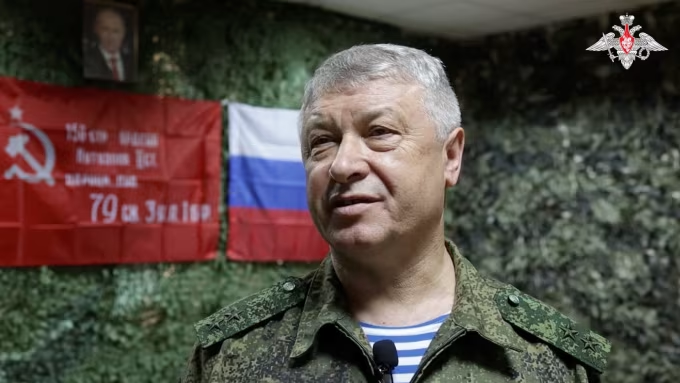
A senior Russian military intelligence official has been shot in Moscow and is receiving treatment in hospital, Russian authorities have confirmed.
Lieutenant General Vladimir Alekseyev, the first deputy head of Russia’s Main Intelligence Directorate (GRU), was wounded after an unknown assailant opened fire inside a residential building on Volokolamskoye Highway in the Russian capital.
In a statement released on Friday, the Russian Investigative Committee said the attacker fired several shots at Alekseyev before fleeing the scene.
Officers were immediately deployed to the location, and a criminal investigation has been opened into what authorities described as the attempted murder of a high-ranking official of the defence ministry.
Alekseyev was rushed to a city hospital, where he is currently in intensive care. Russian state media reported that he remains in serious condition.
The Investigative Committee said efforts are ongoing to identify and apprehend the suspect, but did not provide further details on a possible motive or whether any arrests have been made.
According to a 2025 report by the United States Congressional Research Service, Alekseyev serves as the first deputy director of the GRU, Russia’s military intelligence agency, one of the country’s most powerful security institutions.
The shooting has heightened security concerns in Moscow, particularly given Alekseyev’s senior role within Russia’s defence and intelligence structure.
Authorities have not indicated whether the incident is being treated as politically motivated or linked to his official duties.
When I ended my update on the heartrending mass murder and abductions of the people of Woro in Kaiama LGA by calling attention to the Muslim identity of the victims, just so some screwdriver salesman won’t use “Google” to “verify” that they are Christians in the service of advancing a tendentious “Christian genocide” narrative, I came across to some people as being needlessly overdramatic. But I knew what I was doing.
Now, look at this headline from BarristerNG, a well-regarded, law-focused Nigerian news site: “Kwara Tragedy: Terrorists Kill Villagers for Refusing to Change Their Faith, 78 Buried in Mass Graves.”
It is based on Gov. Abdulrazaq Abdulrahman’s disclosure that the people, whom the governor was careful to identify as Muslims, were murdered because they resisted the extremist version of Islam the terrorists preach.
The headline is a devious, sinister, underhanded but nonetheless visible rhetorical maneuver to give the impression that even in a communal mass slaughter where both the villains and the victims are Muslims, it was a “Christian genocide.”
When you pair “terrorists,” which invariably evokes the imagery of Muslim extremists, with murder as punishment for refusal to “change their faith,” you can’t help but conclude that the victims are Christians.
Faith is a synonym for religion. Since there are two major faiths in Nigeria, and since there has been a tyrannical, well-oiled, carefully choreographed, even if factually impoverished, amplification of a “Christian genocide” narrative that suggests that only Christians are being murdered in Nigeria, that Muslims are not only spared from this but are, in fact, complicit in this “genocide,” the headline basically implies that the mass murders in Woro were just another evidence of “Christian genocide.”
If the screwdriver salesman or his ilk come across this sort of story in a Google search, they will present it as yet another “evidence” of “Christian genocide.”
BarristerNG’s headline is similar in many respects to the December 24, 2025, headlines of many Christian-owned Nigerian news media organizations, which captured the mass murder of Muslims in a Maiduguri mosque with headlines that gave the impression that Christians were the victims.
Channels TV’s headline was: “BREAKING: Many Feared Dead as Bomb Blast Rocks Maiduguri on Christmas Eve.” Other Lagos newspapers had headlines like, “Christmas Eve Bombing Leaves 5 Dead, 35 Injured in Borno.” There was no mention of “mosque” or “Muslim worshipers” in the headlines.
Since most people only read headlines, you can imagine the impression these headlines created in the minds of people who reason like the screwdriver salesman, who fishes for and sees “Christian genocide” anywhere and everywhere.
There is an endemic mass murder of innocents in most parts of Nigeria, which I won’t hierarchize by religious affiliation because I think that’s cruel and inhuman.
And I actually don’t have a problem with Christian communities that interpret their own experience of the nationwide sanguinary fury of bloodthirsty terrorists as religiously based genocide, since the villains self-identify as Muslims.
But I do have a problem with the dangerously divisive dimension this is now taking.
It increasingly seems that the basic humanity that binds us is becoming immaterial. There is now a growing, unreasoning, bigoted, pigheaded, and obnoxiously monomaniacal obsession with advancing the narrative of a Christian genocide that suggests that only Christians are being murdered, that Muslims are exempt from murder because they share a similar faith with the murderers (as if faith is all that matters in a person), that Muslim deaths don’t matter, and that every shocking death must be “Christianized” to make it worthy of sympathy and empathy–and, of course, a part of the rhetorical armory to prosecute the narrative of a “Christian genocide.”
If the facts don’t fit, force them. If you can’t force them, manufacture them. It’s distressing.
Every death diminishes and distresses me. We are, first of all, human before we’re anything else. Our ethnicity, faith, language, etc. are incidental to our humanity.
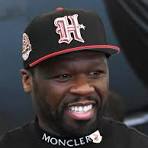
American rapper 50 Cent has once again stirred conversation on social media after reacting to a viral video allegedly showing Rick Rvoss hugging and kissing a man aboard a luxury yacht in Miami.
The clip, which began circulating online over the weekend, quickly ignited debate across platforms, with fans and critics questioning its authenticity. While some speculated that the footage could be digitally altered or generated using artificial intelligence, 50 Cent dismissed such claims with his trademark bluntness.
Sharing his reaction online, the G-Unit boss mocked the situation, writing: “Ya man was looking real saucy kissing that boy on that boat! That’s not AI.”
As expected, the comment sent social media into a frenzy, with many interpreting it as another chapter in the long-running rivalry between the two hip-hop heavyweights. 50 Cent and Rick Ross have been publicly feuding for over a decade, frequently trading insults, jabs, and online taunts.
The alleged yacht incident has since become a trending topic, drawing mixed reactions from fans. While some laughed off 50 Cent’s comment as typical trolling, others criticized the rapper for fueling speculation and making light of a private moment, regardless of who was involved.
Rick Ross, known for maintaining a larger-than-life persona rooted in hyper-masculinity and luxury, has not issued any official statement addressing the viral clip or 50 Cent’s remarks as of the time of this report. His silence has only intensified online discussions, with supporters urging the rapper to ignore what they describe as deliberate provocation.
Meanwhile, several social media users have pointed out that public affection, regardless of gender, should not be weaponized for ridicule, calling for a more respectful tone in celebrity discourse. Others argued that the video’s origin and context remain unclear and should not be treated as factual evidence without confirmation.
Industry observers note that 50 Cent has built a reputation for leveraging viral moments involving rivals to dominate online conversations, often blending humor, controversy, and calculated provocation.
Whether the clip is authentic or misunderstood, the incident underscores how quickly unverified footage can escalate into major pop-culture discourse especially when amplified by influential figures.
For now, the situation remains speculative, with fans watching closely to see if Rick Ross will respond or continue to stay silent as the internet debates rage on.
Asthma is a chronic respiratory condition that affects the airways, causing them to become inflamed, narrowed, and filled with excess mucus. This makes breathing difficult and often leads to recurring symptoms such as wheezing, shortness of breath, chest tightness, and coughing. The condition affects people of all ages and, while commonly diagnosed in childhood, can also develop later in life.
Health experts note that asthma is not contagious, yet it remains one of the most widespread long-term illnesses globally. If not properly managed, asthma can interfere with daily activities and, in severe cases, become life-threatening.
Causes of Asthma
The exact cause of asthma is not fully known, but medical research shows that a combination of genetic and environmental factors plays a major role. Individuals with a family history of asthma, allergies, or other respiratory conditions are more likely to develop the disease.
Environmental exposure is another key factor. Air pollution, cigarette smoke, dust, pollen, pet dander, mold, and chemical fumes can irritate the airways and trigger asthma. Repeated respiratory infections during childhood may also increase the risk of developing the condition.
Common Symptoms
Asthma symptoms vary from person to person and can range from mild to severe. The most common signs include wheezing, shortness of breath, chest tightness, and frequent coughing, especially at night or in the early morning.
During an asthma attack, symptoms may worsen suddenly, making it difficult to breathe. Without prompt medical attention, severe attacks can lead to serious complications and require emergency care.
Prevention and Management
Although asthma has no permanent cure, it can be effectively prevented and controlled. Health professionals advise people living with asthma to identify and avoid known triggers such as smoke, dust, and strong odors. Keeping living spaces clean and well-ventilated also helps reduce exposure to allergens.
Regular use of prescribed inhalers and medications is essential in managing symptoms and preventing attacks. Early diagnosis, routine medical check-ups, and proper education on inhaler use play a critical role in long-term control of the condition.
With increased awareness, access to healthcare, and responsible management, people living with asthma can lead healthy, active, and productive lives. Health authorities continue to urge the public to take asthma seriously and seek medical care at the first sign of breathing difficulties.
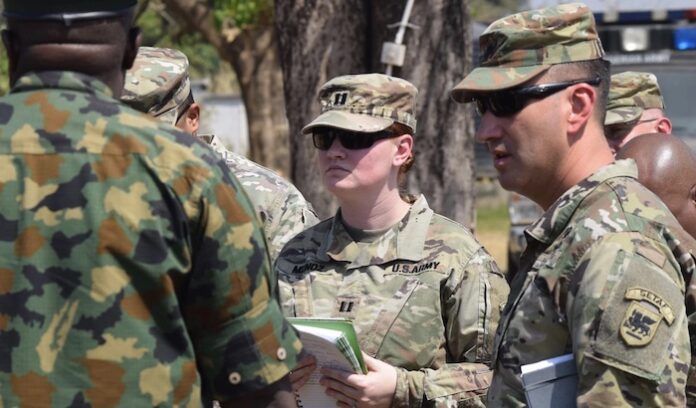
Nigeria’s Defence Headquarters (DHQ) has confirmed the presence of United States military personnel in the country but clarified that they are not deployed for combat operations.
The military high command said the American troops are in Nigeria strictly in an advisory and support capacity, focusing on intelligence sharing, capacity building, professional military education, logistics support and strategic dialogue with Nigerian security forces.
The Director of Defence Information, Major General Samaila Uba, made the clarification on Thursday in response to public concerns and media reports suggesting that US troops had been deployed for ground combat operations in Nigeria.
He stressed that the cooperation between both countries is aimed at addressing shared security challenges, including terrorism and other transnational threats.
The confirmation followed an earlier disclosure by the United States Africa Command (AFRICOM), which revealed on Tuesday that a small team of American military personnel had been deployed to Nigeria as part of ongoing security cooperation between the two countries.
Speaking during a virtual press briefing, AFRICOM Commander, General Dagvin Anderson, said the deployment was made at the request of the Nigerian government and was focused on providing specialised intelligence assistance to support counter-terrorism efforts.
“Our partnership with Nigeria is a great example of a willing and capable ally that requested unique capabilities only the United States can provide,” Anderson said, adding that the mission is advisory in nature and aligned with mutual security objectives.
Major General Uba reassured Nigerians that the Armed Forces of Nigeria (AFN) maintains full operational control and that the country’s sovereignty remains intact.
He noted that Nigeria has a long-standing and structured security partnership with the United States, conducted within existing bilateral frameworks and based on mutual respect.
“All engagements are conducted in full respect of Nigeria’s sovereignty and in accordance with existing bilateral agreements,” Uba said in a statement.
He explained that recent high-level engagements between officials of both countries included a two-day Working Group meeting held at the Office of the National Security Adviser in Abuja.
The meeting, he said, followed earlier discussions in the United States and reflected a mature, trust-based relationship focused on practical security outcomes.
According to Uba, discussions during the engagements centred on proposals to strengthen cooperation mechanisms, improve coordination and enhance accountability in joint efforts to counter violent threats while ensuring the protection of civilians.
He added that the proposals are still under consideration by the appropriate Nigerian authorities.
Uba further stated that Nigeria’s engagement with international partners is guided strictly by national interest, measurable outcomes and the protection of the country’s sovereignty.
He reiterated the military’s commitment to safeguarding Nigeria’s territorial integrity while working with credible partners to strengthen the nation’s security architecture.
Earlier, the Minister of Defence, Christopher Musa, also addressed public concerns, explaining that the US personnel are not combat troops but a small advisory team supporting intelligence gathering and capacity-building initiatives for Nigerian security forces.
In an interview with the BBC, Musa said the deployment forms part of long-standing bilateral cooperation aimed at enhancing Nigeria’s capacity to combat terrorism and insurgency, particularly in areas affected by banditry and violent extremism.
He declined to disclose details such as the size of the team, their locations or duration of stay, citing security reasons.
“Their role is purely supportive,” the minister said, emphasising that Nigerian forces remain fully in charge of all operations and decision-making on the ground.
Meanwhile, security experts and legal practitioners have weighed in on the development.
A security and intelligence expert, Abdullahi Garba, said the presence of US forces would not be harmful to Nigeria if it was approved by the government.
He noted that foreign military deployments typically occur with the consent of host governments and urged Nigerians to allow the situation to unfold.
Legal experts also argued that Nigeria’s security challenges could justify such cooperation.
A Senior Advocate of Nigeria, Dayo Akinlaja, said safeguarding the security and welfare of citizens falls within the executive’s constitutional responsibilities, while another lawyer, Obioma Ezenwobodo, said the deployment aligns with international law when limited to technical and intelligence support.
The Defence Headquarters has continued to assure Nigerians that the country’s defence partnerships remain transparent, policy-driven and firmly anchored on national sovereignty.