
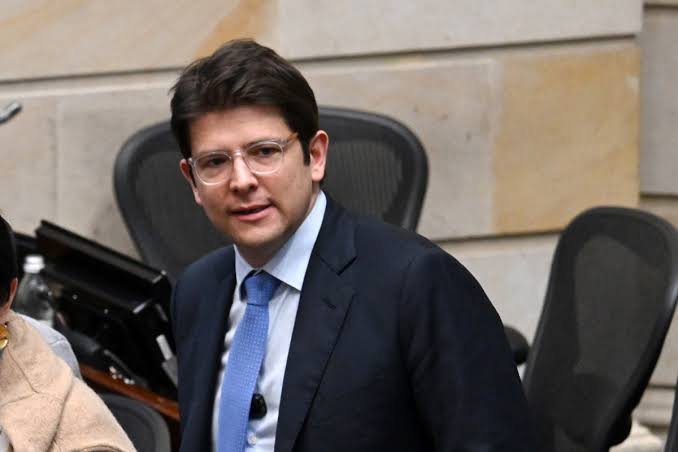
A Colombian juvenile court has sentenced a 15-year-old boy to seven years in detention for shooting opposition presidential candidate Miguel Uribe, who died earlier this month after surviving for weeks in intensive care.
Diaspora Digital Media reported that Uribe, 39, was attacked on June 7 during a campaign rally in a working-class district of Bogotá.
The teenager fired three shots, striking the candidate twice in the head, before Uribe’s bodyguards subdued and arrested him.
According to prosecutors, the teen will “remain in a specialised care centre for seven years, deprived of liberty.”

He was convicted of attempted murder and illegal possession of weapons but not homicide because under Colombian law, charges cannot be upgraded after being formally accepted by a minor defendant.
Uribe, a senator and right-wing presidential hopeful, underwent multiple surgeries and spent more than two months in an intensive care unit.
Diaspora Digital Media reported that the presidential hopeful died on August 11 of a cerebral haemorrhage.
His death shocked Colombians and revived memories of the country’s violent past, when five presidential candidates were assassinated in the latter half of the 20th century.
Authorities say the boy was not acting alone.
Five adults have been arrested and charged with aggravated homicide in connection with the attack.
Investigators have linked the assassination plot to a dissident faction of the demobilised FARC guerrilla movement, which rejected the landmark 2016 peace deal.
Police reports indicate the teenager fired into the crowd as Uribe addressed supporters, sending hundreds fleeing in panic. Videos captured the moment the candidate collapsed, bloodied, as bodyguards exchanged fire with the shooter.
The killing comes amid a surge in rebel attacks.
In recent weeks, guerrilla operations have claimed 19 lives including a truck bombing in Cali that killed six civilians and a drone strike that brought down a police helicopter, killing 13 officers.
President Gustavo Petro, Colombia’s first leftist leader, has condemned the violence, blaming dissident groups who broke away from the Revolutionary Armed Forces of Colombia (FARC) for refusing to honour the 2016 peace accord.
Prosecutors confirmed that the teen, despite the gravity of the crime, will not be transferred to an adult prison once he turns 18. Instead, he will serve his entire sentence in a juvenile facility, in line with Colombian law.