
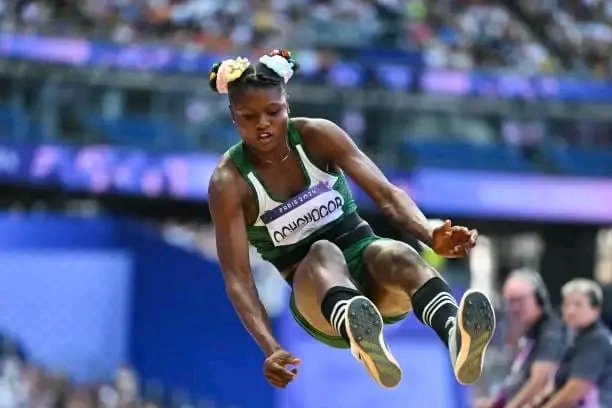
Nigeria’s athletics team has suffered an unexpected setback at the 2026 Commonwealth Games after organisers ruled that national long jump champion Prestina Ochonogor would not be allowed to compete in the women’s long jump event in Glasgow.
The decision comes just days before the athletics programme begins and has dealt a significant blow to Team Nigeria’s medal aspirations in one of its strongest field events. Ochonogor had been expected to strengthen the country’s chances following her impressive performances during the domestic athletics season.
According to officials, Nigeria sought to include Ochonogor in the women’s long jump after the withdrawal of experienced jumper Ese Brume. The Athletics Federation of Nigeria had hoped both Ochonogor and Ruth Usoro would represent the country in the event, but Games organisers declined the request because Ochonogor was not listed in the original final entry submitted before the deadline.
In a communication sent to Team Nigeria, Commonwealth Games Technical Delegate Chris Cohen explained that a review of the final confirmation forms revealed that Ochonogor’s name had been added after the official submission process had closed.
The organisers maintained that competition regulations could not permit additional athletes to be included once the final entry list had been confirmed, making it impossible for the Nigerian athlete to participate despite her qualification credentials.
The ruling means Ruth Usoro will now carry Nigeria’s hopes in the women’s long jump competition as Team Nigeria continues its campaign in Scotland.
For Ochonogor, the decision is particularly disappointing after months of hard work that earned her the national title earlier this year. She secured her place among Nigeria’s leading jumpers by winning the women’s long jump event at the National Athletics Trials held at the Yaba College of Technology Sports Complex in Lagos.
Competing in the absence of national record holder Ese Brume, Ochonogor produced a winning leap of 6.57 metres, a performance that confirmed her status as one of the country’s brightest emerging talents in the event.
Her rise has been one of the encouraging stories in Nigerian athletics this season. The youngster has consistently demonstrated improvement in domestic and international competitions, with athletics enthusiasts viewing her as one of the athletes capable of succeeding established stars in the years ahead.
The development also highlights the importance of administrative accuracy in major international competitions, where strict entry regulations leave little room for amendments after deadlines have passed.
International sporting events such as the Commonwealth Games operate under detailed qualification and registration procedures designed to ensure fairness and smooth organisation. Once national federations submit their final athlete lists, any subsequent changes are generally allowed only under exceptional circumstances and within clearly defined regulations.
Although Nigeria attempted to adjust its team following Brume’s withdrawal, organisers concluded that the request did not meet the conditions required for a late inclusion.
Despite the disappointment, Team Nigeria continues to enjoy an impressive outing at the Glasgow Games.
The country’s athletes have already delivered several memorable performances, particularly in weightlifting, where Nigerian lifters have claimed multiple gold medals while setting new Commonwealth Games records. Those achievements have kept Nigeria among the leading nations on the medals table and boosted confidence ahead of the athletics programme.
Attention will now shift to the remaining athletics events, where several Nigerian competitors are expected to challenge for podium finishes in sprinting, jumping and relay competitions.
Officials within Team Nigeria will also be eager to ensure that similar administrative issues do not affect future international competitions, especially with major events such as the African Championships, World Championships and Olympic qualification tournaments approaching.
For Ochonogor, missing the Commonwealth Games represents a painful setback rather than the end of her journey. At a young age, she has already established herself among Nigeria’s top long jumpers and is expected to remain an important member of the national athletics programme.
Many athletics observers believe her performances this season demonstrate that she possesses the talent and determination required to compete successfully at the highest level. With continued development and regular international exposure, she could become one of Nigeria’s leading medal prospects in future championships.
While the Glasgow Games will proceed without her participation, Ochonogor’s progress remains one of the positive signs for the future of Nigerian athletics.
As Team Nigeria continues its campaign, the focus will now be on converting strong preparations into medals while learning valuable administrative lessons that could help prevent similar disappointments at future global sporting events.