


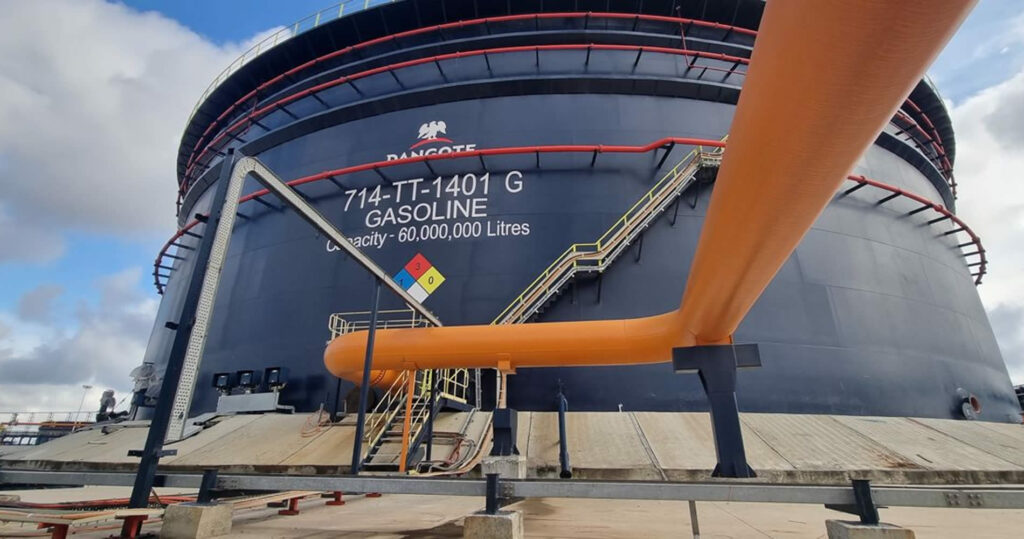
Dangote Petroleum Refinery has increased the gantry price of Premium Motor Spirit, popularly known as petrol, by ₦85 per litre, pushing its wholesale price from ₦1,265 to ₦1,350 per litre.
The latest adjustment represents a 6.7 per cent increase and comes amid rising international crude oil prices and higher replacement costs for petroleum products.
The new price is also above the current petrol landing-cost benchmark of about ₦1,311 per litre, creating fresh pressure on petroleum marketers and consumers across Nigeria.
The development is expected to have wider implications for the downstream petroleum market as depot owners, independent marketers and filling station operators review their prices to reflect the higher cost of obtaining petrol from the refinery.

For Nigerian consumers, the latest adjustment could translate into another round of increases at filling stations, particularly in areas where marketers have limited access to cheaper supplies.
DDM News reports that Dangote Refinery had maintained its petrol gantry price at ₦1,265 per litre before the latest adjustment.
The refinery had previously increased the price from ₦1,200 to ₦1,265, meaning the latest ₦85 increase brings the cumulative rise to ₦150 from the earlier ₦1,200 level.
The repeated changes have highlighted the increasingly volatile nature of petrol pricing in Nigeria, where local pump prices are closely influenced by crude oil prices, exchange rates, supply conditions, transportation expenses and the cost of replacing petroleum products.
The latest adjustment also comes at a time when global oil markets are experiencing significant pressure.
International crude prices have risen sharply amid disruptions in the Middle East, with Brent crude trading above $100 per barrel.
The conflict involving Iran and the resulting uncertainty around shipping routes and energy infrastructure have increased concerns about global crude supply and refined petroleum products.
Higher international crude prices generally increase the cost of producing or replacing refined petroleum products.
For a refinery operating in an increasingly integrated market, those changes can influence the price at which refined products are sold to marketers.
Dangote Refinery has become an increasingly important player in Nigeria’s downstream petroleum industry since beginning operations in 2024.
The facility has a stated processing capacity of 650,000 barrels per day and has significantly changed the country’s dependence on imported refined petroleum products.
The refinery’s growing role means that changes to its wholesale prices can quickly attract attention across the petroleum distribution chain.
When the gantry price rises, marketers that purchase directly from the refinery must factor the additional cost into their own calculations.
These costs may include transportation, storage, depot charges, logistics, operating expenses and margins before petrol eventually reaches consumers at filling stations.
This means that a ₦85 increase at the refinery does not necessarily translate into exactly ₦85 being added to the pump price nationwide.
The final retail price can vary from one location to another depending on transportation distances, available stock, competition among filling stations and the cost at which individual marketers obtained their products.
In some locations, however, marketers may respond to the higher wholesale price by adjusting their pump prices.
The latest Dangote adjustment therefore comes at a particularly sensitive period for consumers who are already dealing with high transportation and living expenses.
Petrol remains an important component of the Nigerian economy because millions of households and businesses depend on it directly or indirectly.
Transport operators require petrol to run vehicles, while businesses that depend on petrol-powered generators also face higher operating costs when pump prices increase.
A sustained rise in petrol prices can therefore affect more than motorists.
Higher transportation costs can increase the cost of moving food and other goods from farms and production centres to markets.
Traders may eventually pass these additional logistics expenses to consumers, while businesses may increase the prices of goods and services to protect their profit margins.
DDM News notes that the impact of the latest adjustment will largely depend on how marketers respond and how international crude prices behave in the coming weeks.
If crude prices remain elevated, petroleum marketers could face continued pressure to adjust their selling prices.
On the other hand, a significant decline in international oil prices or a reduction in supply costs could provide room for prices to stabilise.
The development also raises fresh questions about the relationship between local refining and fuel affordability.
One of the major expectations surrounding the Dangote Refinery was that increased domestic refining would reduce Nigeria’s dependence on imported petrol and eventually provide greater stability in the domestic fuel market.
The refinery has already helped Nigeria reduce its reliance on overseas refined petroleum products, while its expanding operations have strengthened the country’s position in the regional petroleum market.
However, domestic refining does not completely isolate petrol prices from international market movements.
Crude oil remains an internationally traded commodity, and refiners must consider the value of crude, product replacement costs and other market conditions when determining prices.
Consequently, fluctuations in the global energy market can continue to influence the domestic price of refined products.
The latest ₦1,350 gantry price also comes at an important moment for Dangote Refinery as the company prepares for a major expansion and its planned public offering.
The refinery is planning a major expansion that could eventually increase its processing capacity significantly, while the company has also announced plans to raise funds through an initial public offering.
The move reflects the growing ambitions of the refinery within Nigeria and across the wider African petroleum market.
The refinery has also been increasing its purchases of Nigerian crude as it seeks to raise its operating levels.
These developments demonstrate the growing importance of the refinery to Nigeria’s energy sector.
Nevertheless, consumers will be watching closely to see whether the new wholesale price results in another widespread increase at filling stations.
For households already adjusting their budgets around transportation, food and energy costs, another increase in petrol prices could add to financial pressure.
For businesses, particularly small and medium-sized enterprises, the development could increase logistics and operating expenses at a time when many are already struggling with high energy and production costs.
The new Dangote price therefore goes beyond a simple adjustment at the refinery.
It represents another development in Nigeria’s constantly changing petroleum market and could influence the cost of transportation, distribution and several other economic activities.
As marketers begin to respond to the ₦1,350 wholesale price, consumers will be watching pump prices across the country for signs of how strongly the latest increase will filter through the downstream market.
For now, the key question is whether the new price will remain at ₦1,350 or whether changing international crude prices and domestic supply conditions will trigger another adjustment in the weeks ahead.




