


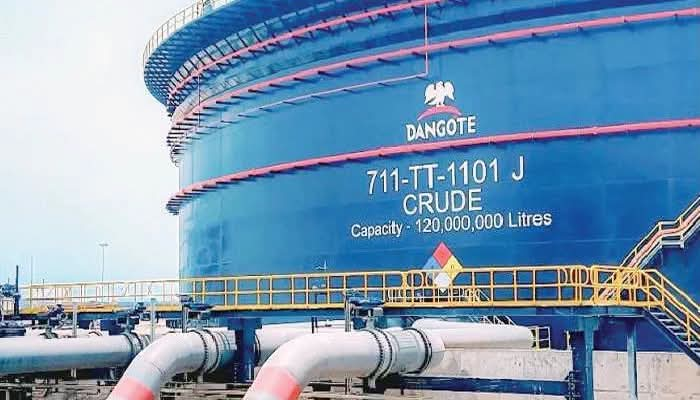
ABUJA, NIGERIA — The Dangote Petroleum Refinery supplied almost 36 million litres of petrol daily to the Nigerian market in August 2026, accounting for about 71 per cent of the country’s total Premium Motor Spirit receipts, according to the latest data from the Nigerian Midstream and Downstream Petroleum Regulatory Authority.
The report, released on Wednesday, showed that the refinery delivered a total of 1.1 billion litres of petrol to the domestic market during the month, consolidating its position as the dominant supplier of refined petroleum products in Nigeria. The remaining 29 per cent of the country’s petrol supply was sourced from imports and other domestic refineries.
The NMDPRA data revealed that the Dangote Refinery’s daily average supply of 35.9 million litres represented a significant increase from the 28.5 million litres per day recorded in July. The increase was attributed to the refinery’s improved operational capacity and its ability to meet the growing demand for petrol in the Nigerian market.
The report also showed that the refinery’s petrol supply accounted for the largest share of the total 1.55 billion litres of petrol received in the country during the month. Other sources, including the Port Harcourt Refinery and imports, accounted for the remaining volume.

Industry analysts say the Dangote Refinery’s dominance of the domestic petrol market is a major shift in Nigeria’s downstream petroleum sector, which has historically relied on imports for the bulk of its refined products. They note that the refinery’s growing output has reduced the country’s dependence on imported petrol and helped to stabilise supply.
“The Dangote Refinery has fundamentally changed the dynamics of Nigeria’s petrol market. Its ability to supply over 70 per cent of the country’s petrol needs is a testament to its capacity and efficiency. This is a positive development for the country, as it reduces our reliance on imports and strengthens our energy security,” said Dr. Emmanuel Uche, an energy economist.
The refinery’s dominance has also raised questions about competition in the downstream sector, with some operators expressing concerns about the refinery’s market power. The NMDPRA has said it is monitoring the situation to ensure that no single operator abuses its market position.
“The NMDPRA is committed to ensuring a competitive market. We are monitoring the activities of all operators, including the Dangote Refinery, to ensure that they comply with the rules and that consumers are not exploited,” the agency said in a statement.
The Dangote Refinery, which has a capacity of 650,000 barrels per day, is the largest single-train refinery in the world. It began operations in 2024 and has been ramping up production since then. The refinery sources crude oil from both local and international markets and sells its refined products to the Nigerian market and neighbouring countries.
The refinery’s growing output has been welcomed by the Federal Government, which has made the development of domestic refining capacity a key component of its economic agenda. The government has argued that domestic refining would reduce the country’s dependence on imported petroleum products, create jobs, and save foreign exchange.
With the refinery now supplying over 70 per cent of the country’s petrol, the focus will shift to whether it can sustain and even increase its output in the coming months. The refinery has said it is working to optimise its operations and to expand its distribution network to reach more consumers across the country. For now, the Dangote Refinery’s dominance of the Nigerian petrol market is a testament to its capacity and to the changing landscape of the country’s downstream petroleum sector.




