


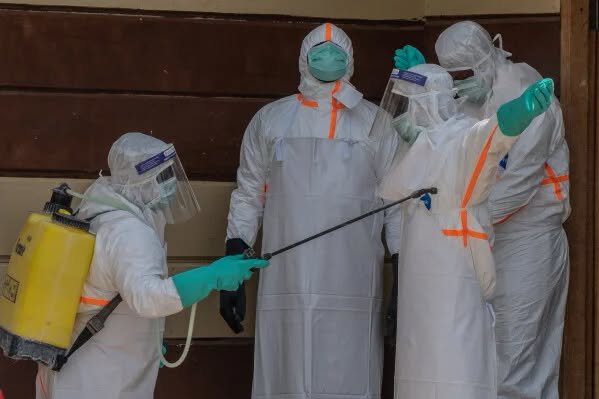
NEW YORK / GOMA, DR Congo — A United Nations report has issued a stark warning that the ongoing Ebola outbreak in the Democratic Republic of Congo could cost the African continent a staggering $3.6 billion in economic losses, potentially pushing nearly a million people into poverty and devastating livelihoods across the region.
The report, released jointly by the UN Development Programme and the World Health Organization, paints a grim picture of the cascading economic consequences of the deadly virus, which has already claimed hundreds of lives since the outbreak was declared in August 2025. Beyond the immediate health crisis, the UN warns that the economic shockwaves will be felt far beyond the borders of DR Congo.
“This is not just a health emergency. This is an economic emergency,” a UNDP spokesperson declared during the report’s launch. “The longer the outbreak persists, the deeper the economic damage will be, affecting jobs, businesses, and entire communities across the continent.”
Devastating Economic Impact

According to the report, the $3.6 billion price tag encompasses direct costs, including healthcare expenditures, border closures, travel restrictions, and disruptions to trade, as well as indirect losses from reduced consumer spending, declining investment, and the erosion of productivity. The agricultural and mining sectors, which form the backbone of many regional economies, are expected to be hit hardest as workers fall ill or stay home to care for loved ones.
The DR Congo, already struggling with decades of conflict and chronic underdevelopment, is projected to bear the brunt of the economic fallout. However, the UN warns that neighboring countries, including Rwanda, Uganda, South Sudan, and Burundi, are also at serious risk. Border closures and heightened surveillance have already led to significant delays in the movement of goods and people, disrupting supply chains and driving up costs for essential commodities.
“The economic spillover is real and imminent,” the report cautions. “Even countries that have not reported a single confirmed case of Ebola are experiencing economic hardship as a direct result of the outbreak.”
A Continent in Peril
The warning comes at a particularly vulnerable moment for African economies, which are still recovering from the aftershocks of the COVID-19 pandemic, global inflation, and the lingering effects of the Russia-Ukraine conflict. The Ebola outbreak threatens to undermine hard-won gains in poverty reduction and economic development over the past decade.
The report estimates that up to 950,000 people could be pushed into extreme poverty, a devastating reversal for millions of families already living on the edge of survival. Unemployment is expected to rise sharply, particularly in sectors reliant on cross-border trade and tourism, where fear of the virus has already led to a sharp decline in activity.
“These are not just statistics,” the UNDP spokesperson emphasized. “These are families who will lose their livelihoods. Children who will go hungry. Communities that will be shattered.”
A Call for International Action
The UN has called for urgent international action to contain the outbreak and mitigate its economic impact. The report urges the international community to step up financial support for the Ebola response, bolster healthcare systems in affected regions, and implement targeted economic interventions to protect vulnerable populations.
The WHO has emphasized that the outbreak is still controllable but warns that “the window of opportunity is closing.” The agency is calling for a massive increase in surveillance, contact tracing, and vaccination efforts to bring the outbreak under control before it spirals further out of hand.
“We cannot afford to wait until the economy collapses before we act,” a WHO representative stated. “The health response and the economic response must go hand in hand.”
A Threat Beyond Borders
The Ebola virus, which has a fatality rate of up to 90% without prompt treatment, has repeatedly proven to be a transboundary threat, spreading rapidly across porous borders and vulnerable communities. The current outbreak, identified as the Zaire strain, is particularly aggressive and has already spread to three provinces in eastern DR Congo.
The UN report warns that without decisive action, the outbreak could expand to major cities, where densely populated urban centers would provide ideal conditions for rapid transmission. A large-scale outbreak in a major city could trigger a humanitarian catastrophe and inflict incalculable damage to the continent’s fragile economies.
As the fight against Ebola continues, the UN’s message is clear: the cost of inaction is far greater than the cost of intervention. “We have a choice,” the report concludes. “We can invest now to contain the outbreak and save lives, or we can pay a much heavier price later. The time to act is now.”




