


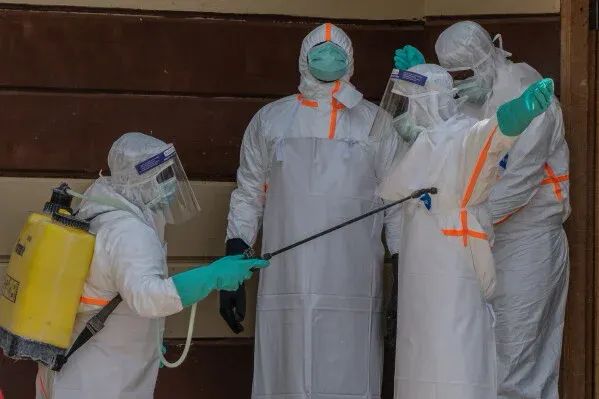
GENEVA, SWITZERLAND — The Ebola outbreak in the Democratic Republic of Congo has expanded to 63 health zones, with 7,890 confirmed cases and 3,799 deaths reported, according to the World Health Organisation, in what has become one of the largest and most widespread Ebola outbreaks in the country’s history.
The WHO, in its latest situation report released on Friday, said the outbreak has spread across 15 of the DRC’s 26 provinces, with the highest number of cases reported in North Kivu, South Kivu, and Ituri provinces in the eastern part of the country. The agency described the situation as “extremely concerning” and warned that the outbreak could spread further if urgent action is not taken.
“The Ebola outbreak in the Democratic Republic of Congo has reached a critical juncture. The disease has spread to 63 health zones across the country, and the number of cases and deaths continues to rise. We are working closely with the DRC government and partners to contain the outbreak, but the challenges are immense,” the WHO said.
The agency attributed the rapid spread of the outbreak to a combination of factors, including insecurity in the eastern DRC, which has hampered access to affected communities; poor health infrastructure; community resistance to Ebola response measures; and the movement of people across borders.

“The eastern part of the DRC has been plagued by armed conflict for decades, and this has made it extremely difficult for health workers to reach affected communities. The insecurity has also displaced thousands of people, and this has contributed to the spread of the virus,” the WHO stated.
The agency said it had deployed hundreds of health workers and contact tracers to the affected areas and had established Ebola treatment centres in several locations. It also said it had begun vaccinating high-risk populations with the rVSV-ZEBOV vaccine, which has been shown to be highly effective against the Zaire strain of the Ebola virus.
“We have made significant progress in vaccinating people in the affected communities, but we need to do more. The vaccine is our best tool in the fight against Ebola, and we need to ensure that it reaches everyone who needs it,” the WHO said.
The outbreak has also raised concerns about the capacity of the DRC’s health system to respond to the crisis. The country has been grappling with multiple health emergencies, including measles, cholera, and COVID-19, and the Ebola outbreak has stretched its already limited resources to breaking point.
“The DRC’s health system is under immense strain. The country is dealing with multiple health crises simultaneously, and the Ebola outbreak is placing additional pressure on an already fragile system. We need to provide more support to the DRC government to help it respond effectively,” the WHO said.
The agency called on the international community to provide more funding and resources to support the response to the outbreak. It said the current funding for the Ebola response was insufficient to meet the needs of the affected populations.
“We are appealing to the international community to provide more funding and support to the DRC. The response to this outbreak requires a coordinated and well-resourced effort. We cannot afford to let our guard down,” the WHO said.
The Ebola outbreak in the DRC is the 14th since the virus was first discovered in the country in 1976. The current outbreak was declared on August 1, 2026, and has since become one of the largest in the country’s history. The WHO has warned that the outbreak could spread to neighbouring countries, including Uganda, Rwanda, and South Sudan, if it is not contained.
As the international community mobilises to support the response, the focus will be on containing the outbreak, protecting health workers, and preventing further spread of the virus. For now, the situation in the DRC remains dire, and the world is watching closely as the country battles one of its worst Ebola outbreaks in decades.




