


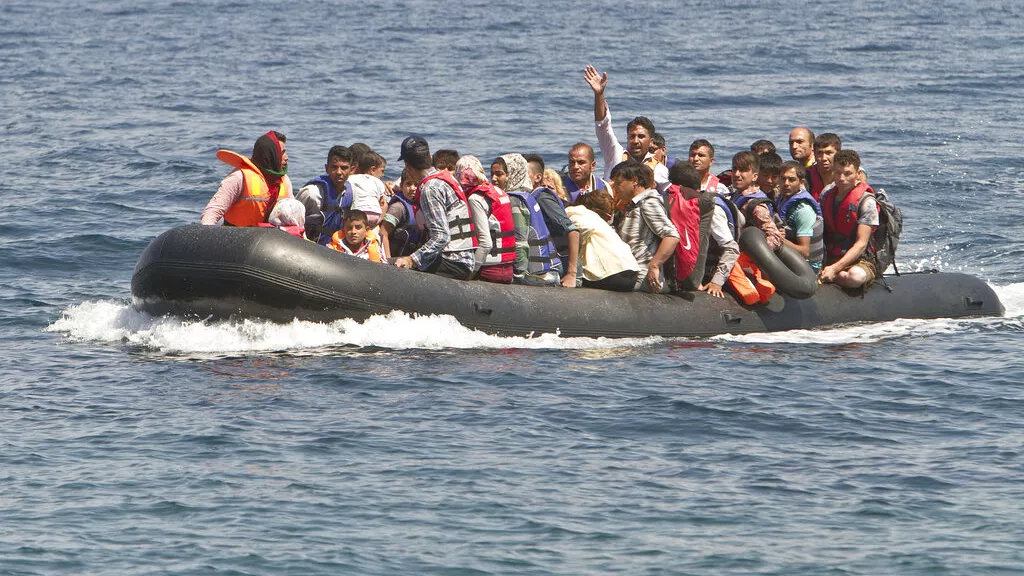
The number of migrants from four West African countries arriving in Europe by sea fell by 59 per cent in the first half of 2026 compared with the same period in 2025, according to the International Organization for Migration (IOM).
The figures were contained in the organisation’s report, Europe – Main West African Nationalities Among Sea Arrivals to Europe in 2025 and 2026, published on October 13, 2026.
The report recorded 4,566 arrivals from Mali, Senegal, Guinea and The Gambia between January and June 2026, down from an estimated 11,137 during the corresponding period in 2025.
Despite the decline, the IOM warned that fewer arrivals along particular routes did not necessarily mean migration pressures had eased, as tighter border controls could push migrants towards alternative and potentially more dangerous journeys.

Atlantic route remains major pathway
IOM Director General Amy Pope said declining arrival figures in one location could reflect a shift in migration routes rather than a reduction in the number of people attempting to reach Europe.
“Fewer arrivals in one place doesn’t mean the pressures have gone away,” Pope said. “They often just shift to other routes. That’s why we need to look at the whole journey, from where people leave to where they arrive.”
According to the report, the West African Atlantic Route remained the principal route for migrants from the region travelling towards Europe. West African nationals accounted for 83 per cent of arrivals recorded along the route in the first half of 2026.
The figures showed that 1,589 migrants from Mali, 1,184 from Senegal, 1,076 from Guinea and 919 from The Gambia arrived in Europe through mixed migration routes during the period.
The report said most of the arrivals were registered in Spain, representing a 59 per cent decline compared with the first half of 2025.
However, the proportion of West African migrants arriving through Mediterranean routes increased during the period.
On the Western Mediterranean Route, their share of arrivals rose from 15.6 per cent in 2025 to 21.9 per cent in the first half of 2026.
Similarly, the proportion of West African nationals among arrivals along the Central Mediterranean Route increased from 8.6 per cent to 10.5 per cent.
The figures suggest that although overall arrivals from the four countries declined, West African migrants accounted for a larger share of arrivals along the two Mediterranean routes.
The IOM also warned that the Atlantic route remained dangerous, with deaths and disappearances continuing to be recorded despite the decline in arrivals.
Over 60,300 Nigerians assisted to return home
Irregular migration continues to expose many Africans to dangerous journeys as they seek better economic opportunities abroad. Some migrants become stranded or require assistance to return to their countries of origin.
In March 2026, Nairametrics reported that more than 60,300 Nigerian migrants had returned home through assisted voluntary return programmes since 2017.
The IOM said many returnees had experienced exploitation, abuse and other life-threatening conditions while attempting to reach their intended destinations.
The figure represents an increase from approximately 16,800 Nigerians who had received assistance to return by December 2020 under an IOM and European Union-backed return and reintegration initiative launched in 2017.
UK and US tighten immigration rules
The decline in arrivals from the four West African countries comes amid tighter immigration rules in several Western countries, including measures affecting employment, study and residency opportunities.
The United Kingdom has introduced stricter requirements for foreign workers, including Nigerians seeking employment through its Skilled Worker visa route.
In July 2025, the UK raised the minimum skill requirement for most Skilled Worker visas to degree-level occupations and increased the standard minimum salary threshold from £38,700 to £41,700, subject to applicable exceptions.
The government also ended new overseas applications for care worker and senior care worker roles, restricting a pathway previously used by foreign workers.
Further changes affect international graduates. From January 1, 2027, the UK’s Graduate visa period is scheduled to fall from two years to 18 months for most eligible applicants, while doctoral graduates will retain a three-year period.
In the United States, immigration authorities have also recorded a rise in rejected applications for certain work permits.
Nairametrics recently reported that the US Citizenship and Immigration Services denied 35,767 work permit applications from foreign nationals seeking Green Cards between April and June 2026.
The developments highlight the changing conditions facing people seeking to migrate through both irregular sea crossings and formal immigration pathways.




