


The Federal Government has introduced a new framework aimed at attracting private-sector investment to provide reliable and sustainable electricity for healthcare facilities across Nigeria.
The initiative, known as the Nigeria Power for Health Initiative (NPHI), was formally launched at the National Healthcare Electrification Investors Matchmaking Forum held in Lagos.
According to government officials, the programme is designed to address longstanding power supply challenges in hospitals, which have continued to disrupt critical medical services nationwide.
Speaking at the event, the Minister of State for Health and Social Welfare, Dr. Iziaq Salako, said unreliable electricity supply remains a major barrier to effective healthcare delivery in the country.

He noted that power interruptions affect essential services such as surgical operations, vaccine storage, laboratory diagnostics, oxygen supply, and emergency care.
Private Sector–Driven Energy Model
Salako explained that the new framework is designed to mobilize private capital for the deployment and management of sustainable energy solutions in healthcare facilities.
Under the initiative, hospitals will adopt an Energy-as-a-Service (EaaS) model, where private energy companies finance, install, operate, and maintain power systems while guaranteeing uninterrupted electricity supply.
He said the arrangement would allow healthcare providers to focus on medical services while energy experts handle power infrastructure management.
The minister described the initiative as a major outcome of the National Stakeholders’ Dialogue on Power in the Health Sector and a shift toward more sustainable financing models for healthcare infrastructure.
Phased Implementation Strategy
According to Salako, the first phase of the programme will focus on federal tertiary hospitals before expanding to secondary and primary healthcare facilities across the country.
He added that the initiative will be supported through a blended financing structure involving government resources, development finance institutions, climate finance mechanisms, and private investment.
To oversee implementation, the government has established an Inter-Ministerial Steering Committee, a 24-member Inter-Agency Technical Committee, Facility Energy Management Teams, and a project secretariat within the Ministry of Health and Social Welfare.
Strengthening Investment Readiness
Salako said the ministry has begun training hospital financial managers on energy economics, project finance, and investor engagement to improve the investment readiness of federal health institutions.
He noted that these efforts are intended to make hospitals more attractive to private investors and energy developers.
The minister also acknowledged the support of development partners, including the UK Partnership for Accelerating Climate Transitions (UK PACT) and Landell Mills International, in developing the initiative.
Addressing Energy Challenges in Healthcare
Health officials at the forum emphasized that electricity is essential for the delivery of safe and effective healthcare services, powering critical equipment used in surgeries, diagnostics, emergency care, and vaccine storage.
Nigeria’s public hospitals have faced persistent challenges linked to unstable electricity supply, rising energy costs, and frequent power outages, which have disrupted services in several facilities.
In recent years, some tertiary hospitals have experienced prolonged blackouts due to unpaid electricity bills, affecting clinical services and medical training activities.
Health authorities have also reported that energy costs account for a significant share of hospital operating expenses, placing additional strain on already limited healthcare budgets.
Shift Toward Alternative Energy Solutions
In response to these challenges, the Federal Government has intensified efforts to adopt alternative energy solutions for healthcare facilities.
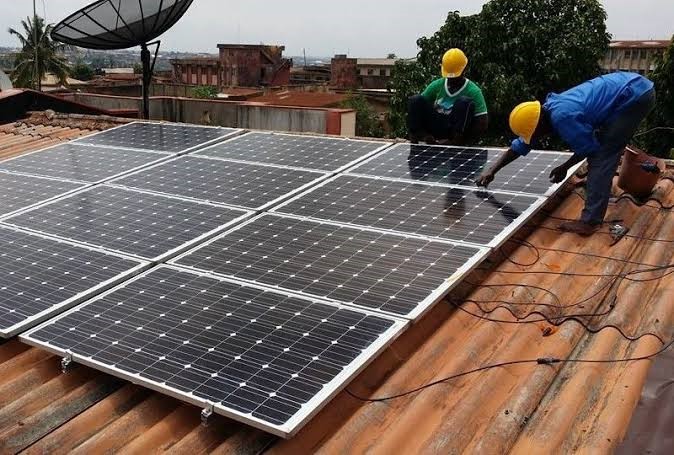
These include plans to transition hospitals to renewable energy sources and ongoing projects to solarize selected primary healthcare centres across the country.
Officials say the Nigeria Power for Health Initiative represents a coordinated effort to ensure stable electricity supply in hospitals, improve service delivery, and reduce dependence on the national grid.
The government maintains that improved energy access in health facilities is critical to strengthening Nigeria’s healthcare system and ensuring continuity of care for patients nationwide.




