


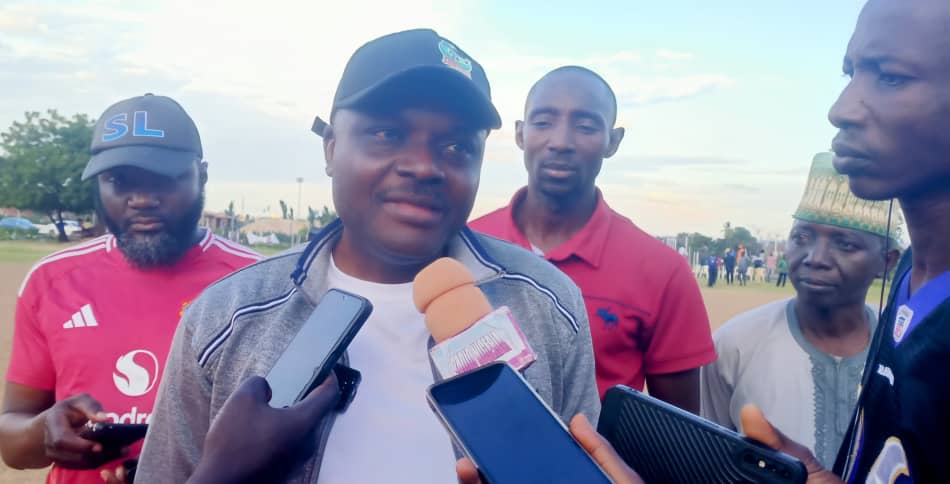
In this short interview, Dr. Ndanusa, a director at Aidu Football Academy (AFA), Lafiagi, speaks with our correspondent on the struggles of running a private football academy in a region ravaged by banditry, and the broader challenges of managing football without government support. AFA players wore black armbands during their friendly against NPFL side, Kwara United, in Ilorin, as a show of solidarity for communities in Kwara North under siege.
AFA only launched formally in February. How has the journey been so far?
What we did in February was an unveiling. The academy had actually started long before that. After the launch, we set up a boot camp where we picked some of the best talents to expose them to the wider world of football. Over the last six months, our boys have had several encounters — some are currently in Ethiopia trying out with clubs, while others are preparing to move to Doha, Qatar. Those at home continue to engage local teams, and coming to Ilorin feels like homecoming since Lafiagi is part of Kwara. But beyond football, our presence here is symbolic — our home base in Kwara North is bleeding due to insecurity. That’s why our boys wore black armbands: a cry for solidarity. Government is doing its best, but security is everyone’s problem.
What does it mean to run a football academy from an insecure region like Lafiagi?
Dr. Ndanusa: It is both emotional and challenging. Every day, we battle the reality that while we try to raise young men through football, our community is under siege by armed bandits. Players come to training after hearing gunshots the previous night. Families are displaced, and yet we must carry on. It shows that football is more than sport — it is a beacon of hope. Our boys are saying through football that Lafiagi deserves peace.
How tough is it for the private sector to invest in football in Nigeria?
Dr. Ndanusa: Very tough. It requires money, time, and enormous resources — things one man alone cannot shoulder. Unfortunately, unlike government-backed clubs such as Kwara United, private academies struggle without institutional support. People understand football’s value but they have not directly benefited from it, so they shy away from investing. Until more investors come in, academies like ours will remain at the mercy of passion and sacrifice.
What lessons do you think government and stakeholders can take from AFA’s effort?
That football can be a force for good. Beyond winning trophies, it can rebuild broken communities, unite people, and take young people off the streets. Our academy is proof — even in a conflict zone, young men can choose football over crime if given the chance. What we need is more investment, collaboration, and deliberate policies that support private football academies. With security guaranteed and stakeholders involved, Nigeria can produce not just players but true ambassadors of peace and development.

