


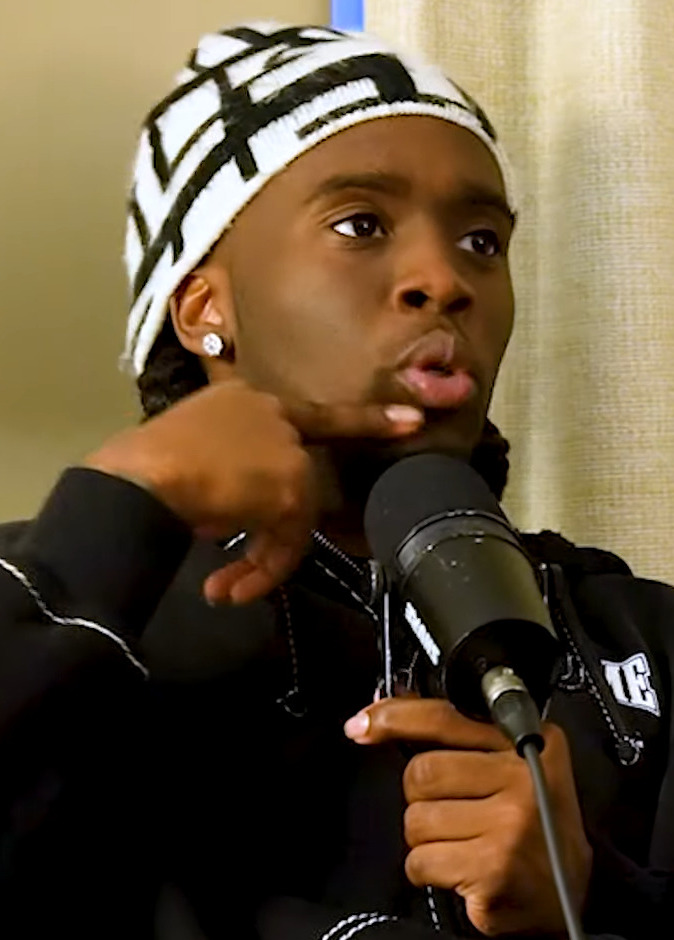
Peller recently sparked conversation across social media with bold remarks about fellow internet sensation IShowSpeed, claiming that he holds a stronger influence in Nigeria and that his recent tour announcement prompted IShowSpeed’s visit to the country.
In an exclusive interview, Peller asserted that his prominence in the Nigerian entertainment and social media landscape has long been established, suggesting that newer international personalities often find themselves navigating his already well-entrenched presence. “I am bigger than IShowSpeed in Nigeria,” he stated confidently, emphasizing the impact he has had on fans and the industry locally. According to him, this influence is why IShowSpeed decided to come to Nigeria only after his own tour was announced.
Peller also addressed a moment of perceived slight, noting that IShowSpeed didn’t respond to him initially because, in his words, his name was “overshadowing” the American YouTuber’s presence. He explained that it wasn’t about competition in a negative sense but rather a reflection of his established fanbase and relevance in the country. “It’s not just about numbers; it’s about who resonates with the local audience and who sets the pace for entertainment in Nigeria,” Peller remarked.
The comments quickly sparked debates on social media platforms, with fans and critics weighing in on the rivalry. Some users agreed with Peller’s assertion, highlighting his significant presence in Nigeria’s entertainment circuit, his viral online moments, and his ability to draw crowds. Others argued that IShowSpeed’s global reach and international fanbase make him a formidable presence regardless of local dominance, noting that online influence is often measured by both domestic and international impact.

Beyond the headline-grabbing statements, Peller’s remarks reflect a broader discussion about the intersection of local and global influence in the digital age. As social media personalities continue to cross borders with viral content, local stars often find themselves balancing national prominence with international competition. Peller’s candid reflections show the tension between being a household name within Nigeria while recognizing the rising influence of global internet personalities.
Entertainment analysts have pointed out that this type of commentary, while provocative, also serves to keep both personalities in public conversation. Peller’s confidence and willingness to assert his local dominance highlight the ongoing evolution of social media influence, where perception, timing, and audience engagement can shape how personalities are received across different regions.
As fans await potential collaborations, responses, or events involving both stars, the conversation continues to shine a spotlight on Nigeria’s growing role in the global digital entertainment landscape. Peller’s statements underscore the fact that local influence can carry significant weight, especially in countries with vibrant social media cultures, even as international creators increasingly seek to make their mark.




