


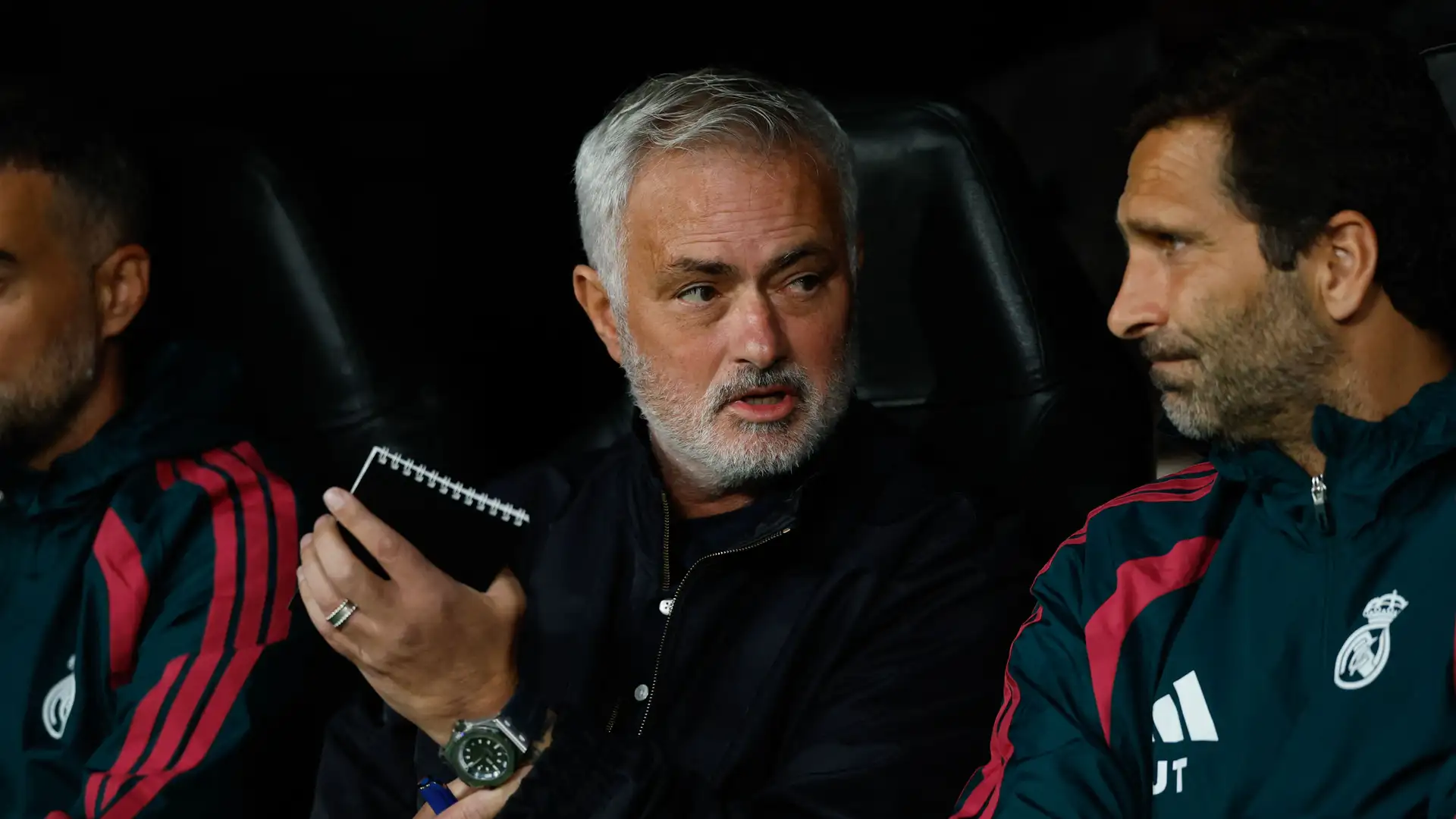
José Mourinho is looking to combine tactical discipline with individual brilliance as Real Madrid prepare for their crucial El Clásico showdown against Barcelona on Sunday, with Arda Güler, Jude Bellingham and Bernardo Silva expected to play important roles in his attacking plans.
Real Madrid travel to the Camp Nou aiming to demonstrate that their attacking variety can translate into success against one of their fiercest rivals. While Mourinho wants his team to maintain a clear tactical structure, he also recognises the importance of allowing technically gifted players the freedom to make decisive contributions in tight situations.
Güler, Bellingham and Bernardo Silva offer different qualities that could prove valuable against Barcelona. Their ability to receive the ball between the lines, combine in confined spaces and change the pace of an attack gives Madrid several ways to break through a well-organised defence.

Rather than restricting their creativity, Mourinho wants these qualities to operate within a coordinated team structure. The objective is to give his players room to improvise without leaving the side exposed when possession is lost.
Madrid’s recent performances at the Santiago Bernabéu have provided encouraging evidence of their attacking potential. They defeated Sevilla 4-1 before recording another 4-1 victory over RB Leipzig in the Champions League, taking their home winning run to seven matches across competitions.
Those results have also highlighted the different routes through which Madrid can threaten opponents. Quick counterattacks, individual skill, organised build-up play, crosses, set pieces and efforts from distance all offer potential avenues to goal.
That unpredictability could become particularly important against Barcelona, whose pressing and possession-based approach can force opponents to make quick decisions under pressure. Madrid will need to recognise when to attack directly, when to retain possession and when to use their creative players to exploit spaces between Barcelona’s midfield and defence.
The numbers underline Madrid’s strong home form. Their seven consecutive victories at the Bernabéu have produced 23 goals, an average of more than three per match. The team has demonstrated an ability to create chances consistently, although its attacking output will face a different test away from home against Barcelona.
Mourinho’s challenge is not simply to encourage his players to attack. He must ensure that their attacking ambition does not compromise the team’s defensive organisation, particularly when Barcelona attempt to exploit spaces left behind by advancing Madrid players.
There is also a question of efficiency. Creating numerous opportunities is valuable, but converting them into goals becomes even more important in a fixture where small mistakes can determine the outcome. Madrid will need to make their possession count while remaining alert to Barcelona’s ability to punish defensive lapses.
The historical benchmark for Madrid’s scoring form also offers perspective. Their record of 23 goals across their first seven home matches is impressive, but they scored 26 during the equivalent opening sequence of home fixtures in the 2011-12 campaign, when Mourinho guided the club to a record 100-point La Liga season.
That comparison highlights the attacking standards associated with Mourinho’s most successful Madrid side, but Sunday’s encounter presents a different challenge. The current team must show that its scoring power can be sustained against elite opposition, particularly in an away fixture with significant implications for the title race.
Barcelona, meanwhile, will be determined to use home advantage to strengthen their position in the standings. Madrid cannot afford to approach the contest as though it were another comfortable night at the Bernabéu.
For Güler, Bellingham and Bernardo Silva, the match represents an opportunity to demonstrate how their individual strengths can influence a contest at the highest level. Their movement, decision-making and ability to create openings could determine whether Madrid’s attacking variety becomes a decisive advantage.
Ultimately, Mourinho’s approach rests on a balance between structure and freedom. His players must understand their responsibilities, but they must also recognise the moments when an unexpected pass, a quick combination or an individual burst of skill can change a game.
Against Barcelona, that balance could prove decisive. Real Madrid have shown that they can score through different methods at home. The greater test will be whether they can reproduce that threat at the Camp Nou while maintaining the discipline required to withstand Barcelona’s response.




