


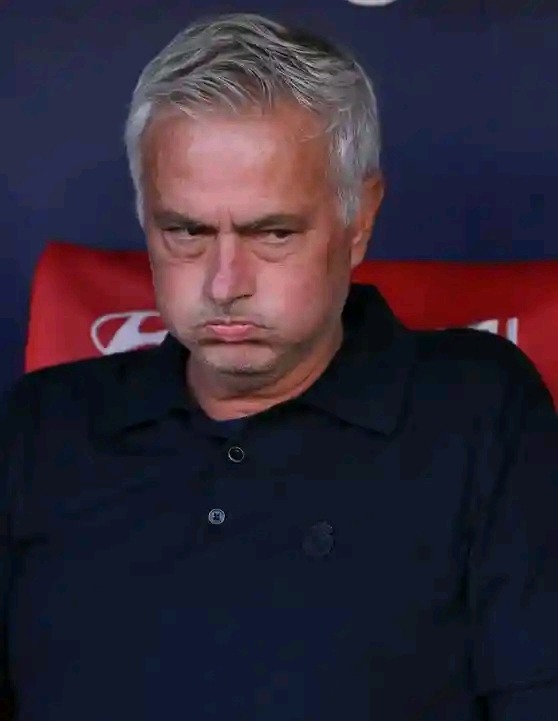
Jose Mourinho is preparing for one of the biggest tests of his second spell at Real Madrid as he returns to the El Clasico spotlight on Sunday, hoping to halt Barcelona’s recent dominance and strengthen his team’s challenge for the La Liga title.
The Portuguese coach will lead Madrid against Barcelona at Camp Nou for the first time since returning to the Spanish giants, renewing a rivalry that defined one of the most intense periods in modern football.
With Barcelona sitting six points ahead of Madrid in the league standings, the encounter carries significant implications for the title race. Victory for Hansi Flick’s side would extend their advantage to nine points, while a Madrid win would reduce the gap to three and provide Mourinho with a major boost early in his second tenure.

The match also offers Mourinho an opportunity to demonstrate whether his experience, tactical discipline and competitive approach can disrupt a Barcelona team that has enjoyed considerable success against Madrid in recent meetings.
Barcelona have won six of their last seven El Clasico encounters, scoring 22 goals and conceding 11. Their recent record under Flick has established them as the dominant side in the rivalry, increasing the pressure on Mourinho to find a solution.
The 63-year-old previously managed Madrid between 2010 and 2013, arriving at the Santiago Bernabeu with the task of challenging Pep Guardiola’s Barcelona, who were then among the most formidable teams in world football.
During that period, El Clasico became more than a contest between two Spanish clubs. It developed into a battle between contrasting football philosophies, with Mourinho’s direct, tactically aggressive approach frequently clashing with Guardiola’s possession-based system.
Their encounters attracted worldwide attention, with disagreements between players, coaching staff and managers sometimes overshadowing the football itself.
Mourinho’s first Clasico in November 2010 ended in a humiliating 5-0 defeat at Camp Nou, as Barcelona overwhelmed Madrid with goals from Xavi, Pedro, David Villa, who scored twice, and Jeffren.
However, Mourinho eventually found ways to compete with his great rivals. His Madrid defeated Barcelona in the 2011 Copa del Rey final, with Cristiano Ronaldo scoring the decisive goal in extra time.
The defining achievement of his first Madrid spell came in 2012, when Real Madrid won the La Liga title with a record 100 points. A 2-1 victory over Barcelona at Camp Nou that April, secured by goals from Sami Khedira and Ronaldo, helped Madrid move seven points clear with four matches remaining.
Mourinho finished his first spell having recorded five victories, six draws and six defeats in 17 Clasicos against Barcelona. Notably, Madrid went unbeaten in his final five encounters against the Catalan club, winning three.
More than a decade later, he returns to a different Barcelona side but faces a familiar challenge: finding a way to stop their attacking momentum while restoring Madrid’s authority in Spanish football.
Barcelona have been particularly dangerous under Flick, combining aggressive pressing with a high defensive line and an attack capable of overwhelming opponents. Their domestic form has been impressive, although their recent 4-2 Champions League defeat against Paris Saint-Germain exposed defensive weaknesses that Mourinho could attempt to exploit.
Flick admitted that Barcelona made too many mistakes in possession during the defeat, suggesting that his players needed to analyse their errors and improve their decision-making.
Those vulnerabilities could offer Madrid opportunities, particularly if Mourinho instructs his players to press selectively, attack spaces behind Barcelona’s defensive line and avoid allowing the hosts to dictate the tempo.
Madrid have shown signs of improvement in recent matches, winning four consecutive games across La Liga and the Champions League. Their attacking performances have also improved, giving Mourinho reasons to believe his side can compete despite Barcelona’s stronger recent Clasico record.
Federico Valverde’s deployment at right-back has been one of the coach’s notable tactical decisions. Mourinho has praised the Uruguayan’s performances in the position, while adjustments in midfield have helped Madrid improve their possession and attacking combinations.
Against Barcelona, however, the Portuguese manager may need to make further changes to protect his defence against the movement and creativity of the hosts’ forwards.
Madrid will also be without Vinicius Junior, who is suspended. His absence removes one of their most dangerous attacking players but could give Mourinho greater freedom to organise the team around a more balanced tactical structure.
Barcelona have their own selection concerns, with Eric Garcia, Andreas Christensen and Dani Olmo sidelined, while Jules Kounde’s availability remains uncertain. Raphinha’s return to fitness provides Flick with an important attacking option, while teenage sensation Lamine Yamal will be expected to influence proceedings.
Kylian Mbappe also enters the contest with considerable attention surrounding his battle with Barcelona’s emerging stars. Both teams will understand that individual brilliance could prove decisive in a fixture where tactical discipline and emotional control are equally important.
For Mourinho, the challenge extends beyond securing three points. Real Madrid appointed him in the hope that he could restore their competitiveness after two trophyless seasons and re-establish the club as serious contenders for domestic honours.
Barcelona, meanwhile, have the opportunity to strengthen their position at the top of the table and increase the pressure on their traditional rivals.
Mourinho’s return guarantees renewed attention on one of football’s most compelling rivalries, but nostalgia alone will not determine the outcome. His ability to adapt his tactics, contain Barcelona’s attacking threats and take advantage of their defensive weaknesses could decide whether Madrid leave Camp Nou with a result capable of changing the direction of their season.




