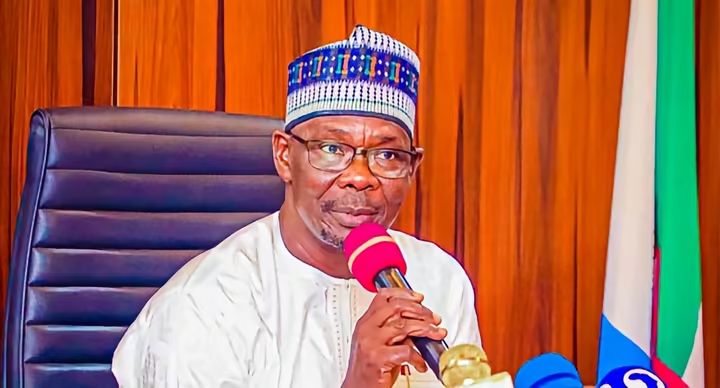
LAFIA, NIGERIA — The Nasarawa State Government says it has attracted more than $2.3 billion in investment commitments between 2022 and 2025, crediting business environment reforms, infrastructure development and stronger public-private partnerships with improving the state’s appeal to domestic and international investors.
The figure was disclosed by the Managing Director and Chief Executive Officer of the Nasarawa State Investment and Development Agency (NASIDA), Ibrahim Adamu Abdullahi, during the unveiling of the state’s third investment summit in Lafia.
Abdullahi said the investment drive had gained momentum since the state organised its inaugural investment summit in 2022, providing a platform to showcase economic opportunities, engage investors and promote private-sector participation in development projects.
He explained that more than $500 million of the reported investment commitments had already been actualised, indicating that a portion of the proposed projects had moved beyond the planning and commitment stages.
According to the agency, the investment portfolio covers important sectors of the state economy, including agriculture, solid minerals, infrastructure, manufacturing and energy.
The announcement forms part of Governor Abdullahi Sule’s broader economic reform programme, which began in 2019 and seeks to strengthen government institutions, simplify business regulations, improve infrastructure and position Nasarawa as a competitive investment destination.
Sule said his administration had spent the past seven years pursuing reforms aimed at removing obstacles to business operations and creating an environment where investors could confidently commit capital to long-term projects.
The governor maintained that the state’s investment strategy was designed to unlock its economic potential through private-sector partnerships rather than relying exclusively on government funding for development.
He also emphasised the importance of sustaining the reforms beyond his administration, particularly as the state approaches another political transition in 2027.
The third Nasarawa Investment Summit, held in May 2026 under the theme, Bold Transitions: Building a Legacy for a Sustainable Future, was designed to deepen investor engagement and establish mechanisms for maintaining economic policy continuity.
The summit followed two previous editions: the inaugural gathering in 2022, themed Diamond in the Rough, and the 2024 edition, which focused on an Industrial Renaissance.
One of the major objectives of the latest summit was to secure a broader commitment from political leaders, investors, development partners and public institutions to preserve the state’s economic reforms irrespective of changes in political leadership.
A major outcome was the Lafia Declaration, a voluntary commitment intended to encourage policy continuity and institutionalise reforms beyond the tenure of the current administration.
The state government also presented several investment opportunities with proposed public-private partnership structures. These included a ₦100 billion infrastructure fund, gold and lithium processing plants, an agro-industrial hub, a technology hub at Nasarawa Technology Village and small hydropower projects at Farin Ruwa and Doma.
Other proposed projects included an embedded electricity network, the Nasarawa Gas Master Plan and the Aso-Pada-Nyanya Toll Road Project.
The investment agency said the projects were structured to attract private capital, expand productive capacity and address infrastructure gaps that could otherwise limit economic growth.
Nasarawa’s solid mineral resources and agricultural potential are central to its investment proposition. The state possesses deposits of minerals including lithium, lead-zinc, barite, coal, gemstones and iron ore, alongside extensive agricultural land suitable for commercial farming and agro-processing.
Its proximity to the Federal Capital Territory also provides access to a large consumer market and creates opportunities for industrial development, logistics, housing and other commercial activities.
To improve the business environment, the administration has introduced measures including harmonised taxes, digitised regulatory processes, improved land administration and investment facilitation services.
The state has also strengthened its public-private partnership framework through the development of a PPP manual, fiscal commitment and contingent liability guidelines, and a disclosure portal designed to improve transparency in project delivery.
These measures are intended to reduce uncertainty for investors, improve procurement procedures and establish clearer responsibilities between government and private-sector partners.
The investment agency’s official portfolio also identifies projects at different stages of preparation, development and implementation, including industrial parks, student accommodation, waste management facilities and manufacturing investments.
Despite the reported inflows, the distinction between investment commitments and actualised investments remains important. The more than $2.3 billion figure represents the cumulative investment attracted between 2022 and 2025, while the agency says over $500 million has already been realised.
The conversion of outstanding commitments into completed projects, operational businesses and sustainable employment will therefore be a major measure of the state’s investment performance.
For residents, the ultimate test will be whether the investment drive translates into improved electricity supply, better roads, stronger agricultural value chains, industrial expansion and more employment opportunities.
As Nasarawa prepares for the 2027 political transition, the government faces the challenge of ensuring that the policies and partnerships responsible for attracting investors remain stable.
The Sule administration believes its seven-year reform programme has laid the foundation for long-term economic growth. Whether the next administration can preserve that momentum will determine how much of the state’s investment potential becomes lasting economic progress.