


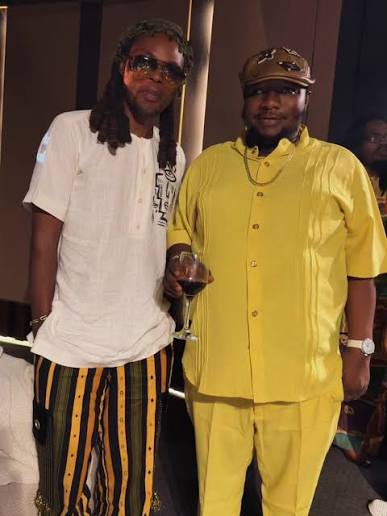
Nigerian rapper and music executive Olamide Adedeji has spoken out in defence of Yoruba cultural identity, insisting that indigenous traditions should not automatically be labelled evil or associated with diabolical practices.
The award-winning musician made the remarks during a private screening of Ose Dudu (The Black Soap), a Yoruba-language film produced by actress and filmmaker Tayo Sobola, popularly known as Sotayo Gaga.
The screening, held at The Pod by Nile Luxury Cinemas in Lagos, attracted attention after videos of Olamide addressing guests circulated on social media.
Dressed in a colourful multicoloured adire outfit, the rapper used the occasion to challenge what he described as the demonisation of African cultural practices and traditions.

“Our culture and tradition is not diabolical and it is not to be demonized. And we’re proud of who we are, where we’re coming from and everything about our heritage, tradition and culture,” he said.
He further affirmed his Yoruba identity, declaring that he was proud of his roots and encouraging people to embrace their cultural heritage.
His remarks attracted positive reactions online, with several social media users praising him for openly expressing pride in his background and supporting the preservation of indigenous identity.
The appearance also reflects a familiar aspect of Olamide’s public image. Throughout his music career, the rapper has consistently incorporated Yoruba expressions, language and cultural references into his songs, helping to establish indigenous-language music as a major part of contemporary Nigerian popular culture.
Beyond his music, his influence as the founder of YBNL Nation has helped bring attention to younger Nigerian artistes, several of whom have also embraced indigenous languages and local cultural expressions in their work.
The event was organised around Ose Dudu, a film produced by Sotayo Gaga under her production outfit. The movie features veteran actress Bimbo Akintola alongside Sotayo Gaga, Fatai Odua and other performers.
Titled after black soap, a familiar product in Yoruba communities with traditional uses, the film explores cultural beliefs and practices through a dramatic storyline. Its subject matter has also generated conversations about the way indigenous traditions are interpreted, represented and sometimes misunderstood.
Sotayo Gaga has continued to explore culturally rooted storytelling through her recent film projects, including Osun Dagbonu, which examined themes surrounding African spirituality, religious beliefs and cultural identity.
The filmmaker has previously spoken about her interest in producing stories that reach ordinary audiences through digital platforms, rather than relying exclusively on conventional cinema distribution.
Olamide’s presence at the Ose Dudu screening has therefore added another layer to the conversation surrounding the film, particularly as his comments touched on the broader issue of how African traditions are perceived in modern society.
His statement has also reignited discussions about the difference between preserving cultural heritage and accepting every traditional practice without question. For many supporters, respecting indigenous identity means understanding the history and meaning of cultural practices instead of dismissing them through stereotypes.
As clips from the screening continue to circulate, Olamide’s message has resonated with fans who believe that African culture deserves to be represented with pride, understanding and respect.




