



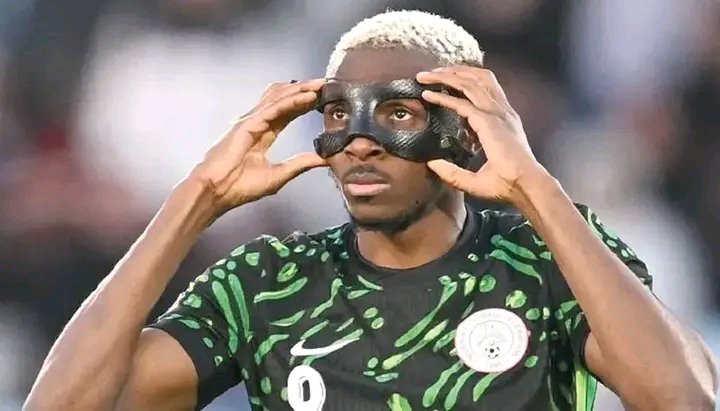
Former Nigerian international Mutiu Adepoju has stirred fresh debate in the national football space after stating that Victor Osimhen may not yet possess the ideal qualities required to serve as captain of the Super Eagles, despite acknowledging the striker’s importance to the team.
Adepoju, a respected ex-midfielder who enjoyed a distinguished career with the Super Eagles and Spanish club Real Madrid, expressed his views amid ongoing discussions about Nigeria’s leadership structure in the national team. His comments have reignited conversations about who should permanently lead the Super Eagles as the team continues its transition under a new generation of players.
While stressing that Osimhen remains one of Nigeria’s most valuable players, Adepoju emphasized that captaincy demands more than goal scoring ability and on field influence.

Leadership Beyond Goals and Talent
According to Adepoju, the role of a national team captain goes beyond performance on the pitch. He explained that true leadership requires emotional balance, strong communication skills, and the ability to manage pressure situations without losing composure.
He noted that while Osimhen brings energy, passion, and commitment to the Super Eagles, those attributes alone do not automatically translate into captaincy suitability.
Adepoju’s remarks reflect a broader philosophical debate in football about whether the best player in a team should also serve as its leader, or whether leadership should be assigned to individuals with calmer temperament and stronger organizational influence.
Osimhen has occasionally worn the captain’s armband in the absence of senior players, but his leadership style has continued to attract mixed opinions among analysts and former internationals.
Victor Osimhen’s Rise to Stardom
Victor Osimhen’s journey to becoming Nigeria’s most prominent striker in recent years is widely regarded as one of the most inspiring stories in African football.
Born in Lagos, Nigeria, Osimhen grew up in a modest environment where football served as both a passion and a potential escape from hardship. His early life was marked by resilience, determination, and a strong desire to succeed in professional football.
He first gained international attention during the FIFA U17 World Cup, where he finished as top scorer and helped Nigeria lift the trophy. That tournament served as a launching pad for his professional career.
Osimhen’s performances eventually earned him a move to Europe, where he signed for German club VfL Wolfsburg before later moving to Belgium and France, where he played for Charleroi and Lille respectively.
At Lille, Osimhen’s explosive pace, aerial strength, and clinical finishing abilities attracted attention from top European clubs, eventually leading to a high profile transfer to Italian side Napoli.
At Napoli, he developed into one of the most feared strikers in world football, playing a crucial role in the club’s historic Serie A title win, their first in over three decades.
His performances earned him the African Footballer of the Year award, cementing his status as one of the continent’s elite players.
Super Eagles Leadership Structure in Transition
The debate over Osimhen’s captaincy comes at a time when the Super Eagles are undergoing a leadership transition.
With several senior players gradually moving out of the national team setup, new leaders are expected to emerge within the squad.
Midfielder Wilfred Ndidi has often been mentioned as a natural leader within the team due to his calm personality, consistency, and experience in European football. Players such as Alex Iwobi and Moses Simon are also considered part of the leadership group.
Osimhen, meanwhile, represents the new generation of Super Eagles stars who are expected to carry the team forward in major international competitions.
While he is not the official captain, his influence in attack and his emotional presence on the pitch often make him one of the most visible figures in the squad.
Passion Versus Composure Debate
One of the central points raised in Adepoju’s comments is the balance between passion and composure.
Osimhen is widely known for his intense playing style, emotional reactions, and high energy approach to matches. These qualities have made him a fan favorite and a relentless competitor on the field.
However, critics argue that such emotional intensity can sometimes make it difficult for a player to maintain the calm authority expected of a captain, especially during high pressure situations.
Supporters of Osimhen counter that his passion is precisely what makes him an effective leader in terms of motivation and performance drive.
They believe leadership in modern football is not limited to calmness alone but also includes the ability to inspire teammates through actions and commitment.
Osimhen’s Importance to Nigeria
Despite the debate surrounding his captaincy suitability, there is no disagreement about Osimhen’s importance to the Super Eagles.
The Galatasaray striker remains Nigeria’s most potent attacking threat and one of the most consistent goal scorers in international football.
His work rate, physical presence, and ability to deliver in crucial moments have made him indispensable to the national team.
Even critics of his captaincy acknowledge that Osimhen is a central figure in Nigeria’s quest for success in upcoming international tournaments.
A Debate That Reflects Nigerian Football Culture
Adepoju’s comments have once again highlighted a recurring theme in Nigerian football, where discussions about leadership often generate strong opinions among fans, former players, and analysts.
The debate reflects broader questions about what qualities define a captain in modern football and how national teams should balance experience, temperament, and performance.
As the Super Eagles continue to evolve under new coaching structures and a changing player base, the question of leadership will likely remain a key talking point.
Mutiu Adepoju’s remarks have added a new dimension to the ongoing conversation about Victor Osimhen’s role in the Super Eagles setup.
While the striker’s talent and importance to the team are unquestionable, the discussion around his captaincy suitability highlights the complex nature of leadership in football.
As Nigeria prepares for future international challenges, the Super Eagles will continue to rely on Osimhen’s goals and influence, even as debates about who should permanently wear the armband continue.




