


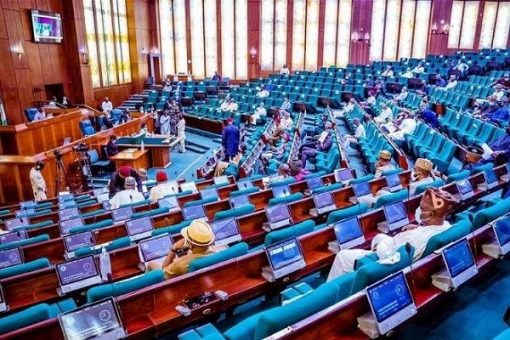
The House of Representatives is considering a bill seeking to prohibit landlords, estate agents and property managers in the Federal Capital Territory (FCT) from demanding more than one year’s rent in advance from tenants.
The proposed legislation also provides for fines of up to ₦5m for individuals who knowingly violate the restriction, while corporate offenders could face penalties of up to ₦20m.
The Federal Capital Territory Rent Regulation and Tenants’ Protection Bill, 2026, sponsored by Paul Nnamchi and Ahmed Doro, seeks to regulate rental transactions, protect tenants from unlawful demands and establish a framework for resolving disputes in Abuja’s housing market.
Under the bill, landlords and their agents would be prohibited from demanding, receiving or compelling tenants to pay more than 12 months’ rent upfront as a condition for securing or renewing accommodation.

The proposal also seeks to prevent landlords from circumventing the restriction through compulsory service charges, separate agreements, repeated tenancy renewals or other arrangements designed to force tenants to pay more than one year’s rent in advance.
Bill allows voluntary advance payments
The proposed law would, however, permit tenants to voluntarily pay rent for more than 12 months where the arrangement is initiated without coercion, threats, discrimination or retaliation.
Such agreements would be required to be documented in writing.
The bill also proposes that landlords and authorised agents provide written tenancy agreements before or at the commencement of a tenancy.
The agreements would specify the rent payable, payment schedule, tenancy duration, refundable deposits, additional charges and the respective rights and obligations of landlords and tenants.
During deliberations on the issue, Emmanuel Ukpong-Udo, who sponsored the motion, said landlords in Abuja commonly demand at least one year’s rent upfront, with some requiring two years’ payment.
He argued that Nigeria needed a more inclusive rental system that would ease the housing burden on working-class families and provide affordable payment options for low- and middle-income earners.
Ukpong-Udo also highlighted the difficulties faced by civil servants and artisans who live in satellite towns because of the high cost of accommodation in Abuja.
He cited the cost of a one-bedroom self-contained apartment at between ₦1m and ₦1.5m, while two-bedroom apartments reportedly cost between ₦2m and ₦3m at the time.
He further expressed concern about additional expenses, including agency and legal fees, service and maintenance charges, and caution fees, which increase the amount tenants must raise before securing accommodation.
Proposed authority to order refunds
The bill seeks to establish the Federal Capital Territory Rent Regulation and Tenants’ Protection Authority to oversee rental transactions and enforce compliance.
The proposed authority would investigate complaints, monitor landlords and estate agents, facilitate dispute resolution and order refunds for unlawful rental payments.
Where the authority determines that a tenant has made a payment in violation of the proposed law, it could direct the landlord or agent to refund the unlawful amount within 30 days of receiving the relevant order.
The legislation also proposes fines ranging from ₦500,000 to ₦5m for individuals convicted of knowingly violating the advance-rent restriction.
Corporate offenders could face fines of between ₦5m and ₦20m, while anyone convicted of failing to comply with a valid notice issued by the authority could be fined up to ₦1m.
The bill would preserve te right of landlords and tenants to seek judicial redress. Anyone dissatisfied with a decision of the proposed authority could appeal to the FCT High Court within 30 days.
Previous efforts to regulate rent
The proposal follows earlier efforts by lawmakers to address rising accommodation costs and excessive rent demands.
In October 2025, the National Assembly proposed limiting rent increases nationwide to 20 per cent and called for government enforcement, although the implementation of that proposal has not been verified.
In May 2024, the House of Representatives also mandated its Committee on the FCT to examine the implementation of monthly rent payments in Abuja, with a view to promoting a more inclusive rental system and curbing arbitrary increases.
If enacted, the new bill would introduce stricter rules on advance rent payments and establish an authority with powers to investigate complaints, order refunds and impose penalties for violations.




