


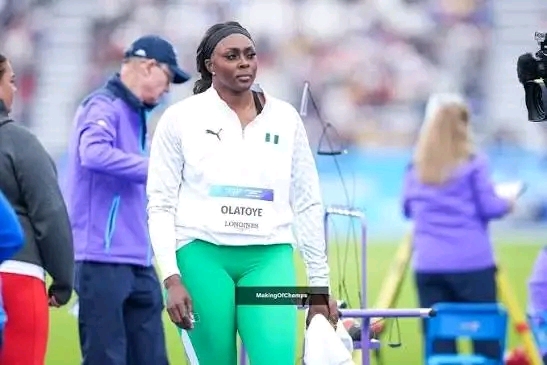
Nigeria’s hopes of adding another medal to its athletics tally at the 2026 Commonwealth Games suffered a setback on Tuesday after experienced hammer thrower Sade Olatoye finished outside the medal positions in the women’s final held in Glasgow.
The Nigerian athlete delivered a determined performance throughout the competition but ultimately ended the event in eighth place, leaving her short of the podium in one of the most competitive field events of the Games.
Olatoye entered the final with confidence after successfully advancing through the qualification round, where she demonstrated the consistency that has made her one of Nigeria’s leading field athletes over the years. Expectations were high that she could secure the country’s first Commonwealth Games medal in the women’s hammer throw, but the final proved far more demanding.

Competing against a field packed with elite throwers from across the Commonwealth, Olatoye struggled to produce the long-distance throws required to challenge for a medal. While she remained composed throughout the competition, her best effort was not enough to move into the top three as several rivals recorded stronger marks.
The event highlighted the increasing standard of women’s hammer throwing globally, with athletes consistently producing world-class performances under pressure. Olatoye fought hard until her final attempt but was unable to improve her standing as the competition progressed.
Despite the disappointment, the result should not overshadow the remarkable journey of the Nigerian thrower, who has been one of the country’s most reliable representatives in field events. Over the years, she has claimed multiple national titles and represented Nigeria at major international championships, including the Olympic Games, World Championships, African Championships and previous Commonwealth Games.
Her consistent presence at global competitions reflects years of dedication and commitment to an event that receives far less attention than track races but demands enormous technical skill, physical strength and mental discipline.
For Team Nigeria, Olatoye’s outing serves as a reminder of the fine margins that separate medal winners from the rest of the field in elite athletics. Even small improvements in distance can make the difference between standing on the podium and finishing outside the medal positions.
Although the hammer throw campaign ended without silverware, Nigeria’s athletics team still has several opportunities to challenge for medals in Glasgow. Sprint stars, middle-distance runners, jumpers and relay teams remain in contention as the athletics programme continues.
The country’s athletes have already shown encouraging signs during the championships, with several competitors advancing to finals and others reaching the podium in different disciplines. Those performances have reinforced optimism that Team Nigeria can conclude the Games with a respectable medal haul.
Olatoye’s performance also reflects the broader challenge facing Nigerian field athletes, who often compete against opponents with access to advanced training facilities, modern equipment and year-round competitive opportunities. Despite these obstacles, Nigerian athletes continue to qualify for major championships and represent the nation with distinction.
Athletics experts believe continued investment in coaching, sports science and grassroots development will strengthen Nigeria’s competitiveness in technical field events such as the hammer throw, discus and shot put. Such improvements could help bridge the gap between qualification and medal-winning performances at future international competitions.
For Olatoye herself, the Glasgow result is unlikely to define her career. With her experience and determination, she remains one of Nigeria’s most accomplished field athletes and is expected to continue competing at the highest level in upcoming international events.
As the Commonwealth Games move into their final stages, Nigerian supporters will be hoping the disappointment in the hammer throw will be offset by stronger performances from the country’s remaining athletes, many of whom are targeting podium finishes in both track and field events.
While Olatoye leaves the competition without a medal, her commitment and resilience remain an inspiration for aspiring athletes across Nigeria. Her appearance in another major international final demonstrates the consistency required to compete among the world’s best, even when the medals ultimately prove elusive.




