


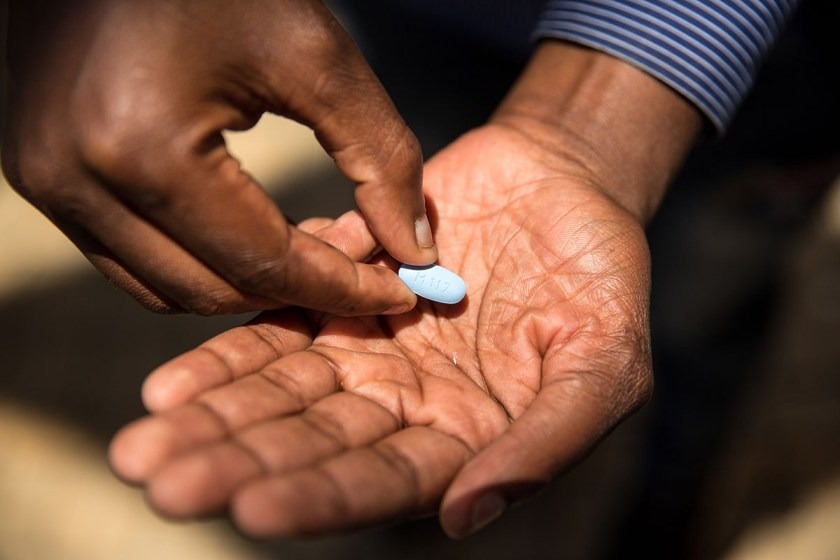
At least 24 HIV-positive sex workers have died in Kenya after losing access to treatment and support following cuts to US aid, according to frontline health workers and an AFP investigation.
The victims, including 36-year-old Judy, reportedly had been managing their condition before US funding cuts disrupted services targeting sex workers and other vulnerable groups.
Health workers and non-governmental organisations warned that the actual number of deaths could be significantly higher, while a rise in HIV infections among sex workers is raising concerns about further transmission in the wider population.

The United States has historically been Kenya’s largest health donor. However, the Trump administration restructured US assistance and dismantled much of the United States Agency for International Development’s operations, affecting programmes that provided HIV prevention and treatment services.
A July 2026 report by the Foundation for AIDS Research, amfAR, found that 73 per cent of US-funded organisations had been forced to end services to key populations, including sex workers, LGBTQ communities and people who use drugs.
Kenya previously had dozens of clinics specifically serving sex workers, providing antiretroviral drugs, condoms and other preventive care. Many of the clinics have since closed.
Kenyan authorities estimate that about 285,000 women are engaged in sex work across the country, with an HIV prevalence rate of 27.5 per cent among them.
UNAIDS Executive Director Winnie Byanyima told AFP that decades of progress in tackling HIV were at risk.
“This is the most serious disruption in the HIV response since the world came together to fight this disease,” she said.
Treatment disrupted
Nearly 1.5 million people, representing about 3.2 per cent of Kenya’s population, are living with HIV.
Judy was diagnosed with HIV in 2017 and had received support from the Bar Hostess Empowerment and Support Programme, an NGO that provides services to sex workers.
Her friend Diana, also a sex worker, said Judy depended on the organisation for medication, condoms and other assistance while living in Nairobi’s Mathare slum.
Judy, who had four children, sometimes earned as little as 50 or 100 Kenyan shillings from sex work or accepted food in exchange for sex.
She could not afford transportation to the organisation’s clinic and was left without regular support after its outreach programme lost US funding and its workers were laid off.
Sex workers interviewed for the report said they were reluctant to seek treatment at public hospitals because of the stigma associated with their profession and HIV status.
Judy eventually stopped taking her medication and her health deteriorated.
“She had sores… Her skin was so rough,” Diana said.
According to BHESP, Judy was one of three HIV-positive sex workers from Mathare who died in recent months after stopping treatment.
Daisy Kwala, the organisation’s programmes director, described the impact of the US funding cuts as devastating.
“The stop-work order from the US administration, for us, is a kill order,” she said.
BHESP operated two centres funded by USAID. One closed in September 2025, while the second shut down in September 2026.
Of the 14,500 sex workers previously treated at the two facilities, about 12,000 have lost contact with the organisation, including 2,300 who were HIV-positive.
New infections rise
Kenya had recorded significant progress in its HIV response, with new infections falling from about 110,000 in 2005 to 13,936 in 2025, according to Douglas Bosire, head of the National Syndemic Diseases Control Council.
However, he warned that the gains could be reversed if sex workers could not access targeted services.
The Sex Workers Outreach Programme, a Nairobi-based NGO monitoring about 45,000 sex workers, recorded a 48 per cent increase in new HIV infections during the first half of 2026 compared with the same period in 2024.
Half of its clinics have closed because of the funding cuts.
BHESP also reported a 14-fold increase in infection rates at its remaining centre in Roysambu between the corresponding quarter of 2024 and 2026.
Nurse Sharon Lagat said reduced access to regular testing and treatment meant patients were arriving at health facilities with more advanced infections and higher viral loads.
“They come for treatment late, and before they come, they will have transmitted more HIV to their customers in the community,” she said.
“These customers… are our parents, our husbands, our friends, so definitely at the end of the day, the virus will reach our homes.”
Dr Joshua Kimani, clinical and research director of SWOP, said he feared Kenya could return to the situation of the 1990s, when HIV infections were widespread.
He recalled 1998 as his “worst year”, saying he had earned the nickname “Dr Death” because he had to tell patients to return home when little could be done for them.
“I don’t want to go back there,” he told AFP.
Kimani said increased infections among sex workers would eventually affect the wider population.
“We cannot treat ourselves out of this epidemic. We need prevention,” he said.
Bosire said the Kenyan government could only afford to provide about 200 million of the estimated 500 million condoms required for free distribution each year.
Sex workers often cannot afford condoms, which cost about 100 Kenyan shillings for a pack of three.
Kwala said many would continue working despite the shortage, potentially increasing the risk of transmission.
In Kenya’s coastal region, the Coast Sex Workers Alliance reported 14 deaths among HIV-positive sex workers who lost access to treatment.
At least five others have died in western Kenya, according to the Kisumu Sex Workers Alliance, while Survivors of Busia reported two deaths near the Ugandan border.
Dorothy Agalla, director of the Kisumu organisation, said none of the 25 USAID-funded clinics serving sex workers in western Kenya remained operational.
She said fewer than 1,000 of the organisation’s 20,000 registered sex workers were now receiving treatment at public health facilities.
US rejects responsibility
Cecilia, a sex worker, mourned her friend Beatrice, who stopped taking her antiretroviral medication after outreach workers stopped visiting her.
Beatrice, 43, died in August 2025. Her sister, Rosemary, who was also a sex worker living with HIV, died a year later.
Cecilia appealed to US President Donald Trump to restore the previous funding, saying the affected communities wanted the services back.
The Trump administration’s Deputy Assistant Secretary for Africa, Frank Garcia, visited Nairobi on September 9 to promote a new health partnership based on what the administration described as “trade not aid”.
Garcia rejected claims that US policy was responsible for the deaths of sex workers.
“I completely push back on the narrative that… the most generous nation in the world with regard to AIDS research, AIDS funding, and AIDS distribution of life-saving methodologies is in any way responsible for that,” he told AFP.




