


The South African government has withdrawn a directive on processing asylum applications following violent clashes between anti-immigration protesters and foreign nationals that left vehicles burnt and foreign-owned shops looted in parts of the country.
The Department of Home Affairs announced the withdrawal on Friday, October 9, 2026, after the directive triggered an overwhelming response at refugee reception offices and heightened tensions surrounding immigration.
According to the department, the implementation process had produced serious consequences, including pressure on its facilities, risks to the safety of officials and growing threats to public order. The government said it would begin a fresh process to determine how to implement the relevant Constitutional Court ruling.

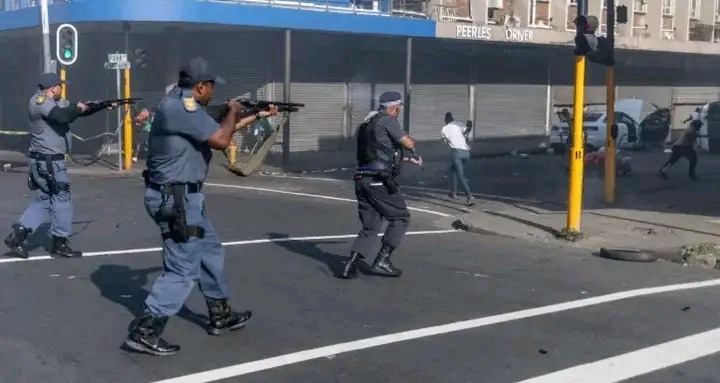
The development came a day after violence erupted in Soweto, Johannesburg, and Durban, where protests against illegal immigration escalated into attacks on property and clashes involving foreign nationals.
In Durban, a major coastal city in eastern South Africa, at least 14 vehicles were set ablaze. A municipal building was also reportedly set on fire, while police arrested three foreign nationals over an alleged assault on a South African protester.
In Soweto, at least 10 vehicles were torched, and small convenience stores were looted during the unrest. The incidents raised fresh concerns about the safety of migrants and the potential for anti-immigration demonstrations to escalate into widespread violence.
The withdrawn directive was issued to refugee reception offices following a Constitutional Court ruling that certain procedural barriers preventing asylum seekers from accessing the application system were unconstitutional.
The directive was intended to help the department implement the court’s decision by allowing affected applications to be processed. However, hundreds of people reportedly visited refugee reception offices within days, placing significant pressure on facilities that were already facing operational challenges.
In its statement, the Department of Home Affairs said the directive had been issued as an operational measure to support compliance with the court order. It maintained that the decision was not politically motivated.
The department explained that the scale of the response and the resulting security concerns had created circumstances that required a fresh approach.
Officials also reaffirmed the government’s commitment to the rule of law and respect for the judiciary, stressing that a new operational process would be developed to comply with the court’s ruling in a sustainable manner.
The withdrawal does not mean that the Constitutional Court’s ruling has been overturned. Rather, the department says it will reconsider how to implement the judgment while addressing the practical and security challenges that emerged during the initial process.
The controversy has exposed the difficult balance South African authorities face between enforcing immigration regulations, protecting public safety and ensuring that people seeking asylum can access the procedures provided under the law.
South Africa has long attracted migrants from across the African continent because of its comparatively large economy and employment opportunities. However, persistent unemployment, inequality and competition over limited public resources have contributed to recurring tensions over immigration.
Anti-immigration groups have frequently accused foreign nationals of taking jobs, placing pressure on public services and contributing to crime. Such allegations have fuelled protests, although claims that migrants are responsible for these broader economic and social problems are disputed.
The latest violence comes amid a renewed wave of anti-migrant demonstrations and growing political attention to immigration ahead of South Africa’s local government elections scheduled for November 4, 2026.
The country has experienced repeated outbreaks of xenophobic violence over nearly two decades. These incidents have sometimes resulted in deaths, destruction of businesses and the displacement of foreign residents.
Earlier violence this year reportedly claimed the lives of at least four foreign nationals, according to South African police figures, although some African governments reported higher death tolls.
Previous outbreaks have also forced migrants to leave South Africa, with citizens of Zimbabwe, Malawi, Ghana, Kenya, Lesotho, Mozambique, Nigeria and Uganda among those affected. In some cases, foreign governments arranged repatriation efforts, creating diplomatic tensions with Pretoria.
The latest clashes have once again raised concerns about the treatment of African migrants living and working in South Africa, as well as the potential consequences for relations between the country and its neighbours.
For foreign nationals whose asylum applications remain unresolved, the withdrawal of the directive introduces further uncertainty about how and when their cases will be processed. The department’s planned fresh approach will therefore be closely watched by asylum seekers, migration organisations and governments across the continent.
Authorities face the immediate task of restoring calm in affected communities while preventing further attacks on people and property. They must also determine how to implement the court’s ruling without overwhelming refugee reception offices or placing staff and applicants at risk.
The government has not announced a final replacement procedure in the statement concerning the withdrawal. Until a new operational approach is established, questions remain about how the affected asylum applications will be handled.
The unfolding situation highlights the wider challenge of addressing immigration concerns without allowing misinformation, economic frustration or political tensions to fuel violence against foreign nationals.




