


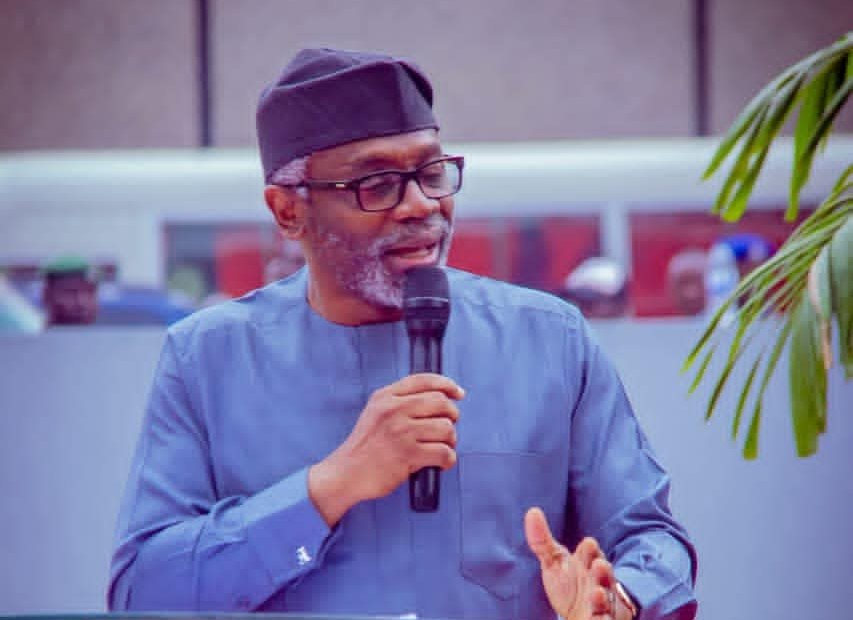
The Federal Government says the National Policing Bill is 90 per cent complete and is expected to be transmitted to the National Assembly within two weeks as part of efforts to establish state police across Nigeria.
The Chief of Staff to President Bola Tinubu, Femi Gbajabiamila, disclosed this following a steering committee meeting at the State House in Abuja on Thursday, October 15, 2026.
The update was contained in a statement issued by the Special Adviser to the President on Information and Strategy, Bayo Onanuga.
Gbajabiamila said the Presidential Working Group would hold one final meeting to address outstanding issues and incorporate observations from state governors before submitting the bill to the National Assembly.

“The National Policing Bill is more or less ready for transmission to the National Assembly. We will probably have one more meeting after this to cross the t’s and dot the i’s and make sure every area is covered. So, we are 90% ready,” he said.
He added that the remaining work, including consideration of recommendations from governors, was expected to be completed within about a week.
“The governors have one or two observations, and we should be ready in about a week or so,” he stated.
Gbajabiamila described the proposed legislation as the most consequential bill of the Tinubu administration, noting that deliberations had been ongoing since the steering committee began work on August 3, 2026.
The meeting was attended by Nigeria Governors’ Forum Chairman and Kwara State Governor AbdulRahman AbdulRazaq; Ogun State Governor Dapo Abiodun; Kaduna State Governor Uba Sani; and Inspector-General of Police Tunji Disu.
Representatives of the Attorney-General of the Federation, the Nigerian Bar Association and the National Security Adviser also attended, alongside other members of the working group.
The National Policing Bill is part of broader constitutional and security reforms aimed at decentralising law enforcement and allowing states to establish their own police services alongside the federal police.
The proposed framework envisages a two-tier policing system comprising a Federal Police Service and State Police Services.
On June 24, 2026, the Senate approved a constitutional amendment seeking to permit the establishment of state police across the federation.
The House of Representatives followed on July 23, approving the amendment with 311 lawmakers voting in favour.
However, the constitutional amendment still requires approval from at least 24 of Nigeria’s 36 state Houses of Assembly before it can proceed towards becoming law.
The development comes amid concerns over the pace of state-level ratification, with reports indicating that only about six state assemblies had approved the amendment.
The proposed reform is intended to strengthen local policing capacity and improve responses to security threats, including banditry, kidnapping, terrorism and communal violence.
President Tinubu inaugurated the Presidential Working Group on the National Policing Bill on July 7, 2026, appointing Gbajabiamila as its chairman.
The group was tasked with developing the legal and operational framework needed to implement state policing once the constitutional amendment process is completed.
Its responsibilities include establishing uniform policing standards, setting conditions for states seeking to establish police services and defining how federal and state police agencies would coordinate their operations.
The proposed legislation is also expected to provide for accountability, human rights protections and funding requirements for the establishment and management of state police services.
According to the Presidency, the aim is to ensure that the necessary legislation is ready for implementation once the constitutional requirements have been met.
The push for state police comes amid persistent security challenges across Nigeria and growing calls for a policing structure that can respond more effectively to local threats.




