


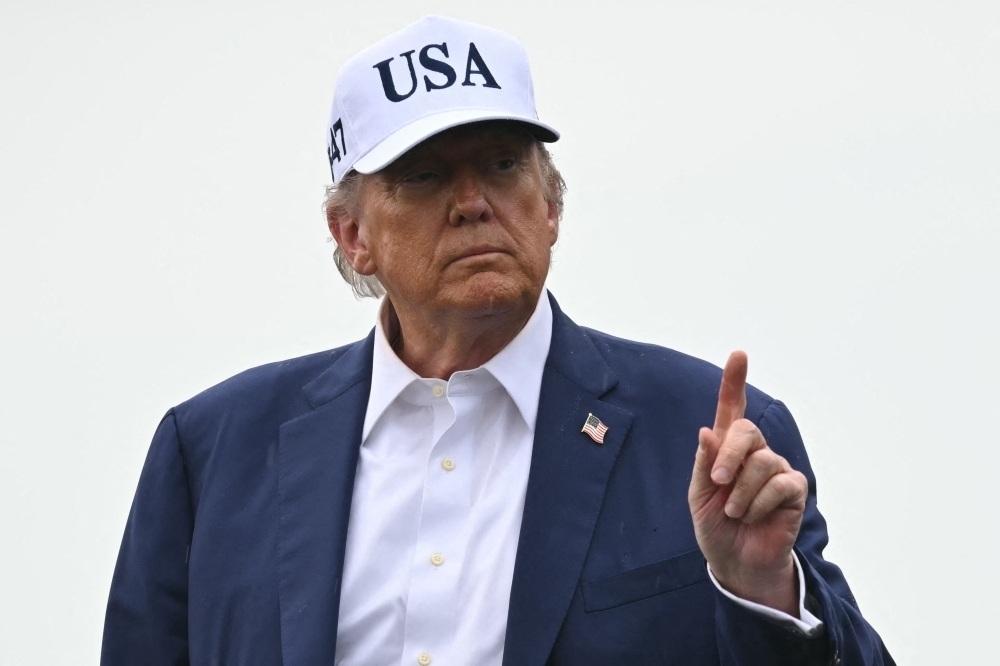

The world is worried that we may have returned to the era of nuclear race after President Donald Trump instructed the United States Department of War to start testing Nuclear Weapons.
President Trump himself confirmed same in a post on Truth Social, a social media platform he personally owns.
Trump’s pronouncement followed the recent successful tests conducted by Russia and China.
He was quoted as saying that it would be on an “equal basis” with Russian and Chinese tests.
“Because of other countries testing programs, I have instructed the Department of War to start testing our Nuclear Weapons on an equal basis.
“That process will begin immediately,” Trump said in the post on Truth Social.
With that pronouncement, multiple media sources suggest that the United States may resume testing nuclear weapons for first time in 30 years.
One source observed that “it appeared to suggest the U.S. will resume testing nuclear weapons”.
The White House is yet to issue an official statement on the issue to provide more and clearer details at the moment of this publication.
Another source, however noted: “There was no indication the U.S. would start detonating warheads.
“But the president offered few details about what seemed to be a significant shift in U.S. policy.
“The U.S. military already regularly tests its missiles that are capable of delivering a nuclear warhead.
“But it has not detonated the weapons since 1992 because of a test ban,” the source observed.
In the meantime, though, the executive director of the Washington-based Arms Control Association, Daryl Kimball, has criticized the president’s announcement.
Kimball said that Trump was “misinformed and out of touch” in his pronouncement.
The Ban
The agreement, Comprehensive Nuclear-Test-Ban Treaty (CTBT), effectively stopped world nuclear powers from testing nuclear weapons since 1992.
CTBT was adopted in 1996 by the United Nations General Assembly.
Its purpose was to ban all nuclear explosions — whether for military or civilian purposes in all environments.
This includes underground, underwater, in the atmosphere, and in space.
Before the CTBT, the Partial Test Ban Treaty (PTBT) of 1963 had already banned nuclear tests in the air, space, and underwater.
However, PTBT still allowed underground testing.
In 1992, the United States and other major nuclear powers declared unilateral moratoriums on nuclear testing.
The moratoriums effectively halted such tests even before the CTBT was formally adopted.
Presently, the CTBT has not yet entered into legal force as some key nations like the United States and China.
Other nations yet to ratified the legal treaty include India, Pakistan, and North Korea.
Meanwhile, no major nuclear power has conducted a test since 1992, except North Korea, which did so between 2006 and 2017.
Summary of Such Treaties and Their Impacts
- 1963: Partial Test Ban Treaty (PTBT) Banned atmospheric, underwater, and space tests
- 1992: Nuclear test moratoriums by major powers Stopped most testing in practice
- 1996: Comprehensive Nuclear-Test-Ban Treaty (CTBT) Sought to ban all tests permanently
The CTBT is the treaty designed to enforce the ban.
Meanwhile, the actual cessation of tests since 1992 stems from the voluntary moratoriums by nuclear powers that the CTBT later formalized.
Russia breaks
Trump’s pronouncement was evidently triggered by Russia’s recent tests of her nuclear-powered, nuclear-armed machines.
President Vladimir Putin, on October 28, had announced that Russia successfully tested its nuclear-powered, nuclear-armed unmanned underwater vehicle, the 2M39 Poseidon.
Russia also recently tested her new nuclear-powered cruise missile.
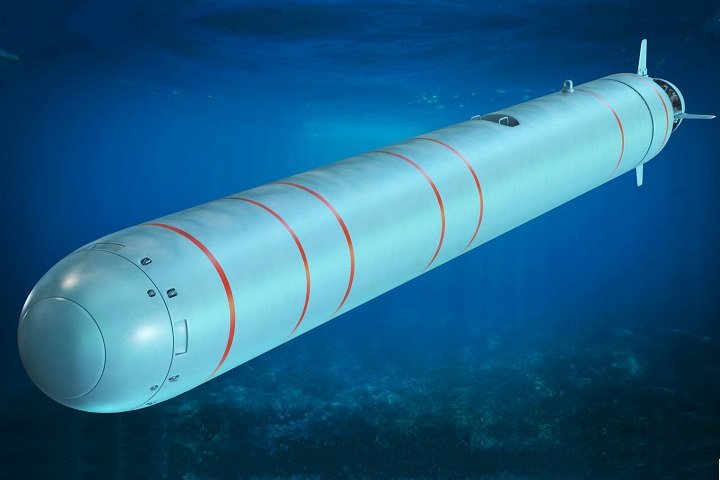
Reacting to the tests, former Russia’s president, Dmitry Medvedev, praised the new ‘Poseidon’ nuclear torpedo .
Medvedev said the Poseidon is capable of triggering radioactive tsunamis and could be “considered a true doomsday weapon.”
Putin, on his part, claimed it is “invincible” to defences, with an almost unlimited range and unpredictable flight path.
In another recent development, Russia said it will withdraw from the 25-year agreement with the US to dispose of plutonium, used to create nuclear weapons.
China abstains
There is no evidence that China recently conducted a live nuclear-explosive weapons test, be it underground or atmospheric nuclear detonation.
Some reports, however, indicate that China conducted a non-nuclear explosive device test in April 2025.
This is a hydrogen-based device using hydrogen-storage materials, but no nuclear material.
China is actively testing and modernising various strategic systems—missile launches and non-nuclear explosive devices, but not a full nuclear weapons test.
China did test-launch an intercontinental ballistic missile (ICBM) with a dummy warhead into the Pacific in September 2024.
However, the launch was a missile launch, not a nuclear explosion.
China’s foreign ministry reaffirmed its support for the CTBT and emphasised that it signed the treaty and is advancing monitoring systems.
A source stated that China has an estimated 600 nuclear warheads, but it did not indicate any recent nuclear test detonation.