
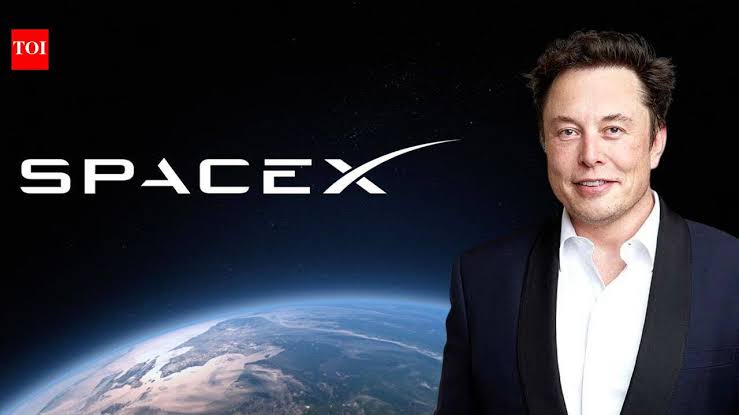
US regulators have approved SpaceX’s proposal to launch up to one million satellites into Earth’s orbit as part of an ambitious plan to establish data centres in space. The decision marks the first regulatory approval of its kind.
The Elon Musk-led company plans to use solar energy to power the satellites, allowing them to process artificial intelligence (AI) workloads in space before transmitting the results back to Earth.
The Federal Communications Commission (FCC) announced the approval on Wednesday, describing the project, named Starmind, as an initiative that could help strengthen America’s rapidly growing AI and advanced computing industry.
The development comes amid increasing resistance from communities across the United States against the construction of large data centres, which consume significant amounts of electricity and water.
SpaceX argues that placing data centres in orbit could provide a more affordable and energy-efficient solution to the rising demand for AI computing power, particularly as traditional infrastructure approaches its limits.
FCC Chairman Brendan Carr welcomed the approval, saying the project represents a major step towards developing the computing infrastructure needed to maintain America’s technological leadership.
He described the initiative as an example of American innovation that could combine the country’s strengths in space exploration and advanced technology while supporting economic growth.
Musk also reacted to the announcement on X, expressing appreciation for the decision and describing the project as a valuable development for both the United States and the rest of the world.
Under the FCC’s approval conditions, SpaceX must begin deploying the satellites by November 2033. The company is expected to have at least 10% of the planned constellation in orbit by November 2035, increasing that figure to 50% by November 2038.
SpaceX has previously indicated that it hopes to launch its first Starmind satellite as early as next year.
However, it remains unclear whether the company intends to deploy the full one million satellites or requested a much larger number of authorisations than it ultimately expects to use.
Similar to SpaceX’s existing Starlink internet network, which operates more than 10,000 satellites, the proposed Starmind constellation will function in low-Earth orbit, at altitudes between 500 and 2,000 kilometres.
The new satellites are expected to connect with Starlink’s existing infrastructure, using the network to transmit processed information back to users and systems on Earth.
According to the FCC, the solar-powered project could bring humanity closer to becoming a Kardashev Type II civilisation, a theoretical stage of development in which a civilisation can harness the full energy output of its host star.
SpaceX is not alone in exploring the possibility of building data centres beyond Earth. Other major technology companies, including Google and Blue Origin, are also investigating similar concepts as potential alternatives to conventional data centre infrastructure.
The growing adoption of artificial intelligence has significantly increased global demand for computing capacity, data storage and processing power. This has triggered a wave of investment in new data centres worldwide.
However, building these facilities on Earth is becoming increasingly challenging. They require vast amounts of land, electricity and water for cooling, while some communities are resisting projects because of their environmental impact and pressure on local resources.
Data centre expansion also became a significant political issue during the US midterm election campaigns earlier this month, with several Democratic candidates promising stricter oversight of new developments.
Despite the potential benefits of orbital data centres, experts have raised concerns about the financial and technical challenges involved. Launching large quantities of equipment into space remains extremely expensive, while protecting, powering and cooling sophisticated computing systems in orbit presents additional difficulties.
The growing amount of space debris is another major concern, as collisions could destroy satellites and damage critical infrastructure. Experts have also warned that an increasingly crowded low-Earth orbit could raise the likelihood of collisions between spacecraft, potentially creating more dangerous debris and sending fragments back towards Earth.
SpaceX’s Starlink network has previously faced criticism over concerns that its rapidly expanding satellite constellation is contributing to congestion in Earth’s orbit.
Musk, however, has rejected claims that Starlink is overcrowding space or restricting access for other satellite operators.
With the approval of Starmind, SpaceX is now moving towards an ambitious vision that could reshape how the world builds and operates computing infrastructure. However, the project’s enormous scale, cost and potential impact on Earth’s orbital environment remain important questions.