


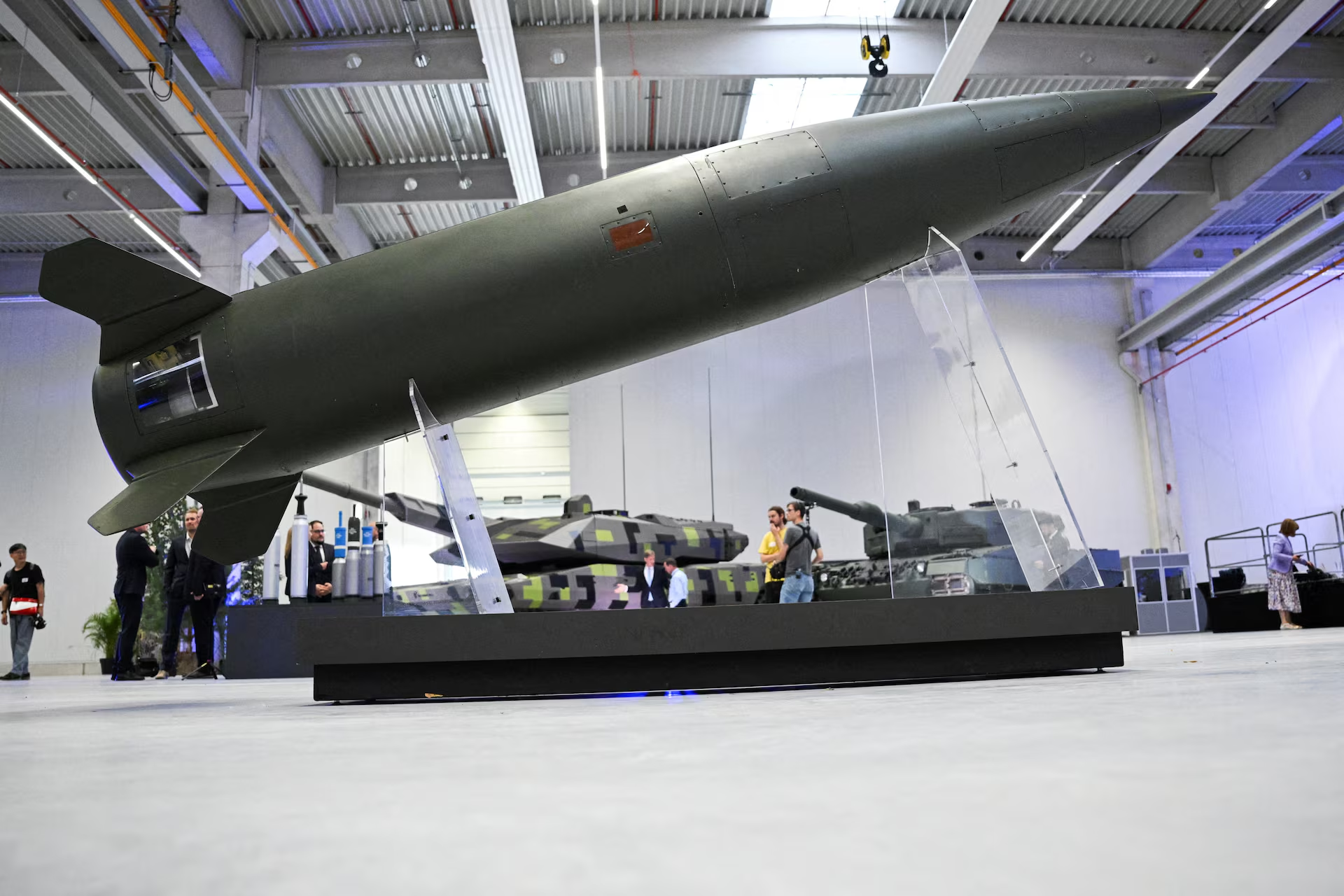
The United States has used almost all of its long-range precision missiles during the five-month war with Iran, raising fresh concerns about the military’s readiness if another major conflict breaks out, according to three sources familiar with the matter.
The weapons include the Army Tactical Missile System (ATACMS) and the newer Precision Strike Missile (PrSM), two of the US military’s most advanced surface-to-surface missiles.
Two of the sources told Reuters that the US has used “virtually all” of its stockpile of both missile systems, although they did not disclose how many remain.
The extensive use of the missiles has not been reported previously.

Each missile costs more than $1 million and is designed to hit targets accurately from long distances without putting pilots at risk.
ATACMS has also been widely used by Ukraine to strike Russian positions, while the PrSM is gradually replacing the older system because of its improved range and capabilities.
The sharp drop in stockpiles means President Donald Trump may have to rely more on manned air strikes if the US resumes large-scale attacks on Iran.
Although Trump initially expected the conflict, which began alongside Israel’s offensive against Iran in February, to end quickly, the war has dragged on much longer than anticipated.
Officials familiar with the situation said the depletion of missile supplies has triggered concerns inside the administration about America’s ability to respond to other potential threats, especially from countries such as China and Russia.
However, another source said the military still has the capacity to replenish its supplies. According to the source, US Central Command has been drawing additional weapons from military stockpiles located in different parts of the world.
Responding to the report, Trump insisted the US still has more weapons than any other country.
“We have far more munitions than anyone in the world and far more than we need,” he said, adding that American defence companies are producing weapons at record levels while expanding their manufacturing capacity.
Military analysts agree that production has increased significantly, particularly for missiles and artillery shells.
However, they warn that current output may still not be enough to sustain a prolonged conflict.
Neither Lockheed Martin, which manufactures the ATACMS, PrSM and THAAD missile defence system, nor Raytheon, maker of the Tomahawk cruise missile and Patriot air defence system, responded to Reuters’ requests for comment.
Pentagon spokesman Sean Parnell dismissed concerns over dwindling supplies, saying the US military remains fully equipped to carry out any mission ordered by the president.
“The US military remains the most powerful in the world and has everything it needs to protect American interests whenever required,” he said.
According to the sources, internal discussions over missile stockpiles have intensified in recent weeks as officials weigh how long the US can continue military operations against Iran without weakening its ability to respond to crises elsewhere.
One source said the heavy use of long-range missiles reflects the administration’s preference for stand-off attacks instead of sending fighter jets on riskier bombing missions.
The concern extends beyond offensive weapons. Military officials have also warned that stocks of defensive systems, including Patriot missile interceptors, are running low.
A recent report by the Center for Strategic and International Studies estimated that the US had used about 65 per cent of its Patriot interceptors and that THAAD interceptor stockpiles had fallen by at least 38 per cent since the war began.
Two sources told Reuters those estimates are broadly consistent with internal government figures.
One source also said the US has used almost half of its global supply of Tomahawk cruise missiles during the conflict, although Reuters could not independently verify that figure.
The Pentagon has not sought congressional approval for the military campaign, a move that has continued to generate debate over the president’s authority to prosecute the war without formal authorisation from Congress.
REUTERS.




