


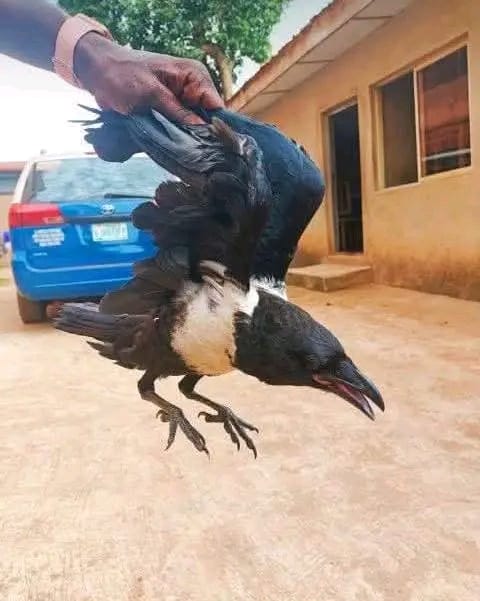
Crows have fascinated humans for centuries, appearing in myths, legends, literature, and scientific research alike. Their glossy black feathers, sharp eyes, and distinctive calls have often associated them with mystery and superstition. However, modern science has revealed that these remarkable birds deserve recognition not for myths, but for their extraordinary intelligence. Far from being ordinary birds, crows are among the smartest animals on Earth, possessing cognitive abilities that continue to surprise researchers around the world.
One of the most astonishing traits of crows is their ability to recognize human faces. Unlike many wild animals that simply react to movement or general appearance, crows can identify specific individuals and remember them for years. Scientific studies have shown that when a person behaves aggressively toward a crow, the bird can store that person’s facial features in its memory and respond differently whenever it encounters them again. This exceptional memory serves as an important survival tool, allowing crows to distinguish between people who pose a threat and those who do not.
What makes this ability even more remarkable is that crows do not keep such information to themselves. They communicate with other members of their group using a variety of vocal calls and behavioral signals. If one crow identifies a dangerous person, it can alert nearby crows, enabling birds that were never present during the original encounter to recognize and react to the same individual. Researchers believe this social learning helps entire crow communities avoid danger and increases their chances of survival in environments where humans are common.
Many people who have had unpleasant encounters with crows often report being followed by noisy birds or hearing loud cawing whenever they appear in a particular area. Although it may seem as though the birds are seeking revenge, scientists explain that crows are actually displaying defensive behavior based on learned experiences. Their impressive long term memory allows them to repeatedly identify individuals they associate with danger, making them one of the few bird species capable of maintaining such detailed recognition over extended periods.

Beyond their remarkable memory, crows are celebrated for their exceptional problem solving abilities. Numerous scientific experiments have demonstrated that they can solve complex puzzles, understand cause and effect, and use tools to obtain food. Some species have been observed selecting sticks to extract insects from tree bark, while others bend pieces of wire into hooks to retrieve food from containers. These advanced skills were once thought to exist only in humans and a handful of highly intelligent mammals such as chimpanzees and dolphins.
In urban environments, crows have displayed equally fascinating behavior. They have been seen dropping hard shelled nuts onto busy roads, allowing passing vehicles to crack the shells before safely retrieving the edible contents once traffic stops. Some researchers have even documented crows waiting for pedestrian crossing lights before collecting their food, showing an impressive understanding of traffic patterns and timing.
Their intelligence extends to teamwork as well. Crows often cooperate when searching for food, protecting nesting sites, or warning one another about predators. Young crows learn by observing older birds, passing valuable survival knowledge from one generation to the next. This social learning contributes significantly to their success in adapting to changing environments, including cities where many wildlife species struggle to survive.
Another fascinating fact about crows is the name given to a gathering of them. A group of crows is traditionally known as a “murder.” While the name sounds dramatic, its origins lie in medieval folklore rather than scientific observation. Hundreds of years ago, people associated crows with death because they were often seen near battlefields and places where animals had died. Their dark appearance and scavenging habits reinforced these beliefs, leading to the enduring collective noun that remains in use today.
Despite this intimidating name, crows are not naturally aggressive toward humans. In most situations, they prefer to avoid conflict and focus on finding food, caring for their young, and interacting with other crows. They typically become defensive only when they perceive a direct threat to themselves or their nests.
Crows also play an important role in maintaining healthy ecosystems. As scavengers, they help clean the environment by consuming dead animals and organic waste that might otherwise spread disease. They also feed on insects, helping control pest populations, while their movement across different habitats contributes to seed dispersal and natural forest regeneration.
Scientists continue to study crows because their intelligence offers valuable insights into the evolution of animal cognition. Every new discovery challenges long held assumptions about the limits of bird intelligence and highlights the complexity of wildlife that often goes unnoticed in everyday life.
The next time you spot a crow perched on a tree branch, rooftop, or roadside, remember that you are observing one of nature’s most intelligent creatures. Its sharp gaze is backed by an extraordinary memory, advanced communication skills, and problem solving abilities that rival some of the smartest mammals on the planet. Rather than viewing crows as symbols of bad luck or mystery, they should be appreciated as remarkable examples of nature’s ingenuity and resilience.




