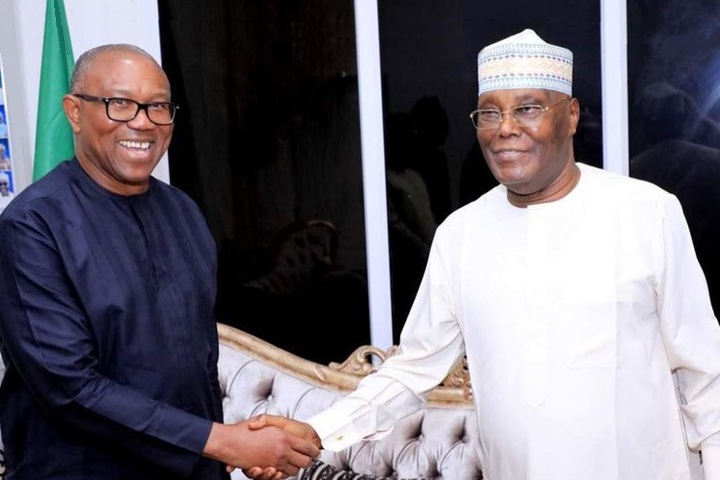
As Nigeria inches toward the 2027 general election, one man again dominates the nation’s political discourse Peter Gregory Obi.
The former Anambra governor and 2023 Labour Party presidential candidate, whose campaign redefined civic engagement among Nigerian youths, now finds himself at a complex political crossroads.
Once the embodiment of Nigeria’s democratic rebirth, Obi now stands between the fading promise of the Labour Party, the uncertain strength of emerging coalitions, and the unrelenting expectations of his loyal “Obidient” movement.
His next political move will not only determine his personal future but could also shape the entire opposition landscape ahead of 2027.
The Labour Party Crisis and Obi’s Dilemma

The Labour Party, Obi’s 2023 platform, is today a house divided against itself.
The internal struggle between the Julius Abure-led faction, the Nigeria Labour Congress (NLC), and a third group dominated by Obi’s supporters has weakened its foundation.
The March 2024 convention, described by INEC as non-compliant, deepened the rift.
What once symbolized a mass citizens’ movement for reform has become an arena of endless litigations, ego battles, and accusations of hijack.
For Obi, the question is no longer just about political loyalty it’s about survival. Can he rebuild a fractured party machinery strong enough to confront the ruling APC in 2027? Or will he, like many before him, abandon ship for a fresh platform?
The Atiku Factor and the ADC Gamble
In recent months, Obi’s growing closeness to opposition figures particularly under the emerging African Democratic Congress (ADC) coalition has fueled speculation.
The coalition, which includes Atiku Abubakar and other veterans of opposition politics, presents itself as the nucleus of a new “third force.”
But the partnership comes with risks. For one, Atiku has made it clear that he remains in the presidential race.
His wealth, national structure, and influence make him a formidable competitor. Within the ADC, Obi’s prospects for a presidential ticket appear uncertain, and the idea of him running as Atiku’s running mate has sparked discontent among his base.
The “Obidients,” whose passion transformed Obi into a national phenomenon, are unlikely to accept a vice-presidential compromise.
They see him as the authentic alternative not a subordinate in a recycled alliance.
Waiting for a Platform
Obi’s spokesperson, Dr. Yunusa Tanko, insists that the former governor is still a Labour Party member while simultaneously part of a wider coalition.
According to Tanko, Obi will announce his definitive political platform before the end of December 2025.
Until then, he remains strategically noncommittal a move political analyst Jide Ojo describes as “a waiting game.”
Ojo suggests Obi and other opposition figures are holding out for INEC’s approval of the African Democratic Alliance (ADA), a new coalition platform free from existing court disputes.
Yet, beneath the calm surface, lies an unspoken calculation: Obi is wary of competing against Atiku in the same primary.
The 2027 election is his brightest window of opportunity at 62, time may no longer be on his side. If power returns to the North in 2031, the road back could stretch another decade.
The Stakes Ahead
Beyond strategy and alliances, Obi’s challenge is also moral.
His 2023 campaign was built on integrity, transparency, and generational change.
The young Nigerians who rallied behind him did not do so merely for political excitement; they believed he represented something purer in a corrupt system.
If Obi compromises those ideals for convenience, he risks losing the movement that gave him relevance.
Yet if he insists on idealism without pragmatism, he may find himself politically isolated.
What remains clear is that Obi has become too consequential to ignore. His name dominates political conversations across Nigeria, from the markets of Onitsha to the streets of Maiduguri.
He represents, for millions, the idea that politics can still inspire hope.
Conclusion
In the end, Peter Obi’s political dilemma mirrors Nigeria’s broader democratic contradiction between the desire for change and the gravitational pull of old structures.
If he succeeds in uniting the fractured opposition under a credible platform, he may finally translate the Obidient Movement’s moral energy into institutional power.
But if he miscalculates, 2027 could mark not a rebirth, but the quiet fading of a political dream that once electrified a nation.
For now, all eyes remain on him the man caught between faith, ambition, and history.