



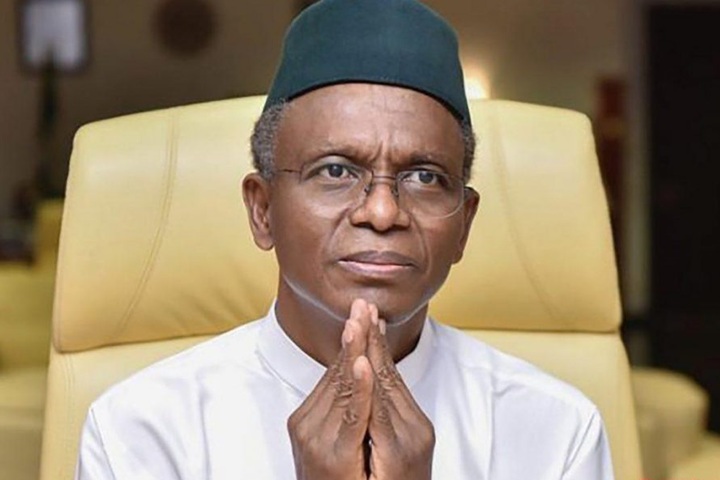
A major political shift has unfolded in Kaduna State as former governor, Malam Nasir El-Rufai, spearheaded the merger of the entire structure of the Social Democratic Party (SDP) with the African Democratic Congress (ADC).
The development, which signals a significant realignment ahead of Nigeria’s next political cycle, was announced during a coalition meeting held in Kaduna on Saturday, August 23, 2025.
The gathering brought together influential leaders, party executives, and stakeholders drawn from diverse political platforms.
In a communiqué issued after the meeting and signed by the Kaduna State Coalition Publicity Secretary, Hon. Darius Kurah, El-Rufai was identified as the key figure driving the coalition efforts.
He chaired the meeting, which was attended by ADC leaders, former commissioners, SDP executives, and several prominent figures from the state’s political class.

Among the attendees were Hon. Ja’afar Mohammed Sani, ADC Vice Chairman (North West); Elder Patrick Ambut, ADC Kaduna State Chairman; and Mallam Bashir Saidu, a leading ADC strategist in the state.
Addressing the gathering, El-Rufai described the merger as a decisive step toward building a credible political alternative in Kaduna.
He stressed that the coalition’s central goal is unity, with a strong emphasis on inclusive governance and people-centered development.
“Our mission is clear: to strengthen progressive leadership in Kaduna and Nigeria by rallying around shared ideals and ensuring that politics serves the people, not personal interests,” El-Rufai said.
Ja’afar Mohammed Sani, ADC Vice Chairman for the North West, praised the SDP leadership for what he called a “bold and courageous decision.”
He described the merger as a new dawn for credible leadership in Kaduna and a signal that opposition politics is reawakening.
Similarly, Elder Patrick Ambut welcomed the SDP members into the ADC fold, assuring them of full integration into existing party structures.
He noted that the coalition was not just about structures merging but about harmonizing ideologies for the collective good of the people.
Mallam Bashir Saidu reinforced this view, stressing that the merger represented “a convergence of visions and principles dedicated to building a future where governance is truly accountable.”
As part of the resolutions adopted at the meeting, the ADC National Working Committee (NWC) was tasked with setting up a Membership Registration Committee.
This committee will work closely with the Kaduna State chapter, alongside local government and ward units, to begin new membership registration while revalidating existing members.
According to the communiqué, this grassroots exercise is expected to strengthen the coalition’s reach, consolidate its base, and position it strategically ahead of future elections.
The meeting ended on a hopeful note, with stakeholders pledging commitment to building a formidable front capable of challenging the dominance of established parties in the state.
Political observers say El-Rufai’s move has reshaped Kaduna’s political landscape.
By leading the SDP into a merger with the ADC, the former governor has positioned himself once again as a central figure in the state’s opposition politics.
The coalition is seen as part of a broader strategy by opposition forces to rally around credible alternatives and build momentum ahead of 2027.
With grassroots mobilization already on the agenda, analysts suggest the ADC-SDP merger could become a significant force, particularly in northern Nigeria where El-Rufai still commands influence.
For now, Kaduna’s political terrain has shifted, and the coming months will determine whether this coalition translates into electoral strength or fades into another short-lived alliance.

