


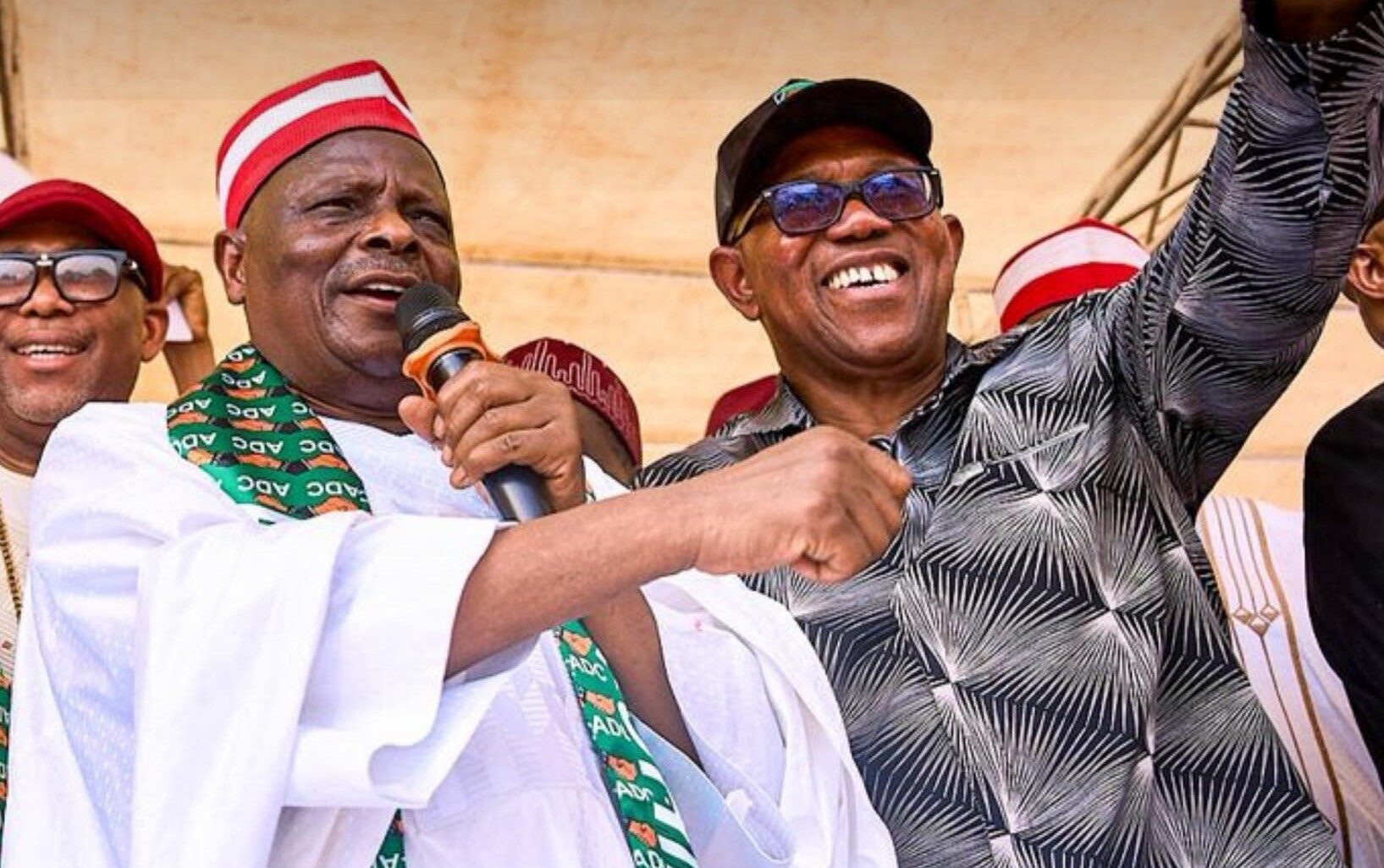
Fresh efforts to unite Nigeria’s opposition ahead of the 2027 presidential election appear to be gaining momentum as supporters of Peter Obi and Rabiu Musa Kwankwaso move toward a possible political alliance under the Nigeria Democratic Congress (NDC).
The emerging coalition, driven by the Obidient and Kwankwasiyya movements, was unveiled during the NDC Aspirants’ Summit in Abuja, where supporters openly backed the idea of a consensus Obi-Kwankwaso presidential ticket.

For many within the opposition fold, the initiative reflects lessons from the 2023 elections, where divided ambitions and competing candidates weakened the challenge against the ruling party. This time, coalition advocates say early negotiations may offer a better chance at building a formidable political alternative.
National Coordinator of the Obidient Movement Worldwide, Dr Yunusa Tanko, revealed that supporters had begun mobilising funds to purchase a joint presidential nomination form, setting a ₦60 million fundraising target.
According to Tanko, the fund drive is intended not only to finance political participation but also to signal grassroots commitment to a coalition many believe could reshape the 2027 contest.
He described the initiative as a response to growing calls for a stronger and more coordinated opposition capable of confronting Nigeria’s economic and governance challenges.
While neither Obi nor Kwankwaso has formally declared for the presidency, growing cooperation between their supporters has already fuelled speculation over possible power-sharing arrangements and broader coalition negotiations.
Speaking on Obi’s behalf, former Chairman of the Inter-Party Advisory Council, Chief Peter Ameh, urged aspirants within the NDC to prioritise national interest and credibility above personal ambition.
Ameh warned that coalitions built on convenience rather than principle could struggle to win public confidence, especially at a time when many Nigerians remain frustrated by political defections and what he described as transactional politics.
On the Kwankwasiyya side, Coordinator of the Kwankwaso National Network, Moshood Shittu, argued that Nigeria’s biggest challenge remains leadership failure rather than lack of resources, insisting that integrity and competence must shape future political choices.
The summit also exposed concerns over how the NDC intends to manage its internal process ahead of 2027.
National Secretary of the party, Ikenna Enekweizu, moved to calm fears of manipulation, assuring aspirants that no preferred candidates had been secretly endorsed and promising transparent primaries or consensus arrangements.
He also announced reduced nomination fees for women, youths and persons living with disabilities as part of efforts to broaden participation.
Veteran politician Buba Galadima, however, cautioned that poorly managed primaries could fracture opposition unity before campaigns even begin.
Drawing from past political experiences, Galadima warned that bitter internal contests often leave behind legal battles and factional crises that weaken parties ahead of elections.
As conversations around an Obi-Kwankwaso alliance gather pace, political observers say the coming months may reveal whether the talks mature into a genuine coalition or fade into yet another unrealised opposition experiment.




