



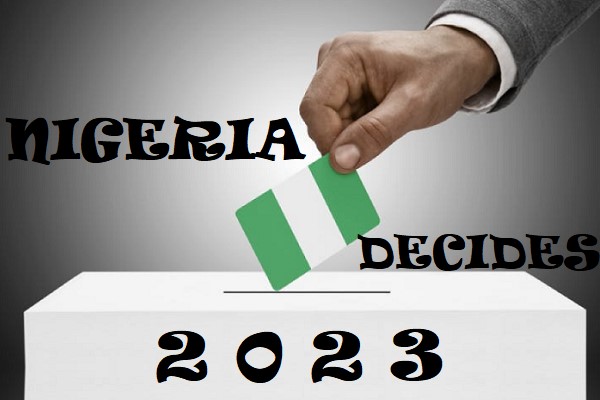
Professionals for Good Governance and Social Justice (PGGSJ), has called for a ‘Revolutionary Electoral Reform’ in Nigeria.
The group in a statement made available to NewsBand Newspaper, said Nigeria has reached a crossroads where both the leaders and the people must take a firm stance on the right path to take.
PGGSJ said the call became necessary after observing the flaws that greeted the 2023 General Elections and subsequent Governorship polls.
“We, members of Professionals for Good Governance and Social Justice, having observed the 2023 General Elections and subsequent Governorship polls, are calling for what we have termed a ‘Revolutionary Electoral Reform’.

“Nigeria has reached a crossroads where both the leader and the people must take a firm stance on the right path to take. What is all this noise about political alliances? Why do Nigerians take delight in putting the cart before the horse? How can the country’s democracy rise like a phoenix from the ashes when the fire destroying its electoral process still rages relentlessly? Should we not first put off the conflagration?
“It is pertinent that of all democratic elements—press freedom, multiparty system etc—, election is most crucial because it provides the only legitimate pathway for citizens to exercise their sovereignty, to hold their leaders accountable, and to shape the destiny of their nation.
“In light of this, Nigeria does not need a change! ‘Change’ was employed as a buzzword to evoke a false cult of personality around former president Muhammadu Buhari. Also, it was used as a tool of expediency, where corrupt oligarchs or godfathers formed a political alliance, not to genuinely serve the poor masses, but to capitalize on the security
challenges of the incumbent government in which they themselves were complicit.
In the same vein, Nigeria does not need a reform. Since 1999, the country has witnessed series of electoral reforms. From the card reader to the Bi-modal Voter Accreditation System, the existence of reforms is incontestable”, the statement partly reads.
Speaking further, the group called on Nigerians to reject mere reforms or
changes but instead, they should demand for radical changes which it itemized and termed Revolutionary Electoral Reforms.
The statement added, “Dear, fellow citizens of Nigeria, it is time we leapt to our feet to reject mere reforms or changes. Instead, we should demand for radical changes which the PGGSJ has already itemized and collectively termed Revolutionary Electoral Reforms, RER.
“In this enterprise, the National Assembly, as the first arm of government, must get the ball rolling through radical and unambiguous pieces of legislation. First, it must enact a law to make real time/electronic voting compulsory, regardless of regulatory guidelines that may be established by the Independent National Electoral Commission. To ensure flexibility, thee-voting will involve two independent steps. The first step is the procurement of electronic voting machines to every polling unit, while the second step is remote e-voting where voters deliver their votes from the comfort of their homes. The utility of either step will depend on the discretion of the voter.
“Second, voters who desire to take pictures and videos of the electoral process must not be restrained from doing so. When voters are granted this liberty, electoral officials are more likely to adhere to the rules and guidelines. Thus, this visual evidence can serve as a deterrent against potential electoral malpractices and provide valuable insight into the electoral process. Additionally, it can foster voter engagement, as sharing one’s voting
experience on social media can encourage others to participate in the democratic process, ultimately leading to a higher voter turnout.
“Third, there must be strict enforcement of the secret ballot principle sanctified by the Nigerian constitution. The secret ballot eliminates problems, such as blackmail, bribery, threat, and violence, allowing voters to make their choices free from fear of retribution.
“Fourth, vote buying is another monster! Its danger resides in its insidiousness and false harmlessness. Therefore, to combat vote buying, the government must set up an early warning system to track potential violators and violations. This can be achieved through a combination of technology, community engagement and robust electoral laws.
“Fifth, to boost voter registration in Nigeria, several technological solutions can be explored. Online Voter Registration Platforms can be developed to allow citizens to register from anywhere, using their smartphones or computers. This platform can be integrated with the country’s national identity database to verify applicants’ information. Mobile Voter Registration Apps can also be designed to facilitate registration, especially in remote areas with limited internet access. These apps can be offline-enabled, allowing users to register and then sync their data when internet connectivity is available.
“Sixth, the government must establish a publicly accessible portal where citizens can monitor the electronic voting process in real-time. This portal should provide a secure and reliable platform for voters to cast their ballots electronically, with their votes being registered and updated simultaneously. Also, media organizations must be permitted to publicly disclose the voting process. Moreover, Civil Society Organizations that desire to mount independent tech monitors must be granted absolute leeway to do so. The idea behind all this is to ensure the integrity and transparency of our electoral process.
“Seventh, in a country where party ideology and loyalty are non-existent and defection is a hobby, independent candidacy could not be entirely strange. Independent candidates often emerge from the grassroots, giving a voice to marginalized communities that feel disenfranchised by traditional party system. In essence, the candidates are unencumbered by party affiliations, allowing them to approach problems with a clear and unbiased mind.
“Eighth, the National Assembly must legalize Diaspora Voting to ensure inclusivity and holistic representation. It can also promote global citizenship and engagement by encouraging citizens living abroad to stay connected with their home country.
“Ninth, it is imperative that election petition tribunal cases be concluded within one month before the swearing-in of a disputed president-elect. Rushing into inauguration without resolving these disputes can lead to a legitimacy crisis, undermining the stability of the government and creating an atmosphere of tension and mistrust. This becomes vital especially when the declaration of a candidate as winner is met with a resounding coldness across the nation.
“Tenth, the appointment of the Chairman of INEC must cease to be the responsibility of the President. To address this concern, a constituted body representative of the six regions or thirty-six states should take on the mandate. Another avenue is to adopt the Muhammadu Uwais Recommendation on Electoral Reform. By dint of this, the power to appoint the INEC board should transit from the president to the National Judicial Council, NJC, while its funding should be derived from the Consolidated Revenue of the Federation. Then, 48 hours to the election day, key electoral officials must be furnished with new telephone lines. Any form of communication or correspondence between electoral officials and the executive must be criminalized. This would help to ensure the independence and neutrality of the electoral body.
“The aforementioned strategies are mutually inclusive. This entails that they each depend on one another to succeed.
“The integrity of Nigeria’s electoral process is under siege, and drastic measures are needed to restore trust and accountability. The government must consider imposing the death penalty as punishment for those who engage in certain electoral malpractices, particularly electoral violence, vote trading and failure to make voting and election result portal accessible to the public.
“This may seem extreme, but the consequences of inaction far outweigh the perceived severity of this punishment.
“Electoral malpractices have become pervasive in Nigeria, with the 2023 presidential election being a grotesque reminder of the depths to which some individuals will sink to undermine the democratic process. The prevalence of vote-buying, ballot box snatching, and falsification of election results has eroded public trust in the electoral system. It’s imperative that the government takes bold action to address this issue.
“The death penalty may seem like a drastic measure, but it’s essential to consider the gravity of the offense. Electoral malpractices are not just a crime against the state; they’re a betrayal of the trust placed in individuals to uphold the integrity of the democratic process. By imposing the death penalty, the government can send a strong message that such behavior will not be tolerated.
“Moreover, the death penalty can serve as a deterrent to those who would otherwise engage in electoral malpractices. The fear of severe punishment can be a powerful motivator, and it’s essential to harness this fear to protect the integrity of the electoral process.
“As Nigeria hurtles towards the 2027 presidential election, it’s imperative that the government prioritizes revolutionary electoral reforms to prevent the chaos and controversy that has marred previous elections. The current system is fraught with vulnerabilities, from ambiguous language to loopholes that can be exploited by partisan actors. Without comprehensive reforms, every other effort to ensure free and fair elections will be rendered completely useless and abortive.
“Nigerians must stand boldly and consistently demand that their government takes decisive action to address these issues, lest the country be plunged into another cycle of electoral disputes and instability. The time for action is now, and the government must be held accountable for ensuring that the electoral process is transparent, accountable, and truly reflective of the will of the people.”




