


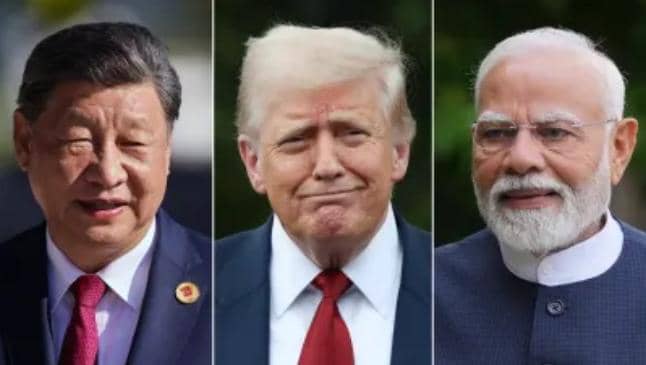
(DDM) – A complex geopolitical shift is unfolding in Asia as U.S. President Donald Trump’s latest trade war measures appear to be nudging historic rivals India and China into a cautious, tactical alliance.
The two nations, long divided by a bloody border conflict, vast power disparities, and competition for influence across the continent, are now finding common cause in response to Washington’s increasingly punitive economic policies.
DDM gathered that Trump recently announced a new 25% base tariff rate on India, with plans to escalate it to 50% as further punishment for New Delhi’s purchase of Russian oil.
This mirrors the hardline trade stance his administration has maintained toward China, effectively placing both countries in the same category of economic adversaries.

While diplomatic observers note that a tentative thaw between India and China had been developing in recent months, Trump’s actions have accelerated this shift, creating what some analysts describe as a “marriage of convenience” between the Asian giants.
The Trump administration’s approach has been marked by transactional dealings with both allies and rivals alike, unsettling governments from Europe to Asia.
In targeting India’s energy ties with Russia and its relatively closed economic policies, Washington is punishing a nation it has spent years cultivating as a strategic counterbalance to Beijing’s influence.
This, experts warn, risks undermining the U.S.’s long-term Indo-Pacific strategy.
Instead of isolating China, the measures may be inadvertently strengthening its hand by offering New Delhi a reason to coordinate more closely with Beijing on economic and geopolitical matters.
India and China still have deep-rooted mistrust, stemming from their 1962 border war, repeated skirmishes in the Himalayas, and starkly different political systems.
However, the shared experience of navigating a volatile and unpredictable Washington is now shaping a pragmatic alignment between them.
Trade analysts point out that this tactical cooperation could manifest in joint opposition to certain U.S.-led trade rules, as well as increased coordination in global forums where developing economies seek more equitable terms.
For Beijing, the opportunity lies in reducing its isolation while subtly weakening America’s influence over one of its most important regional partners.
For New Delhi, the benefit is a potential counterweight to Washington’s pressure while still preserving its strategic autonomy.
Yet, observers stress that this alignment remains fragile and highly transactional, a relationship driven less by trust than by necessity.
Any serious flare-up along their contested border or a clash over regional influence could quickly unravel the current détente.
In the meantime, Trump’s economic brinkmanship is forcing both capitals to reconsider old animosities in the face of a shared challenge, the world’s most powerful economy treating them both as targets rather than partners.
🚨 Follow DDM WhatsApp channel Now!
Get breaking news, hot gist, and updates FIRST!
*📲 Click to join 👇* https://whatsapp.com/channel/0029Vajkwdc4dTnFHl19vW3g
*Apply at the link below and Start Your Tech Journey:*
👇🏽
https://www.ddm.media/cohort-6

