


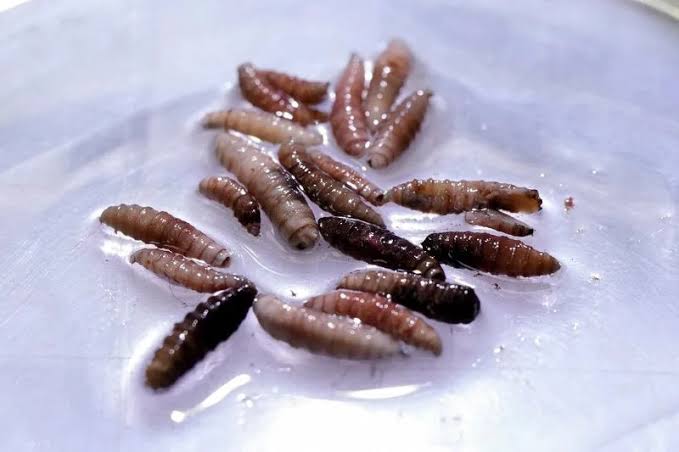
The United States has confirmed its first-ever human case of the New World screwworm infection, a rare but dangerous parasitic fly whose larvae feed on living tissue.
Health officials say the patient, a Maryland resident, had recently returned from El Salvador, where an outbreak of the pest is ongoing.
The case was diagnosed on August 4, 2025, according to the U.S. Centres for Disease Control and Prevention (CDC).
“Screwworm larvae literally eat living tissue, which can cause devastating and potentially life-threatening infections if untreated,” said CDC Director, Dr. Rochelle Walensky.

“Though extremely rare in humans, travellers must seek immediate medical care if symptoms develop.”
The U.S. Department of Health and Human Services (HHS) confirmed the case on August 24, assuring that health authorities are closely monitoring travel-related risks and collaborating with Central American counterparts to curb further spread.
“We are treating this with utmost seriousness,” HHS spokesperson Dr. Anthony Fauci stated. “Our priority is preventing any new infections.”
Screwworm infestations are most common in livestock, where outbreaks can devastate cattle herds and lead to billions in agricultural losses.
The larvae burrow into living tissue, creating deep, hard-to-heal wounds.
“For humans, it’s rare but extremely dangerous. For cattle, it’s catastrophic,” explained Dr. Jose Ortega, a senior official at the U.S. Department of Agriculture (USDA).
So far, no U.S. animals have tested positive this year.
But experts warn that a single human case is a red flag for the need for vigilance, given how quickly the pest can spread.
The USDA has begun constructing a sterile fly production facility in Texas, while also temporarily suspending cattle imports from Mexico.
Mexico itself is expanding its control measures, as Panama’s existing sterile fly plant struggles to contain the northward-moving outbreak.
The sterile insect technique involves releasing sterile male screwworm flies into the environment, effectively reducing the breeding population and helping to stamp out infestations.
Health experts stress that early detection remains the key to saving both human lives and livestock industries.
“Prompt diagnosis and treatment are critical both for individual health and for protecting agriculture,” Dr. Walensky emphasised.
The Maryland patient is receiving treatment, though officials have not disclosed their identity for privacy reasons.




